Who Is It For?
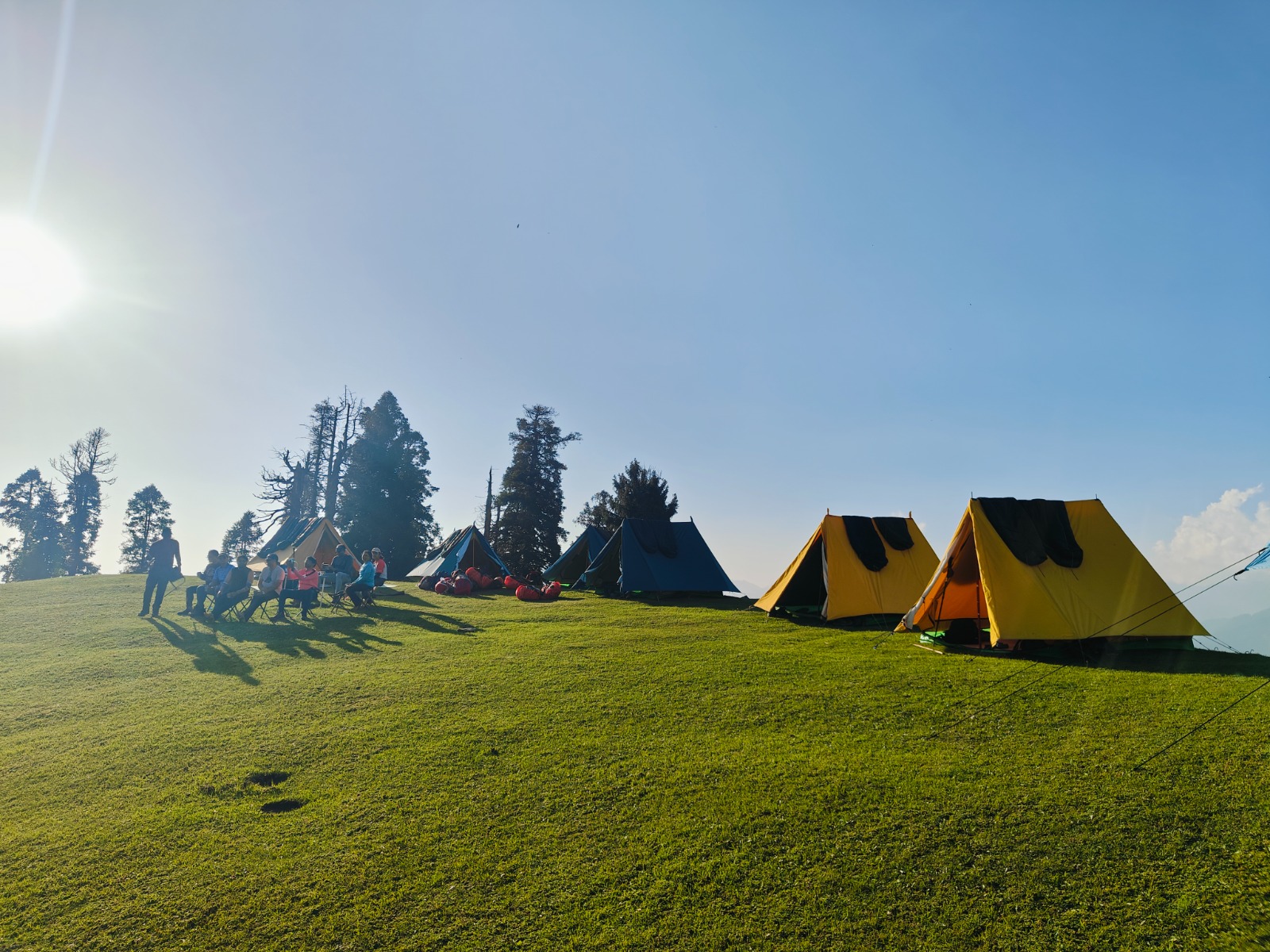
Choosing a private trek lets you see the mountains on your own terms. You don't have to follow a rigid schedule. The itinerary changes based on your fitness level or what you want to see. You can stop to take photos or push for a harder climb. You decide how the journey looks.
You pick the dates that work for you. You aren't stuck with a pre-set departure time. This works well if you have a busy job or want to time your trip with the best weather.
Private trips also focus on safety. Guides can pay closer attention to your health in a smaller group. It is easier to coordinate and move responsibly through the mountains. These treks offer privacy for families or friends who want to spend quiet time in nature.
Why Choose a Private Trek?
Private treks work for anyone who wants a specific experience in the mountains. They are a good choice for beginners. The pace is slower. Guides can focus on your safety. Women looking for treks in India often choose this option for more comfort.
Companies use these trips for corporate trekking programs. It helps coworkers build resilience outside the office. Photographers like private trips because they can visit offbeat Himalayan treks. You can find quiet spots away from the crowds.
These tours also suit families. Couples can find privacy. It is about connecting with people in a natural setting.
What We Customize
We plan your trek based on your group. Trips can be short weekend breaks. They can be long expeditions lasting ten days or more. You choose the dates that fit your calendar. You can pick the season you like best.
We offer different places to stay. You can camp in the wild. You can stay in local homes. You can mix both options. We plan your meals around what you like to eat. This keeps you healthy in the mountains.
The pace of the trip matches your fitness. This is important for remote Himalayan treks. We make sure the timing allows you to stay safe.
Safety and Leadership
Safety in the mountains is a responsibility. Every trek is led by a certified leader trained to manage groups and difficult terrain. These leaders use their experience to choose the best routes and campsites.
We prepare for emergencies with first aid and evacuation plans. We watch the weather closely to avoid risks. Local teams help with navigation and logistics. This keeps the journey organized and secure.
The emotional core of luxury trekking. Humans don't just want adventure — they want their most important moments witnessed by the most powerful backdrop on Earth. This entire category isn't sold to trekkers. It's sold to love, loyalty, and longing. The Himalayas are not the product here. The occasion is.
Proposal Expeditions
"Will you marry me at 14,000 ft?"
There is no more cinematic setting for a marriage proposal than a Himalayan summit — wind-carved silence, a horizon of white peaks, two people standing at the edge of the ordinary world. Proposal Expeditions are not trekking packages. They are choreographed emotional productions. The guide team operates as silent co-conspirators: carrying the ring, timing the arrival, pre-setting the scene, coordinating the hidden photographer to capture the exact moment.
The product is sold weeks before departure. The proposer co-designs every element in secret. The partner arrives thinking it's just a trek.
Includes:
Anniversary Treks
Not all anniversaries are champagne-and-restaurant affairs. Some couples want to mark their milestone by doing something they've never done — something that tests them, bonds them, and reminds them of who they chose. Anniversary Treks offer precisely that: shared hardship that becomes shared glory. The mountain becomes the metaphor for the marriage.
Milestones that deserve more than dinner:
Experience includes:
Birthday Summit Experience
"Turn 30 on top of a Himalayan summit."
Birthdays at altitude become mythologies. You don't just add another year — you stand above the clouds and feel what it means to have made it this far. The Birthday Summit Experience is designed for people who refuse to celebrate with a cake on a table when they could have a cake on a mountain. Every milestone birthday has its own emotional gravity: 18, 21, 25, 30, 40, 50. Each is a different micro-target.
Includes:
Valentine's Himalayan Escape
Designed for couples. Not necessarily trekkers. This is where the category expands beyond the trekking audience. Valentine's Himalayan Escape targets urban couples who want something extraordinary instead of a restaurant reservation. The experience is curated for accessibility: moderate routes, stunning settings, romantic add-ons at every camp. The mountains do the heavy lifting emotionally; the operator handles everything else.
It is not an adventure product. It is a love product. Sold in December–January. Positioned directly against hotels, cruises, and city weekend packages. The competitive framing: a candlelit table in Mumbai versus a candlelit tent under the Milky Way at 10,000 feet.
Honeymoon Treks
Massive untapped category. Most operators don't own this. The honeymoon market in India is enormous — and yet almost no trekking operator has built a credible, fully-designed product around it. Couples are choosing between Bali, Maldives, and Kerala. No one is offering them a Himalayan honeymoon with private campsites, luxury gear, curated meals, and professional photography included.
Target: couples who are slightly adventurous, slightly unconventional, and tired of the same tropical beach fantasy. This segment is underserved and deeply profitable. The operator who builds it first owns the search terms for the next decade.
The most powerful insight in trek marketing: people don't always buy the mountain. Sometimes they buy the camera opportunity. Sometimes they buy the stars. Sometimes they buy the rare bird sighting. Interest-Based Customizations pull in audiences who would never search "Himalayan trek" — but would absolutely search for what they're genuinely passionate about.
Astrophotography Expeditions
Not trekking. Not photography. Milky Way Hunting.
The Himalayas offer some of the darkest skies in Asia. Above 3,500m, with zero light pollution and a thinner atmosphere, the Milky Way is visible to the naked eye as a physical band of light across the sky. Astrophotography Expeditions are designed around dark-sky windows, new moon calendars, and optimal shooting altitudes.
Target audience:
The product includes pre-trek camera briefings, dedicated night photography windows, guide support for composition and safety, and morning golden-hour shoot sessions. Two worlds in one expedition: the cosmos overhead, the peaks in the frame.
Star Gazing Retreats
Star Gazing Retreats are family-friendly, couple-friendly, and education-friendly. The night sky at 3,000m is a completely different universe from what anyone experiences in a city. This product wraps the experience in both science and story: constellation mythology, telescope sessions, and astrophysics delivered around a campfire by a guide trained in both.
Audience:
Includes:
Wildlife Tracking Treks
The Himalayas are not empty. They are alive with rare, elusive species that most people will never encounter in their lifetime. Snow leopards in the upper Spiti valleys. Himalayan brown bears in trans-Himalayan zones. Red foxes crossing glacial moraines. Over 500 bird species across altitudinal gradients that shift from subtropical to alpine tundra within a single vertical kilometre.
Wildlife Tracking Treks reframe the mountain as ecosystem rather than landscape — and tap into a wildlife photography and ecotourism market that is growing rapidly.
Focus zones:
Botanical Expeditions
The Himalayan flora is one of the most extraordinary plant systems on Earth — from rhododendron forests at 3,000m to rare medicinal herbs at 4,500m that have been used in Ayurveda for thousands of years. Botanical Expeditions turn the trek into a living herbarium, and the mountain into a classroom that no university can replicate.
What participants encounter:
Perfect for:
Photography Masterclass Treks
Not just a trek with cameras. A structured education in mountain photography delivered entirely in the field, surrounded by the most photogenic terrain on Earth. Photography Masterclass Treks pair technical instruction with extraordinary subject matter: golden hour on glaciers, blue hour above the cloud layer, long-exposure waterfalls, star trails over peaks.
Target audience:
Modern wellness is not about spa treatments. It is about removing noise, recovering the self, and returning to baseline after prolonged overstimulation. The Himalayas offer the most powerful natural context for this restoration available on the planet. Altitude, silence, physical exertion, and genuine isolation combine into an environment that resets the nervous system in ways no resort can replicate.
Digital Detox Treks
No notifications. No social media. No laptop. No meetings. This is one of the most important products an operator can build right now. The audience is enormous, growing, and genuinely desperate. Burnout, notification fatigue, and decision fatigue are 21st-century epidemics — and the Himalayas offer one of the few genuine antidotes. The product's rules are the product itself.
The framework:
Burnout Recovery Retreats
For founders. For corporate workers. For creators. This product goes deeper than digital detox. Burnout Recovery Retreats are designed for people who are genuinely depleted — not tired, not stressed, but fundamentally emptied. The itinerary is structured around low-exertion trekking, therapeutic pace, extended natural rest periods, guided journaling sessions, and campfire conversations that don't require performance.
The emotional positioning is very strong because the need is very real. You don't sell this with feature lists. You sell it with permission: it's okay to stop. The mountain will still be here. So will you.
Himalayan Fitness Camp
Weight loss. Stamina. Endurance. Mountain conditioning. Trekking at altitude burns 600–900 calories per day of active hiking. Add the metabolic cost of acclimatization, cold thermogenesis, and altitude-induced appetite shifts, and participants return from 10 days genuinely, measurably transformed. Himalayan Fitness Camp frames the trek as a structured physical training program with quantifiable outcomes — not just scenery.
The product includes:
Yoga + Trek Retreats
Most operators bolt a morning yoga session onto a standard trek and call it a yoga retreat. The actual integration — of breath, movement, altitude, asana, meditation, and physical exertion — is almost never done with craft. The opportunity is to build the first deeply integrated Yoga + Trek product where the trek IS the yoga, and the yoga IS preparation for the trek.
The framework:
Silent Mountain Retreat
No talking. Meditation. Mindfulness. Reflection. Silent Mountain Retreat is for the serious inner practitioner — people who have done vipassana, who meditate daily, who understand the value of sustained silence and want to inhabit it inside one of Earth's most dramatically beautiful environments.
The silence is enforced by prior agreement, not inability. Guides communicate through hand signals and written notes. Camp is arranged for contemplative space rather than social gathering. The landscape does the speaking. What participants discover, in five or seven days of genuine silence at altitude, is usually irreversible.
One of the most underserved markets in adventure tourism is the whole family — across generations. Most trekking operators design for individuals or young couples. The Family Ecosystem category is built to bring everyone: grandparents with knee concerns, teenagers with energy they don't know what to do with, and parents trying to give their children something real instead of another screen.
Grandparents & Grandkids Program
This product almost doesn't exist in the Indian trekking market. The concept: a carefully engineered trek that an 8-year-old and a 70-year-old can both complete — side by side, sharing an experience that neither could have had alone. The altitude stays accessible (2,500–3,200m), the trail is well-graded, mule support is available, and the pace is set by the slowest member with full celebration for every step.
Family Bonding Expeditions
Parents and kids. Adventure activities. Shared challenge. Families spend more time in the same house and less time in the same experience. Family Bonding Expeditions give parents and children a shared physical narrative — something they built together, suffered through together, and celebrated together. The mountain becomes the family story.
Activities woven into the trek beyond hiking: river crossings, campfire cooking together, map and compass navigation, altitude science sessions, wildlife observation, and stargazing that converts children into astronomers by morning.
Multi-Generation Himalayan Vacation
Grandparents. Parents. Children. Everyone together. The most ambitious family product. Requires careful route selection, medical screening at multiple age profiles, and layered logistics support. The reward is immense: a three-generation shared experience that no hotel package can replicate. The mountains strangely compress time — grandparents become children again, children reveal capabilities that surprise their parents, and parents see their family from outside the domestic frame for the first time.
The Himalayas are an outdoor university. Every altitude band is a different ecosystem, geological era, cultural zone, and observational laboratory. Learning expeditions turn the trek into curriculum — rigorous, embodied, and entirely irreplaceable by anything that can happen inside a classroom.
Student Discovery Expeditions
Schools. Colleges. Gap-year students. Student Discovery Expeditions are designed as immersive field programs that complement formal education with embodied learning. Geography students walk across moraines and touch the terminus of glaciers. Biology students document species across elevation gradients. History students trace ancient trade routes that once connected India and Central Asia before borders existed.
These are not fun trips. They are academic expeditions with defined learning outcomes, field journals, and post-trek deliverables. The differentiation: learning happens in the field, not the classroom, which means it stays.
Himalayan Geology Expedition
Mountains are time machines. The Himalayas expose rock that was once the floor of the ancient Tethys Sea — and marine fossils at 4,000m are the evidence. A geology expedition is a walk through 50 million years of Earth history, where every cliff face is a page and every river terrace is a chapter.
Participants learn:
Astronomy Camps
Schools would love this. And so would adults who never stopped wondering. Himalayan Astronomy Camps combine altitude advantage — thinner atmosphere, zero light pollution — with structured celestial education. Participants observe through telescopes, track planetary movement, map constellations, and understand their position in the Milky Way galaxy from a place where the Milky Way is physically, viscerally visible overhead.
Survival Skills Camp
Fire. Navigation. Mountain safety. Shelter building. Survival Skills Camp teaches the fundamentals of mountain self-reliance — skills that are simultaneously ancient and urgently relevant. In a world where most people cannot orient themselves without GPS, this product delivers a profound competence: the ability to navigate, survive, and make decisions in terrain that doesn't negotiate.
Curriculum:
The corporate segment is the highest revenue-per-group product in the trekking category. Companies spend enormous budgets on offsites, team building, and leadership programs — and get very little return from conference rooms and hotel ballrooms. The Himalayas offer a genuinely different proposition: no projector, no slide deck, no agenda distributed by HR. Real terrain. Real pressure. Real results.
Founder Escape
Specifically for entrepreneurs. Founders carry a specific kind of cognitive weight — not just work stress, but the total, undelegable responsibility of a company, a team, and a vision they haven't yet fully proven. Founder Escape is designed exclusively for this audience: a retreat offering real disconnection, real physical challenge, and real peer community. Small cohorts of 8–12 founders, selected, not open-enrollment, guided by a facilitator who understands what it means to build something.
Leadership in the Mountains
Decision making. Pressure handling. Team dynamics. Leadership in the Mountains uses the trek environment as a management development laboratory. Every day on trail generates authentic leadership scenarios: route decisions under uncertainty, resource allocation (food, fuel, energy, morale), team motivation when conditions deteriorate, crisis management when weather forces a pivot. These are not simulations. The mountain doesn't care about your organizational chart.
The debrief structure: each evening, the group reflects on the day's decisions through leadership frameworks — the trek provides the content, the facilitator provides the synthesis, and participants connect their mountain behavior to their organizational behavior with uncomfortable clarity.
Remote Team Retreats
Work + Trek. For teams that operate remotely, the annual retreat is the only time people inhabit the same physical space. Remote Team Retreats design that time around shared physical challenge — a 4–6 day trek that builds the kind of trust and rapport that no number of Zoom calls can manufacture. The research on team cohesion is unambiguous: shared adversity creates bonds that shared success cannot.
Deliverable for the company: a team that has suffered together, been awed together, and eaten dinner together at altitude. These are the foundations of genuine organizational culture.
Annual Offsite Expeditions
B2B revenue generator. Repeat business. Long-term contract potential. Annual Offsite Expeditions is sold as a recurring annual contract, not a one-time booking. The operator becomes the company's dedicated outdoor experience partner. The package includes custom branding and mission theming, facilitated programming, professional photography and video production for internal and external use, and a dedicated account manager who understands the company's culture and goals.
This product converts a transactional client into a long-term partner. One contract. Annual recurring revenue. The most defensible position in the B2B trekking market.
The most psychologically powerful products are built around who someone IS — not just what they want to do. Identity-based products create belonging, tribal affiliation, and a sense of arriving rather than just travelling. They are sticky, shareable, and generate the highest organic word-of-mouth referrals of any category. These are not just products. They are communities with a mountain in the middle.
Women Only Treks
Women deserve a space in the mountains designed for them — not a modified version of a mixed-gender product, but a fully considered experience with female guide leadership, structured safety, and the specific kind of freedom that comes from a space without the social dynamics of mixed groups.
The market is enormous and systematically underserved. Female solo travelers are one of the fastest-growing segments in global adventure tourism. No operator has fully owned this space in the Indian Himalayan market. The one who does, owns it for a very long time.
First-Time Trekkers Program
Huge market. The barrier is psychological, not physical. First-Time Trekkers Program is designed to dismantle every excuse standing between an interested person and their first mountain. "I'm not fit enough." "I don't have the gear." "I'll slow everyone down." "I don't know what to expect." The product addresses each one: pre-trek fitness guidance, gear rental, detailed briefings, a patient pace, and guides trained specifically in beginner encouragement and fear management.
The goal: convert the 90% who want to trek but never start. This product is a conversion engine that feeds every other product in the portfolio for the next decade.
Solo Explorer Series
One of the biggest market opportunities in the entire framework. The desire to travel alone is enormous, but perceived safety risk stops most people from acting on it — especially women. Solo Explorer Series creates a structured framework for meaningful solo travel: a curated small group of fellow solo travelers, a route designed for independence within a safety envelope, and a social environment where being alone is the common bond rather than the anomaly. Strangers become travel companions. Companions become friends.
40+ Explorer Club
This demographic has time, money, motivation, and is almost completely ignored by operators who design their products for 22-year-old backpackers. The 40+ Explorer Club is built around controlled exertion profiles, accessible routes with extraordinary scenery, medical support availability, a slightly slower and significantly richer pace, and social curation that puts participants with peers at a similar life stage who share similar priorities.
50+ Himalayan Journeys
Same logic. Deeper customization. 50+ Himalayan Journeys acknowledges that the mountain is not age-gated — it is logistics-managed. With the right route selection, medical screening, support infrastructure, and pace design, a 58-year-old can summit a pass that a poorly prepared 30-year-old cannot. The difference is preparation and support, not capacity. This product sells that truth.
Beginner Mountain Program
Remove fear. Increase conversions. The Beginner Mountain Program is the entry gate to the entire product ecosystem. Its purpose is not just to deliver a great first experience — it is to create a lifelong trekker. Someone who books once, returns annually, and sends everyone they know. The route is the easiest in the portfolio; the experience design is the most intensive. Because the first time always decides everything.
This should not be a separate product. It should be a customization engine — a layer that sits beneath every trek in the portfolio and personalizes the nutritional experience for every participant automatically. Food is one of the most powerful identity markers and comfort mechanisms for Indian travelers. Getting it exactly right turns a good experience into an unforgettable one. Getting it wrong undoes everything else.
The architecture: every meal profile is modular, stackable, and pre-designed. Every trek inherits the engine. Every booking includes a meal preference form. Operations scales without proportional complexity because the system is built once.
Meal Profiles — Every trek can inherit any combination:
These are the truly differentiated experiences — the ones that generate press coverage, social virality, and word-of-mouth referrals that no advertising budget can replicate. They occupy territory so specific that anyone who searches for them will find exactly one operator. They are not treks. They are concepts that happen to take place on a mountain.
Summit Your Age
The most elegant product concept in this entire framework.
Turning 25? Climb to 12,500 ft. Turning 30? Climb to 13,000 ft. Turning 40? Climb to 14,000 ft. The concept is mathematically poetic: your age becomes your altitude target. Every birthday becomes a summit mission. A personal record that can never be taken away. The product sells itself through the concept alone — it is immediately understood, immediately desirable, immediately shareable, and it generates a new booking every year for every person who does it once.
Himalayan Time Capsule
Write a letter to your future self. Seal it. Leave it with the operator. Return in five years to receive it — ideally on a second trek to the same location, standing in the same spot, reading who you were to who you have become.
This product generates repeat bookings by architectural design. It creates a five-year emotional anchor between the participant and the mountain. The letter could be to a future self, to an unborn child, to a partner not yet met, or to the person the writer intends to become. The emotional gravity of the concept is extraordinary. Nothing else in the trekking market does this.
Father-Son Expedition
A space specifically designed for the relationship between fathers and sons — a bond that often lacks the language for depth, but finds it consistently through shared physical experience. The trek provides the context; the mountain provides the metaphor; the shared adversity provides everything that conversation alone cannot.
Mother-Daughter Expedition
The same principle applied to a different and equally powerful bond. Mothers and daughters navigate complex dynamics across generations and expectations. The Mother-Daughter Expedition gives them neutral ground: shared exertion, shared beauty, shared achievement — and the specific intimacy that comes from facing something hard together.
Brothers of the Himalayas
Men's bonding trips. Male friendship is famously underserved by a culture that rewards individual achievement over shared vulnerability. Brothers of the Himalayas creates a container for male friendship — a space where men can be competitive, ridiculous, exhausted, and fully themselves without performance. The mountain is the permission structure.
Sisters in the Mountains
Women's bonding trips. The female friendship travel market is enormous, deeply underserved by adventure operators, and growing rapidly. Sisters in the Mountains is positioned as a celebration of female friendship, solidarity, and the specific kind of adventure that women design for each other when given the space to do it.
Life Milestone Treks
These carry enormous emotional weight because they are attached to the most significant transitions in a human life. Each one deserves its own landing page, its own photography, and its own emotional narrative arc.