Lipulekh Pass Reopens in 2026 The Untold Story of India Ancient Himalayan Gateway
Lipulekh Pass Reopens in 2026 The Untold Story of India Ancient Himalayan Gateway
08
Jul

The reopening of Lipulekh Pass in 2026 has once again brought this legendary Himalayan gateway into the spotlight. While most discussions revolve around the Kailash Mansarovar Yatra, the significance of Lipulekh extends far beyond being a pilgrimage route. Hidden among the towering peaks of the Kumaon Himalayas, this ancient mountain pass has witnessed centuries of trade, exploration, cultural exchange, and geopolitical importance, making it one of the most fascinating corridors in the Indian Himalayas.
For generations, merchants, pilgrims, local communities, and explorers crossed Lipulekh Pass long before modern roads existed. Caravans carrying salt, wool, borax, medicinal herbs, grains, and spices moved through these rugged mountains, connecting the Indian subcontinent with the Tibetan Plateau. Today, while access to the pass remains highly regulated due to its strategic location on the India–China border, its legacy continues to shape the history and identity of the region.
The reopening of the Lipulekh route is more than just the resumption of a sacred pilgrimage—it is a reminder of the Himalaya's enduring role as a bridge between civilizations. Every valley leading to the pass tells a story of resilience, faith, commerce, and adaptation to one of the world's harshest mountain environments.
In this article, we'll go beyond the headlines to explore where Lipulekh Pass is located, why it is historically and strategically important, its role in the Kailash Mansarovar Yatra, its ancient trade heritage, unique geography, nearby attractions, and what makes it one of India's most remarkable Himalayan passes. Whether you're a trekker, mountain enthusiast, history lover, or spiritual traveler, understanding Lipulekh Pass offers a deeper appreciation of the Himalayas beyond their breathtaking landscapes.
Nestled in the far eastern corner of Uttarakhand's Pithoragarh district, Lipulekh Pass is one of India's most significant high-altitude Himalayan mountain passes. Situated at an elevation of approximately 5,334 meters (17,500 feet) above sea level, the pass lies in the Kumaon Himalayas, where the borders of India, Nepal, and the Tibet Autonomous Region of China converge. This unique geographical position has made Lipulekh an important gateway for centuries, connecting cultures, trade routes, and spiritual journeys.
Unlike many famous Himalayan passes that are known primarily for trekking or scenic drives, Lipulekh Pass has historically served as a vital corridor for ancient Indo-Tibetan trade, allowing local communities to exchange goods such as salt, wool, borax, herbs, grains, and spices long before modern roads were built.
Today, the route to Lipulekh passes through the picturesque Kali River valley, crossing remote Himalayan villages such as Dharchula, Gunji, Nabi, and Kuti. These settlements offer a glimpse into the traditional lifestyle of the Byansi community, whose history has been deeply intertwined with this ancient mountain pass.
Geographically, Lipulekh marks a dramatic transition in the Himalayan landscape. As travelers ascend from lush forests and river valleys, the terrain gradually transforms into alpine meadows, rocky moraines, and eventually the stark, windswept expanses of the Tibetan Plateau. This striking change in scenery makes the region one of the most fascinating examples of Himalayan geography.
Although Lipulekh Pass attracts pilgrims undertaking the Kailash Mansarovar Yatra, it is not an open tourist or trekking destination. Due to its strategic location along the India–China border, access is tightly regulated by the Government of India, and only authorized pilgrims, security personnel, and individuals with special permissions are allowed to cross the pass.
More than just a point on the map, Lipulekh Pass stands as a meeting place of geography, history, culture, and spirituality—making it one of the most remarkable mountain passes in the Indian Himalayas.
Lipulekh Pass is much more than a high-altitude crossing in the Himalayas. Perched at 5,334 meters (17,500 feet) in the Kumaon Himalayas, it has earned its significance through a unique blend of spiritual heritage, ancient trade, strategic importance, and breathtaking geography. Few places in the Himalayas have played so many roles over such a long period of history.
For millions of Hindus, Buddhists, Jains, and followers of the Bon tradition, Lipulekh Pass is best known as one of the traditional routes to the sacred Kailash Mansarovar Yatra. Pilgrims cross this pass to continue their journey toward Mount Kailash and Lake Mansarovar, two of the most revered spiritual destinations in the world. The reopening of the pass has once again revived this centuries-old pilgrimage, allowing devotees to follow a path that has been walked for generations.
Long before highways and border checkpoints existed, Lipulekh served as one of the busiest trans-Himalayan trade routes. Local communities, particularly the Byansi people of the Kumaon region, regularly crossed the pass with caravans carrying salt, wool, borax, medicinal herbs, and animal products from Tibet. On their return journey, they transported grains, jaggery, spices, tea, and other essential goods from India. This exchange not only supported local economies but also encouraged cultural interactions across the Himalayas.
Lipulekh is also famous because of its location at the meeting point of India, Nepal, and the Tibet Autonomous Region of China. As one of the few high-altitude border passes connecting India with Tibet, it holds considerable strategic importance. Access to the pass is therefore tightly regulated, and the region is closely monitored by Indian security agencies. This geopolitical significance has kept Lipulekh in the national and international spotlight for decades.
Beyond its historical and strategic importance, Lipulekh Pass is renowned for its dramatic natural beauty. The journey toward the pass takes travelers through dense forests, glacial rivers, alpine meadows, remote Himalayan villages, and rugged high-altitude terrain before gradually opening into the vast, barren landscapes of the Tibetan Plateau. This remarkable transition in ecosystems makes the region a paradise for geographers, photographers, and mountain enthusiasts.
Perhaps what makes Lipulekh Pass truly special is that it represents the many identities of the Himalayas. It is a place where faith, commerce, culture, history, and adventure converge. Every trail, village, and valley leading to the pass reflects centuries of human resilience and adaptation to one of the world's most challenging environments.
Today, Lipulekh Pass is not just famous because it has reopened—it is famous because it continues to connect people, landscapes, and traditions, just as it has for hundreds of years.
Long before motorable roads reached the remote valleys of eastern Uttarakhand, Lipulekh Pass was one of the most important trans-Himalayan trade routes connecting India with Tibet. While many people today associate the pass with the Kailash Mansarovar Yatra, its story began centuries earlier, when merchants, shepherds, and local communities relied on this rugged mountain corridor for survival and commerce.
For generations, traders from the Byansi, Chaudansi, and Johari communities of the Kumaon Himalayas crossed Lipulekh with long caravans of sheep, goats, mules, and yaks. These animals were not just companions—they were the backbone of Himalayan trade, carrying goods across steep mountain trails where no roads or bridges existed.
The trade was both practical and essential. From Tibet came rock salt, wool, pashm (fine undercoat used for premium textiles), borax, yak tails, animal hides, and medicinal herbs. In return, traders from the Indian side carried rice, wheat, jaggery, spices, tea, cotton cloth, metal utensils, sugar, and other everyday necessities. This exchange sustained mountain communities on both sides of the Himalayas and created a vibrant economic network that flourished for centuries.
But Lipulekh was never just a commercial route. It was also a corridor for ideas, languages, traditions, and cultures. Traders often spent weeks on these journeys, staying in remote Himalayan villages and forming relationships that transcended political boundaries. The pass became a bridge between civilizations, allowing knowledge, customs, and stories to travel alongside goods.
The journey itself demanded extraordinary endurance. There were no paved roads, mobile phones, weather forecasts, or rescue teams. Traders navigated narrow cliffside paths, crossed icy streams, and faced unpredictable snowstorms, strong winds, and high-altitude conditions. Every successful crossing reflected not only physical strength but also an intimate understanding of the mountains, passed down through generations.
This centuries-old trade system came to an abrupt halt after the 1962 Sino-Indian War, when border tensions led to the closure of traditional trading routes between India and Tibet. The bustling caravans disappeared, and many Himalayan villages that had once prospered through cross-border commerce had to adapt to entirely new ways of life. Although limited border trade resumed years later under regulated conditions, it never returned to the scale or spirit of the historic caravan era.
Today, when people celebrate the reopening of Lipulekh Pass, they often think of pilgrims and geopolitics. Yet beneath the headlines lies a much older story—one of fearless traders, resilient mountain communities, and a route that kept the Himalayas connected long before the first road was ever built.
At Thin Air Expedition, we believe understanding these forgotten trade routes adds a new dimension to Himalayan travel. Every pass has a history beyond its peaks, and every trail carries the footsteps of those who shaped the mountains long before modern explorers arrived.
With the reopening of Lipulekh Pass, one of the most common questions among adventure enthusiasts is: "Can I trek to Lipulekh Pass?" The simple answer is no—not as an independent trekker.
Unlike popular Himalayan trekking destinations such as Kedarkantha, Har Ki Dun, or the Valley of Flowers, Lipulekh Pass is not an open trekking route. Its location on the India–China border, near the tri-junction of India, Nepal, and the Tibet Autonomous Region of China, makes it one of the country's most strategically sensitive mountain passes. As a result, access is strictly regulated by the Government of India and monitored by security agencies.
The route to Lipulekh passes through the Vyas Valley in eastern Uttarakhand, an area that falls under strict security and administrative oversight. Travelers entering this region require specific permits, and unrestricted movement beyond designated points is not allowed. These regulations are in place to ensure national security and to protect the sensitive border environment.
Crossing Lipulekh Pass is generally limited to authorized groups, such as:
· Pilgrims approved for the Kailash Mansarovar Yatra through official government channels.
· Security personnel and government officials on duty.
· Individuals with special permissions issued by the relevant authorities.
For most travelers, simply planning a trek to the pass is not permitted, even if they have prior high-altitude trekking experience.
While the pass itself remains off-limits for independent trekking, the surrounding region offers incredible Himalayan experiences. Subject to the required permits and current regulations, travelers can explore destinations such as Dharchula, Gunji, Nabi, Kuti, Adi Kailash, and Om Parvat. These places showcase the culture of the Kumaon Himalayas, remote mountain villages, pristine valleys, and spectacular views, making the journey rewarding even without reaching Lipulekh Pass itself.
High-altitude border regions are shaped not only by their natural beauty but also by their strategic importance. Responsible mountain travel means respecting local regulations, obtaining the necessary permits, and understanding that some places are protected for reasons beyond tourism.
For trekkers, the true adventure often lies not in crossing every pass but in appreciating the landscapes, communities, and history that surround them. The villages leading toward Lipulekh tell stories of ancient trade, Himalayan resilience, and centuries-old traditions—experiences that are just as enriching as standing at the pass itself.
At Thin Air Expedition, we encourage travelers to explore the Himalayas responsibly, choosing journeys that respect both the mountains and the people who call them home. Sometimes, understanding why a place is protected makes the experience even more meaningful than reaching the destination itself.
One of the most fascinating aspects of the journey toward Lipulekh Pass is the extraordinary transformation of the landscape. Within a relatively short distance, travelers witness a complete change in altitude, climate, vegetation, and terrain—a transition that showcases the incredible diversity of the Kumaon Himalayas.
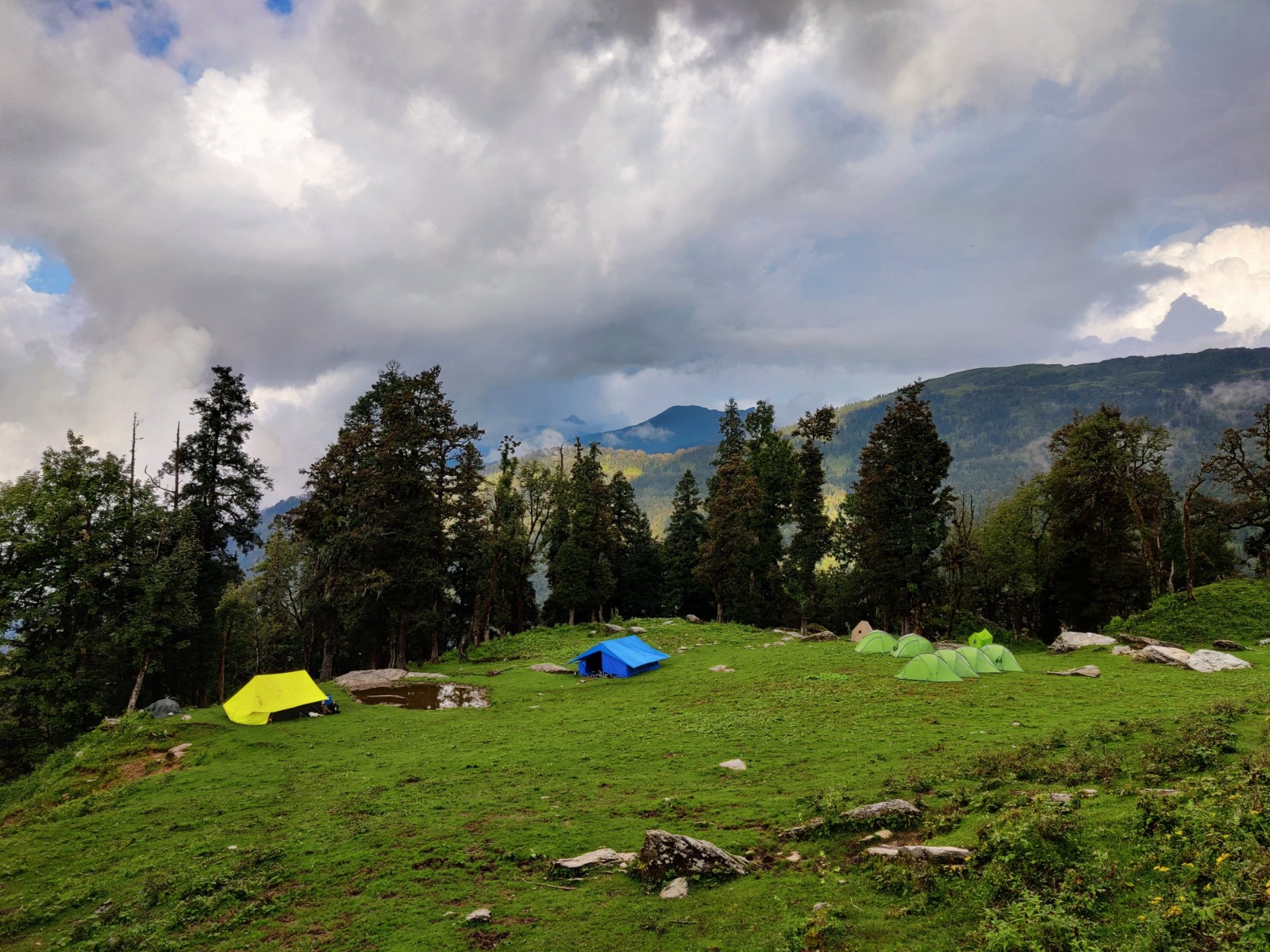
The journey typically begins in the lower valleys around Dharchula, where the Kali River carves its way through lush green hills. Here, the climate is comparatively mild, and the mountains are covered with dense forests of pine, oak, rhododendron, and deodar. During spring, the hillsides burst into vibrant colors as rhododendrons bloom, while countless streams fed by melting snow add to the region's beauty.
As the trail climbs higher toward villages like Gunji, Nabi, and Kuti, the forests begin to thin out. The air becomes noticeably cooler, and the terrain changes into rolling alpine meadows, rocky slopes, and glacial valleys. These high-altitude grasslands, known locally as bugyals, come alive during the short Himalayan summer with wildflowers and grazing livestock. Snow-fed rivers, hanging glaciers, and towering peaks dominate the landscape, creating some of the most dramatic scenery in the Indian Himalayas.
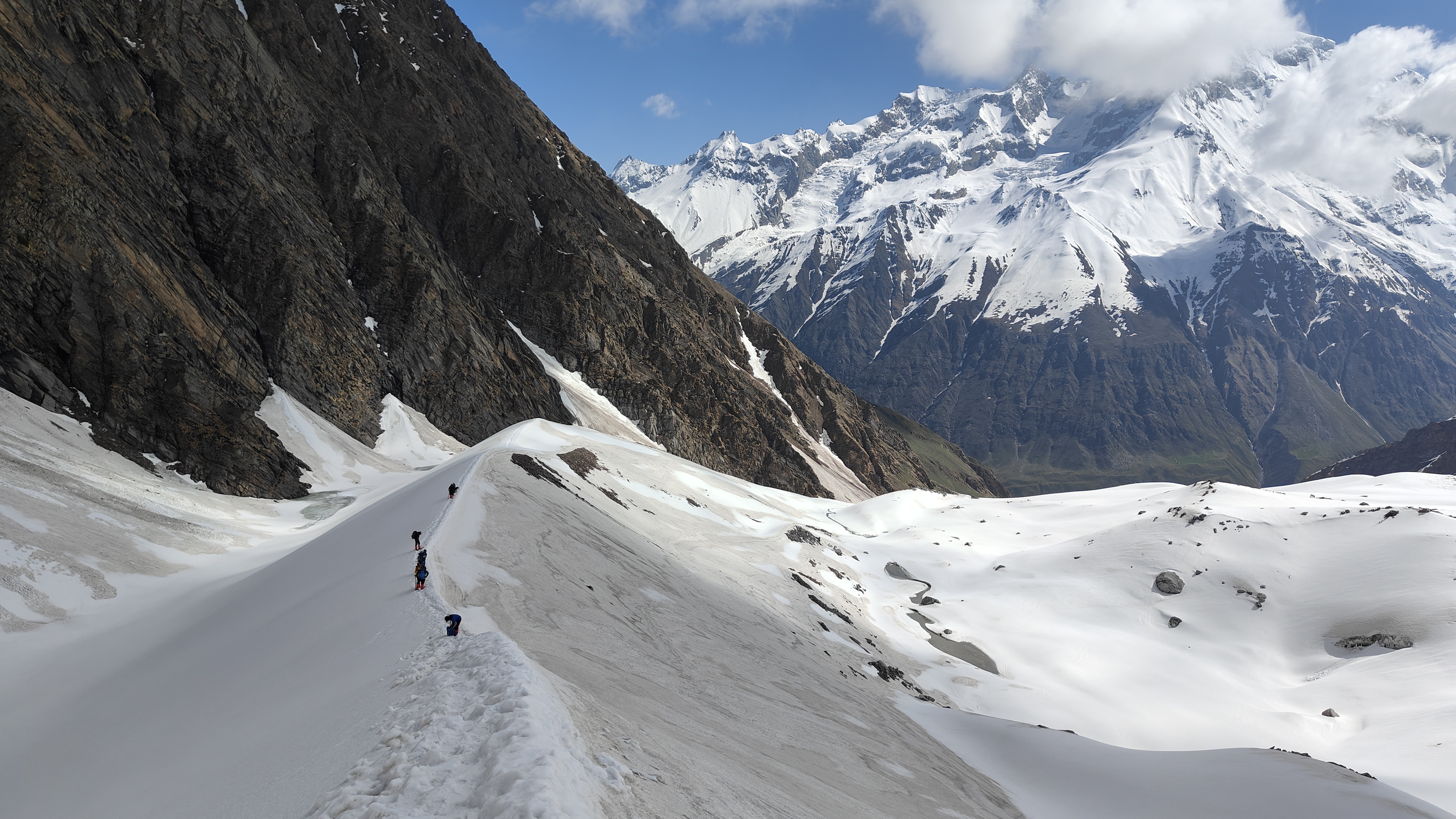
Beyond this point, the environment becomes increasingly rugged. Vegetation grows sparse as the altitude rises above 4,500 meters. Rocky moraines, scree-covered slopes, and patches of permanent snow replace forests and meadows. The oxygen level drops significantly, and weather conditions can change within minutes, with strong winds and sudden snowfall being common even during the trekking season.
As travelers approach Lipulekh Pass at 5,334 meters (17,500 feet), another remarkable transformation takes place. The lush green valleys of the Indian Himalayas gradually give way to the vast, dry, and windswept landscape of the Tibetan Plateau. This rain-shadow region receives far less rainfall than the southern slopes of the Himalayas, resulting in a stark, almost otherworldly terrain of barren mountains, wide valleys, and open skies.
This dramatic shift from temperate forests to alpine meadows, then to glacial landscapes, and finally to the cold desert ecosystem of Tibet is one of the defining geographical features of the Lipulekh region. Few places in the Himalayas offer such a vivid lesson in how altitude and climate shape the natural world.
For geographers, photographers, and mountain enthusiasts, the route to Lipulekh is more than just a journey through the mountains—it's a journey through multiple ecosystems, each with its own unique beauty and ecological significance. Every kilometer reveals a new face of the Himalayas, reminding travelers that these mountains are not a single landscape but a collection of diverse worlds connected by ancient trails.
The remote valleys leading to Lipulekh Pass are not only rich in history and culture but also form part of one of the most fragile and diverse high-altitude ecosystems in the Indian Himalayas. With dense forests at lower elevations, alpine meadows in the middle reaches, and barren rocky terrain near the pass, the region provides habitats for a remarkable variety of Himalayan wildlife.
Although spotting wildlife in these rugged mountains requires patience and a bit of luck, the Lipulekh region is home to several iconic species that have adapted to survive in extreme conditions.
As you move higher into the Kumaon Himalayas, you may encounter the bharal, or Himalayan blue sheep, gracefully navigating steep rocky slopes. These agile animals are among the primary prey of the elusive snow leopard, one of the rarest and most mysterious predators in the world. While snow leopard sightings are exceptionally uncommon, the remote mountains around eastern Kumaon provide suitable habitat for this apex predator.
The region is also home to the Himalayan tahr, a wild mountain goat known for its thick coat and remarkable climbing ability. Other mammals that inhabit the area include the Himalayan musk deer, red fox, Himalayan marmot, yellow-throated marten, and, in lower forested zones, the Himalayan black bear.
For bird enthusiasts, the valleys around Lipulekh are equally rewarding. Large birds of prey such as the Himalayan griffon vulture, golden eagle, and lammergeier (bearded vulture) are often seen soaring effortlessly on mountain thermals. Their enormous wingspans make them some of the most impressive birds in the Himalayas.
The forests and alpine meadows also support colorful species such as the Himalayan monal—the state bird of Uttarakhand—along with snow pigeons, choughs, rosefinches, and various species of high-altitude warblers and accentors.
At first glance, the harsh terrain near Lipulekh Pass may appear lifeless. However, every species found here has evolved remarkable adaptations to survive freezing temperatures, thin air, and long snow-covered winters. Thick fur, specialized hooves, seasonal migrations, and efficient oxygen utilization help these animals thrive where few others can.
The alpine meadows that bloom briefly during summer become an essential source of food for grazing mammals, while glacial streams and rocky cliffs provide nesting and hunting grounds for numerous bird species.
The wildlife around Lipulekh exists in a delicate balance. Climate change, habitat degradation, and increasing human activity in the Himalayas pose growing challenges to these fragile ecosystems. Responsible travel, strict adherence to local regulations, and respect for wildlife habitats are essential to preserving the region's biodiversity for future generations.
Visitors should remember that wildlife sightings are never guaranteed—and that's part of the magic. The true privilege lies in walking through landscapes where these extraordinary creatures still roam freely, even if they remain hidden from view.
At Thin Air Expedition, we believe that exploring the Himalayas also means understanding and protecting the incredible life they support. Every trail is part of a living ecosystem, and every responsible traveler plays a role in ensuring that the mountains remain wild, resilient, and thriving for years to come.
For most people, Lipulekh Pass is synonymous with the Kailash Mansarovar Yatra—one of the world's most revered pilgrimages. Every year, thousands of devotees aspire to visit Mount Kailash and Lake Mansarovar, both located in the Tibet Autonomous Region of China. For centuries, Lipulekh has served as one of the traditional gateways to this sacred journey, making it a place of profound spiritual significance.
According to Hindu beliefs, Mount Kailash is the eternal abode of Lord Shiva and Goddess Parvati, while Lake Mansarovar is believed to have been created by Lord Brahma. Completing the Kailash Parikrama and taking a holy dip in the pristine waters of Lake Mansarovar are considered deeply transformative spiritual experiences. The mountain is equally sacred in Buddhism, where it is associated with Mount Meru, the center of the universe in Buddhist cosmology. Followers of Jainism believe that the first Tirthankara, Rishabhdev (Adinath), attained liberation near Mount Kailash, while practitioners of the ancient Bon religion also regard the mountain as their holiest site.
The route through Lipulekh Pass has been used by pilgrims for generations. Long before roads reached the higher Himalayas, devotees undertook weeks of strenuous walking through remote valleys, crossing rivers, forests, and high mountain passes before entering Tibet. The pilgrimage demanded immense physical endurance, unwavering faith, and mental resilience.
Today, the journey has become more accessible thanks to improved road infrastructure on the Indian side. However, crossing Lipulekh Pass remains a carefully regulated process managed by the Government of India in coordination with the relevant authorities. Pilgrims are selected through official procedures and undergo medical examinations, acclimatization, and safety briefings before beginning the high-altitude journey.
Yet, the significance of Lipulekh extends beyond religion. For many travelers, standing near this historic pass is a reminder that the Himalayas have always connected people through faith, trade, and exploration. Every pilgrim walking toward Kailash follows a path that has witnessed centuries of human history, making the journey as meaningful as the destination itself.
While pilgrims see Lipulekh Pass as a gateway to Mount Kailash, mountaineers and Himalayan explorers view it through a different lens. For them, Lipulekh represents one of the most strategically located mountain corridors in the Kumaon Himalayas—a region known for its dramatic landscapes, remote valleys, and immense geological significance.
Although Lipulekh Pass is not an open trekking or mountaineering destination, developments in the region are closely watched by the adventure community. Improved infrastructure, better road connectivity, communication facilities, and emergency support in remote border areas can make access to nearby regions safer and more efficient for authorized expeditions and scientific studies.
The eastern Kumaon region surrounding Lipulekh is home to spectacular landscapes, including Adi Kailash, Om Parvat, the Kuthi Yankti Valley, and several lesser-known peaks and glacial systems. These areas attract geologists, photographers, researchers, and experienced mountain enthusiasts who are fascinated by the region's unique combination of glacial formations, alpine ecosystems, and high-altitude terrain.
Lipulekh also offers valuable insights into Himalayan geology. The dramatic transition from the lush valleys of Uttarakhand to the barren expanses of the Tibetan Plateau provides researchers with an opportunity to study mountain formation, climate patterns, river systems, and ecological adaptation. Few places in the Himalayas display such a striking contrast within a relatively short distance.
For mountaineers, every historic mountain pass tells a story beyond its elevation. It reveals how ancient communities navigated extreme landscapes, how trade routes shaped civilizations, and how geography continues to influence exploration today. Lipulekh is one such pass—a place where history, science, and adventure intersect.
At Thin Air Expedition, we believe the true spirit of the Himalayas lies not only in reaching summits but also in understanding the landscapes that connect them. Lipulekh reminds us that some of the world's most extraordinary mountain journeys are defined not by technical climbs, but by the stories, cultures, and natural wonders found along the way.
While Lipulekh Pass itself is a restricted border crossing, the surrounding region is home to some of the most breathtaking and culturally rich destinations in the Kumaon Himalayas. From sacred mountains and remote villages to pristine river valleys, these places offer travelers an authentic glimpse into one of Uttarakhand's least-explored Himalayan landscapes.
Often referred to as Chhota Kailash, Adi Kailash is one of the most sacred destinations in Uttarakhand. Resembling the iconic Mount Kailash in Tibet, it attracts devotees and mountain lovers alike. Surrounded by snow-clad peaks, glacial lakes, and untouched valleys, Adi Kailash offers a spiritually enriching experience without crossing the international border.
One of the region's most remarkable natural attractions is Om Parvat, a mountain where snow naturally forms the sacred 'ॐ' (Om) symbol on its rocky face. This rare phenomenon has made Om Parvat an important pilgrimage site and a dream destination for photographers and nature enthusiasts. The mountain can be viewed from designated viewpoints during the pilgrimage season.
Located at an altitude of over 3,200 meters, Gunji serves as a crucial halt for travelers heading toward Adi Kailash, Om Parvat, and Lipulekh. Surrounded by towering peaks and fed by glacial rivers, this peaceful Himalayan village is known for its spectacular scenery and strategic location. It also acts as an important acclimatization point for high-altitude journeys.
Nestled in the picturesque Kuthi Yankti Valley, Kuti Village is one of the oldest settlements in the region. Home to the Byansi community, the village preserves centuries-old traditions, architecture, and stories of the historic Indo-Tibetan trade. Walking through Kuti offers a rare opportunity to experience the cultural heritage of the eastern Kumaon Himalayas.
Located along the route to Lipulekh, Nabi Village is another traditional Himalayan settlement where life continues to revolve around agriculture, livestock, and close-knit community living. Stone houses, prayer flags, and stunning mountain views make Nabi a memorable stop for travelers exploring the region.
Almost every journey toward Lipulekh begins in Dharchula, a vibrant Himalayan town situated on the banks of the Kali River. Known as the gateway to the Adi Kailash and Kailash Mansarovar routes, Dharchula combines natural beauty with cultural diversity. It is also the last major town where travelers complete formalities and prepare for their high-altitude adventure.
Together, these destinations showcase that the Lipulekh region is far more than a single mountain pass. It is a landscape filled with sacred sites, ancient villages, dramatic valleys, and timeless Himalayan traditions waiting to be explored responsibly.
The Himalayas are home to several famous mountain passes, each with its own story. Nathu La connects India with Tibet through Sikkim, Mana Pass lies near the Indo-Tibetan border in Uttarakhand, while Shipki La has long served as an important trade route in Himachal Pradesh. Yet Lipulekh Pass stands apart because it combines history, spirituality, geography, and strategic importance in a way that very few Himalayan passes can.
One of Lipulekh's most distinctive features is its location near the meeting point of India, Nepal, and the Tibet Autonomous Region of China. This unique geographical position has shaped its role in trade, diplomacy, pilgrimage, and border management for centuries.
Unlike many Himalayan passes that are primarily known for transportation or military significance, Lipulekh continues to serve as an active gateway for the Kailash Mansarovar Yatra. Every pilgrim who crosses the pass becomes part of a spiritual tradition that stretches back hundreds of years, making it one of the few mountain passes where faith remains central to its identity.
Before modern roads transformed the Himalayas, Lipulekh was a thriving Indo-Tibetan trade corridor. Caravans carrying salt, wool, borax, grains, spices, and medicinal herbs crossed these mountains, connecting communities on both sides of the border. This rich trading heritage gives Lipulekh a cultural depth that many other mountain passes cannot match.
Few Himalayan routes showcase such a striking transition in ecosystems. Travelers move from lush river valleys and dense forests to alpine meadows, glacial terrain, and finally the cold, windswept landscapes of the Tibetan Plateau. This remarkable geographical shift makes Lipulekh a natural classroom for understanding Himalayan ecology and mountain formation.
Reaching the Lipulekh region has never been easy. For centuries, pilgrims, traders, and explorers crossed this rugged terrain with limited resources, relying on their experience, endurance, and knowledge of the mountains. Their journeys transformed Lipulekh into more than just a passage—it became a symbol of human resilience in one of the world's harshest environments.
Perhaps the greatest difference is that Lipulekh Pass is not defined by a single purpose. It is simultaneously a sacred pilgrimage route, an ancient trade corridor, a strategically important border pass, and a gateway to some of the most remote landscapes in the Indian Himalayas.
For travelers, historians, and mountain enthusiasts alike, Lipulekh represents the true spirit of the Himalayas—where nature, culture, history, and spirituality come together in one extraordinary landscape. That is what makes it not just another Himalayan pass, but one of the most remarkable gateways in the entire mountain range.
1. Is Lipulekh Pass open in 2026?
Yes. Lipulekh Pass reopened in 2026 for the Kailash Mansarovar Yatra, allowing approved pilgrims to resume the traditional route after the necessary government clearances. However, access remains strictly regulated, and the pass is not open for unrestricted tourism.
2. Where is Lipulekh Pass located?
Lipulekh Pass is located in the Pithoragarh district of Uttarakhand, in the Kumaon Himalayas, at an altitude of approximately 5,334 meters (17,500 feet). It lies near the tri-junction of India, Nepal, and the Tibet Autonomous Region of China.
3. Can tourists visit Lipulekh Pass?
No. Lipulekh Pass is not an open tourist destination. Due to its strategic location along the India–China border, access is restricted. Only authorized pilgrims, government officials, and individuals with special permissions are allowed to cross the pass.
4. Can I trek to Lipulekh Pass independently?
No. Independent trekking to Lipulekh Pass is not permitted. Travelers must follow government regulations and obtain the necessary permissions. While the pass itself is restricted, nearby destinations such as Adi Kailash, Om Parvat, Gunji, and Kuti can be visited under the applicable permit system.
5. Why is Lipulekh Pass famous?
Lipulekh Pass is famous for four major reasons:
It is one of the traditional routes for the Kailash Mansarovar Yatra.
It served as an important ancient Indo-Tibetan trade route for centuries.
It is strategically located near the India–Nepal–China tri-junction.
It connects diverse Himalayan landscapes, from lush valleys to the barren Tibetan Plateau.
6. What is the altitude of Lipulekh Pass?
Lipulekh Pass stands at approximately 5,334 meters (17,500 feet) above sea level, making it one of the highest and most significant mountain passes in the Indian Himalayas.
7. Which is the best time to visit the Lipulekh region?
The ideal time to explore the Lipulekh region is May to September, when weather conditions are relatively stable, mountain roads are accessible, and pilgrimage routes operate. However, weather in the Himalayas can change rapidly, so travelers should always check the latest advisories before planning their journey.
8. What are the major attractions near Lipulekh Pass?
Some of the most popular destinations in the region include:
Adi Kailash
Om Parvat
Gunji Village
Kuti Village
Nabi Village
Dharchula
Together, these places offer a unique blend of spirituality, Himalayan culture, and spectacular mountain scenery.
9. What wildlife can be found near Lipulekh Pass?
The region is home to several iconic Himalayan species, including the snow leopard, bharal (Himalayan blue sheep), Himalayan tahr, Himalayan marmot, Himalayan musk deer, golden eagle, Himalayan griffon, and the colorful Himalayan monal. Wildlife sightings are rare but make the region ecologically significant.
10. Why is Lipulekh Pass important beyond the Kailash Mansarovar Yatra?
Beyond its role as a pilgrimage route, Lipulekh Pass is significant for its historical trade heritage, strategic border location, unique Himalayan geography, and its role in connecting ancient cultures across the Himalayas. It remains one of India's most important mountain corridors, admired by historians, geographers, researchers, and mountain enthusiasts alike.
The reopening of Lipulekh Pass has renewed interest in one of the Himalaya's most iconic gateways. Yet, its true significance extends far beyond the headlines. For centuries, this remarkable mountain pass has connected civilizations, carried ancient trade caravans, guided pilgrims toward Mount Kailash, and stood as a silent witness to the changing history of the Himalayas.
From the lush valleys of Dharchula to the windswept heights overlooking the Tibetan Plateau, the journey toward Lipulekh reveals far more than breathtaking landscapes. It tells the story of resilient mountain communities, forgotten trade routes, extraordinary biodiversity, and a spiritual legacy that continues to inspire travelers from around the world.
Although the pass itself remains a protected border crossing, the surrounding region offers an unforgettable experience through destinations such as Adi Kailash, Om Parvat, Gunji, and Kuti. These places remind us that the Himalayas are not just about reaching a destination—they are about understanding the landscapes, cultures, and traditions that have shaped them for centuries.
At Thin Air Expedition, we believe every mountain trail has a story waiting to be discovered. Whether you are a trekker, a pilgrim, a photographer, or simply someone fascinated by the Himalayas, the Lipulekh region invites you to look beyond the map and appreciate a living heritage where history, nature, faith, and adventure come together.
As the ancient trails of Lipulekh once again welcome pilgrims, they also remind us of an enduring truth: the greatest journeys are not only measured in kilometers, but in the stories they leave behind.