Bhagirathi II Expedition 2026
Bhagirathi II Expedition 2026
04
Feb

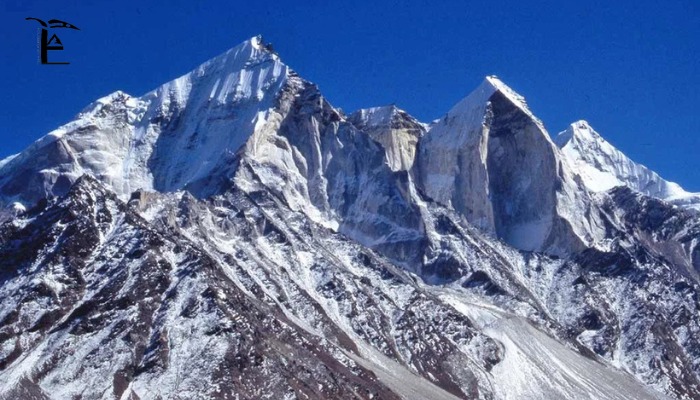
Rising majestically at 6,512 meters (21,365 feet) in the heart of the Garhwal Himalayas, Bhagirathi II stands as a mountaineering gem that perfectly balances technical challenge, aesthetic beauty, and accessibility. Often overshadowed by its more famous and difficult neighbor Bhagirathi I, this spectacular peak offers serious mountaineers an opportunity to test their skills on one of the finest mixed climbing routes in the Indian Himalayas while avoiding the extreme technical demands of its taller sibling.
The Bhagirathi peaks form one of the most striking massifs in the Gangotri region, comprising four distinct summits that dominate the skyline above the sacred Gangotri Glacier. Named after the legendary King Bhagiratha who, according to Hindu mythology, performed intense penance to bring the holy Ganges from heaven to earth, these peaks guard the very source of India’s most sacred river.
Within this family, Bhagirathi II occupies a special position. At 6,512 meters, it’s the second-highest peak in the group after Bhagirathi I (6,856m), yet it presents a markedly different climbing experience. Where Bhagirathi I demands sustained rock climbing at extreme grades and massive commitment, Bhagirathi II offers a more balanced mixed route that challenges mountaineers without requiring world-class rock climbing ability.
The massif stands surrounded by glaciers on all sides: the massive Gangotri Glacier to the west, Vasuki Glacier to the east, Chaturangi Glacier to the north, and Swachhhand Glacier to the south. This glacial embrace creates a dramatic amphitheater of ice and rock that has captivated mountaineers for nearly a century.
Bhagirathi II holds the distinction of being the first peak in the Bhagirathi group to be successfully climbed. In 1933, an Austrian expedition led by Erwin Schneider achieved the first ascent via the southwest ridge, establishing a route that would become the standard approach for future expeditions.
This early ascent came during mountaineering’s golden age of Himalayan exploration, when European climbers were systematically attempting peaks throughout the region. The 1933 team’s success demonstrated that while the Bhagirathi peaks presented serious challenges, they were accessible to well-prepared mountaineers with solid alpine experience.
The achievement of Schneider’s team is particularly impressive considering the equipment and knowledge available in 1933. Without modern synthetic fabrics, lightweight gear, accurate weather forecasting, or detailed topographic maps, these pioneers climbed a technically demanding 6,500-meter peak using raw skill, determination, and the mountaineering techniques developed in the Alps.
Since 1933, Bhagirathi II has seen numerous ascents via various routes, though it remains far less climbed than commercial peaks like Stok Kangri or even neighboring Bhagirathi III. The southwest ridge established by Schneider remains the most popular line, offering a logical and aesthetically pleasing route to the summit.
Various expeditions have pioneered new routes on different faces, including attempts on the imposing north face. However, detailed information about many of these climbs remains scattered, as Bhagirathi II hasn’t received the same documentation and attention as more famous peaks.
What’s clear from expedition reports is that Bhagirathi II consistently rewards climbers with high-quality mountaineering. The climbing is sustained but never desperate, the positions are exposed but not terrifying, and the summit views rank among the finest in the Garhwal Himalaya.
For mountaineers who’ve successfully climbed easier 6,000-meter peaks and aspire to harder objectives, Bhagirathi II represents an ideal next step. The mountain demands:
Technical Competence: Mixed climbing skills combining rock, snow, and ice work, but not at the extreme grades required for Bhagirathi I.
High-Altitude Experience: At 6,512 meters, you’ll experience the challenges of serious altitude without entering the death zone above 8,000 meters.
Mountain Judgment: Route-finding, weather assessment, and risk management all play crucial roles, preparing you for more serious expeditions.
Expedition Skills: The 20+ day commitment teaches logistics, team dynamics, and the patience required for major climbing projects.
Unlike some commercial peaks where hundreds of climbers follow identical routes each season, Bhagirathi II offers an authentic mountaineering experience. You won’t find fixed rope highways or overcrowded camps. Instead, expect:
The Gangotri region ranks among the most beautiful mountain landscapes on Earth. The approach trek passes through diverse ecosystems—from subtropical forests to alpine meadows to stark glacial terrain. Throughout the climb, you’ll have constant views of iconic peaks like Shivling, Meru, Thalay Sagar, and the entire Bhagirathi group.
The sacred geography adds another dimension. You’re climbing above the source of the Ganges, near the pilgrimage site of Gangotri, in a landscape that has spiritual significance for hundreds of millions of people. This context creates a climbing experience that transcends pure physical challenge.
A typical Bhagirathi II expedition requires 22-25 days from Delhi and back, allowing for proper acclimatization, load ferrying, potential weather delays, and the climbing itself.
Day 1: Arrival in Delhi Your expedition begins in India’s capital with equipment checks and final preparations. Evening briefings cover expedition overview, safety protocols, and administrative requirements.
Day 2: Delhi – Indian Mountaineering Foundation The day is devoted to essential bureaucratic procedures. The IMF visit involves detailed briefings on current conditions in the Gangotri region, route information, and formal permit processing. While administrative tasks might seem tedious, IMF staff provide valuable intelligence about recent expeditions, weather patterns, and specific concerns for your climbing period.
Day 3: Delhi to Rishikesh (225 km) to Uttarkashi The journey to the mountains begins with a drive to Rishikesh, the spiritual capital where the Ganges emerges from the Himalayas onto the plains. After brief stops in this yoga and pilgrimage hub, you continue to Uttarkashi at 1,150 meters. This mountain town, home to the Nehru Institute of Mountaineering, serves as your final logistics hub before entering the high mountains.
Day 4: Administrative Day in Uttarkashi Additional permits and permissions are obtained from forest department and district authorities. These formalities, separate from IMF authorization, relate to passage through protected areas and Gangotri National Park. Teams also complete final equipment checks and conduct last purchases of supplies unavailable higher up.
Day 5: Drive to Gangotri The spectacular 90-kilometer drive follows the Bhagirathi River upstream through dramatic gorges and past terraced hillsides. The road winds through pine forests and traditional villages before reaching Gangotri, one of Hinduism’s four Char Dham pilgrimage sites.
Gangotri temple, positioned where goddess Ganga is said to have descended to earth, bustles with pilgrims during the May-October season. The evening allows for acclimatization walks, temple visits (respectful dress required), and mental transition from urban chaos to mountain focus.
Day 6: Gangotri to Bhojbasa (3,800m) – 14 km The first trekking day covers approximately 14 kilometers in 5-6 hours, following the right bank of the Bhagirathi River. The well-maintained trail climbs gradually through the tree line transition zone, passing through increasingly dramatic mountain scenery.
Bhojbasa (“fragrant birch”) sits at the last stunted birch trees before the alpine zone begins. Basic guesthouses and camping areas serve both pilgrims heading to Gaumukh and mountaineering expeditions. Evening views of Bhagirathi peaks and Shivling are spectacular as sunset light illuminates the ice walls.
Day 7: Bhojbasa to Gaumukh to Nandanvan to Base Camp (4,500m) This significant day brings you to the glacier and establishes Base Camp. Starting with the pilgrimage to Gaumukh—the “Cow’s Mouth” where the Bhagirathi River emerges from beneath Gangotri Glacier—you witness the sacred source of the Ganges. Despite glacial retreat in recent decades, the ice tongue remains awe-inspiring.
From Gaumukh, the route continues to Nandanvan (“Garden of Delights”), a popular camping area with views of Shivling’s dramatic pyramid. From here, teams continue to establish Base Camp at approximately 4,500 meters, positioned for optimal access to the Bhagirathi II climbing route. The exact location varies based on current glacier conditions and chosen approach.
These crucial days allow bodies to adapt to altitude while teams organize equipment, scout routes, and conduct training refreshers. Activities include:
Day 8: Rest day at Base Camp. Light activity only—organizing gear, hydrating extensively, and allowing bodies to respond to the altitude gain.
Day 9: Short acclimatization climb to approximately 5,000 meters and return to Base Camp. This “climb high, sleep low” approach stimulates altitude adaptation while maintaining recovery capacity.
Day 10: Technical training and equipment checks. Rope systems, crampon technique, ice axe skills, and team climbing protocols are reviewed and practiced. Expedition leaders also conduct route reconnaissance.
Days 11-12: Load carry to Advanced Base Camp. Teams make carries depositing tents, food, fuel, and climbing equipment at ABC, then return to Base Camp to sleep. This rotation continues the acclimatization process while prepositioning supplies.
Day 13: Rest day at Base Camp. Recovery day allowing bodies to adapt to the load carry efforts.
Day 14: Move to Advanced Base Camp. With gear already positioned, teams make a lighter carry to ABC and establish residence at approximately 5,400 meters. This camp becomes the staging area for the summit push.
Day 15: Acclimatization day at ABC. Short climbs above camp, equipment organization, and monitoring weather forecasts for summit windows.
Day 16: Establish Summit Camp at approximately 5,900-6,100 meters. The location depends on route conditions and team strategy—higher camps reduce summit day effort but expose climbers to more extreme conditions.
Day 17: Rest and preparation at Summit Camp or ABC. Final equipment checks, route discussion, and early sleep before the summit push. Most teams prefer to rest at ABC and move to Summit Camp on summit day eve, minimizing time at extreme altitude.
Summit day begins in darkness, typically between 1:00-3:00 AM. After quick breakfast and final gear checks, teams rope up and begin the climb. The early start ensures optimal snow conditions and allows adequate time for a safe descent in daylight.
The Southwest Ridge Route:
The standard route follows the southwest ridge established in 1933. The climbing combines:
Lower Ridge (5,900-6,100m): Mixed terrain with rock sections interspersed with snow. Technical grade varies from straightforward scrambling to short sections of grade III-IV rock climbing. Proper route-finding is crucial as several variations exist.
Mid Ridge (6,100-6,300m): Increasing exposure as the ridge narrows. Primarily snow and ice climbing with occasional rock steps. Fixed ropes may be installed on steeper or more exposed sections, though many teams climb this section continuously as a rope team.
Upper Ridge (6,300-6,512m): The final section involves sustained snow climbing on increasingly steep slopes. The summit ridge itself can be corniced depending on prevailing wind patterns—requiring careful navigation and conservative decision-making about proximity to the cornice edge.
Summit: The relatively small summit provides 360-degree panoramas including Bhagirathi I looming nearby, the entire Bhagirathi massif, Shivling’s spectacular pyramid, Meru’s shark fin, and countless other peaks stretching to the horizon. On clear days, you can see deep into both the Garhwal and Kumaon Himalayas.
Summit day typically requires 8-12 hours round trip from Summit Camp to summit and back, depending on conditions, team fitness, and route variations. After photographs and brief celebration, the careful descent begins—often the most dangerous phase as fatigue sets in and snow conditions deteriorate through the day.
Day 19: Descend to Advanced Base Camp after summit. Despite exhaustion, teams typically descend to ABC rather than spending another night at Summit Camp, minimizing exposure to extreme altitude.
Day 20: Rest day at ABC followed by descent to Base Camp. Teams dismantle Summit Camp and ABC, carrying equipment down. This day is often physically demanding due to accumulated fatigue, though being at lower altitude helps recovery.
Day 21: Rest and celebration at Base Camp. With the major objective complete, teams take time to recover, organize gear, and celebrate success (or process a unsuccessful summit attempt).
Day 22: Base Camp to Nandanvan or Bhojbasa. The trek out begins, retracing the approach route.
Day 23: Continue to Gangotri. Reaching the road head and showering after weeks in the mountains is a memorable transition.
Day 24: Drive to Uttarkashi or Rishikesh. The long drive provides time for reflection and team bonding over shared experiences.
Day 25: Return to Delhi, final debriefing, and departures. Many teams visit the IMF office to provide route information and condition updates for future expeditions.
While Bhagirathi II doesn’t demand the sustained difficult rock climbing of Bhagirathi I, solid rock skills are essential:
Grade III-IV Climbing: Comfortable climbing and downclimbing at these grades, occasionally with heavy packs and in crampons.
Mixed Terrain: Transitioning between rock, snow, and ice without losing efficiency or security.
Rope Management: Understanding various rope team configurations and belay systems for different terrain types.
The majority of the route involves snow and ice work:
Crampon Technique: Proficient on moderate slopes and competent front-pointing on steeper sections.
Ice Axe Use: Proper technique for self-arrest, using axes for balance and support, and understanding anchor placements.
Snow Assessment: Recognizing avalanche terrain, understanding snow conditions, and evaluating cornices.
Glacier Travel: Comfortable with roped glacier travel, crevasse recognition, and basic rescue techniques.
At 6,512 meters, Bhagirathi II pushes into serious altitude:
Acclimatization Understanding: Recognizing altitude sickness symptoms in yourself and teammates.
Altitude Performance: Maintaining technical precision despite reduced oxygen and fatigue.
Prior Experience: Previous successful climbs to 5,500-6,000 meters provide valuable preparation.
Cardiovascular Endurance: 3-4 months of consistent training for sustained effort over 10+ hour days.
Strength: Leg strength for step-kicking and climbing, upper body strength for technical sections, core stability for maintaining balance with packs.
Endurance Training: Practice hikes with 12-15 kg packs, progressively increasing distance and elevation gain.
Recovery Capacity: Ability to bounce back from hard days at altitude with limited food and disrupted sleep.
Climbing Hardware:
Trekking/Approach Gear:
Base Layers:
Mid Layers:
Shell Layers:
High-Altitude/Summit:
Extremities:
Eye Protection:
Advantages:
Disadvantages:
Best For: Teams preferring warmer conditions and those with less extreme altitude experience.
Advantages:
Disadvantages:
Best For: Experienced mountaineers comfortable with cold conditions and hard ice.
Generally Not Recommended: Heavy precipitation, poor visibility, high avalanche risk, unstable weather. Success rates are very low, and objective hazards are significantly elevated.
Bhagirathi II expeditions typically cost ₹50,000 to ₹85,000 ($600-$1,000) per person through organized operators, with variation based on:
Included Services:
Additional Costs:
Required Permits:
Processing takes 4-8 weeks minimum. Reputable operators handle paperwork, but independent expeditions must navigate considerable bureaucracy.
AMS Prevention:
HACE and HAPE Awareness:
Avalanches: While routes are chosen to minimize exposure, assessment skills are crucial. Early morning starts when snow is frozen reduce risk.
Crevasses: Glacier sections demand roped travel and constant vigilance. Hidden crevasses beneath snow bridges pose serious danger.
Rockfall: Climbing during cold hours when rocks are frozen in place reduces risk. Helmets are mandatory.
Weather: Himalayan weather changes rapidly. Conservative decision-making and willingness to turn back save lives.
Cornices: Summit ridge may be corniced. Stay well back from edges, test snow carefully, and don’t assume visible edge is true edge.
Helicopter Evacuation: Possible from Base Camp in good weather. Higher elevations are beyond helicopter operational limits—teams must self-rescue to reachable locations.
Communication: Satellite phones provide contact for weather updates and emergency coordination, though mountain terrain can create dead zones.
Insurance: Comprehensive coverage including high-altitude mountaineering and helicopter evacuation is mandatory. Verify policy covers climbing above 6,000 meters, as many exclude this.
Self-Rescue Capability: Teams must be capable of basic rescue operations, crevasse rescue, and evacuating injured members to Base Camp.
This expedition suits:
This expedition is inappropriate for:
Waste Management: All waste, including human waste from higher camps, must be carried out. Use biodegradable bags designed for this purpose at advanced camps.
Minimal Impact: Stay on established trails, use designated campsites, minimize campfire use (often prohibited), avoid disturbing vegetation and wildlife.
Equipment Removal: All fixed ropes, anchors, and gear must be removed during descent. Leave routes clean for future parties.
Sacred Geography: The Gangotri region holds profound spiritual significance. Show respect through behavior, dress, and interactions.
Temple Etiquette: Remove footwear before entering Gangotri temple, dress modestly, maintain quiet behavior, and don’t photograph inside without permission.
River Sanctity: The Bhagirathi/Ganges is sacred. Don’t contaminate water sources, avoid washing with soap in streams, and treat the river with reverence.
Pilgrim Consideration: During pilgrimage season, be courteous to pilgrims on the trail, many undertaking journeys of deep personal and spiritual significance.
The Gangotri Glacier’s dramatic retreat—over 850 meters in recent decades—provides visible evidence of climate change. As mountaineers, we should:
In an era of commercialized Himalayan mountaineering, Bhagirathi II offers something increasingly rare: an authentic mountain experience on a beautiful peak without crowds, where success depends on your skills rather than the strength of support teams.
The climbing quality is consistently high—never desperate but always engaging. The positions are spectacular without being terrifying. The summit views rival anything in the Garhwal Himalaya. And throughout, you’re climbing in a landscape of profound spiritual significance, above the source of the Ganges, in sight of some of the world’s most beautiful mountains.
For mountaineers progressing toward more serious objectives, Bhagirathi II provides ideal preparation. The altitude pushes you into the serious zone above 6,500 meters. The technical demands require competence across mixed terrain. The expedition length teaches patience and logistics management. The commitment develops judgment and decision-making under pressure.
Success on Bhagirathi II demonstrates readiness for harder peaks—whether Bhagirathi I, other technical Garhwal summits, or expeditions in the greater ranges.
Bhagirathi II stands as a hidden jewel in the Gangotri region—a peak that doesn’t demand the news-making difficulty of Bhagirathi I or the fame of Shivling, but offers mountaineering of exceptional quality and beauty. It’s a peak that rewards skill, respects preparation, and provides an experience that goes beyond the summit itself.
The combination of technical mixed climbing, serious altitude, spectacular setting, rich cultural context, and relative solitude creates something special. This isn’t a peak you climb to check a box or post on social media. It’s a mountain you climb for the pure joy of mountaineering—for the movement over mixed terrain, for the rope work with partners, for the sunrise views from high camps, for testing yourself against a worthy challenge.
The southwest ridge rises through clouds, ice, and rock toward a summit that has beckoned climbers since 1933. The question isn’t whether Bhagirathi II will continue standing as a testament to Himalayan beauty—it will. The question is whether you’ll answer its call.
Are you ready to discover the hidden jewel of Gangotri?