Black Peak vs Friendship Peak vs Yunam Peak
Black Peak vs Friendship Peak vs Yunam Peak
16
Jul

Standing on the summit of your first Himalayan expedition peak is a milestone that countless trekkers dream of achieving. But the journey from trekking to mountaineering in India is much bigger than simply climbing to a higher altitude. It demands preparation, patience, technical awareness, and, most importantly, choosing the right mountain.
For many aspiring climbers, the confusion begins with three popular names—Black Peak Expedition, Friendship Peak Expedition, and Yunam Peak Expedition. Each offers breathtaking Himalayan landscapes, demanding summit days, and the unforgettable experience of climbing above the tree line into the world of snow, glaciers, and high-altitude mountaineering. Yet these expeditions are vastly different in terms of terrain, altitude, technical difficulty, glacier travel, and the skills they demand.
One of the biggest mistakes beginners make is choosing an expedition based solely on social media photos or the summit height. In reality, the best Himalayan expedition for a beginner is not necessarily the highest or the most popular—it is the one that matches your current fitness, trekking experience, technical ability, and long-term mountaineering goals.
In this guide, we'll compare the Black Peak Expedition, Friendship Peak Expedition, and Yunam Peak Expedition beyond just numbers. Instead of focusing only on itineraries, we'll explore what each mountain teaches, who it is best suited for, the level of preparation required, and how to choose your first Himalayan expedition wisely. If you're planning your first high-altitude expedition or looking for the ideal peak climbing experience in India, this guide will help you make an informed decision before taking your first step toward the summit.
Before comparing Black Peak vs Friendship Peak vs Yunam Peak, there's a more important question to answer: Are you ready for a Himalayan expedition?
Many climbers search for the easiest 6,000-meter peak in India, but very few pause to evaluate their own experience. A successful expedition depends as much on the climber as it does on the mountain. The strongest athlete may struggle with altitude, while a moderately fit trekker with good endurance and patience may perform exceptionally well.
Ask yourself a few honest questions. Have you completed at least one or two high-altitude Himalayan treks? Are you comfortable walking for eight to ten hours a day while carrying a backpack? Have you ever slept above 4,000 meters? Have you experienced snow, glacier terrain, or used equipment like crampons, gaiters, or a climbing harness? If the answer to most of these questions is "no," your preparation may need to come before your summit.
Another important factor is understanding why you want to climb. Some people want to learn the fundamentals of alpine climbing in India, while others simply want to experience standing above 6,000 meters. Some climbers enjoy technical challenges involving ropes and glaciers, whereas others are more interested in testing their endurance at extreme altitude. Your objective will largely determine whether the Friendship Peak Expedition, Yunam Peak Expedition (an introductory 5000+ peak), or Black Peak Expedition is the right choice.
Remember, mountaineering is not about proving how tough you are—it is about making good decisions in difficult environments. Choosing the right mountain is often the first sign of becoming a responsible mountaineer.
ThinAir Insight: In the Himalayas, your first expedition shouldn't be the mountain that impresses others. It should be the one that prepares you for every expedition that follows.
Although all three expeditions take you above 6,000 meters, they offer completely different experiences. Understanding these differences can help you select the best peak for beginners or decide which challenge aligns with your mountaineering journey.
|
Feature |
Black Peak Expedition |
Friendship Peak Expedition |
Yunam Peak Expedition |
|
Approx. Altitude |
6,387 m |
5,289 m* (Often chosen before 6,000 m expeditions) |
6,111 m |
|
State |
Uttarakhand |
Himachal Pradesh |
Himachal Pradesh |
|
Difficulty |
Difficult |
Moderate to Difficult |
Moderate |
|
Technical Climbing |
High |
Moderate |
Low to Moderate |
|
Glacier Travel |
Extensive |
Yes |
Limited |
|
Main Challenge |
Technical terrain & endurance |
Learning mountaineering skills |
High altitude & thin air |
|
Best For |
Experienced trekkers |
First-time expedition aspirants |
Strong trekkers aiming for their first 6,000 m summit |
|
Ideal Season |
May–June & September–October |
May–June & September–October |
June–September |
While Black Peak is the most demanding of the three, requiring greater endurance and confidence on glacier terrain, Friendship Peak is widely regarded as one of the best mountains for learning the fundamentals of mountaineering in India. It introduces climbers to rope techniques, glacier movement, and snow travel in a controlled expedition environment.
Yunam Peak, on the other hand, presents a different kind of challenge. It is often considered less technical than Black Peak, but its extreme altitude means that acclimatization becomes the deciding factor. Many climbers discover that breathing at over 6,000 meters can be more difficult than negotiating technical terrain.
Instead of asking which expedition is the hardest, ask a better question: Which expedition will help you grow as a mountaineer? The answer depends on your experience, fitness, and the skills you hope to gain. The right Himalayan expedition is not always the one with the highest summit—it is the one that safely builds your confidence for the next mountain.
Note: Although Friendship Peak is below 6,000 meters, it is intentionally included in this comparison because it is widely recognized as one of the best stepping stones for climbers preparing for more demanding 6,000-meter expeditions such as Yunam Peak and Black Peak. This progression is why many experienced mountaineers recommend Friendship Peak as a first expedition.
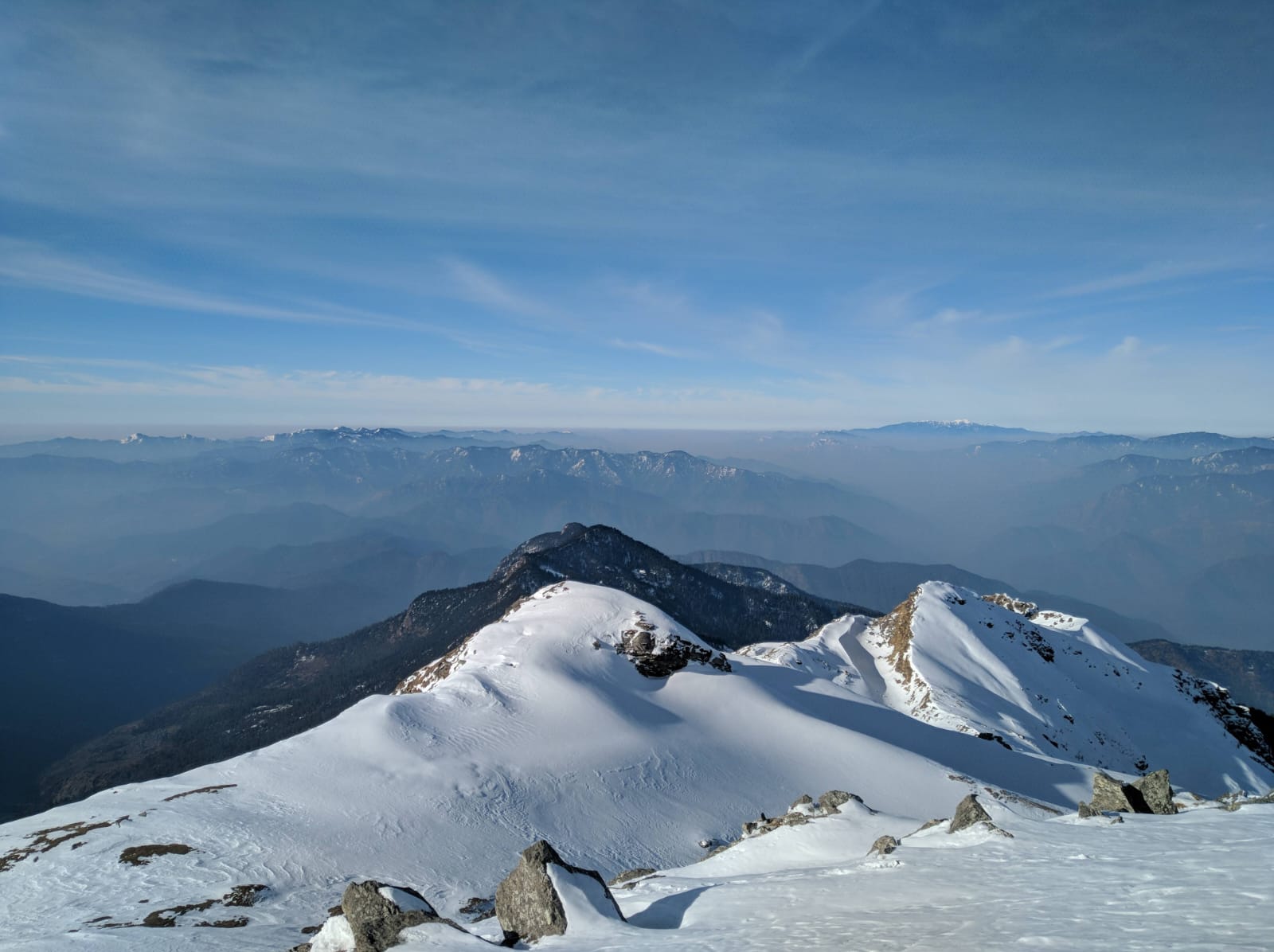
Among the most respected Himalayan expeditions in India, the Black Peak Expedition (Kala Nag, 6,387 m) is not simply about reaching a summit—it is about experiencing what a true high-altitude expedition feels like. Located in the Govind Pashu Vihar National Park of Uttarakhand, Black Peak demands physical endurance, mental resilience, and the ability to remain focused during long days in a constantly changing mountain environment.
Unlike expeditions where the primary challenge is altitude alone, Black Peak combines glacier travel, snow-covered slopes, moraine sections, and a demanding summit push. Climbers often spend several days establishing camps, acclimatizing, and learning to adapt to unpredictable Himalayan weather. This makes it one of the most rewarding peak climbing experiences in India for those ready to move beyond trekking.
The Black Peak Expedition is best suited for trekkers who have already completed challenging Himalayan treks and are looking for their next step in mountaineering in India. While prior technical climbing experience is beneficial, what matters most is excellent cardiovascular fitness, patience, and the willingness to spend extended periods in remote alpine terrain.
If your goal is simply to tick off a 6,000-meter peak in India, Black Peak may not be the ideal starting point. However, if your ambition is to build confidence for bigger Himalayan objectives while learning the discipline required for serious high-altitude expeditions, Black Peak offers an unforgettable experience. It is a mountain that rewards preparation, humility, and perseverance far more than speed, making it a natural choice for climbers seeking a genuine Himalayan challenge.
Although Friendship Peak stands at 5,289 meters, it remains one of the most recommended expeditions for anyone beginning their journey into mountaineering in India. Rather than focusing only on altitude, the Friendship Peak Expedition introduces climbers to the essential skills that form the foundation of future Himalayan expeditions.
This expedition typically includes glacier travel, movement on snow, the use of crampons, climbing harnesses, fixed ropes, and basic mountaineering techniques under the guidance of experienced expedition leaders. For many climbers, Friendship Peak becomes their first real exposure to the technical side of alpine climbing in India, making it far more educational than a traditional trek.
The mountain strikes an excellent balance between challenge and learning. It demands good physical fitness and determination but remains achievable for trekkers who have previously completed high-altitude Himalayan treks. This combination is why Friendship Peak is often recommended before attempting more demanding objectives such as the Yunam Peak Expedition or the Black Peak Expedition.
One of Friendship Peak's greatest strengths is the confidence it builds. Climbers return not only with a successful summit but also with a better understanding of glacier safety, rope management, expedition discipline, and high-altitude decision-making. These are skills that cannot be learned from books or videos—they are developed through experience in the mountains.
If your goal is to progress gradually from trekking to peak climbing in India, the Friendship Peak Expedition is less about conquering a mountain and more about becoming a safer, smarter, and more capable mountaineer. In many ways, it is the classroom where future Himalayan climbers begin their journey.
The Yunam Peak Expedition offers a unique experience among 6,000-meter peaks in India. Rising to 6,111 meters in the cold desert of Lahaul, Himachal Pradesh, Yunam is often considered less technical than Black Peak, yet many climbers underestimate its greatest challenge—altitude.
Unlike heavily glaciated expeditions, Yunam involves comparatively straightforward terrain during much of the ascent. However, as climbers move above 5,500 meters, the thin air becomes the defining obstacle. Every step requires greater effort, and proper acclimatization becomes more important than technical climbing skills. Success on Yunam depends on pacing, hydration, and the body's ability to adapt to extreme elevation.
The surrounding landscape is equally remarkable. Instead of dense forests and lush valleys, climbers traverse the stark beauty of the Trans-Himalayan cold desert, where vast open mountains, dry ridgelines, and endless skies create an entirely different expedition experience from the greener Himalayas of Uttarakhand.
The Yunam Peak Expedition is an excellent choice for experienced trekkers looking to achieve their first 6,000-meter summit before progressing to more technical Himalayan expeditions. It teaches one of the most valuable lessons in high-altitude mountaineering: above a certain elevation, the mountain is not your greatest challenge—your body's ability to function in thin air is. For climbers seeking to understand the true meaning of altitude, Yunam is one of the best classrooms the Himalayas can offer.
Choosing between the Black Peak Expedition, Friendship Peak Expedition, and Yunam Peak Expedition is not about finding the "best" mountain—it's about finding the one that matches your current experience, mindset, and long-term goals in mountaineering in India.
If you enjoy learning new skills and want a structured introduction to peak climbing in India, the Friendship Peak Expedition is the ideal starting point. It offers the opportunity to experience glacier travel, rope techniques, and snow climbing while building the confidence needed for future Himalayan expeditions. Think of Friendship Peak as the bridge between trekking and technical mountaineering.
If you've already completed several high-altitude treks and your dream is to stand on your first 6,000-meter peak in India, the Yunam Peak Expedition is an excellent choice. The terrain is comparatively less technical, allowing you to focus on acclimatization, endurance, and understanding how your body performs above 6,000 meters. It is a true test of altitude rather than advanced climbing techniques.
The Black Peak Expedition is best suited for those seeking a more demanding challenge. If you're comfortable with long summit days, glacier terrain, and physically demanding expeditions, Black Peak offers the complete Himalayan experience. It is less about collecting another summit and more about developing the discipline and resilience expected from serious mountaineers.
Ultimately, your first Himalayan expedition should not be chosen because someone else completed it. Choose the mountain that prepares you for the next one. In mountaineering, steady progression always leads to greater success than chasing the highest summit too early.
Most unsuccessful high-altitude expeditions don't fail because the mountain is too difficult—they fail because of avoidable mistakes made before reaching the summit.
The most common mistake is choosing an expedition based on social media rather than personal experience. A beautiful summit photograph never reveals the months of training, acclimatization, and preparation behind it. Another frequent error is underestimating altitude. Even experienced trekkers can struggle above 5,500 meters if they ignore hydration, nutrition, and proper acclimatization.
Many first-time climbers also invest heavily in expensive gear while neglecting fitness. The latest jacket or boots cannot replace cardiovascular endurance and mental resilience. Similarly, carrying an overloaded backpack often leads to unnecessary fatigue during long summit days.
Perhaps the biggest mistake is becoming completely focused on reaching the summit. In mountaineering in India, turning back because of weather, health, or safety concerns is never a failure—it's a sign of good judgment. Every experienced mountaineer understands that the mountain will always remain, offering another opportunity when conditions are right.
The goal of your first Himalayan expedition should not simply be to stand on the summit, but to return with the knowledge, confidence, and experience to climb many more mountains in the future.
Preparing for your first 6,000-meter expedition begins well before you arrive in the Himalayas. Around three months before departure, focus on building cardiovascular endurance through running, cycling, stair climbing, and long weekend hikes. Strength training for your legs, core, and shoulders should become part of your weekly routine.
During the final month, train with a loaded backpack, increase your hiking distance, and if possible, complete a high-altitude trek to improve acclimatization and confidence. This is also the ideal time to familiarize yourself with essential mountaineering equipment.
In the last week before the expedition, reduce the intensity of your workouts, prioritize quality sleep, stay well-hydrated, and double-check your gear. Arriving fresh and well-rested is far more beneficial than trying to gain last-minute fitness. Remember, successful peak climbing in India is built through consistent preparation—not rushed training in the days before the expedition.
1. Which is the best first Himalayan expedition?
For most beginners, the Friendship Peak Expedition is the best introduction to mountaineering in India because it combines glacier travel, rope work, and high-altitude experience in a controlled environment.
2. Which is the easiest 6,000-meter peak among these?
The Yunam Peak Expedition is generally considered less technical than the Black Peak Expedition, but its altitude of 6,111 meters makes acclimatization the biggest challenge.
3. Is Black Peak suitable for beginners?
The Black Peak Expedition is better suited for experienced trekkers or climbers who have already completed high-altitude Himalayan treks and are looking for a more demanding Himalayan expedition.
4. Do I need a mountaineering course before joining an expedition?
A formal course is not mandatory for every expedition, but basic knowledge of mountain safety, fitness, and equipment significantly improves your confidence and overall experience.
5. Which expedition teaches the most technical skills?
Among the three, the Friendship Peak Expedition provides the best introduction to technical peak climbing in India, including glacier movement and rope techniques.
6. Which expedition should I choose after completing Himalayan treks?
If you've successfully completed multiple treks above 4,500 meters, Yunam Peak is an excellent first 6,000-meter peak in India. If your goal is to build technical mountaineering skills, Friendship Peak is the smarter progression.
Choosing between the Black Peak Expedition, Friendship Peak Expedition, and Yunam Peak Expedition isn't about finding the most famous mountain—it's about finding the right mountain for where you are today. Every expedition teaches something different. Friendship Peak builds technical confidence, Yunam Peak teaches respect for altitude, and Black Peak tests the complete skill set of an aspiring mountaineer.
The best climbers aren't the ones who climb the highest mountain first—they're the ones who progress steadily, gain experience, and return safely to climb again. Your first Himalayan expedition should be the beginning of a lifelong journey in the mountains, not just a one-time achievement.
At Thin Air Expedition, we believe every climber deserves honest guidance. Instead of recommending the toughest expedition, we help you choose the one that matches your fitness, experience, and long-term mountaineering goals. Our experienced leaders focus on safe expedition practices, proper acclimatization, technical learning, and responsible mountain travel, ensuring that every climb becomes a valuable learning experience.
Whether you're preparing for your first 6,000-meter peak in India or planning your next major Himalayan expedition, Thin Air Expedition is committed to helping you climb smarter, safer, and with greater confidence. Because the true measure of a mountaineer isn't the number of summits conquered—it's the knowledge, respect, and resilience gained with every step in the Himalayas.