Brahmatal Trek The Winter That Does not Close
Brahmatal Trek The Winter That Does not Close

14
Jul

By a ThinAirExpedition trek writer, built from field data supplied by our Lohajung-based trek leaders.
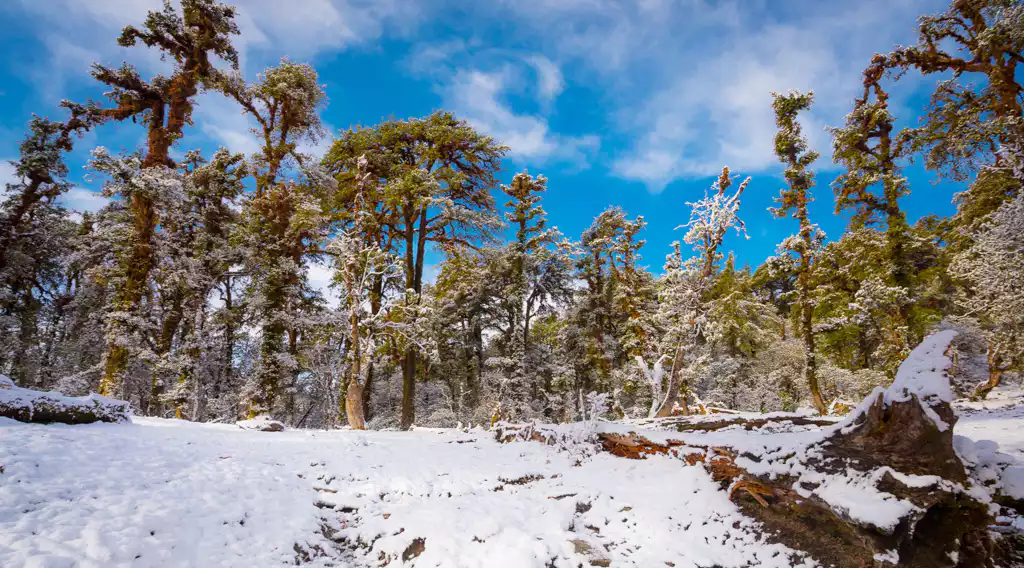
January and February shut most of the Himalayas down. Snow blocks the high trails, agencies pause departures, and the mountains go quiet in a way that has nothing to do with peace — it's just inaccessible. Brahmatal is one of the rare exceptions. While Kedarkantha's crowds thin and other winter treks close their books, Brahmatal stays open, and that fact alone changes who ends up walking it: fewer people, deeper solitude, and a trail that feels genuinely undiscovered even though it isn't, technically, a secret.
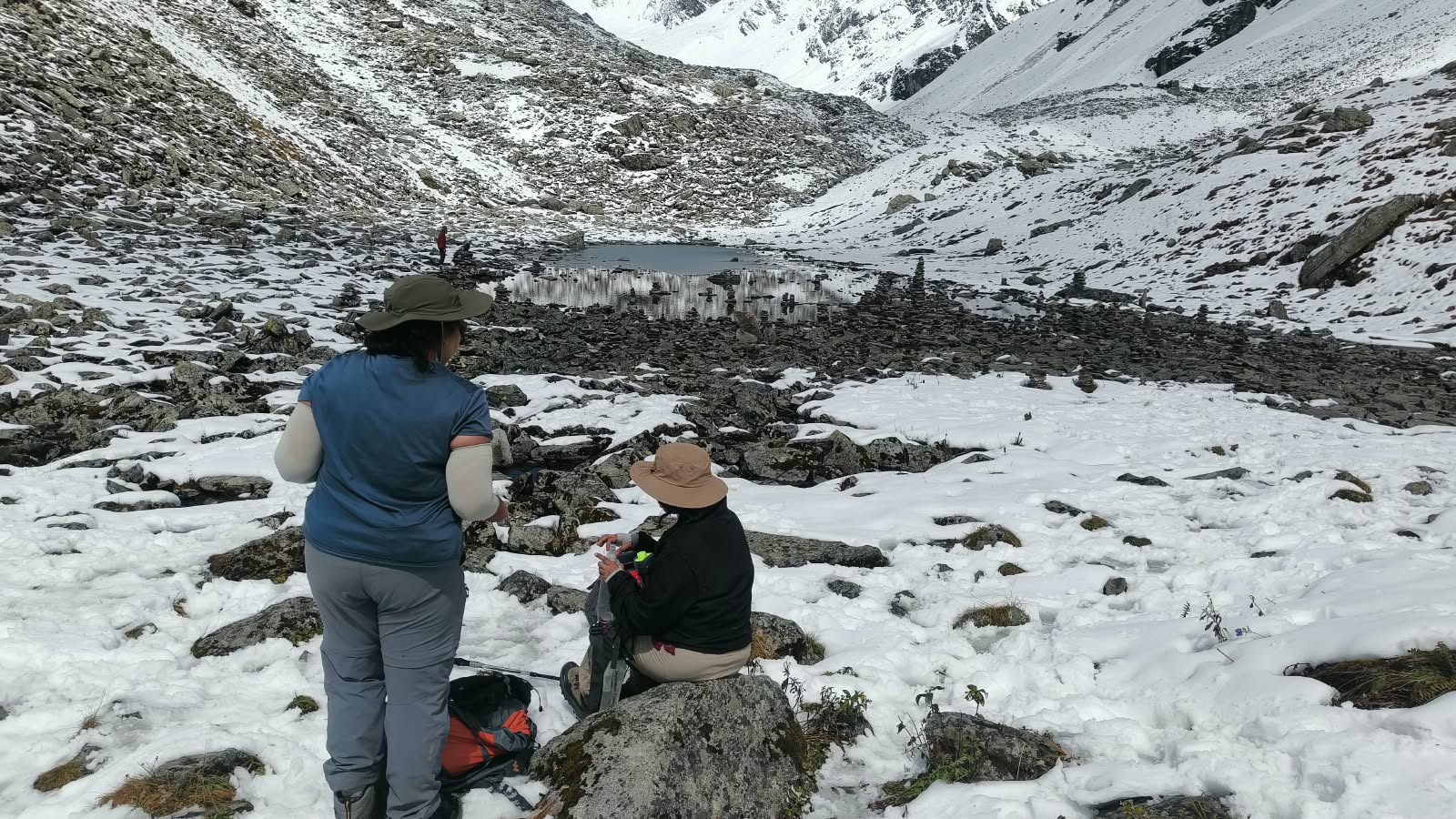
I went in the dead of winter, alone. Not for the mythology, though it's there if you want it — the lake is named for Brahma, who's said to have meditated on this exact spot, and Lohajung itself is named for a battle Parvati is said to have fought here against a demon. What actually got me was simpler: a frozen lake at 12,250 feet with a small temple beside it, reached by a trail with almost no one else on it. Stoicism has a phrase for what that kind of solitude asks of you — the dichotomy of control. You can't control whether the weather clears for the Trishul and Nanda Ghunti view from the summit ridge, or whether the snow is knee-deep this particular week. You can control your own pace, and whether four days of near-silence unsettle you or steady you.
For most people, it steadies you. There's a specific kind of clarity that shows up around day three, once the novelty of the cold wears off and what's left is just walking, breathing, and a lake that doesn't care whether you showed up.
Most winter treks in Uttarakhand are seasonal in a narrow sense — open for a window, then closed once the snow gets serious. Brahmatal inverts that logic. December and January, when Kedarkantha gets genuinely crowded and higher routes shut down entirely, are Brahmatal's actual peak season. The trek is short enough and low enough in absolute altitude (12,250 ft) that deep snow doesn't close it the way it closes routes reaching 14,000–15,000 ft — it just makes it more dramatic to walk.
That combination — open in the depth of winter, but rarely crowded — is unusual enough that it's worth stating plainly rather than burying in scenery description. If solitude at altitude is the actual goal, most of the popular winter alternatives won't give it to you nearly as reliably as this one does.
Brahmatal takes its name from Brahma, the creator god in Hindu cosmology, paired with ‘tal’ — lake. Local legend holds that Brahma meditated at this exact spot, which is why the frozen lake carries a quiet reverence beyond its scenery. Lohajung, the base village, has its own separate legend: that Parvati fought a demon named Lohasur here, and the village takes its name from that battle. Neither claim is something a trek company can verify — they're presented here as what they are, local belief passed down through the region, not historical fact — but they're part of why this particular trail feels different from a purely scenic winter walk.
|
Duration |
6 days |
|
Trek distance |
~22 km |
|
Base camp |
Lohajung, Chamoli district, Uttarakhand |
|
Max altitude |
12,250 ft (~3,735 m) at Brahmatal Top |
|
Difficulty |
Easy–Moderate |
|
Group size |
6–12 |
|
Signature season |
December–February (winter/snow); accessible October through spring |
|
Pickup point |
Rishikesh (some listings show Dehradun's Prince Chowk — confirm at booking) |
|
Trek fee |
₹9,500 + 5% GST (optional: ₹250 trek insurance, ₹400/day backpack offloading) |
|
Suitable age |
11–60 years |
The drive to Lohajung is roughly 250 km and 10 hours, passing through three of the five sacred confluences of the Ganga — Devprayag, Rudraprayag, and Karnaprayag — before climbing toward Nanda Ghunti's silhouette. If you time it right, the descent into Lohajung comes with a genuinely good sunset over the peak. The nearest railhead is Kathgodam, roughly 210 km away; the nearest airport is Pantnagar, around 260 km.
Lohajung itself has a small market for last-minute gear or supplies, and a guesthouse stay is included on the first and last nights.
Brahmatal crosses a forest section, so an entry permit is mandatory. If you're booking through an agency, permit processing is bundled into the trek fee; going independently means contacting the forest department at Lohajung or the district headquarters in Chamoli directly, with a valid ID and its soft copy ready.
Fitness prep: start conditioning 3–4 weeks out — stair climbs, brisk walking, and basic strength and flexibility work all transfer directly. At 12,250 ft, altitude symptoms like headache, nausea, or breathlessness are a real possibility regardless of fitness level; the actual defense is steady pace and consistent (not excessive) hydration, not speed.
Worth taking seriously: mountain weather here can turn without warning — whiteouts, sudden snowstorms, and freezing temperatures are all possible even outside the coldest months, and remote location means evacuation options are limited. This isn't a reason to avoid the trek; it's the reason a trek leader and a basic first-aid kit (AMS medication, paracetamol, diarrhoea medicine, bandages) aren't optional extras.
A few operating habits matter more than they sound like they should: drink water consistently rather than in large amounts at once, avoid rushing to gain altitude even if the group ahead is moving faster, and dress to avoid sweating through your base layer — wet clothing at altitude is a genuine hypothermia risk, not just a discomfort. Carry a spare pair of socks and a spare set of base-layer innerwear for exactly this reason.
The drive traces the Ganga through Devprayag, Rudraprayag, and Karnaprayag before climbing toward Lohajung, named for a legendary battle between Parvati and a demon called Lohasur. Check into the guesthouse, get to know the group over dinner, and use the small local market for anything you forgot.
An easy first trekking day on a well-worn trail past Mundoli village, following water pipes toward a cluster of homes. From February onward, rhododendron trees along this stretch turn genuinely vivid; in winter, the same trees carry snow instead. Camp at Gujreni among silver oak, maple, and rhododendron — keep an eye out for Himalayan bird species specific to this stretch: the solitary snipe, Asian barred owlet, Himalayan woodpecker, and blue-fronted redstart.
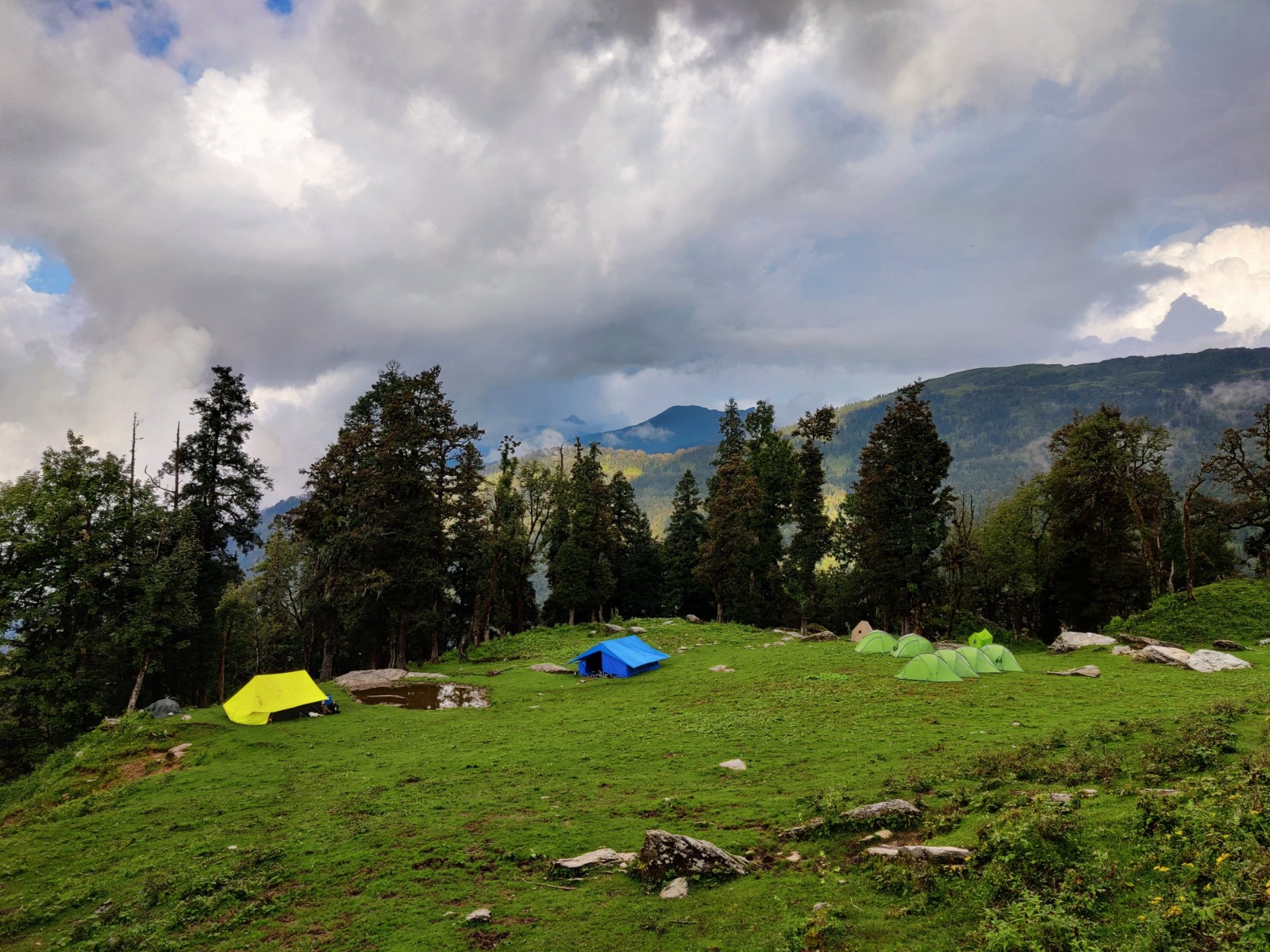
A shorter day through oak and rhododendron forest that thins into open meadow as you climb, with Trishul and Nanda Ghunti visible for the first time in full. Tilandi camp sits well clear of tree cover — genuinely good stargazing here, away from any light pollution.
The longest and most demanding day. An early start takes you along a ridge with the Roopkund trail visible in the distance, up to Jhandi Top, then a further ascent to Brahmatal Top itself — the trek's highest point. From here, descend to Brahmatal Lake, a small, frozen alpine lake with a modest temple beside it. Rest here before the final push to Brahmatal campsite, where sunsets over the surrounding ranges are, by local account, not guaranteed but worth the wait when they happen.
A long descent back through Jhandi Top and a final stretch of rhododendron forest, passing a shepherd settlement called Chhanni before reaching Lohajung. Rest, eat, and let the last of the altitude fade out of your legs.
Breakfast at the guesthouse, then the return drive, arriving in Rishikesh by early evening. Build in buffer if you have same-day onward travel.
Trek fee: ₹9,500 + 5% GST.
Optional add-ons: ₹250 trek insurance, ₹400/bag/day backpack offloading (up to 12 kg). Single-sharing base-camp accommodation: +₹5,000/person for the trek.
Included:
• Shared transport from Prince Chowk/Rishikesh pickup to base camp and back (non-AC, for mountain-road safety)
• 1-night guesthouse stay at Lohajung on arrival and return; twin-sharing sub-zero-rated tents on trek nights
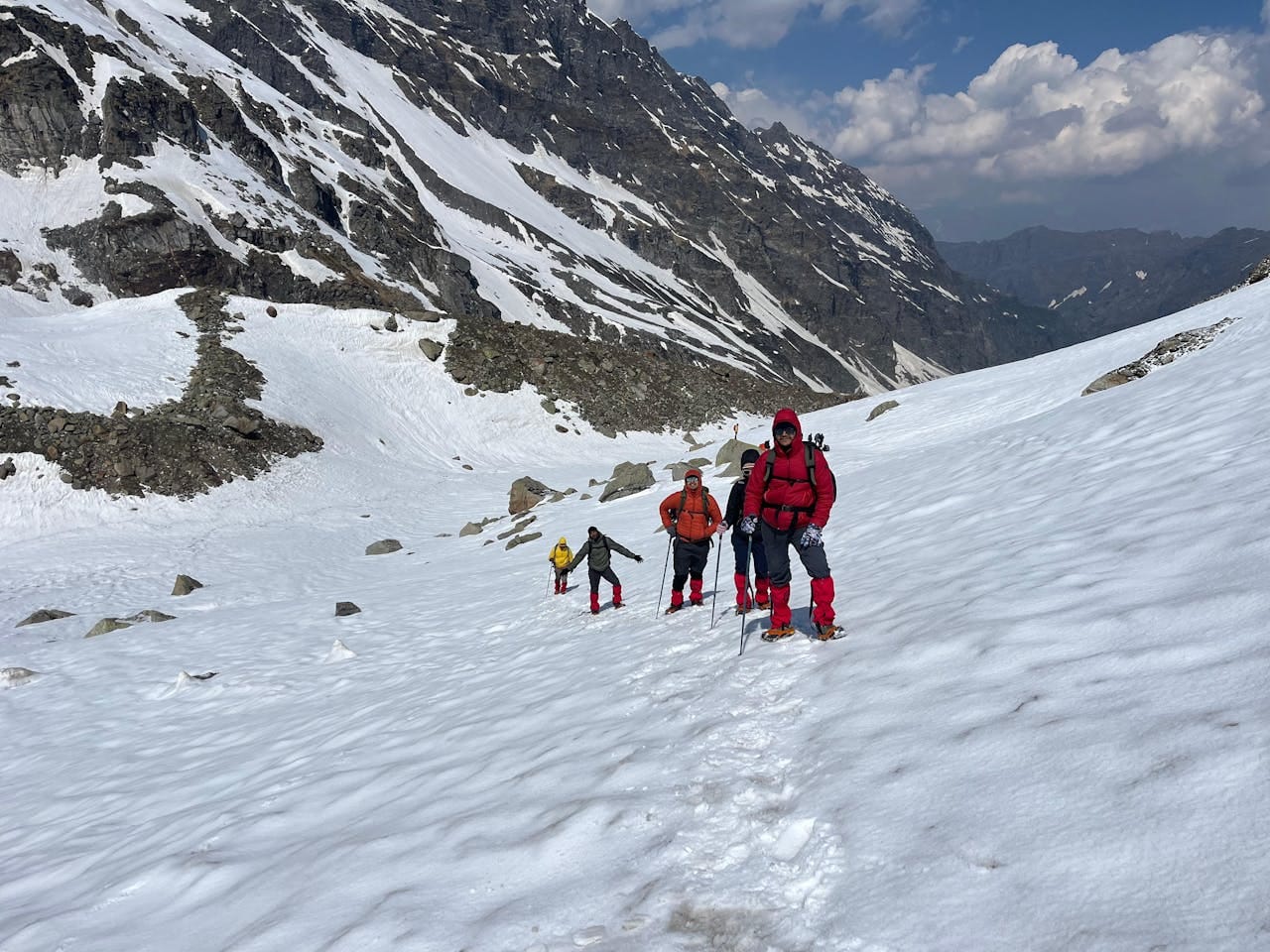
• Sleeping bags, foam mattresses, microspikes, gaiters, helmets, and ice axes where required
• Extensive medical kit, high-altitude first-aid trained crew, and oxygen cylinders checked before every trek
• Forest permits and camping fees (Indian nationals; additional charges apply for foreign nationals)
• Vegetarian meals with eggs — breakfast, packed lunch, evening snacks, dinner; Jain and vegan on request
• Certified trek leader (AMC/BMC/NIM-trained), local guides, cook, helpers, porters and mules for common equipment
• Free cloakroom facility at base camp for extra luggage
Not included:
• Travel from your hometown to the pickup point
• Personal expenses, personal gear rental, and mandatory trek insurance (arranged separately)
• Backpack offloading and buffer-day costs if used
Winter (December–February) — the signature season: this is the actual differentiator — Brahmatal is one of the few Himalayan treks that stays accessible when most others close. Deep snow, a frozen lake, and genuinely few other trekkers on the trail.
Spring (March–May): rhododendrons in bloom against melting snow — arguably the most photogenic window, with easier underfoot conditions than winter.
Autumn (September–November): clear skies, crisp air, and fewer crowds than winter — the best window if snow isn't the priority.
Monsoon is not recommended — the trail becomes slippery with real landslide risk, and the trek is effectively closed during this window.
The lower trail runs through oak, maple, and rhododendron forest, which turns genuinely vivid through February and March before thinning into alpine meadow near Tilandi. Bird species specific to this stretch include the solitary snipe, Asian barred owlet, Himalayan woodpecker, and blue-fronted redstart — distinctive enough that birdwatchers treat Brahmatal as a real destination in its own right, not just a means to the lake.
• High-ankle waterproof trekking boots with good grip, plus microspikes for snow sections
• Thermal wear, fleece or down jacket, waterproof windcheater, woollen socks, gloves, warm cap
• Headlamp with spare batteries, water bottle, trekking poles, sunscreen, UV sunglasses
• Personal medication and a basic first-aid kit if trekking with awareness of pre-existing conditions
• Government ID (original) for permit processing
The same operating principles that shape every ThinAir batch apply here: low-noise trekking by design, so birdsong and wind stay audible instead of being drowned out by group chatter; waste carried out rather than left behind; and an expectation that trekkers carry their own load where possible, which builds independence rather than dependence on the support crew. None of this is unique to Brahmatal — it's the operational default across every ThinAir trek, and part of why solo trekkers consistently report feeling genuinely looked after rather than just logistically managed. On a trek this quiet, that operating discipline matters more than usual — there's no crowd noise to mask a poorly run camp, and nowhere to hide a badly paced day. What you experience is close to exactly what the operation actually is, for better or worse.
All three are classic Uttarakhand winter-adjacent treks, but they solve for different things:
• Brahmatal trek: the only one of the three that stays genuinely accessible through the depth of winter (Jan–Feb) when most other treks close entirely — the pick for real solitude and a lake at altitude.
• Kedarkantha trek: a single defined summit push, more crowded, better for trekkers who want a clean peak-and-photo moment.
• Har Ki Dun: a gentler valley trek prioritizing village culture and river scenery over high-altitude drama.
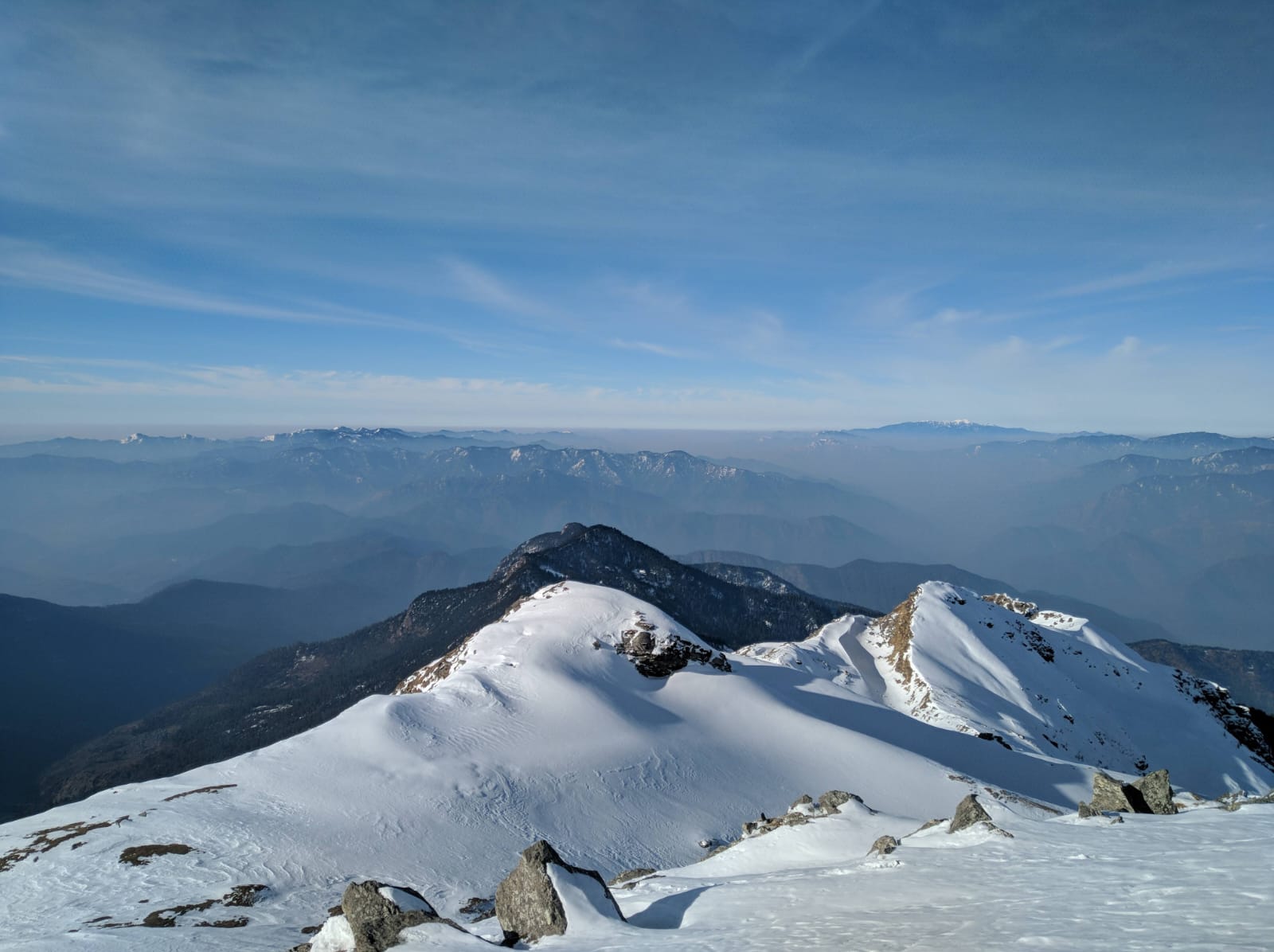
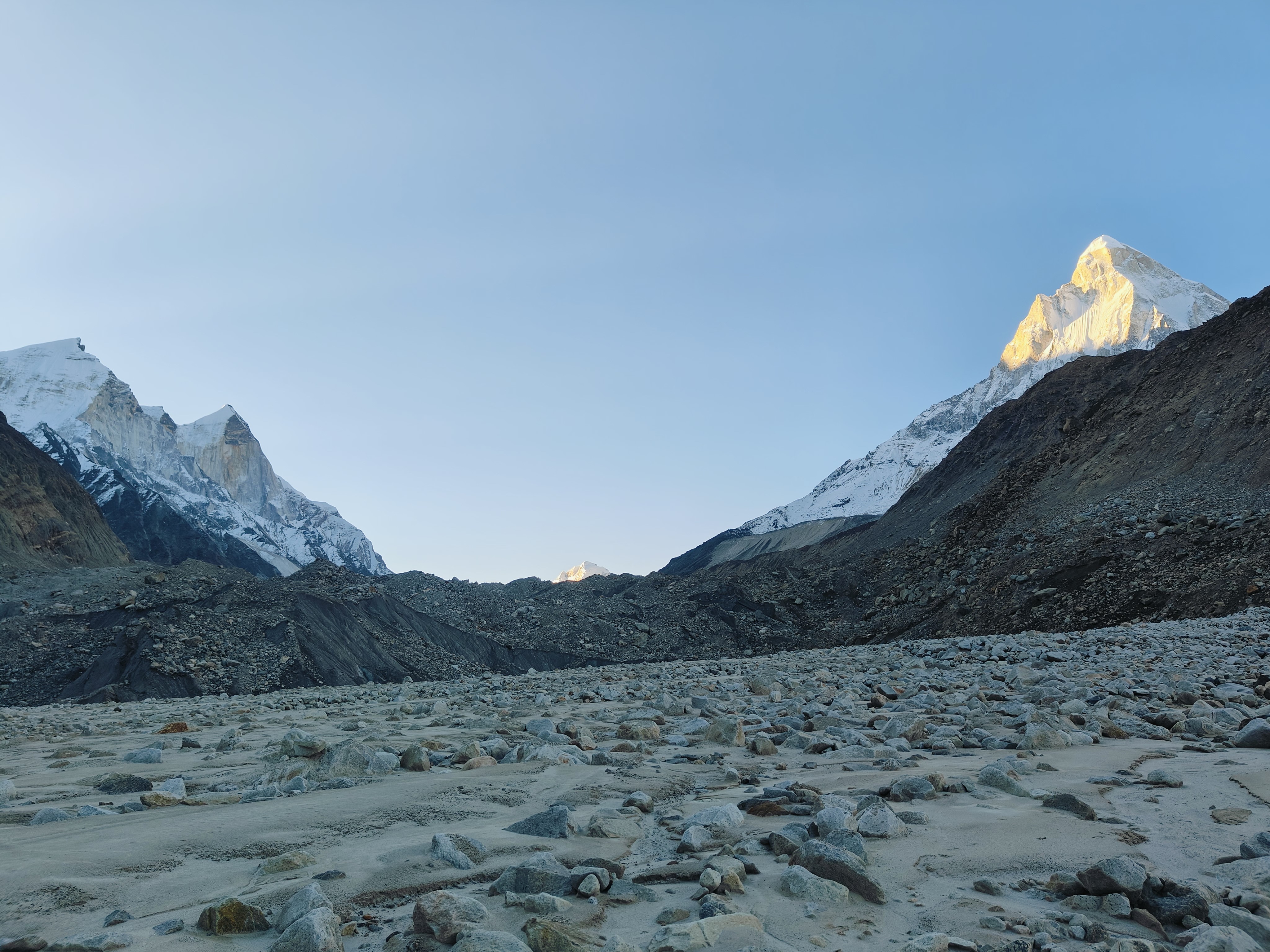
Tilandi and Brahmatal campsites both sit well clear of tree cover and far from any meaningful light pollution, which makes this one of the more reliable stargazing stretches among Uttarakhand's winter treks. The ridge walk on Day 4 toward Jhandi Top offers the trek's widest photography window — Trishul and Nanda Ghunti dominate the skyline for most of the day, and on genuinely clear mornings, Chaukhamba is visible further along the horizon. The frozen lake itself photographs best in the hour after sunrise, before foot traffic disturbs the undisturbed ice.
What is the Roopkund connection? The Day 4 ridge offers views of the trail leading toward Roopkund, the well-known “skeleton lake” — not part of this itinerary, but visible from the same ridge system.
Do I need previous snow-trekking experience? No — the trek is designed to be accessible to first-time winter trekkers, though microspikes and a trek leader's guidance on snow sections are standard, not optional.
Where is the Brahmatal Trek located?
In the Garhwal Himalayas of Uttarakhand, starting from the village of Lohajung in Chamoli district.
What is the highest point of the trek?
Brahmatal Top, at roughly 12,250 ft (3,735 m).
How difficult is the Brahmatal Trek?
Easy–Moderate — beginner-friendly, but genuine physical fitness is still required, particularly for the long summit day.
Can I do this trek in monsoon?
No — the trail is closed during monsoon due to slippery conditions and landslide risk.
Is a trek leader mandatory?
Not officially, but strongly recommended — Himalayan treks carry real risk, and a certified leader handles navigation, permits, and emergencies.
Where's the last mobile network?
Jio and BSNL work in Lohajung; beyond that, expect a full digital detox for the rest of the trek.
Can kids or older trekkers do this trek?
The trek is generally suitable for ages 11 to 60, fitness permitting.
Is single-sharing accommodation available?
Yes, for an additional ₹5,000 per person for the full trek.
By the time Lohajung's small market comes back into view on Day 5, the frozen lake already feels like something that happened somewhere quieter than the actual world. Brahmatal doesn't give you a crowded summit selfie or a headline peak — it gives you four days where almost no one else is on the trail, and a lake that's been sitting there, frozen and indifferent, since long before you decided winter was a good time to find out what silence actually does to you.
That's the part worth being honest about: this trek rewards people who don't need the crowd, the summit rush, or the noise to feel like the trip was worth it. If that's you, winter here will do something that a busier trek simply can't.