Trek difficulty
Easy - Moderate
Trek duration
6 Days
Trek altitude
11,755 feet | 10,279 feet
Group size
6-12
Trek distance
18 Km
Basecamp
Sonprayag
Best Time
May–June
Pickup Point
Dehradun
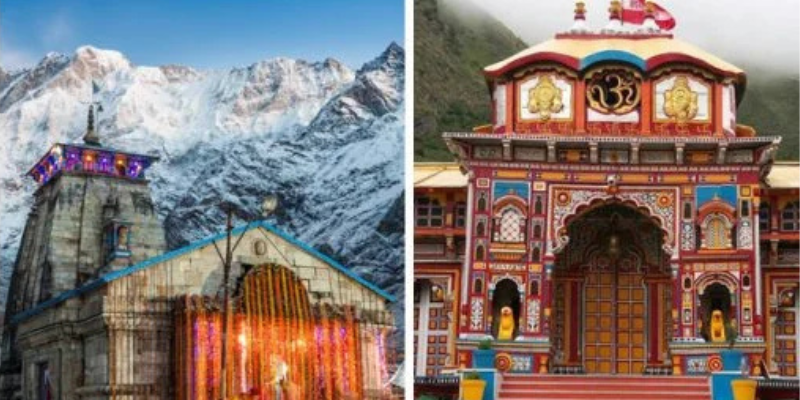
In 2 Dham Yatra, two sacred shrines are covered-Kedarnath and Badrinath. Devotees connect with divine duo of Lord Shiva (Kedarnath) and Lord Vishnu (Badrinath) by undertaking one of the most spiritual journeys in the region of Indian Himalayan. Instead of picking Charm Dham circuit devotes take this shorter pilgrimage route of most revered temples of Uttarakhand. These shrines in Garhwal Himalayas offer an enchanted fusion of spirituality and natural wonder which includes soaring peaks, ancient legends, timeless devotion, and serene valleys.
This blog will take you through the detailed itinerary of Kedarnath-Badrinath 2 Dham Yatra, followed by their history, highlights, tips and FAQs. In short, everything you need to know has been shared in this blog.
2 Dham Yatra- Where Faith Meets the Mountains
Devotees from across the globe visit the majestic Garhwal Himalayas, cross the rugged terrains to receive the gentle and protective warmth of Lord Shiva and Lord Vishnu. The 2 Dham Yatra represents unbroken faith forming a deeply meaningful spiritual journey that cleans the mind, soothes the soul, and strengthens one bond with the supreme divine.
With each step on the trail, crisp fresh air, every mantra reaching your ear through the valley reminds that the journey is just not physical but soulful.
Let’s learn about both the temples one by one.
KEDARNATH DHAM — THE SACRED ABODE OF LORD SHIVA
Mythology and Significance
Kedarnath is one of the twelve Jyotirlingas-an ancient Hindu belief associated that passed down from generation to generation. If legends are to be believed, after the Kururkshetra was over, the Pandavas seeked forgiveness from Lord Shiva. Shiva wanted to avoid them, hence turned into a bull and vanished into the ground. The hump that remained in sight is worshipped at Kedarnath, while other parts are showed across the Panch Kedar temples.
Forgiveness, liberation and protection- this much mystical weight the legend of Kedarnath holds.
Geographical Beauty
Kedarnath ji is located at an altitude of 3,583 meters, the magnificent backdrop of the Kedar Dome and Mandakini Valley makes this temple a sight to die for. Snow-clad mountains frame the temple from three sides, making it one of the most stunningly mesmerizing spiritual destinations in the world.
The crisp air, valley carrying the sound of river, and the tranquility of the Himalayan wilderness defines the aura of this place.
The Kedarnath Temple
The temple was originally built by the Pandavas and later restored by Adi Shankaracharya. The temple has endured in its pristine stillness by centuries of storms, floods, and heavy snowfall. The moment devotees do step inside the shrine, the black stone architecture gives an ancient strength vibe which can be easily felt.
The sanctum that has triangular Shiva lingam (naturally formed) believed to represent the hump of the divine bull. Only oil lamps are lit in the temple since its establishment.
The Trek to Kedarnath
The trek covers 18 km one way from Gaurikund to Kedarnath which was shorter before the flood of 2013. The trail takes you through pine forest, river crossings, waterfalls, steep ascents, and vast cliffs of mountains- the highlights of the 2 Dham Yatra.
Other highlights of Kedarnath Trek are:
Trek to Kedarnath will test your endurance but reward you with unmatched beauty of nature.
BADRINATH DHAM — THE DIVINE ABODE OF LORD VISHNU
Mythology and Importance
Badrinath is one of the most important shrines from Char Dham Yatra and Chota Char Dham circuits. The temple is dedicated to Lord Vishnu, where goddess Laxmi herself took the form of Badri tree (Berry tree) to protect Shri Vishnu ji from harsh weather during his meditation. It is said that Lord Vishnu meditated here for more than thousand years.
Hence, the name of the place is Badrinath.
Location and Landscape
Located at the altitude of 3, 300 meter height, Badrinath rests on the banks of Alaknanda River, bordered by the sky soaring peaks like Neelkanth which turn golden during sunrise. The region harmoniously blends quiet riverbanks, serene mountain villages, and eternal sacred energy.
The Badrinath Temple
The Badrinath temple resembles a Buddhist vihara due to its vibrant colors. Lord Badri Narayan’s black stone idol is seated in meditative pose which brings deep calmness to mind and sense of surrender-defining the true meaning of divine grace.
There is natural hot water spring near the entrance, known as Tapt Kund, famous for purifying devotees before they move ahead for darshan.
Spiritual Vibes of Badrinath
The devotees humming gently, priests chanting Vedic hymns, the sound of river flowing beside the temple, and the dreamlike silence of Himalayas create an aura that feels timeless. Many visit this temple to dissolve old karmic burdens and bring inner peace.
Day 1: Haridwar/Dehradun → Sonprayag
Day 2: Sonprayag → Gaurikund → Kedarnath Trek
Day 3: Kedarnath → Gaurikund → Joshimath/Pipalkoti
Day 5: Badrinath → Rudraprayag/Srinagar
Day 6: Rudraprayag → Rishikesh/Haridwar/Dehradun
The best time to do the 2 Dham Yatra is in the months of May and June. One gets clear skies, pleasant weather and heavy pilgrim movement.
For fewer crowds, do this circuit in the months of September and October where the views to magnificent Himalayas are crystal-clear. Nature lovers are suggested to book their Char Dham Yatra during these months.
Inclusion:
Exclusions
To wrap up, the best time to visit 2 dham yatra for most people is late April to June as this period gives clear roads and open temples, so the best time to go for Char Dham yatra is here.
₹4000 | $43
1 Days
Uttarakhand
10 Km
All Time
₹40000 | $500
10 Days
Uttarakhand
-
May–June
₹9500 | $130
5 Days
Uttarakhand
8 km
April to June (pleasant weather) and September to November (clear views); December to March for snow trekking.
₹10000 | $109
2 Days
Uttarakhand
1 km
March to June/ September to November
Testimonials

Rakesh dulams
Nice experience with the thinAir expedition and accommodation and hospitality and safty such as taken personal care and well experienced guide and such a cool guy

Aditi 99
I had an amazing experience with thin air expeditions. The food, the hospitality, and the preparedness of the staff for all sorts of scenarios was commendable. The location of camps was perfect. Even though i was a female solo traveller , i felt very safe and comfortable. Couldn’t have asked for a better team.

Radandi Shashank
“You are not just a mountain trek guides, but a true guardian of the journey. Your unwavering loyalty to our team, the mountains, and safety itself is extraordinary. Every step felt secure because of your dedication, integrity. And stayed committed to every trekker, through every challenge, with patience, care, and honesty. Huge respect to Subodh Jii n Aditi Mam!! Thank youu @thinairexpedition It was wonderful experience!!❤️❤️

67D3_KALYAN
Completing the Kedarkantha trek at an altitude of around 12,500 feet was not just a trek for us, it was a life-long memory, and a major reason for this unforgettable experience is our guide Shubhod Sir. From the very first day till the summit, Shubhod Sir guided us with immense patience, discipline, and genuine care. At every difficult patch, when our legs were tired and breathing became hard, his calm words, constant motivation, and confident leadership gave us the strength to keep moving forward. He never rushed anyone and always made sure that every member of the group was safe, comfortable, and mentally strong. Shubhod Sir’s knowledge of the mountains, weather, and high-altitude conditions was truly impressive. More than a guide, he felt like a protector and mentor who treated everyone like family. His positive attitude and humble nature created a sense of trust and confidence among all of us. We are also thankful to Atidhi Madam for her support and cooperation during the trek, which added to the smooth experience. Because of Shubhod Sir’s guidance and dedication, we successfully reached the summit with confidence and joy. We will always remember this trek with gratitude and respect. Truly blessed to have a guide like him. 🙏⛰️

Arvind Sahu
Wonderful experience totally worth it. At those price they provided services that no one could provides really enjoyed ❤️🎉

Kolanu Anirudh
This is my first trek in Uttarakhand(Kedharkanta) and Thin Air Expedition made it a memorable one Thanks for everything subodh bro you made it so special.

kanica kandpal
Completed the Gaumukh–Tapovan trek with Thin Air Expedition, and it was an exceptional experience from beginning to end. Instead of opting for a fixed-departure model, we chose a personally curated itinerary, as this was our first trek—and it turned out to be the perfect decision. The team was extremely thoughtful in planning each day’s distance, ensuring we were comfortably challenged without ever feeling overtired or exhausted upon reaching the campsites. Every campsite was carefully selected, offering not just safety and comfort but also breathtaking views that made each halt truly memorable. What stood out most was the level of personalization. The itinerary was clearly tailored to our pace and comfort, and the trek leader constantly shared insightful facts about the region, its geography, and cultural significance, adding depth and meaning to the journey. Overall, Thin Air Expedition delivers a highly personalized, well-paced, and enriching trekking experience. I would highly recommend them, especially for first-time trekkers looking for a safe, informative, and thoughtfully curated adventure.Sen

Raj Bahadur
I booked my trek with Thin Air Expedition on a friend’s recommendation, and it turned out to be a great decision. They managed travel and accommodation very smoothly, and everything was well organized throughout the journey. The team stayed in regular coordination, ensuring that stays and drivers were properly arranged each day. The entire trip was timely, hassle-free, and also pocket-friendly. I would definitely recommend Thin Air Expedition—you can trust them completely with your travel and trekking plans.

sachin aulakh
I recently completed the Kedarkantha Trek with ThinAirExpedition, and the entire experience was outstanding. The coordination, communication, and arrangements were excellent. The trek leaders were experienced and friendly, the support staff was humble, the stay was comfortable, and the food quality in such high altitude conditions was truly impressive. Their focus on safety and responsible trekking made the journey even better. I would definitely choose them again for my next Himalayan adventure! 🏔️✨

Aman rai
I recently completed a trek with the help of ThinAirExpedition, and the entire experience was very comfortable. From stay arrangements to travel from Rishikesh to Rishikesh, everything was well managed. The driver was extremely polite, supportive, and made the journey smooth and stress-free. Overall, a great experience and I would definitely recommend them.

Nitya Jaiswal
Kedarkantha was not just a trek, it was an experience that helped me reconnect with myself. Thanks to Thin air expeditions , I felt safe, cared for and encouraged at every step. The sunrise at the summit, the laughter around the campfire and the kindness of the guides will stay with me forever. If you're looking for a company that treats you like family on the mountains, this is the one.

Biswajit Sahoo
Subodh Sir making the trek so much of fun and intresting .. Awesome Experience with Subodh Sir

Anmol Verma
Overall trekking and accommodation was a very smooth experience. Our trek leader Mr. Ramesh was amazing and very helpful. He managed to make the trek look easy. Overall experience was 10/10. Would highly recommend.

Rishabh Singh Rana
Trek Guide Mr. Ramesh Ji is a very cool & good person. Trek journey became beautiful with the group and overall it became my one of the best experience.

aditi vaidya
I recently went on a trek with Thin Air Expeditions, and I can't get over the experience I had! I did the Phulara Ridge trek with Subodh sir, and it was an incredible experience. What made it even more special was that Subodh sir made sure I could bring my dog, Flake, a toy pom. His team and him took such great care of us, and it was clear that they truly care about their guests, human or canine! The group was amazing too. I met some wonderful people along the way, and we formed lifelong bonds. The whole experience was beautiful – from the breathtaking views to the friendly, supportive environment. I’ll cherish these memories forever! If you're looking for a SAFE, well-organized, fun, and caring trekking company, Thin Air Expeditions and Subodh sir are the ones to go with!

Anuja Vaidya
It was a wonderful experience with TAE on Phulara ridge trek, everything was on point the gears, food, trek guides and Subodh sir himself was an amazing leader who is the founder of TAE, he made sure the experience was amazing even for the first timers keeping safety the first priority. Also I took my Dog, Flake along with me for the trek and it was a great experience for her as well and her food and safety was well taken care of . 🐾 Would love to go back again with Thin air expedition. Thank you so much 🤗

Simran Samal
Phulara Ridge Trek – A Memorable Experience for me !!! Someone once told me, “Trips aren’t just about travel — they become a part of you.” I never really believed it, but this time, Phulara Ridge became exactly that for me. Our first campsite — the forest trail, the tents, the whole setting — gave me the first taste of what was to come. Everything was so thoughtfully arranged, it felt like nature itself had prepared that space for us. All thanks to our trek leader, Subodh bhai 🙌🏻. The next stop was magical in its own way. The campsite was picture-perfect, and we even ended up learning a bit of the local Uttarakhandi dance from Dev bhaiya (well… I tried to! 😄). In the evenings, we played games and spent such a good time that we forgot the weight of city life for a while. And finally, the Ridge: Honestly, we thought the weather would block the views, but Subodh bhai timed it so perfectly that the skies cleared for us. Walking on the ridge — one valley on the right, another on the left, clouds passing beneath us — felt surreal. We sat there for hours, just soaking it all in. It was pure peace. And yes, we even made tea there!!! 🫶🏻 (Of course, we made no mess, cleaned it all up, and left the space exactly the way it should be 😌). For me personally, trekking has always been like meditation — a way to quiet the noise and reconnect with myself. This trek with Subodh bhai and the team gave me exactly that: peace, perspective, memories for a lifetime, and inspiration. #SoGrateful 🙏🏻 Thank you, Subodh bhai and team, for making this such a soulful and unforgettable journey! Lastly Just one note for all: “In the end, we don’t conquer mountains; they help us discover who we truly are.” To anyone even considering it: please go with #ThinAir Expeditions to experience the rawness of trekking, the beauty of nature, and the joy of escaping city life for a while. You’ll come back not just with pictures, but with stories, stillness, and a piece of the mountains in your heart. All the best !!! ✌🏻

Netra Sharma
It was a wonderful experience with ThinAir Expedition. I went on my first trek to Phulara Ridge, and it was truly amazing. Our guide, Subodh ji, managed everything so well and remained patient throughout the trek. I enjoyed every moment and every spot. The place, the cook, and the helpers were all wonderful. The food and camps were awesome. I highly recommend joining ThinAir Expedition to experience the best of “pahadi” life!

Vaibhav Srivastava
Thin Air Expedition gave us the best experience while trekking. Everything was finely arranged and properly taken care of whether it was travel, food. Staff availablity. But the best part was free hand while trekking. Subodh led us beautifully taking in note that everyone reaches the base camp and everyone is doing well. Consulting our next phase keeping in mind the safety and gears. It was collectively very amazing. He gave us full free hand additionally it is our responsibility as well to take care of each other. We did so many activities had games and fun and he even taught us how to camp. How to set up it was fun. If it would've given me option I'll rate it 10. Thanks subodh and team and thin air expedition for such a memorable trip.

Somya Chaturvedi
I recently did the Phulara Ridge Trek with Thin Air Expedition, and it was my first trek ever truly an unforgettable experience! Everything was so well managed from safety arrangements and equipment to food and stay, I never had to worry about a thing. Our trek leader, Subodh, was extremely supportive, patient, and motivating, which made a huge difference for a first-timer like me. The food was simple, homely, and very satisfying after long trekking hours. Most importantly, safety was always the top priority. For anyone planning their first or next trek, I’d highly recommend Thin Air Expedition. Professional, caring, and passionate about making the experience memorable!
We're always ready for adventure
Trekking comes with uncertainty. Weather, terrain, and setbacks are part of the journey. We embrace them with resilience and openness—each challenge makes us stronger and more appreciative of nature's beauty.
We embrace low-noise trekking
We blend into nature, not the other way around. We avoid shouting, loud music, and noisy games. In silence, we hear birdsong, streams, and the wind—inviting peace, reflection, and a deeper connection with nature.
We protect the environment
We protect the environment by minimising waste, reusing resources, and picking up litter. We carry eco-bags, segregate waste, and inspire others to preserve trails. Sustainable trekking ensures these mountains remain beautiful for future generations.
We are self-sufficient
We carry our load as much as possible, manage our gear, and stay prepared for all situations. Self-sufficiency builds confidence, independence, and respect for fellow trekkers, support staff, and the trail itself.
We support each other
Trekking is not a solo act. We wait for each other, share burdens, and uplift teammates. By putting the group first, we build strong bonds and help everyone complete the trek joyfully.
We are fit and prepared
We train well before our treks. This helps us walk longer, handle emergencies, and contribute to the team. Fitness ensures we are never a burden and always ready to help when needed.


