Trek difficulty
Moderate
Trek duration
10 Days
Trek altitude
13500m
Group size
6-12
Trek distance
-
Basecamp
Barkot
Best Time
May–June
Pickup Point
Dehradun
Welcome to the India’s most well-regarded temples-the Char Dham Yatra-where the faith meets the never-ending spiritual warmth of Himalayas
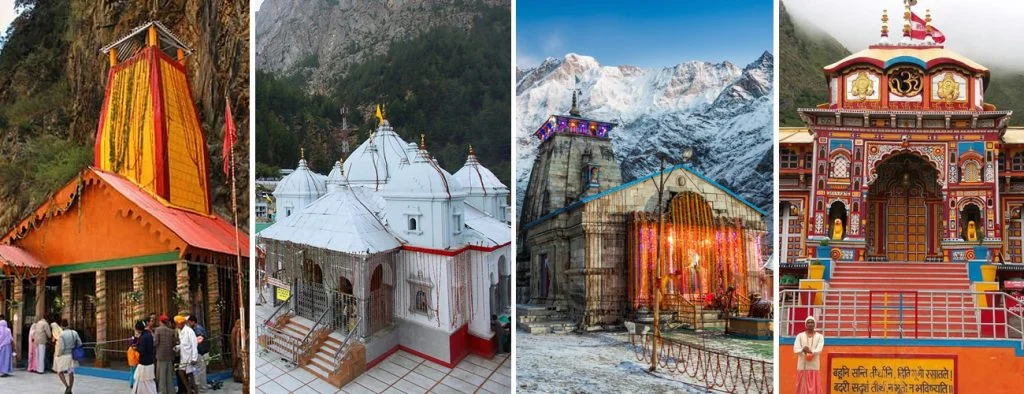
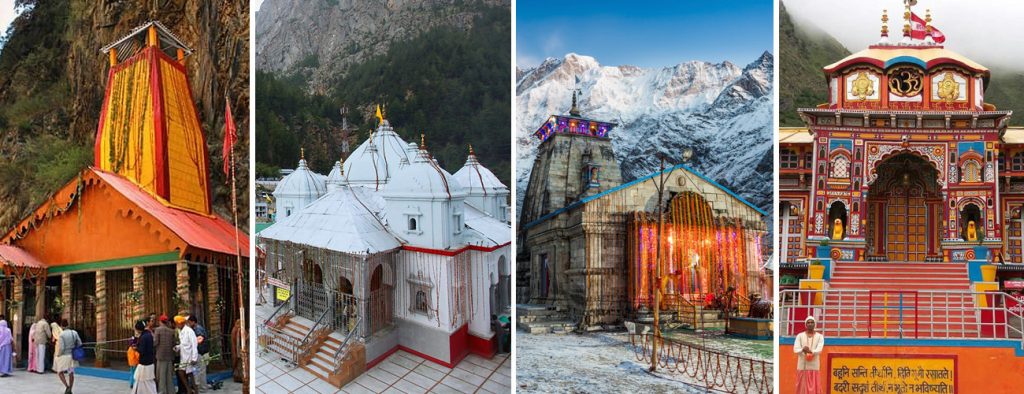
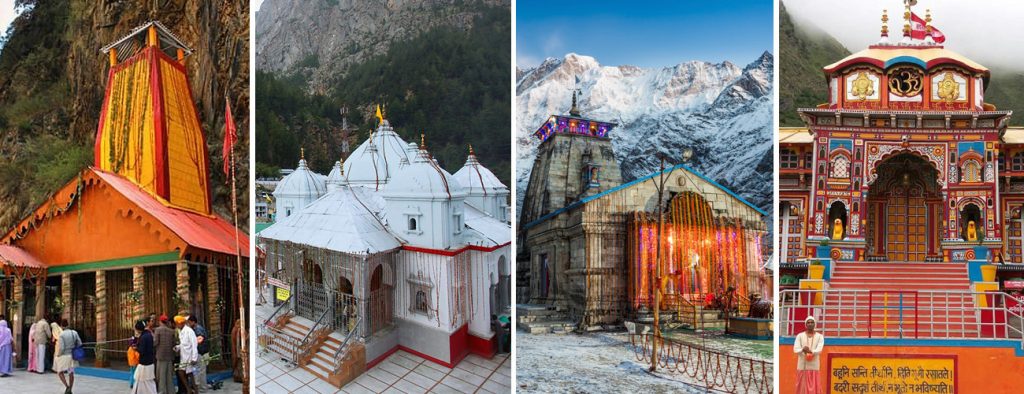
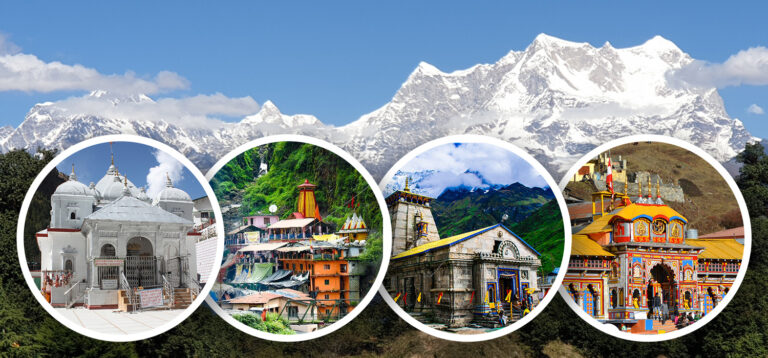
The Char Dham Yatra has been fascinating devotees and travelers from across the globe for two main reasons; Himalayas and its four holy shrines- Yamunotri, Gangotri, Kedarnath, and Badrinath. The journey to these sacred places is done for the soul purification and spiritual connection. Each temple is devoted to distinct deity but what remains same is that they sit amidst splendid natural beauty of snow-capped peaks to relaxing river valleys. It may be popularly known as a religious circuit but in fact the Char Dham Yatra is all about self-discovery, faith, and endurance. Pilgrims dive into spiritual essence while being in breathtaking landscapes of Uttarakhand, also regarded as Devbhoomi — the abode of gods.
Let’s now learn about all four sacred temples one by one, understanding their legends, beauty, and spiritual significance along the way.
Kedarnath
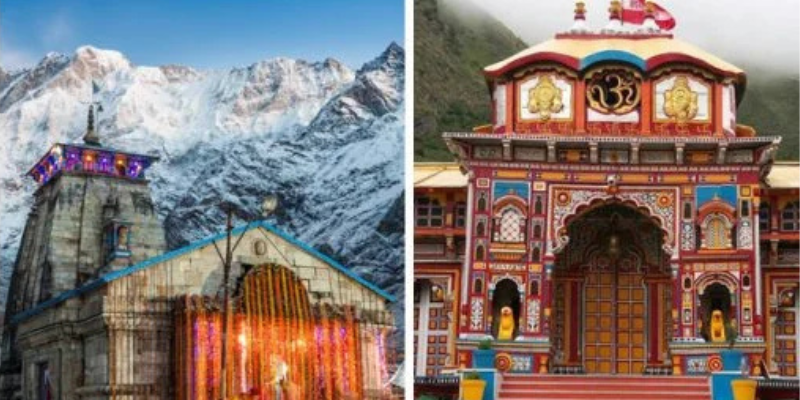
Kedarnath is one of the most respected temples of Lord Shiva standing at the height of 11,755 feet Nestled high in the Garhwal Himalayas at an altitude of 11,755 feet, Kedarnath stands as one of the most revered temples of Lord Shiva and a vital stop on the Char Dham Yatra. Surrounded by snow-clad peaks and the Mandakini River flowing beside it, the temple radiates with peaceful aura and devotion. Originally built by Pandavas and later restored by Adi Shankaracharya, Kedarnath requires bit challenging yet soul- satisfying trek where each step tests your devotion. Not just a destination, Kedarnath is a meeting point of faith, endurance, nature and eternity.
Badrinath
Nestled on the banks of the Alaknanda River, Badrinath is sits at an altitude of approximately 10,200 feet, and is one of the consecrated shrines devoted to Lord Vishnu. This temple is a key part of the Char Dham Yatra. Embraced by the soaring peaks of Nar and Narayan, the temple radiates heavenly calmness attracting thousands of pilgrims each year. If legends to be believed, Lord Vishnu meditated here and Goddess Laxmi turned into Badri tree to protect him from the harsh weather— thus the Badrinath got its sacred name. The colorful scene of the temple contrasting with the rugged Himalayan backdrop creates a sight worth admiring-magnificent and awe-inspiring. Badrinath is more than just a spiritual destination; it makes its way through your heart invoking devotion for the Himalayan purity.
Yamunotri
Perched gracefully in the Garhwal Himalayas at a soaring elevation of around 10,800 feet, Yamunotri marks as a holy origin of the Yamuna River and beginning of the Char Dham Yatra. The temple is dedicated to Goddess Yamuna and is believed to have sacred energies with power of healing, especially when you experience the hot spring. Yamunotri, the temple rests amidst snow-clad mountains, and sparkling streams. The trek to Yamunotri involves dense forest, and dramatic mountain trails-offering both scenic and spiritual endeavor. Legend is that taking a dip in the holy waters of the Yamuna releases pilgrims from the anxiety of death. Calm yet Serene yet great, Yamunotri symbolizes the pure, natural spirit of the Himalayas and a starting point of a devotee’s journey toward truth, faith and peace of mind.
Gangotri:
Located at an altitude of about 10,200 feet in the Garhwal Himalayas, Gangotri is the sacred source of the Ganga River and a vital destination of the Char Dham Yatra. The temple is dedicated to Goddess Ganga believed to be descended from heavens to cleanse humanity, and bathing in its water purifies the soul. The temple is enveloped by snow-clad peaks and the glacial Bhagirathi River, creating a tranquil and mystical atmosphere. The trek to Gangotri starts from the dense forests and enters the meadows, and twisting trails, offering both raw beauty and a sense of spirituality. Gangotri is defined as a sign of timeless bond between the Himalayas and soulful connection.
The Char Dham Yatra comprises four prominent pilgrimage sites – Yamunotri, Gangotri, Kedarnath, and Badrinath. Travellers often visit here to learn about the rooted history, mythology, and spirituality.
What is the Historical Significance of Char Dham Yatra?
The origin of the Char Dham Yatra lies in timeless Hindu scriptures and carried through generations. As per the legends, the 8th-century philosopher and saint Adi Shankaracharya came up with the concept of uniting spiritual essence of India by establishing Char Dham. Later, this Himalayan circuit was called as Chhota Char Dham, symbolizing a path to purify the spirit and lead devotees towards liberation (moksha). Adding to its historical depth, divine tales are linked with each temple, like Mahabharata and Puranas.
Geographical Significance
If seen geographically, the char dham yatra starts from Yamunotri from where the river Yamuna originates. The journey continues to Gangotri, source of Ganga and leads to shri Kedarnathji, highly revered temple of dedicated to Lord Shiva, and ends at shri Badrinath abode of Lord Vishnu. Highest altitude of these shrines range between 3,000 to 3,600 meters. They are surrounded by snow-covered peaks, glaciers, and serene valleys—representing entwined magnificence and divinity of nature.
Cultural Significance
Every year thousands of travelers undertake this holy journey from across the nation creating a rhythm for generations to follow. If seen culturally, the Char Dham Yatra is an expression of ‘faith, unity, and devotion’. During the tour, one realizes the significance of traditions, rituals, and folklore of the Garhwal region. Here, your will find the locals feel extremely honored to serve selflessly by preserving the Himalayan hospitality essence. It all comes by the heart. Along the way, listen to the sound of festivals, chants, and rituals through the valleys emphasizing India’s enduring spirit and unwavering faith.
Feel the eternal bond between nature, humankind, and divinity by taking a journey through the soul of the Himalayas- a perfect blend of faith, history, and the natural glory of Uttarakhand.
Char Dham Yatra Permit Information
A mandatory registration/permit is required to undertake the Char Dham Yatra in Uttarakhand from the Uttarakhand Government. This process is important to ensure safety, crowd management, and help during emergencies along the route.
You can register for the Yatra either online by visiting Uttarakhand Government’s official website [https://registrationandtouristcare.uk.gov.in/](https://registrationandtouristcare.uk.gov.in/) or mobile app Tourist Care Uttarakhand.
For offline registration, visit registration counters in Haridwar, Rishikesh, and other key points along the Yatra route.
This might look hectic and intricate; Thin Air expedition has covered that for you. Get in touch with the company and their experts will guide you through the process.
So what documents are required for the registration process of Char Dham Yatra?
Valid Photo ID proof (Aadhaar card, Passport, Voter ID, etc.)
Recent passport-size photograph
Note: The registration/permit is compulsory for everyone even if it is free.
Once the verification is done, you will receive a card (Yatra Registration Card), which must be shown at various checkpoints. If you travelling through helicopter then biometric registration is required. You will be notified before the journey of this process.
Health and Safety Measures
Health and Safety Measures for Char Dham Yatra
Steep trails, patchy network, and weather shift in high-altitude region is common. It is important to follow the proper health and safety precautions before undertaking Char Dham Yatra.
Physical Preparation:
A good physical fitness is required, if not, start working out at least a month prior before Yatra. Start with basic walk. Then brisk walk followed by light jogging and other breathing exercises to help build the stamina.
Medical Check-up:
Any tour operator needs medical fitness certificate before the Yatra starts. Those with asthma, and other heart related issues consult a doctor beforehand.
Acclimatization:
People often rush to finish the trek, especially at Kedarnath and Badrinath and face altitude sickness. Take time to adjust to the altitude.
Essential Medicines:
Carry personal medication prescribed by your doctor and basic essential first aid with medicines for headache, nausea, fever and altitude-related discomfort. Thin Air Expedition staff carries first aid kit with all the basic medicines.
Weather Protection:
Before the journey begins a checklist of essential gear will be shared (things to carry during Char Dham Yatra). Basic gear includes, warm clothing, rain gear, and sturdy footwear. Keep all of them handy as weather in the Himalayas is unpredictable.
Hydration and Nutrition:
Drink plenty of water but in intervals. Sip water in little amount and wait for at least 30 minutes. Pack light snacks, and do not consume alcohol or cigarette during the Yatra.
Emergency Support:
Along the route, emergency support like, medical aid centers, oxygen facilities, and rescue teams are available at key points. Only suggestion, always keep your Yatra Registration Card handy for assistance.
Conclusion: The Eternal Journey of Faith
Traverse through the origin of Yamuna and Ganga to the abode of Lord Shiva and Vishnu by doing the Char Dham Yatra. This self-discovery journey will show you the eternal bond between humankind and the Himalayas. Every dham, its trail and mountain you come across whispers tales of faith, endurance and surrender.
Your modern life often erodes when you encounter snow-covered peaks, lively rivers, and sacred hymns. This is a journey where one rediscovers purpose of their existence, soul-level tranquility and blessings of mighty. Char Dham Yatra reminds us that true spirituality lies in the journey itself and not just destination. This circuit has left imprint on many devotees before you and has given countless memories that last lifetime. This journey offers blessings, peace, and simplicity.
Day 1- Haridwar/Dehradun to Barkot
Day 2- Barkot-Janakichatti – Yamunotri – Jankichatti- Barkot
Day 3- Barkot to Uttarkashi (90 kms one way)
Day 4- Uttarkashi – Gangotri – Uttarkashi( 100 kms each side)
Day 5- Uttarkashi to Guptkashi/ Sonprayag
Day 6- Guptkashi -Gaurikund – Kedarnath
Day 7- Kedarnath – Gaurikund – Sonprayag / Guptkashi
Day 8-Guptkashi/ Sonprayag to Badrinath ji
Day 9-Badrinath to Karnaprayag
Day 10- Karnaprayag to Haridwar/Dehradun
May–June
Essential packing gear for Charm Dham Yatra includes; warm layers, good quality trekking shoes, rain gear, woolen gloves, and caps.
Choosing a perfect trekking agency is like choosing an experience that offers best of both worlds-safety and authenticity. Thin Air Expedition is a comfort in every step of your journey as the team ensures that your Char Dham Yatra (Uttarakhand) is not just another adventure but a well-guided soulful experience.
Our team possesses expertise in all kinds of Himalayan treks, expeditions and spiritual circuits.
We give utmost priority to safety and personalized care-from offering small group departures, certified local guides, and thoughtfully curated itineraries that balance both time and terrain well. With complete support on the trail, you can travel with complete peace of mind. As much as we do love to take our clients on Uttarakhand journey, our eco-friendly practices safeguard the untouched beauty of Himalayas.
From hassle-free permits and transport arrangements to comfortable accommodation and scrumptious balanced meals, we take care of every detail—so you can enjoy the journey within. Whether you’re looking for a life-changing moment, an adventure, or spending time in the calmness of mountain silence, Thin Air Expedition has got it all covered, because we turn every trail into a story worth reminiscing.
Inclusion:
Exclusions
The Char Dham Yatra is a sacred pilgrimage to four holy shrines in Uttarakhand — Yamunotri, Gangotri, Kedarnath, and Badrinath, dedicated to different deities and symbolizing spiritual purification.
Charm Dhams are located in Uttarakhand’s Garhwal region, settled in the high Himalayas.
The window for this Yatra opens in the month of April/May and closes around October/November. The best months to book your Yatra are May, June, and September. Due to heavy snowfall window of Char Dham Yatra closes after October.
The complete Charm Dham Yatra journey takes around 10 to 12 days by road. Also, the duration of the trip depends on weather and other unavoidable reasons.
The traditional route which is being followed in a clockwise direction: Yamunotri → Gangotri → Kedarnath → Badrinath.
Haridwar, Rishikesh, or Dehradun are known as gateways of Himalayas. You can pick any gateway to start your journey to the Himalayas.
Yes, basic level of fitness is advised, especially for Yamunotri and Kedarnath, which contains steep climb.
Yes, helicopter services operate for Kedarnath and Badrinath from Dehradun, Phata, Guptkashi, and Sirsi.
In higher altitudes, temperature drops to almost freezing. Even in summers, the mornings and evenings are chilly with occasional shower. In higher altitudes, temperatures can drop close to freezing.
Essential packing gear for Charm Dham Yatra includes; warm layers, good quality trekking shoes, rain gear, woolen gloves, and caps.
Yes, Thin Air Expedition takes care of all the accommodations right before the trip starts. The stays are comfortable and homely.
Connectivity is limited in high-altitude areas, especially near Kedarnath and Yamunotri. BSNL and Jio have the best network. However, you will find coverage getting patchy during Kedarnath and Yamunotri trek.
Yes, but do a medical checkup and hand over medical certificate to your travel agency before the journey begins. To ease the travel, Helicopter options are also available.
Yes, community kitchens, eateries and medical camps can be found at key points. However, Thin Air Expedition covers basic first aid and 3 time meal in the package.
Yes, online registration is mandatory for all pilgrims, available on the Uttarakhand Tourism website.
Yes, you can pick do dham yatra circuit instead of doing all the four shrines. Visit Thin Air Expedition Yatra Package and pick your desired circuit.
The package includes private vehicle from/to Dehradun/Haridwar/Rishikesh (complete Char Dham). The travel expense to and from your hometown is not abide by the agency though.
No, they remain close from November-March/April due to heavy snowfall in winter.
Photography is allowed outside the sanctum but not inside.
Only after the completion of Char Dham Yatra you will know that undertaking this journey was not about visiting four shrines but taking a soulful journey through the heart of Himalayas. Completing this spiritual circuit of four temples Yamunotri, Gangotri, Kedarnath, and Badrinath, purifies the mind, body, and soul-eventually uplifting the spirit.
There is a reason behind following the circuit in clockwise — offering prayer in Yamunotri purifies the soul (significant stop before embarking on remaining shrines), Gangotri has the purifying properties that cleanses body and soul (the source of sacredness), Kedarnath testes one’s power of devotion (soul-stirring experience at first sight of temple), and Badrinath is the last stop signifying the soul at last seeks salvation. These sites represent the circle of life that connects one to the rhythm of nature.
Besides its religious core, the Char Dham Yatra takes pilgrims through some of the most breathtaking landscapes in Uttarakhand, where every turn reveals new surprises. From snow-capped peaks that stand tall to tranquil rivers kissing moon in night, and primeval villages echoing with hymns. This journey will teach lessons that stay lifetime-patience, humility, and the joy of simplicity.
Doesn’t matter what purpose you want to fulfill by doing Char Dham Yatra; each temple will transform you into something that words can’t express. Spiritual healing, peacefulness, or simply experiencing the divine itself; no other teacher can teach you the way energy of Himalayas can. So, are you ready to be awakened? Ready to surrender to the nature? Ready to find yourself? Book your Char Dham Yatra here.
₹4000 | $43
1 Days
Uttarakhand
10 Km
All Time
₹22000 | $300
6 Days
Uttarakhand
18 Km
May–June
₹40000 | $500
10 Days
Uttarakhand
-
May–June
₹10000 | $109
2 Days
Uttarakhand
1 km
March to June/ September to November
Testimonials

Rakesh dulams
Nice experience with the thinAir expedition and accommodation and hospitality and safty such as taken personal care and well experienced guide and such a cool guy

Aditi 99
I had an amazing experience with thin air expeditions. The food, the hospitality, and the preparedness of the staff for all sorts of scenarios was commendable. The location of camps was perfect. Even though i was a female solo traveller , i felt very safe and comfortable. Couldn’t have asked for a better team.

Radandi Shashank
“You are not just a mountain trek guides, but a true guardian of the journey. Your unwavering loyalty to our team, the mountains, and safety itself is extraordinary. Every step felt secure because of your dedication, integrity. And stayed committed to every trekker, through every challenge, with patience, care, and honesty. Huge respect to Subodh Jii n Aditi Mam!! Thank youu @thinairexpedition It was wonderful experience!!❤️❤️

67D3_KALYAN
Completing the Kedarkantha trek at an altitude of around 12,500 feet was not just a trek for us, it was a life-long memory, and a major reason for this unforgettable experience is our guide Shubhod Sir. From the very first day till the summit, Shubhod Sir guided us with immense patience, discipline, and genuine care. At every difficult patch, when our legs were tired and breathing became hard, his calm words, constant motivation, and confident leadership gave us the strength to keep moving forward. He never rushed anyone and always made sure that every member of the group was safe, comfortable, and mentally strong. Shubhod Sir’s knowledge of the mountains, weather, and high-altitude conditions was truly impressive. More than a guide, he felt like a protector and mentor who treated everyone like family. His positive attitude and humble nature created a sense of trust and confidence among all of us. We are also thankful to Atidhi Madam for her support and cooperation during the trek, which added to the smooth experience. Because of Shubhod Sir’s guidance and dedication, we successfully reached the summit with confidence and joy. We will always remember this trek with gratitude and respect. Truly blessed to have a guide like him. 🙏⛰️

Arvind Sahu
Wonderful experience totally worth it. At those price they provided services that no one could provides really enjoyed ❤️🎉

Kolanu Anirudh
This is my first trek in Uttarakhand(Kedharkanta) and Thin Air Expedition made it a memorable one Thanks for everything subodh bro you made it so special.

kanica kandpal
Completed the Gaumukh–Tapovan trek with Thin Air Expedition, and it was an exceptional experience from beginning to end. Instead of opting for a fixed-departure model, we chose a personally curated itinerary, as this was our first trek—and it turned out to be the perfect decision. The team was extremely thoughtful in planning each day’s distance, ensuring we were comfortably challenged without ever feeling overtired or exhausted upon reaching the campsites. Every campsite was carefully selected, offering not just safety and comfort but also breathtaking views that made each halt truly memorable. What stood out most was the level of personalization. The itinerary was clearly tailored to our pace and comfort, and the trek leader constantly shared insightful facts about the region, its geography, and cultural significance, adding depth and meaning to the journey. Overall, Thin Air Expedition delivers a highly personalized, well-paced, and enriching trekking experience. I would highly recommend them, especially for first-time trekkers looking for a safe, informative, and thoughtfully curated adventure.Sen

Raj Bahadur
I booked my trek with Thin Air Expedition on a friend’s recommendation, and it turned out to be a great decision. They managed travel and accommodation very smoothly, and everything was well organized throughout the journey. The team stayed in regular coordination, ensuring that stays and drivers were properly arranged each day. The entire trip was timely, hassle-free, and also pocket-friendly. I would definitely recommend Thin Air Expedition—you can trust them completely with your travel and trekking plans.

sachin aulakh
I recently completed the Kedarkantha Trek with ThinAirExpedition, and the entire experience was outstanding. The coordination, communication, and arrangements were excellent. The trek leaders were experienced and friendly, the support staff was humble, the stay was comfortable, and the food quality in such high altitude conditions was truly impressive. Their focus on safety and responsible trekking made the journey even better. I would definitely choose them again for my next Himalayan adventure! 🏔️✨

Aman rai
I recently completed a trek with the help of ThinAirExpedition, and the entire experience was very comfortable. From stay arrangements to travel from Rishikesh to Rishikesh, everything was well managed. The driver was extremely polite, supportive, and made the journey smooth and stress-free. Overall, a great experience and I would definitely recommend them.

Nitya Jaiswal
Kedarkantha was not just a trek, it was an experience that helped me reconnect with myself. Thanks to Thin air expeditions , I felt safe, cared for and encouraged at every step. The sunrise at the summit, the laughter around the campfire and the kindness of the guides will stay with me forever. If you're looking for a company that treats you like family on the mountains, this is the one.

Biswajit Sahoo
Subodh Sir making the trek so much of fun and intresting .. Awesome Experience with Subodh Sir

Anmol Verma
Overall trekking and accommodation was a very smooth experience. Our trek leader Mr. Ramesh was amazing and very helpful. He managed to make the trek look easy. Overall experience was 10/10. Would highly recommend.

Rishabh Singh Rana
Trek Guide Mr. Ramesh Ji is a very cool & good person. Trek journey became beautiful with the group and overall it became my one of the best experience.

aditi vaidya
I recently went on a trek with Thin Air Expeditions, and I can't get over the experience I had! I did the Phulara Ridge trek with Subodh sir, and it was an incredible experience. What made it even more special was that Subodh sir made sure I could bring my dog, Flake, a toy pom. His team and him took such great care of us, and it was clear that they truly care about their guests, human or canine! The group was amazing too. I met some wonderful people along the way, and we formed lifelong bonds. The whole experience was beautiful – from the breathtaking views to the friendly, supportive environment. I’ll cherish these memories forever! If you're looking for a SAFE, well-organized, fun, and caring trekking company, Thin Air Expeditions and Subodh sir are the ones to go with!

Anuja Vaidya
It was a wonderful experience with TAE on Phulara ridge trek, everything was on point the gears, food, trek guides and Subodh sir himself was an amazing leader who is the founder of TAE, he made sure the experience was amazing even for the first timers keeping safety the first priority. Also I took my Dog, Flake along with me for the trek and it was a great experience for her as well and her food and safety was well taken care of . 🐾 Would love to go back again with Thin air expedition. Thank you so much 🤗

Simran Samal
Phulara Ridge Trek – A Memorable Experience for me !!! Someone once told me, “Trips aren’t just about travel — they become a part of you.” I never really believed it, but this time, Phulara Ridge became exactly that for me. Our first campsite — the forest trail, the tents, the whole setting — gave me the first taste of what was to come. Everything was so thoughtfully arranged, it felt like nature itself had prepared that space for us. All thanks to our trek leader, Subodh bhai 🙌🏻. The next stop was magical in its own way. The campsite was picture-perfect, and we even ended up learning a bit of the local Uttarakhandi dance from Dev bhaiya (well… I tried to! 😄). In the evenings, we played games and spent such a good time that we forgot the weight of city life for a while. And finally, the Ridge: Honestly, we thought the weather would block the views, but Subodh bhai timed it so perfectly that the skies cleared for us. Walking on the ridge — one valley on the right, another on the left, clouds passing beneath us — felt surreal. We sat there for hours, just soaking it all in. It was pure peace. And yes, we even made tea there!!! 🫶🏻 (Of course, we made no mess, cleaned it all up, and left the space exactly the way it should be 😌). For me personally, trekking has always been like meditation — a way to quiet the noise and reconnect with myself. This trek with Subodh bhai and the team gave me exactly that: peace, perspective, memories for a lifetime, and inspiration. #SoGrateful 🙏🏻 Thank you, Subodh bhai and team, for making this such a soulful and unforgettable journey! Lastly Just one note for all: “In the end, we don’t conquer mountains; they help us discover who we truly are.” To anyone even considering it: please go with #ThinAir Expeditions to experience the rawness of trekking, the beauty of nature, and the joy of escaping city life for a while. You’ll come back not just with pictures, but with stories, stillness, and a piece of the mountains in your heart. All the best !!! ✌🏻

Netra Sharma
It was a wonderful experience with ThinAir Expedition. I went on my first trek to Phulara Ridge, and it was truly amazing. Our guide, Subodh ji, managed everything so well and remained patient throughout the trek. I enjoyed every moment and every spot. The place, the cook, and the helpers were all wonderful. The food and camps were awesome. I highly recommend joining ThinAir Expedition to experience the best of “pahadi” life!

Vaibhav Srivastava
Thin Air Expedition gave us the best experience while trekking. Everything was finely arranged and properly taken care of whether it was travel, food. Staff availablity. But the best part was free hand while trekking. Subodh led us beautifully taking in note that everyone reaches the base camp and everyone is doing well. Consulting our next phase keeping in mind the safety and gears. It was collectively very amazing. He gave us full free hand additionally it is our responsibility as well to take care of each other. We did so many activities had games and fun and he even taught us how to camp. How to set up it was fun. If it would've given me option I'll rate it 10. Thanks subodh and team and thin air expedition for such a memorable trip.

Somya Chaturvedi
I recently did the Phulara Ridge Trek with Thin Air Expedition, and it was my first trek ever truly an unforgettable experience! Everything was so well managed from safety arrangements and equipment to food and stay, I never had to worry about a thing. Our trek leader, Subodh, was extremely supportive, patient, and motivating, which made a huge difference for a first-timer like me. The food was simple, homely, and very satisfying after long trekking hours. Most importantly, safety was always the top priority. For anyone planning their first or next trek, I’d highly recommend Thin Air Expedition. Professional, caring, and passionate about making the experience memorable!
We're always ready for adventure
Trekking comes with uncertainty. Weather, terrain, and setbacks are part of the journey. We embrace them with resilience and openness—each challenge makes us stronger and more appreciative of nature's beauty.
We embrace low-noise trekking
We blend into nature, not the other way around. We avoid shouting, loud music, and noisy games. In silence, we hear birdsong, streams, and the wind—inviting peace, reflection, and a deeper connection with nature.
We protect the environment
We protect the environment by minimising waste, reusing resources, and picking up litter. We carry eco-bags, segregate waste, and inspire others to preserve trails. Sustainable trekking ensures these mountains remain beautiful for future generations.
We are self-sufficient
We carry our load as much as possible, manage our gear, and stay prepared for all situations. Self-sufficiency builds confidence, independence, and respect for fellow trekkers, support staff, and the trail itself.
We support each other
Trekking is not a solo act. We wait for each other, share burdens, and uplift teammates. By putting the group first, we build strong bonds and help everyone complete the trek joyfully.
We are fit and prepared
We train well before our treks. This helps us walk longer, handle emergencies, and contribute to the team. Fitness ensures we are never a burden and always ready to help when needed.


