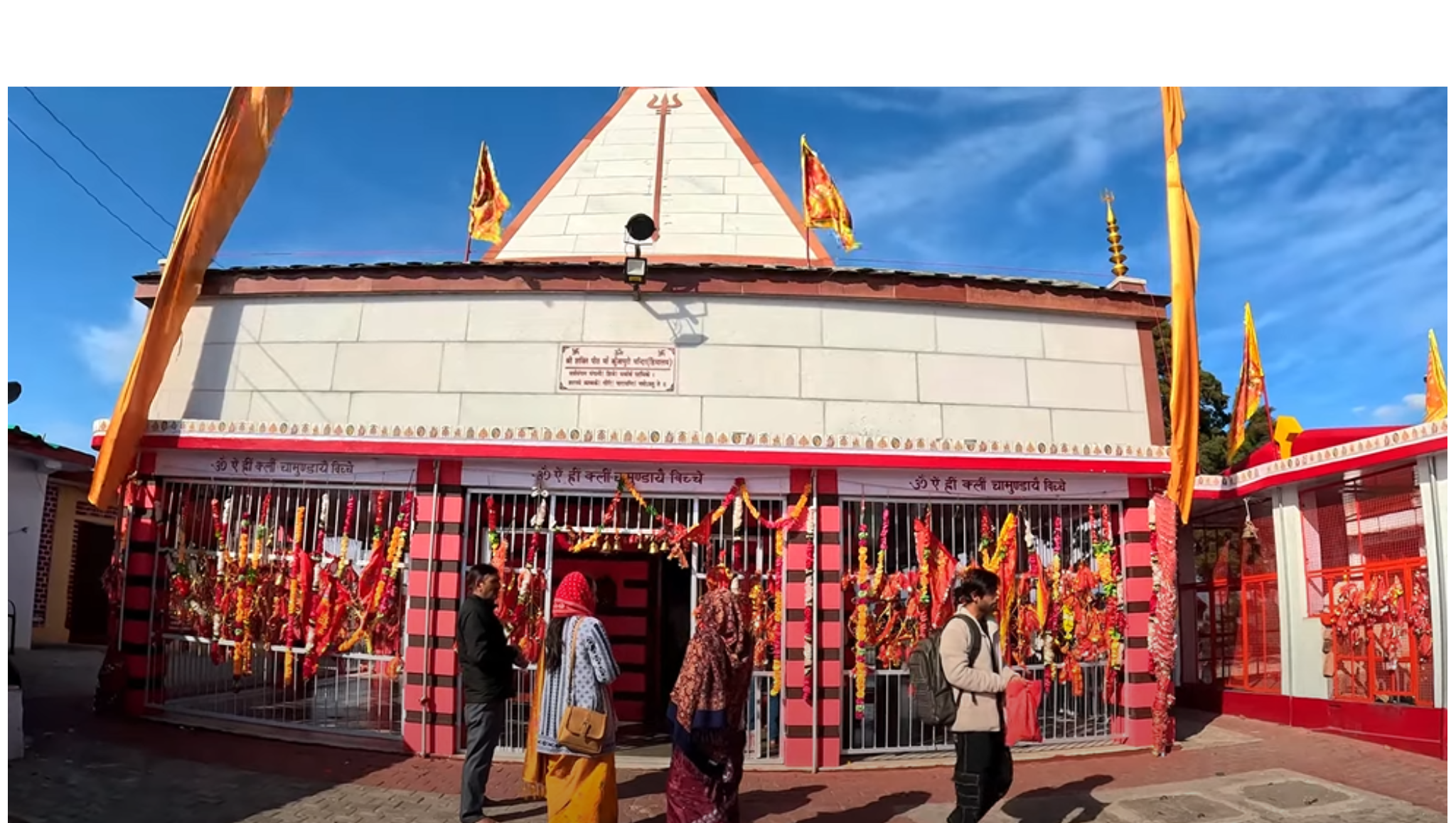
Trek difficulty
Easy
Trek duration
1 Days
Trek altitude
5498 Ft
Group size
6-12
Trek distance
10 Km
Basecamp
kunjapuri temple
Best Time
All Time
Pickup Point
Dehradun/Rishikesh
It is some hour before sunrise, stillness Rishikesh has a way of it, the sort of old-fashioned stillness that is older than sound itself. Then above the murmuring Ganga, the sleeping hills, there is a ridge which receives the first light before anything else we have to do with it the Kunjapuri, the temple, 1,650 meters above sea level, which lies between myth and the mountain. The journey to it is not only a climb up and down the altitude, but, through strata, mythology, and self.
Itinerary Kunjapuri Temple Trek— Pathways to the Goddess
The Kunjapuri Temple Trek isn’t one route; it’s three different pilgrimages wrapped around a single destination. Each path offers a distinct rhythm — one of devotion, one of discovery, and one of descent. The choice depends on whether you wish to chase the sunrise from the temple, climb your way up through silence and oak forests, or wind your way back down into hidden waterfalls and Rishikesh’s hum.
Option 1: Drive from Hotel to Kunjapuri Temple and Back
Three to four hours will be required for the complete round trip journey. People who want to experience spirituality without climbing should visit this location during sunrise.
Most travellers choose to greet Kunjapuri Temple at dawn, when the first light spills across the Garhwal Himalayas. The drive starts before dawn between 4:30 and 5:00 a.m. as you travel through the dark areas of Rishikesh before reaching the peaceful hill villages of Tapovan and Hindolakhal. The city lights disappear while the temperature drops and pine tree aromas take over from the urban pollution.
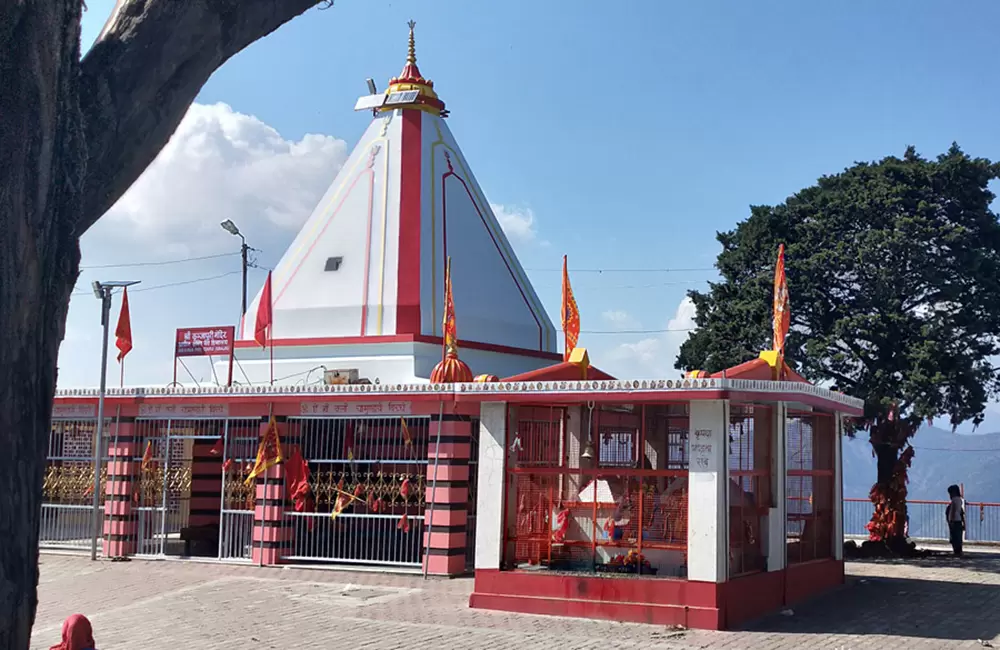
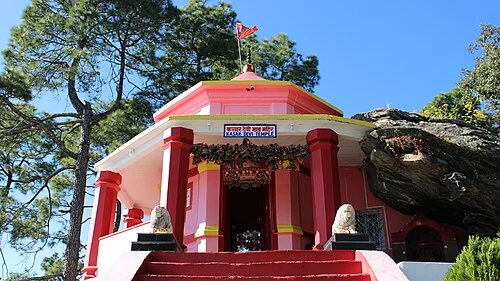
Your vehicle will show the eastern horizon starting to turn pink when it reaches Kunjapuri Hill base at 1,650 meters above sea level. A short trek of about 300 stone steps leads to the temple which stands as one of India’s 52 Shakti Peethas dedicated to Goddess Durga.
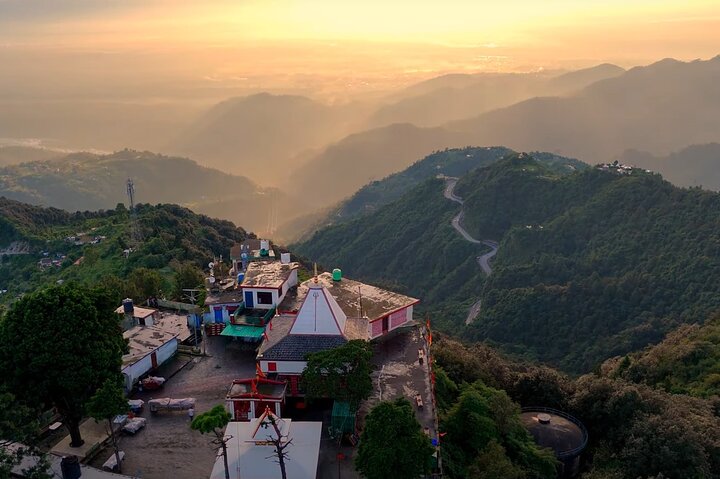
At the summit, you’re met not just by prayer bells, but by a panoramic revelation — peaks of Swargarohini, Chaukhamba, Bandarpunch, and Gangotri ranges shimmer under the first strike of sunlight. The Doon Valley reveals itself as a vast green bowl which contains the faint lights of Rishikesh and Haridwar settlements.
Locals and sadhus gather here every morning — some meditating, some simply sitting in silence as the day ignites. The temple priest offers blessings to visitors through the application of tilak and distribution of prasad while the sound of conch shells blends with the mountain breeze.
After sunrise, you can linger for chai at a small shack nearby, then descend the steps, return to your vehicle, and drive back to Rishikesh — reaching your hotel by late morning as the city begins to stir awake.
Option 2: Trek from Secret Waterfall Point to Kunjapuri Temple and Drive Back
The trek demands five to six hours for a single direction and the return journey takes one and a half hours by car. The trail suits hikers who want peaceful nature paths while they develop their spiritual connection at a steady pace.
The route demands climbers to reach the summit through their own physical effort. You begin from Secret Waterfall Point, about 3 km uphill from Tapovan, where a small dirt trail disappears into the jungle. The trail passes through thick oak and rhododendron and pine forests while it opens up at specific points to show views of the distant valley.
The route shows signs of ancient use because villagers together with monks and herders used it while stone steps appear between mossy rocks at different points. The route takes you through Kyardu and Banglow Ki Kandi which are two small villages.
The sounds of the city fade entirely, replaced by rustling leaves, distant temple bells, and the murmur of unseen streams. The forest transforms into open ridges when you reach an elevation gain of about 800 meters during your gradual ascent that lasts until mid-morning.
Travelers from these ridgelines obtain access to two distinct views which include the snow-covered peaks on one side and the Ganga valley that flows beneath on the other side. The trail shows its most beautiful side during spring when red buransh (rhododendron) flowers emerge but during monsoon the mist appears as smoke that creates an otherworldly gray atmosphere.
The temple welcomes you at noon with fluttering flags and soft chanting and the aromatic smell of incense. The terrace offers a view that shows the complete Garhwal skyline as if it were right in front of you. After spending time at the temple, a vehicle will pick you up for the drive back down — a winding descent through pine forests and local hamlets that feels like rewinding through a story you’ve just lived.
Option 3: Drive Up to the Temple and Trek Down to the Secret Waterfall
The total time required for this activity is between 5 to 6 hours which includes both driving and trekking. The trail suits explorers who want to experience both sunrise views and forest trails with moderate difficulty.
This route begins much like the first — with a predawn drive to the temple to witness sunrise over the Himalayas. The day starts at 1,650 meters when you stand above the clouds while the snow peaks glow with orange light. The temple exploration along with its view leads you to start your walk downhill through the forest path which takes you back to Secret Waterfall Point.
The downhill path becomes completely different when you see it during daylight hours. The forest environment interacts with you through sunlight which passes cedar and oak trees as monkeys move between branches and you hear water sounds from far away. The route takes you through terraced agricultural land and stone-built homes while providing views back to the temple you previously visited.
The Secret Waterfall becomes visible through fern-covered rocks when you follow the stream at the halfway point. It’s a good spot to rest, eat, or even dip your feet into the icy water — a quiet transition from the spiritual stillness of Kunjapuri to the earthy calm of Rishikesh’s outskirts. The trek ends near Neer Garh or Tapovan, where vehicles await to drive you back to your hotel. The majority of students complete their work during the first half of the day.
In Essence ach route to Kunjapuri Temple offers a different conversation with the mountain.
The Essence of Geography and Trails of the Mountain.
Kunjapuri is situated in the Shivalik range, the youngest halt of the Himalayas the meeting of the battle-tossed Indian and Eurasian plates. The landscape is animated – loose moraine, rocky spur, blocks of subtropical forest made by overstitching with narrow paths used by mules. This path starts some few kilometres above Narendranagar, some 25 km of Rishikesh, and passes through groves of pine and rhododendron that even in the beginning of summer retain the smell of winter.
It is an easy path, scarcely 5.5 kilometers of footwork, even beginning at the village of Hindolakhal, yet it cannot be approached with disdain: it has steep steps, bare ridges, and occasionally at this time of the year the trail leads into dust. However, the reward is breath-taking, a 180 degrees panorama leading to Gangotri, Chaukhamba, and Swargarohini and Bandarpoonch on a clear day. On the other side, the Doon Valley stretches out in the form of an emerald basin, the mist floating softly over it.
Temple in the sky Mythology and Legends.
Kunjapuri forms one of 108 Siddha Peeths that are devoted to Goddess Shakti. As per the Devi Bhagavata purana, the burnt body of Sati was being transported by Lord Shiva upon her self-imburial, and they further divided into various pieces harbored on different locations on earth and that formed a worshipable Shakti Peeth each. Sati it is said, fell here, and made the hill thus sacred.
The plain temple is monumental in its energy and the watch-tower of the Garhwal Himalayas. The locals believe that when there is a Navratri, goddess is awake, and she is watching the people – the time when the mountain is vibrating with chants and conch shells in the morning hours. A mystery spoken secretly by the people of Hindolakhal.
There is a more or less unknown mythos that is whispered about by the inhabitants of this place, and that is, the goddess appeared here once as a pillar of flame and was observed by shepherds who were the first followers of the goddess. The temple is glowing to this time in certain angles of sunrise at some angles appearing amber and this look eerily lively as though the myth is still alive.
A Walk of Faith to the Soul– The Sunrise Adventure.
The difference in this trek is not in the distance, but it is in the time. Kunjapuri in the glass of the sunrise is one of the few Himalayan experiences that makes you feel like forced down to his knees by nature. Trekkers typically make an early departure of around 4 a.m. at Rishikesh and travel up to Hindolakhal, and start the climb, with the cold sky sprinkled with stars.
The ascent lasts approximately 1.5 to 2 hours depending on the speed. As the path winds and disappears the air has become light. And suddenly the ignition of the eastern ridge takes place, the initial ray cuts across the horizon, and the mountains in the distance start to glitter. The villagers assure that the goddess herself opens her eyes as soon as the first light appears, and the ones who look through the window at it have her blessings on their side throughout the year in case of a good intention. With or without belief in it, one cannot help feeling that, a marriage between the divine and the earthly, between myth and morning.
Flora and Fauna Life between the Stones.
The Kunjapuri biodiversity is neglected. These bottom areas around Hindolakhal are covered with sal and chir pine which are replaced by oak and rhododendron in mid altitude. During spring, the rhododendrons are set ablaze with scarlet and Himalayan bulbuls and sunbirds come to feast. Other animals in the area include the langurs, barking deers, Himalayan black bears but they are seldom seen and they should be left at their luck rather than hunted.
The slopes themselves are overrun with medical herbs that locals use, where kutki, jatamansi and atis plants were trading items between Garhwali shepherds and Rishikesh sadhus. The odour of the pine resin blends with wet soil to form the comfortable smell of a Himalayan morning that not even a perfume bottle can give.
Option 1: Drive from Hotel to Kunjapuri Temple and Back
Option 2: Trek from Secret Waterfall Point to Kunjapuri Temple and Drive Back
Option 3: Drive Up to the Temple and Trek Down to the Secret Waterfall
Kunjapuri gets painted in different ways with each season.
Despite the short distance, readiness separates comfort from regret.
• Footwear: Trekking shoes that are lightweight and have good traction (avoid sneakers; the trail may be slick or dusty).
• Clothes: layered, consisting of a windproof shell, fleece or light jacket, and base layer.
• Accessories: energy bars, a small backpack (20L), a headlamp or flashlight, and a water bottle (at least 2L).
• Optional Equipment: A camera with an extra battery (the cold quickly depletes them), and trekking poles for stability on steep descents.
• Seasonal Add-ons: Bring a poncho or rain jacket in the monsoon and gloves, a woolen cap, and thermals in the winter.
Kunjapuri tests presence rather than endurance, in contrast to the multi-day Himalayan expeditions. The view is brief but eternal, the climb steep but short. The summit altitude creates a mental state of peace which makes heavy objects seem less important according to what trekkers report.
Since the goddess prefers sincerity over strength, many locals hike barefoot.
The trek teaches people about humility and environmental protection because it shows how forests transform at different heights and how slopes become unstable and how plastic bottles create environmental damage. To keep the goddess’ mountain as pristine as her legend, Thin Air Expeditions advises all hikers to abide by the Leave No Trace philosophy.
Follow Leave No Trace principles to protect the mountain goddess from losing her sacred status.
What Makes Kunjapuri Unforgettable: Its Soul
Kunjapuri offers more than just the daily sunrise and its natural beauty. The practice exists as a combination of spiritual intensity with physical simplicity. The service delivers the most peaceful Himalayan sunrise experience to both experienced veterans and first-time visitors.
The view from the top shows the entire Rishikesh valley together with the snow-covered peaks of upper Garhwal Himalaya and distant Mussoorie. The vastness of the universe and human tranquility become apparent through a single Indian trek which lasts only a short time.
The sensation of ancient life and current vitality emerges when you watch the wind from that valley ridge. The natural beauty exists independently of human approval because it demands direct observation instead of seeking validation from others.
The Kunjapuri Temple Trek requires answers to various questions from travellers.
The path to Kunjapuri Temple presents a challenging journey.
The trail shows hikers with basic fitness levels an easy to moderate level of difficulty.
The path shows a short section of steep climbing that hikers must navigate.
The distance between Rishikesh and Kanjapuri measures about 25 kilometres when traveling by road. The driving distance to Hindolakhal requires about 45 to 60 minutes.
There is no need for a permit. A local guide provides extra value to the experience through their storytelling and shortcut knowledge but their presence remains optional.
People regularly choose to go trekking on their own. Trekkers should, however, bring headlamps and let someone know their plan before dawn.
The brightest skies and most visible mountain peaks occur between October and April. The summit requires your arrival at least thirty minutes before sunrise.
There aren’t many guesthouses close to Hindolakhal and Narendranagar. The majority of trekkers spend only half a day in Rishikesh.
The location remains accessible throughout the year except for two specific times which include heavy rain periods and local religious ceremonies. For quiet visits, the best time to go is in the morning (5–8 a.m.).
The Kunjapuri Temple Trek does not aim to establish superiority through competition or test physical endurance. The silent challenge of scale testing shows the Himalayas exist for viewing purposes rather than for human conquest.
Kunjapuri provides eternal access to the goddess and sunrise and peaceful moments between them without requiring anything in return.
Under the first light of dawn, when the peaks turn gold and bells ring faintly in the cold wind, you’ll understand why some places are not destinations, but thresholds.
The Kunjapuri offers its gift without request and without any fuss to provide eternal access to the goddess and sunrise and the peaceful moments between them. The first light of dawn creates golden peaks which mix with chilly wind-bells to prove that particular locations serve as entry points instead of being final destinations.
Kunjapuri provides it without asking, without drama, just, forever, whether you’re looking for the goddess, the sunrise, or simply the quiet between the two.
The golden peaks of early morning light along with the soft ringing of bells in the cold wind will reveal to you which locations function as entrances instead of final destinations.


₹4000 | $43
1 Days
Uttarakhand
10 Km
All Time
₹40000 | $500
10 Days
Uttarakhand
-
May–June
₹10000 | $109
2 Days
Uttarakhand
1 km
March to June/ September to November
Testimonials

Rakesh dulams
Nice experience with the thinAir expedition and accommodation and hospitality and safty such as taken personal care and well experienced guide and such a cool guy

Aditi 99
I had an amazing experience with thin air expeditions. The food, the hospitality, and the preparedness of the staff for all sorts of scenarios was commendable. The location of camps was perfect. Even though i was a female solo traveller , i felt very safe and comfortable. Couldn’t have asked for a better team.

Radandi Shashank
“You are not just a mountain trek guides, but a true guardian of the journey. Your unwavering loyalty to our team, the mountains, and safety itself is extraordinary. Every step felt secure because of your dedication, integrity. And stayed committed to every trekker, through every challenge, with patience, care, and honesty. Huge respect to Subodh Jii n Aditi Mam!! Thank youu @thinairexpedition It was wonderful experience!!❤️❤️

67D3_KALYAN
Completing the Kedarkantha trek at an altitude of around 12,500 feet was not just a trek for us, it was a life-long memory, and a major reason for this unforgettable experience is our guide Shubhod Sir. From the very first day till the summit, Shubhod Sir guided us with immense patience, discipline, and genuine care. At every difficult patch, when our legs were tired and breathing became hard, his calm words, constant motivation, and confident leadership gave us the strength to keep moving forward. He never rushed anyone and always made sure that every member of the group was safe, comfortable, and mentally strong. Shubhod Sir’s knowledge of the mountains, weather, and high-altitude conditions was truly impressive. More than a guide, he felt like a protector and mentor who treated everyone like family. His positive attitude and humble nature created a sense of trust and confidence among all of us. We are also thankful to Atidhi Madam for her support and cooperation during the trek, which added to the smooth experience. Because of Shubhod Sir’s guidance and dedication, we successfully reached the summit with confidence and joy. We will always remember this trek with gratitude and respect. Truly blessed to have a guide like him. 🙏⛰️

Arvind Sahu
Wonderful experience totally worth it. At those price they provided services that no one could provides really enjoyed ❤️🎉

Kolanu Anirudh
This is my first trek in Uttarakhand(Kedharkanta) and Thin Air Expedition made it a memorable one Thanks for everything subodh bro you made it so special.

kanica kandpal
Completed the Gaumukh–Tapovan trek with Thin Air Expedition, and it was an exceptional experience from beginning to end. Instead of opting for a fixed-departure model, we chose a personally curated itinerary, as this was our first trek—and it turned out to be the perfect decision. The team was extremely thoughtful in planning each day’s distance, ensuring we were comfortably challenged without ever feeling overtired or exhausted upon reaching the campsites. Every campsite was carefully selected, offering not just safety and comfort but also breathtaking views that made each halt truly memorable. What stood out most was the level of personalization. The itinerary was clearly tailored to our pace and comfort, and the trek leader constantly shared insightful facts about the region, its geography, and cultural significance, adding depth and meaning to the journey. Overall, Thin Air Expedition delivers a highly personalized, well-paced, and enriching trekking experience. I would highly recommend them, especially for first-time trekkers looking for a safe, informative, and thoughtfully curated adventure.Sen

Raj Bahadur
I booked my trek with Thin Air Expedition on a friend’s recommendation, and it turned out to be a great decision. They managed travel and accommodation very smoothly, and everything was well organized throughout the journey. The team stayed in regular coordination, ensuring that stays and drivers were properly arranged each day. The entire trip was timely, hassle-free, and also pocket-friendly. I would definitely recommend Thin Air Expedition—you can trust them completely with your travel and trekking plans.

sachin aulakh
I recently completed the Kedarkantha Trek with ThinAirExpedition, and the entire experience was outstanding. The coordination, communication, and arrangements were excellent. The trek leaders were experienced and friendly, the support staff was humble, the stay was comfortable, and the food quality in such high altitude conditions was truly impressive. Their focus on safety and responsible trekking made the journey even better. I would definitely choose them again for my next Himalayan adventure! 🏔️✨

Aman rai
I recently completed a trek with the help of ThinAirExpedition, and the entire experience was very comfortable. From stay arrangements to travel from Rishikesh to Rishikesh, everything was well managed. The driver was extremely polite, supportive, and made the journey smooth and stress-free. Overall, a great experience and I would definitely recommend them.

Nitya Jaiswal
Kedarkantha was not just a trek, it was an experience that helped me reconnect with myself. Thanks to Thin air expeditions , I felt safe, cared for and encouraged at every step. The sunrise at the summit, the laughter around the campfire and the kindness of the guides will stay with me forever. If you're looking for a company that treats you like family on the mountains, this is the one.

Biswajit Sahoo
Subodh Sir making the trek so much of fun and intresting .. Awesome Experience with Subodh Sir

Anmol Verma
Overall trekking and accommodation was a very smooth experience. Our trek leader Mr. Ramesh was amazing and very helpful. He managed to make the trek look easy. Overall experience was 10/10. Would highly recommend.

Rishabh Singh Rana
Trek Guide Mr. Ramesh Ji is a very cool & good person. Trek journey became beautiful with the group and overall it became my one of the best experience.

aditi vaidya
I recently went on a trek with Thin Air Expeditions, and I can't get over the experience I had! I did the Phulara Ridge trek with Subodh sir, and it was an incredible experience. What made it even more special was that Subodh sir made sure I could bring my dog, Flake, a toy pom. His team and him took such great care of us, and it was clear that they truly care about their guests, human or canine! The group was amazing too. I met some wonderful people along the way, and we formed lifelong bonds. The whole experience was beautiful – from the breathtaking views to the friendly, supportive environment. I’ll cherish these memories forever! If you're looking for a SAFE, well-organized, fun, and caring trekking company, Thin Air Expeditions and Subodh sir are the ones to go with!

Anuja Vaidya
It was a wonderful experience with TAE on Phulara ridge trek, everything was on point the gears, food, trek guides and Subodh sir himself was an amazing leader who is the founder of TAE, he made sure the experience was amazing even for the first timers keeping safety the first priority. Also I took my Dog, Flake along with me for the trek and it was a great experience for her as well and her food and safety was well taken care of . 🐾 Would love to go back again with Thin air expedition. Thank you so much 🤗

Simran Samal
Phulara Ridge Trek – A Memorable Experience for me !!! Someone once told me, “Trips aren’t just about travel — they become a part of you.” I never really believed it, but this time, Phulara Ridge became exactly that for me. Our first campsite — the forest trail, the tents, the whole setting — gave me the first taste of what was to come. Everything was so thoughtfully arranged, it felt like nature itself had prepared that space for us. All thanks to our trek leader, Subodh bhai 🙌🏻. The next stop was magical in its own way. The campsite was picture-perfect, and we even ended up learning a bit of the local Uttarakhandi dance from Dev bhaiya (well… I tried to! 😄). In the evenings, we played games and spent such a good time that we forgot the weight of city life for a while. And finally, the Ridge: Honestly, we thought the weather would block the views, but Subodh bhai timed it so perfectly that the skies cleared for us. Walking on the ridge — one valley on the right, another on the left, clouds passing beneath us — felt surreal. We sat there for hours, just soaking it all in. It was pure peace. And yes, we even made tea there!!! 🫶🏻 (Of course, we made no mess, cleaned it all up, and left the space exactly the way it should be 😌). For me personally, trekking has always been like meditation — a way to quiet the noise and reconnect with myself. This trek with Subodh bhai and the team gave me exactly that: peace, perspective, memories for a lifetime, and inspiration. #SoGrateful 🙏🏻 Thank you, Subodh bhai and team, for making this such a soulful and unforgettable journey! Lastly Just one note for all: “In the end, we don’t conquer mountains; they help us discover who we truly are.” To anyone even considering it: please go with #ThinAir Expeditions to experience the rawness of trekking, the beauty of nature, and the joy of escaping city life for a while. You’ll come back not just with pictures, but with stories, stillness, and a piece of the mountains in your heart. All the best !!! ✌🏻

Netra Sharma
It was a wonderful experience with ThinAir Expedition. I went on my first trek to Phulara Ridge, and it was truly amazing. Our guide, Subodh ji, managed everything so well and remained patient throughout the trek. I enjoyed every moment and every spot. The place, the cook, and the helpers were all wonderful. The food and camps were awesome. I highly recommend joining ThinAir Expedition to experience the best of “pahadi” life!

Vaibhav Srivastava
Thin Air Expedition gave us the best experience while trekking. Everything was finely arranged and properly taken care of whether it was travel, food. Staff availablity. But the best part was free hand while trekking. Subodh led us beautifully taking in note that everyone reaches the base camp and everyone is doing well. Consulting our next phase keeping in mind the safety and gears. It was collectively very amazing. He gave us full free hand additionally it is our responsibility as well to take care of each other. We did so many activities had games and fun and he even taught us how to camp. How to set up it was fun. If it would've given me option I'll rate it 10. Thanks subodh and team and thin air expedition for such a memorable trip.

Somya Chaturvedi
I recently did the Phulara Ridge Trek with Thin Air Expedition, and it was my first trek ever truly an unforgettable experience! Everything was so well managed from safety arrangements and equipment to food and stay, I never had to worry about a thing. Our trek leader, Subodh, was extremely supportive, patient, and motivating, which made a huge difference for a first-timer like me. The food was simple, homely, and very satisfying after long trekking hours. Most importantly, safety was always the top priority. For anyone planning their first or next trek, I’d highly recommend Thin Air Expedition. Professional, caring, and passionate about making the experience memorable!
We're always ready for adventure
Trekking comes with uncertainty. Weather, terrain, and setbacks are part of the journey. We embrace them with resilience and openness—each challenge makes us stronger and more appreciative of nature's beauty.
We embrace low-noise trekking
We blend into nature, not the other way around. We avoid shouting, loud music, and noisy games. In silence, we hear birdsong, streams, and the wind—inviting peace, reflection, and a deeper connection with nature.
We protect the environment
We protect the environment by minimising waste, reusing resources, and picking up litter. We carry eco-bags, segregate waste, and inspire others to preserve trails. Sustainable trekking ensures these mountains remain beautiful for future generations.
We are self-sufficient
We carry our load as much as possible, manage our gear, and stay prepared for all situations. Self-sufficiency builds confidence, independence, and respect for fellow trekkers, support staff, and the trail itself.
We support each other
Trekking is not a solo act. We wait for each other, share burdens, and uplift teammates. By putting the group first, we build strong bonds and help everyone complete the trek joyfully.
We are fit and prepared
We train well before our treks. This helps us walk longer, handle emergencies, and contribute to the team. Fitness ensures we are never a burden and always ready to help when needed.


