Aancha Top Trek Complete Guide to Route Difficulty Best Time Cost Itinerary
Aancha Top Trek Complete Guide to Route Difficulty Best Time Cost Itinerary
18
Aug

Introduction: Discover Aancha Top, Uttarakhand’s Emerging Offbeat Himalayan Trek
There are Himalayan treks that become famous because thousands of people walk them every season, and then there are trails that remain relatively quiet, allowing the mountains to remain the centre of the experience. Aancha Top Trek belongs to the latter category.
Situated in the Yamunotri region of Uttarakhand, Aancha Top is an emerging destination for trekkers who want to explore a lesser-known Himalayan landscape. The trail takes you through the forests and high meadows of the Garhwal Himalayas before leading towards a high ridge and the Aancha Top summit. With a maximum altitude of roughly 12,500 feet, a trekking distance of around 24 kilometres, and an itinerary commonly planned over six days, it offers a genuine high-altitude trekking experience without requiring technical mountaineering skills.
What makes the Aancha Top Trek in Uttarakhand particularly interesting is the variety of landscapes encountered during the journey. You don't spend the entire trek walking through one type of terrain. The route gradually changes from Himalayan forest to open meadows and then to the exposed landscape of the higher ridge. By the time you approach the summit, the dense vegetation has given way to expansive mountain views.
The trek also offers an opportunity to experience the Yamunotri Valley from a different perspective. Rather than simply visiting a well-known Himalayan destination, you spend several days walking through the mountains, camping at altitude and watching the landscape change with every kilometre.
For trekkers searching for offbeat treks in Uttarakhand, a relatively less-crowded Himalayan experience, or a new destination to add to their trekking calendar, Aancha Top is an intriguing option.
But before you start planning your backpack, there are several things worth knowing. Where is Aancha Top Trek located? How difficult is it? What is the Aancha Top Trek route? How many days does the trek take? Is it suitable for beginners?
Let's explore the trek from the beginning.
The Aancha Top Trek is a Himalayan trekking route in the Garhwal region of Uttarakhand, situated in the broader Yamunotri Valley. The trekking journey begins around Ranachatti, from where the trail gradually climbs into the mountains towards the high-altitude landscapes of Dinnala and eventually Aancha Top.
The summit rises to approximately 12,500 feet, making it a proper high-altitude trek even though its overall difficulty is generally described as easy to moderate. The route is approximately 24 kilometres long, although the exact distance can vary slightly depending on the itinerary and route followed by the trekking operator.
The attraction of Aancha Top isn't only the summit.
In fact, if you look at the trek as a complete journey, the summit is almost the final chapter of a much longer story. The trail begins amid Himalayan forests, where the mountains still feel relatively enclosed. As you climb higher, the trees begin to thin and the landscape becomes more open. Eventually, you enter the expansive meadow environment around Dinnala Bugyal, before progressing towards the ridge and the summit.
This transition makes the Aancha Top Himalayan trek particularly rewarding for people who enjoy landscape diversity.
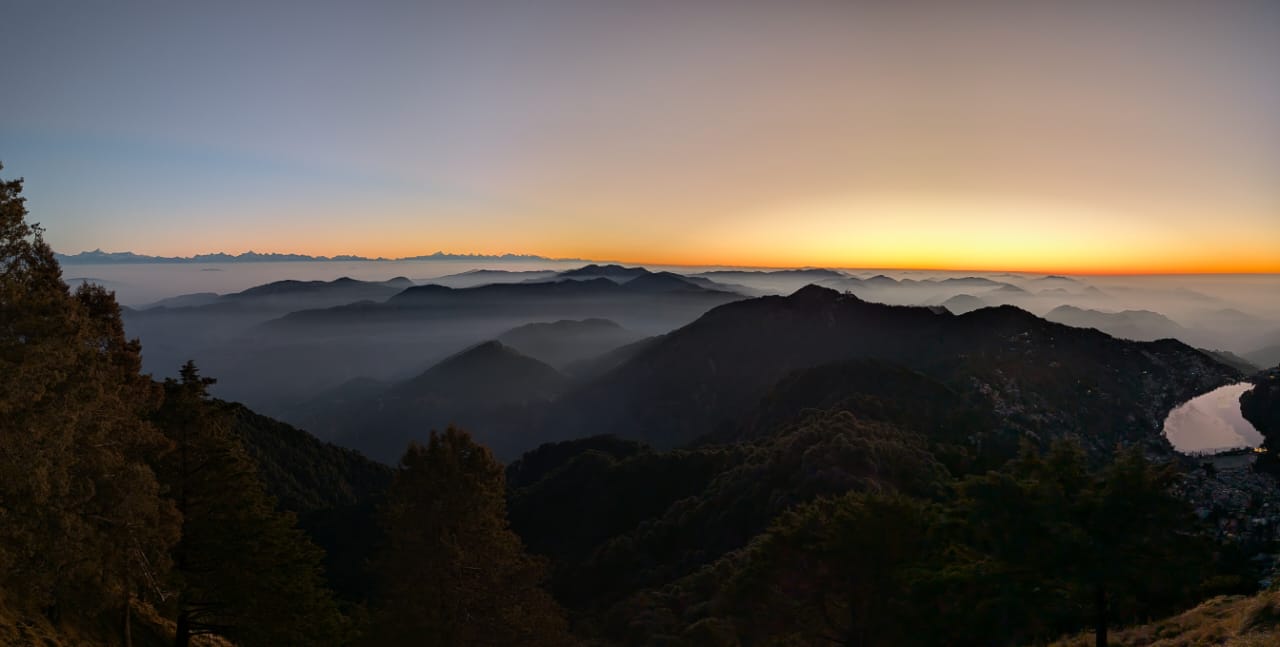
The higher sections provide an entirely different perspective. Instead of looking at the mountains through gaps between trees, you begin standing in open terrain with wider views of the surrounding Garhwal Himalayas. On a clear day, the summit area can provide impressive views towards prominent Himalayan ranges and peaks.
Another reason trekkers are beginning to notice Aancha Top is its relatively quiet character. It doesn't yet carry the same level of recognition as some of Uttarakhand's established trekking destinations.
That can be a major advantage for travellers who aren't looking for a crowded trail.
Aancha Top gives you the opportunity to experience the mountains at a slower pace, where the forest, meadow, ridge and summit each become part of the adventure.
And that is what makes it more than simply another point on a trekking map.
If you're searching for “Where is Aancha Top Trek located?”, you will find it in Uttarakhand's Uttarkashi region, within the Yamunotri Valley of the Garhwal Himalayas.
The commonly used gateway for the trek is Ranachatti, a mountain settlement that becomes the starting point for the walking portion of the journey. Trekkers generally approach Ranachatti by road from Dehradun before beginning the actual trek.
For someone travelling from another city, this is useful information while planning the journey. Your trekking package may begin with transportation from Dehradun, or you may need to arrange your own travel to the reporting point. The exact arrangement depends on the trekking operator, so it is important to check the current itinerary before booking.
Geographically, the location is one of the reasons the trek is so appealing.
The Yamunotri region is surrounded by the dramatic landscape of the Garhwal Himalayas. As you move away from the road and begin walking, the environment gradually becomes more remote. The sounds and movement of the plains disappear, and the experience becomes increasingly centred around the trail, the forests and the mountains.
Ranachatti therefore isn't merely a starting point on an itinerary. It represents the point where the journey changes character.
From here, the Aancha Top trek route begins its gradual ascent through Himalayan terrain. The lower sections introduce trekkers to the forest environment, while higher sections eventually lead towards Dinnala and the summit ridge.
For travellers searching for an Aancha Top Trek from Dehradun, this also makes planning relatively straightforward. You can structure your trip around reaching Dehradun first and then joining the trekking group for the onward journey.
However, always verify the current reporting point, transportation arrangements and itinerary with your trekking company because operational details can change.
One of the biggest attractions of the Aancha Top trek route is the gradual transformation of the landscape.
The first walking sections take you through Himalayan forest. Depending on the season and exact trail conditions, you can encounter vegetation typical of the middle and higher Himalayan zones, including oak and rhododendron-dominated sections.
Walking through these forests gives the beginning of the trek a completely different atmosphere from the open landscapes that come later.
The trail continues climbing, and eventually the character of the surroundings begins to change. The dense forest starts giving way to more open terrain, and the mountains begin to feel larger because there are fewer trees blocking the view.
Then comes Dinnala Bugyal.
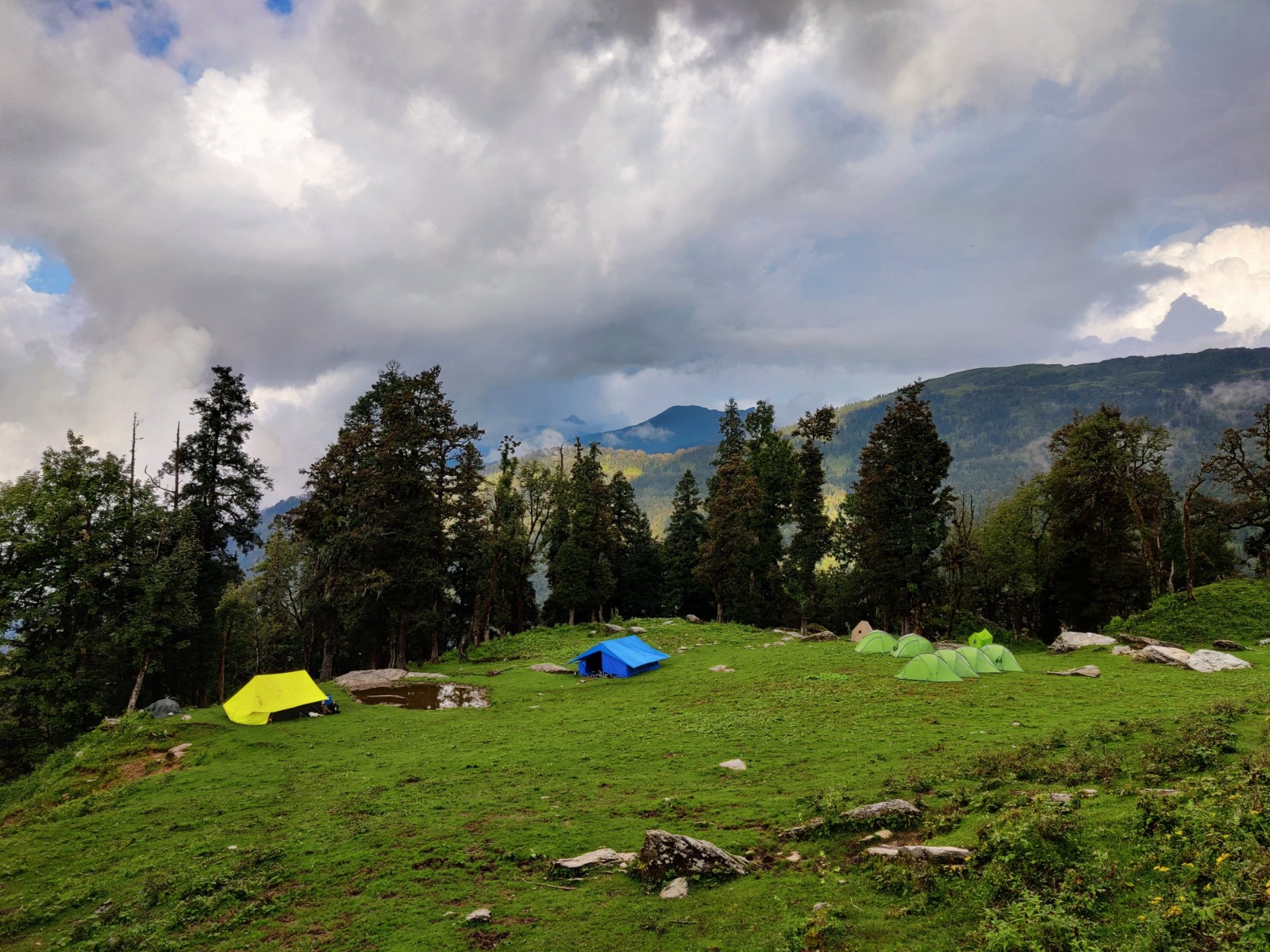
Bugyals are high-altitude alpine meadows characteristic of Uttarakhand, and they are among the most visually striking landscapes found on Himalayan treks. Instead of narrow forest trails, you suddenly have broad open spaces where the sky seems larger and the surrounding mountains become much more visible.
The Dinnala section is an important part of the Aancha Top experience because it provides a transition between the forest and the higher summit terrain.
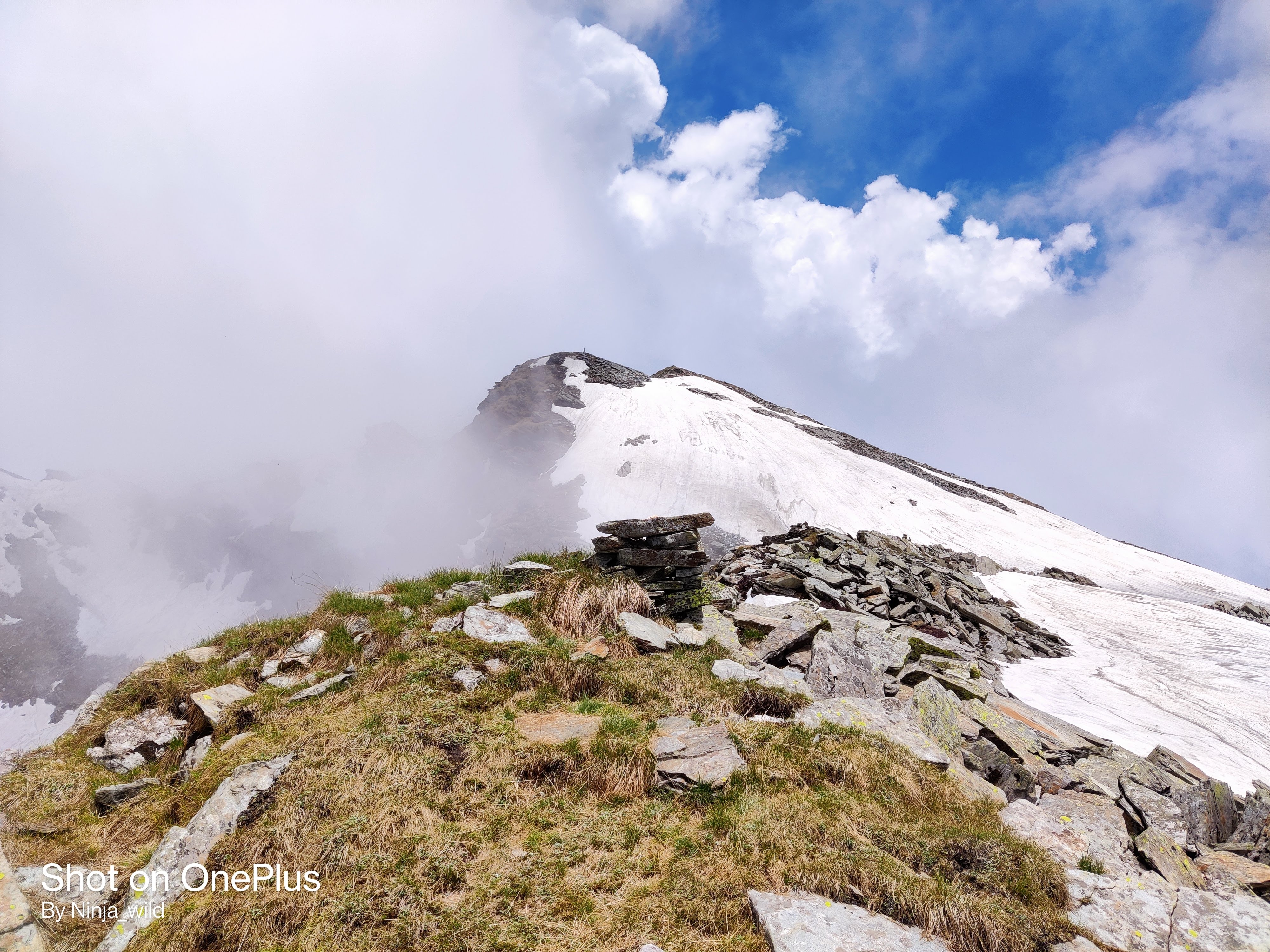
From the meadow region, the trail moves towards the higher ridge. The character of the walk changes again. Ridge sections can feel more exposed than forest trails, and the landscape becomes increasingly dominated by rock, grass and open mountain slopes.
This is also where the altitude becomes more noticeable.
The summit approach is not simply a matter of walking uphill until you reach a marker. It is the culmination of several days of gradually gaining elevation.
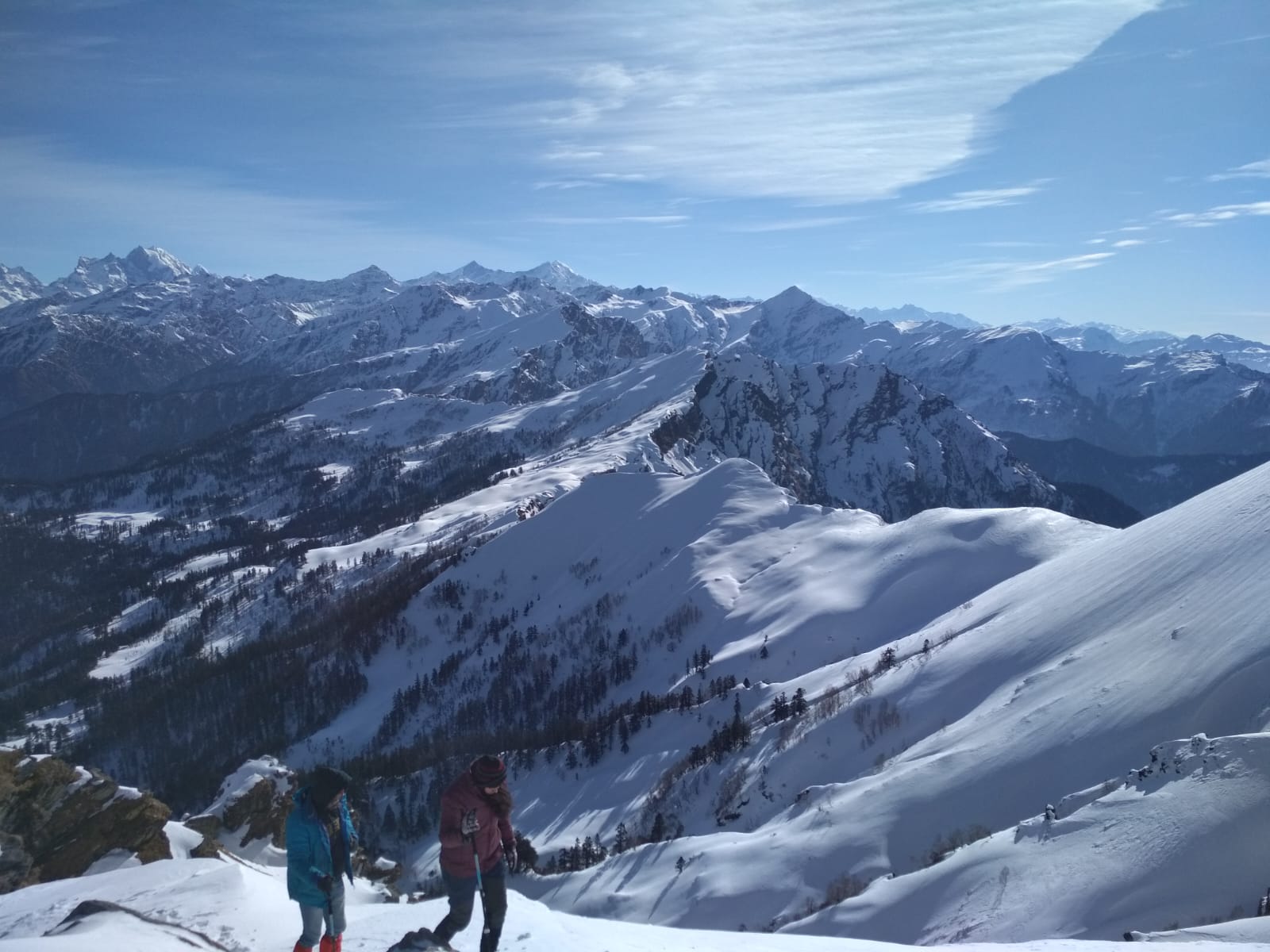
At approximately 12,500 feet, Aancha Top summit provides the reward for that effort. Under clear weather conditions, trekkers can enjoy wide Himalayan views, with prominent Garhwal peaks and ranges visible across the horizon.
The exact panorama depends heavily on weather and visibility. Clouds, snowfall, mist and changing mountain conditions can completely alter what you see from the summit.
That unpredictability is part of the Himalayan experience.
You may start the morning surrounded by cloud and find the mountains suddenly appearing through a break in the weather. Or you may get a crystal-clear summit day when the horizon seems to stretch endlessly.
This combination of forest trails, alpine meadows, ridge walking and Himalayan summit views is what gives Aancha Top its distinctive character.
A typical Aancha Top trek itinerary is planned over approximately six days, including the road journey from Dehradun and the return journey. The exact camping points and distances can differ between operators, so trekkers should always follow the current itinerary provided at the time of booking.
The journey usually begins with the drive from Dehradun to Ranachatti. This first day is primarily a road journey, taking you deeper into the Yamunotri region. Once you reach Ranachatti, you have officially arrived at the gateway of your trekking adventure.
The following day marks the beginning of the actual trek.
From Ranachatti, the trail climbs towards Bamsingh, taking you into the forested Himalayan landscape. For many trekkers, this is when the trip starts feeling completely different from an ordinary mountain holiday. You are no longer travelling through the mountains—you are moving through them on foot.
The next stage takes you from Bamsingh towards the Dinnala campsite. The elevation increases and the surroundings gradually become more open. This is where you begin to appreciate the scale and character of the high Himalayan landscape.
Then comes the most important day of the trek: the Aancha Top summit day.
Starting from the Dinnala area, you climb towards the summit at approximately 12,500 feet. This section can involve sustained ascent and ridge walking, so maintaining a steady pace is more important than trying to reach the top quickly.
The summit is the moment when the different landscapes you've crossed during the previous days come together. Looking back, you can see the terrain you have walked through; looking ahead, you are surrounded by the larger Himalayan panorama.
After spending time at the summit, the route continues towards the designated higher campsite or descends according to the day's itinerary.
The following day takes you back towards Ranachatti. The descent is considerably different from the ascent. Your legs may already be tired from summit day, and uneven sections requirecareful foot placement. A controlled pace is therefore just as important while descending as it is while climbing.
Finally, the journey ends with the drive from Ranachatti back to Dehradun.
What makes the Aancha Top six-day itinerary appealing is that it provides enough time to experience the landscape without turning the trek into a rushed summit attempt.
The mountain isn't something you simply visit for a few hours.
You walk through it, sleep in it, wake up in it and gradually become part of its rhythm.
One of the most important questions for anyone considering this trek is: “Is Aancha Top Trek suitable for beginners?”
The trek is generally classified as Easy to Moderate, which makes it a possible choice for beginners who have a reasonable level of fitness. But the word “moderate” is important.
Aancha Top should not be treated as a casual weekend walk.
The summit is around 12,500 feet, and altitude can make physical exertion feel considerably harder than it does at lower elevations. Even someone who regularly exercises in the city may find that walking uphill at altitude requires more time and energy.
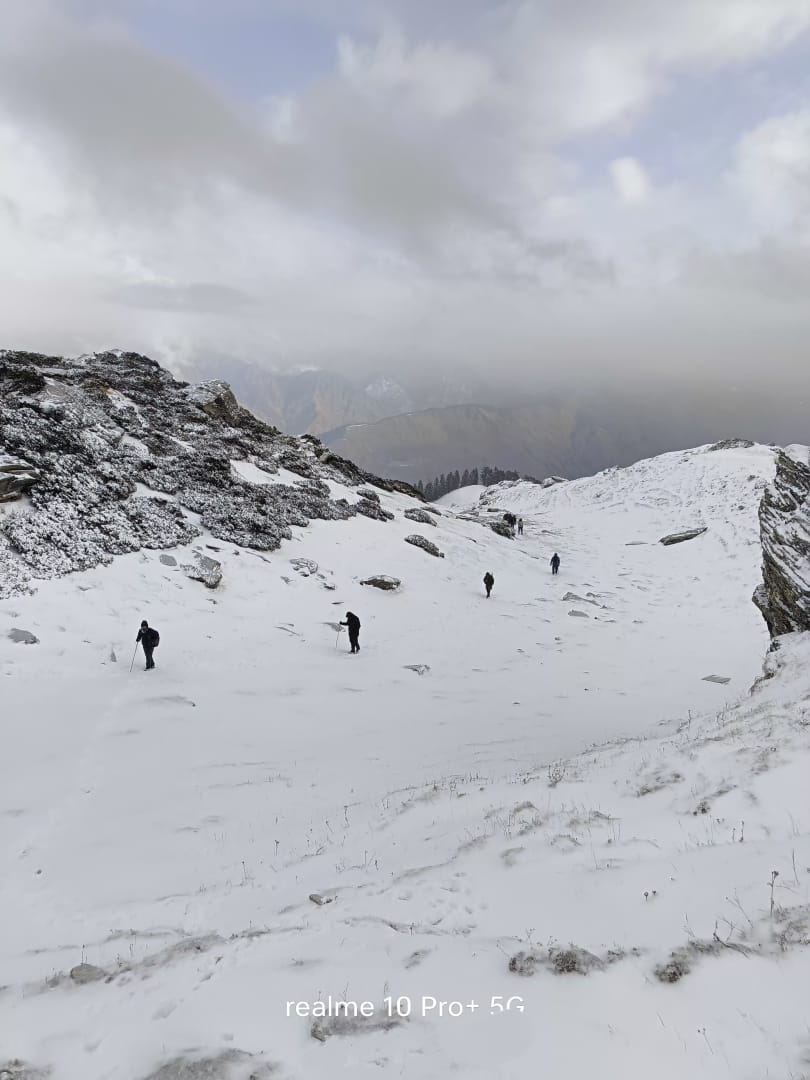
The trek also involves changing terrain. Forest paths may be comfortable underfoot, while higher sections can become steeper, uneven or rocky. If you are trekking during winter, snow and cold weather can add another layer of difficulty.
Your experience will therefore depend on much more than the official trek grade.
Fitness, previous trekking experience, weather, sleep, hydration, pacing and your individual response to altitude all matter.
For a beginner, the best way to prepare for the Aancha Top Trek difficulty is to build endurance before arriving in the mountains. Regular brisk walking, stair climbing and basic leg-strengthening exercises can help your body adapt to sustained uphill movement.
You don't need to become an athlete.
You simply need to arrive prepared enough that the mountain doesn't feel like a shock to your body.
It is also important to understand that a beginner-friendly trek does not mean that altitude can be ignored. At 12,500 feet, your body is operating in an environment with significantly less available oxygen than at sea level. Walking slowly, staying hydrated, eating properly and following the instructions of your trek leader are therefore important parts of responsible trekking.
Weather is another variable.
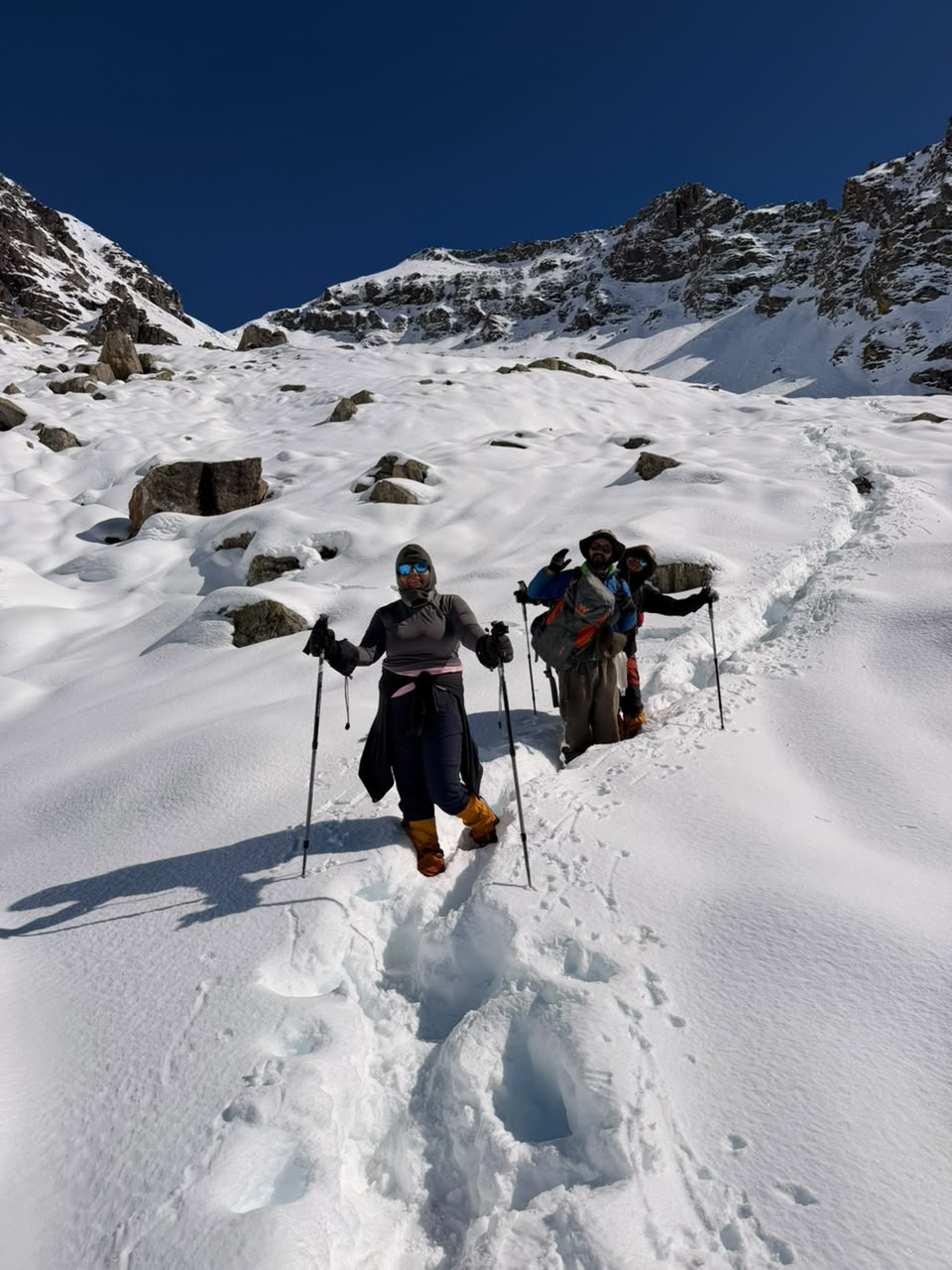
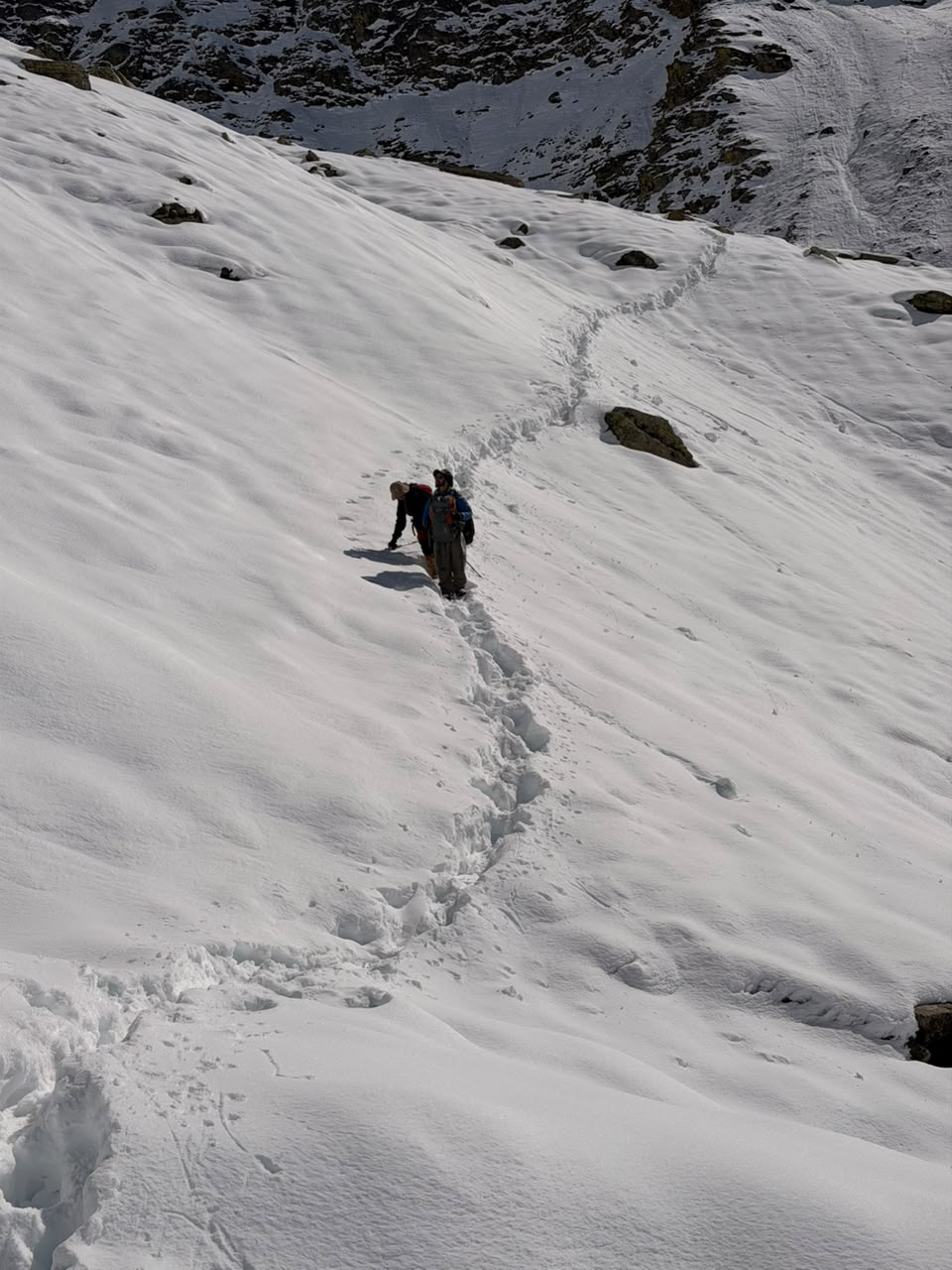
A route that feels relatively comfortable in dry conditions can become considerably more challenging when snow, ice, rain or strong winds enter the picture. This is particularly relevant when planning an Aancha Top winter trek.
So, can a beginner do Aancha Top?
And perhaps that's what makes Aancha Top such an interesting introduction to Himalayan trekking. It offers the feeling of a genuine high-altitude adventure—forests, meadows, ridges and a summit—without requiring the technical climbing abilities associated with more demanding Himalayan expeditions.
When planning the Aancha Top Trek, two of the most important numbers to understand are its altitude and distance. The summit stands at approximately 12,500 feet (around 3,810 metres), while the trekking route is generally around 24–25 kilometres, depending on the itinerary and route followed.
These figures may not sound intimidating when viewed on paper, but altitude changes the way your body experiences a trek. A distance that might feel manageable at lower elevations can require considerably more effort when you are climbing towards 12,500 feet.
The Aancha Top trek altitude is one of the reasons the trek should be approached with proper preparation. As you gain elevation, the air becomes thinner and the amount of oxygen available to your body decreases. You may notice that your breathing becomes faster, your walking pace naturally slows down and recovery between climbs takes longer.
This is completely different from simply walking the same distance in a city or at low altitude.
The gradual ascent through the Aancha Top trek route gives trekkers an opportunity to adjust to the changing environment. Rather than rushing towards the summit, maintaining a steady pace and listening to your body becomes important.
The distance itself is also interesting because the trek packs considerable landscape variation into a relatively compact journey. You move through forests, reach the open terrain around Dinnala Bugyal and then continue towards the higher ridge and summit.
For someone looking for a high-altitude trek in Uttarakhand, Aancha Top therefore offers a combination of manageable distance and significant elevation. It is not an expedition requiring technical climbing, but the altitude is high enough that proper acclimatization, fitness and responsible trekking practices matter.
The Aancha Top trek best time depends largely on the kind of Himalayan experience you want.
If your dream is to experience snow-covered landscapes and a classic Aancha Top winter trek, the colder months can transform the trail into a completely different world. Forests, meadows and ridges may take on a white appearance, and the quiet atmosphere of a winter mountain can make the journey especially memorable.
However, winter also brings lower temperatures, shorter daylight hours and potentially
snow-covered or icy sections. This means that trekkers need appropriate winter trekking gear, good footwear and sufficient protection against cold weather.
Spring offers another beautiful version of the trek. As winter gradually retreats, the landscape begins changing again. Forests become livelier, mountain vegetation starts responding to warmer temperatures and the meadows slowly regain their character.
For trekkers who are particularly interested in the scenery rather than snow, this can be an excellent time to explore the Aancha Top Trek in Uttarakhand.
The warmer months can provide different trail conditions, although mountain weather remains unpredictable. During the monsoon period, rain can affect trail conditions, visibility and road travel, so trekkers should pay close attention to current weather and route conditions.
Autumn is often appreciated by Himalayan trekkers for clearer mountain views and a crisp atmosphere. The landscape can appear dramatically different from the lush conditions of summer.
Therefore, there isn't one month that is universally perfect for everyone.
The best time for Aancha Top Trek depends on whether you want snow, greener landscapes, clearer mountain panoramas or a particular seasonal atmosphere. Before booking, always check the latest trail conditions and choose your dates according to the experience you want as well as your trekking experience.
The Aancha Top trek cost is another important consideration before booking your Himalayan adventure. However, there isn't one fixed price that applies to every trekker.
Your final Aancha Top trek price depends on the trekking operator, itinerary, transportation arrangements, accommodation, meals, equipment and services included in the package.
This is why comparing only the advertised Aancha Top trek package cost can sometimes give you an incomplete picture.
A package may cover transportation from the designated meeting point, camping accommodation, meals during the trek, trek leader support, permits and selected trekking equipment. Another package may offer a lower headline price while excluding some of these services.
Your actual Aancha Top trip cost should therefore be calculated by considering the complete journey.
If you are travelling to Dehradun from another city, your train or flight expenses need to be added. If you arrive a day early, additional accommodation and meals may be required.
Personal expenses, snacks, equipment rental and emergency funds should also be considered.
For first-time trekkers, equipment can make a noticeable difference to the Aancha Top trekking cost. If you already own suitable trekking shoes, warm layers and a backpack, your additional expenses may be relatively low. If you need to rent or purchase most of your gear, the budget will naturally increase.
The smartest approach is not necessarily to choose the cheapest Aancha Top trek package.
Instead, compare what is included and ask whether the package provides the logistics, support and safety arrangements you actually need.
A transparent package makes it much easier to plan your Aancha Top trek budget without unpleasant surprises later.
For trekkers travelling from outside Uttarakhand, understanding how to reach Aancha Top Trek is an important part of trip planning.
Dehradun generally serves as the main gateway for the journey. From Dehradun, trekkers travel towards the Yamunotri region and eventually reach Ranachatti, from where the trekking portion begins.
The road journey itself is an introduction to the Garhwal Himalayas. As you travel away from Dehradun, the landscape gradually changes from the plains and foothills into deeper mountain valleys. The road journey can take several hours, so reaching Dehradun with sufficient time before departure is advisable.
If you are booking an Aancha Top trek from Dehradun, confirm whether transportation from Dehradun to Ranachatti and back is included in your trekking package.
This is especially important when calculating your overall trip budget. The cost of reaching Dehradun from your home city is generally separate unless specifically stated otherwise.
It is also worth confirming the reporting location and time before travelling. Mountain itineraries are often tightly coordinated, and arriving late can create unnecessary complications.
For someone travelling independently, the journey requires more planning because road transport in remote Himalayan regions may not operate with the same frequency as urban transportation.
An organized Aancha Top Trek package can simplify this aspect by coordinating the road journey, accommodation and trekking logistics.
Packing correctly can make a significant difference to your Aancha Top Trek experience.
The goal isn't to carry everything you own. It is to carry what you genuinely need while keeping your backpack manageable.
Your clothing should be based on the principle of layering. Instead of depending on one extremely heavy jacket, use a combination of comfortable inner layers, insulating layers and an outer layer capable of protecting you from wind or precipitation.
Proper trekking shoes are especially important. The Aancha Top trek route includes forest paths, uneven terrain, meadow sections and higher ridge areas, so comfortable footwear with good grip is essential.
A suitable backpack, water bottle, headlamp, sunglasses, sunscreen, personal toiletries and basic personal medication should also be part of your Aancha Top trek essentials.
If you are trekking during winter, your requirements become more demanding. Warm gloves, thermal layers, an insulated jacket, warm socks and appropriate snow protection may become essential depending on the actual conditions.
Trekking poles can also be useful, particularly during steep sections and descents.
Don't forget that the best packing list is not necessarily the longest one. Every additional item eventually becomes weight that your legs have to carry uphill.
There are countless Himalayan treks in Uttarakhand, so why should Aancha Top be on your list?
The answer lies in the variety of experiences it brings together.
The trek begins among forests, gradually opens into high-altitude meadows and then takes you towards a mountain ridge and a summit overlooking the Garhwal Himalayas.
It gives you the feeling of progressing deeper into the mountains rather than simply travelling to a scenic destination.
For trekkers who have already explored popular routes and are searching for lesser-known treks in Uttarakhand, Aancha Top offers the appeal of discovery.
For beginners, it can provide an introduction to high-altitude trekking without requiring technical mountaineering experience. For experienced trekkers, it offers a quieter alternative to some of the more heavily travelled trails.
But perhaps the biggest attraction is the feeling of space.
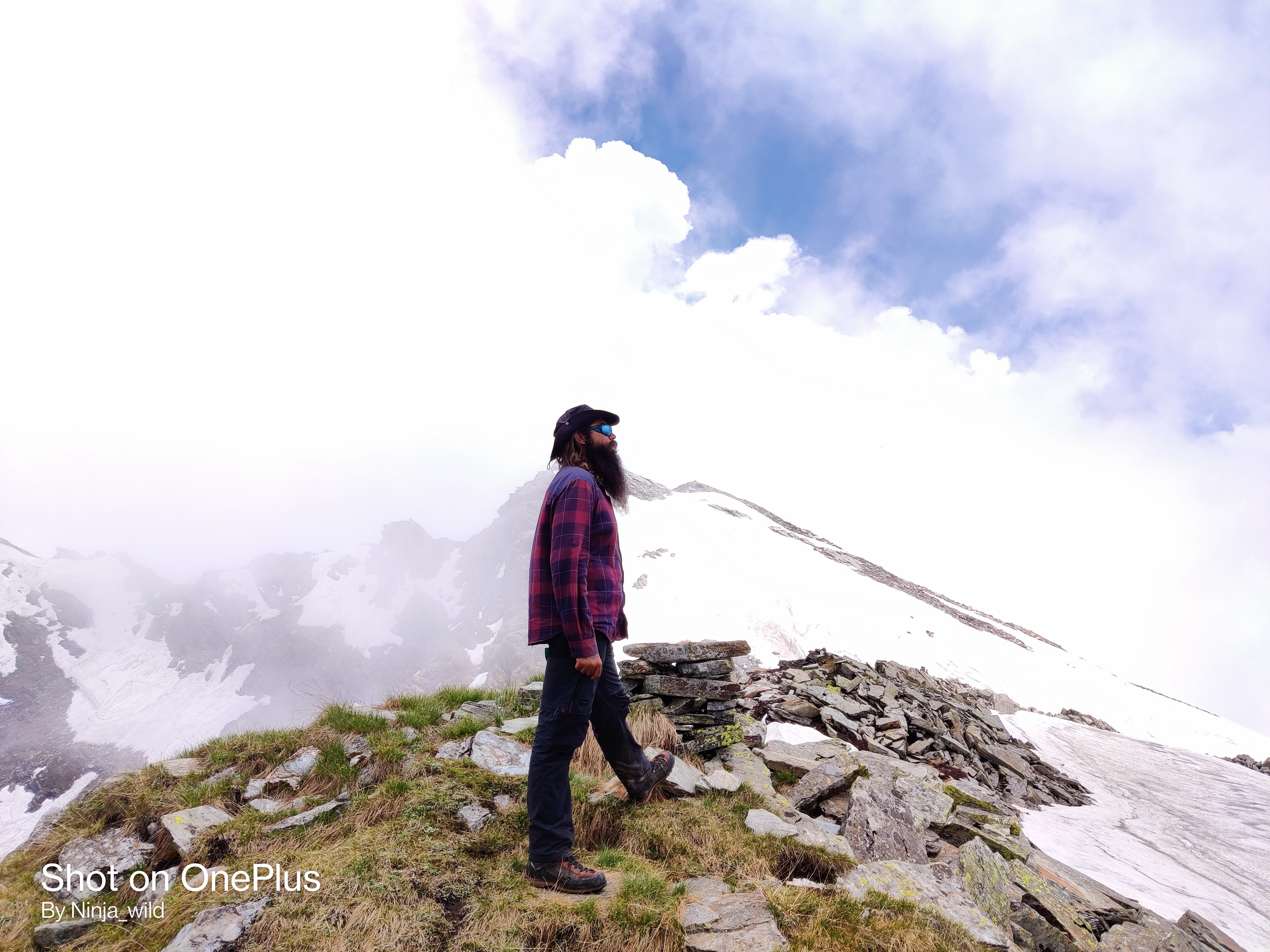
There is something special about standing on a Himalayan ridge with nothing immediately around you except mountains, sky and vast open terrain.
That is the experience that makes an offbeat Himalayan trek memorable.
Even though Aancha Top is generally considered an easy-to-moderate trek, preparation should never be ignored.
The Aancha Top trek altitude crosses 12,000 feet, and your body needs time to adjust to the reduced oxygen availability. Walking slowly, staying hydrated and avoiding unnecessary exertion can help you manage the altitude more comfortably.
Fitness preparation should ideally begin several weeks before the trek. Regular walking, stair climbing and exercises that strengthen your legs and core can help you handle long uphill sections and descents.
Weather awareness is equally important. Mountain conditions can change quickly, particularly at higher elevations. A sunny morning does not guarantee an equally clear afternoon.
Follow the instructions of your trek leader, especially regarding pace, weather, route changes and altitude-related concerns.
And remember one of the most important principles of Himalayan trekking: the summit is never more important than your safety.
The Aancha Top Trek may not yet have the recognition of some of Uttarakhand's most famous trekking destinations, and perhaps that is exactly what makes it interesting.
It offers the opportunity to experience the Himalayas through changing landscapes—from forest trails and alpine meadows to high ridges and a summit at approximately 12,500 feet.
Whether you're searching for an offbeat trek in Uttarakhand, a new Himalayan trek for beginners, a winter adventure or simply a quieter mountain experience, Aancha Top deserves a place on your trekking list.
But don't measure the trek only by its altitude or distance.
The real experience lies in everything that happens between the starting point and the summit—the early mornings in the mountains, the changing weather, tired legs, quiet trails, open meadows and that moment when the horizon suddenly expands in front of you.
Some Himalayan trails are famous because everyone knows their name. Others are special because you get to discover them before the crowds arrive.
If you're ready to step beyond the usual trekking routes and experience the forests, meadows, ridges and Himalayan panoramas of this emerging trail, let ThinAirExpedition be part of your journey.
From planning and mountain logistics to your time on the trail, the right trekking team allows you to focus on what brought you to the Himalayas in the first place—the experience.
Your next mountain story could begin at Aancha Top.