Dayara Bugyal Trek in Winter vs Summer Best Time to Go
Dayara Bugyal Trek in Winter vs Summer Best Time to Go
16
Nov

The Dayara Bugyal trek in Uttarakhand is one of the most beautiful Himalayan meadow treks, known for its vast alpine grasslands, peaceful forest trails and spectacular views of snow-covered mountain ranges. Located in the Uttarkashi district of Uttarakhand, Dayara Bugyal transforms dramatically with the changing seasons. During winter, its rolling meadows become a vast white landscape covered in snow. In spring and summer, the same slopes turn green, wildflowers appear, and the surrounding forests come alive with colour.
This seasonal transformation often leaves trekkers with one important question: Is Dayara Bugyal better in winter or summer? The answer depends on what kind of Himalayan experience you are looking for. If you dream of walking across snow-covered meadows, enjoying chilly mountain mornings and experiencing a winter trek, December to February is an excellent choice. If you prefer green alpine grasslands, blooming rhododendrons, comfortable walking conditions and longer daylight hours, spring and early summer are more suitable.
The best time to visit Dayara Bugyal also depends on snowfall, weather conditions, trail accessibility and your trekking experience. This guide compares the Dayara Bugyal trek in winter vs summer, explains what each season offers, and helps you choose the right month for your journey with Thin Air Expedition.
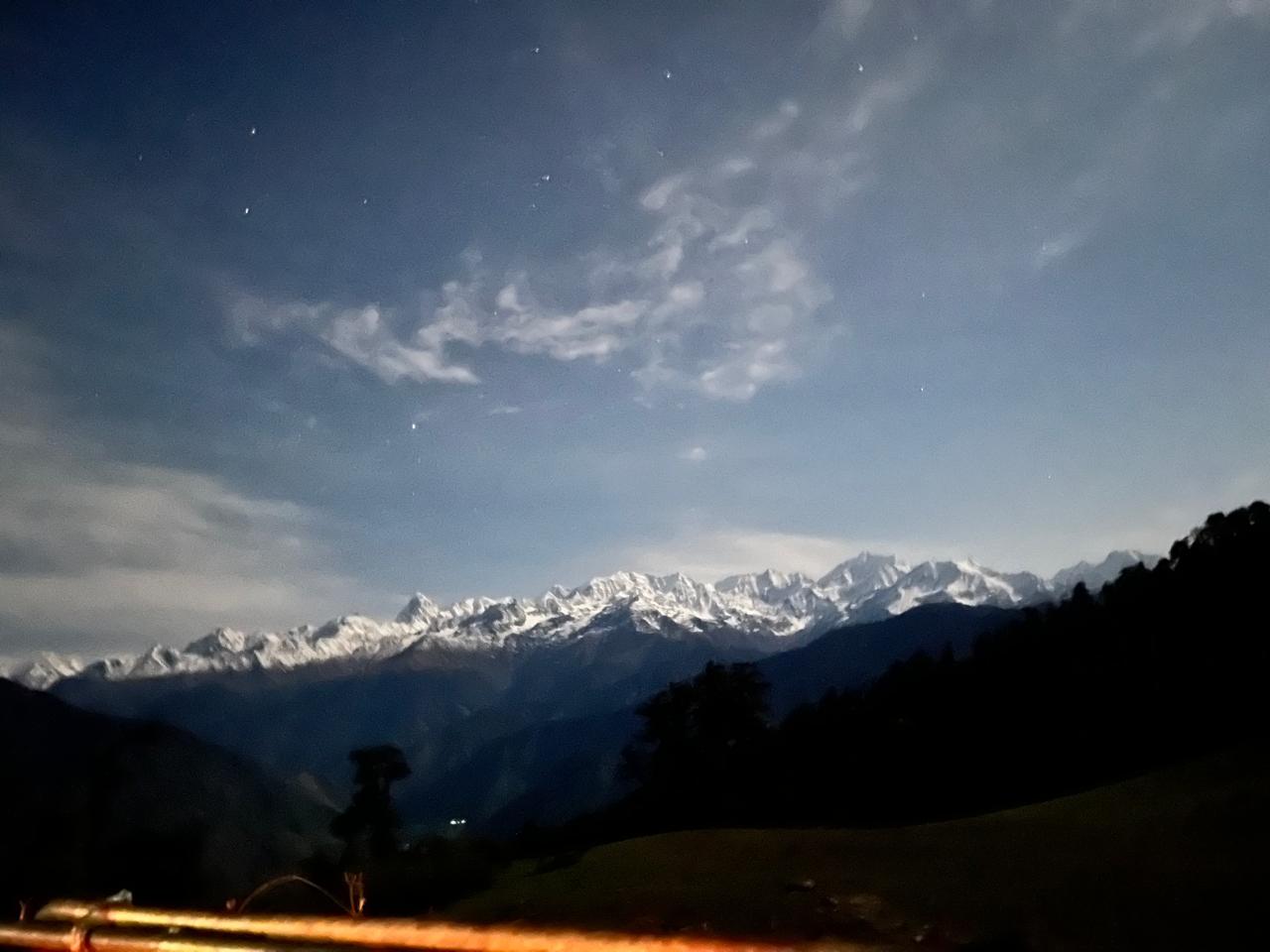
Dayara Bugyal is a high-altitude meadow in the Garhwal Himalayas of Uttarakhand. The word bugyal means alpine meadow in the local language. Surrounded by forested slopes and impressive Himalayan peaks, this expansive grassland is a spectacular destination for nature lovers, photographers and trekking enthusiasts.
The meadow lies in Uttarkashi district, with Raithal and Barsu serving as popular base villages for the trek. According to the Uttarkashi district administration, the grassland begins at approximately 2,600 metres and extends towards 3,500 metres. The surrounding landscape includes oak and rhododendron forests, open grazing grounds and panoramic mountain viewpoints. During summer, shepherds traditionally bring their cattle to the high meadows, while winter turns the grassland into a snow-covered landscape.
The trek is generally considered easy to moderate in normal trail conditions, making it an attractive option for beginners with reasonable fitness. However, the difficulty increases during heavy snowfall because snow-covered paths, slippery sections and freezing temperatures require more care. The Uttarakhand Tourism website lists the Raithal route as approximately 21 kilometres in total, with stages connecting Raithal, Gui, Chilapada, Dayara Bugyal Top and Nayata.
One of the biggest attractions of this trek is that the same landscape offers two very different experiences. Winter brings snow, while spring and summer reveal the natural beauty of the Himalayan meadows.
Winter is one of the most popular seasons for the Dayara Bugyal trek, especially among travellers who want to experience snowfall and walk through a beautiful white landscape. From late December to February, the meadow can receive substantial snowfall, depending on the weather patterns of the year. The forests, campsites and open slopes may become covered in snow, creating a completely different atmosphere from the warmer months.
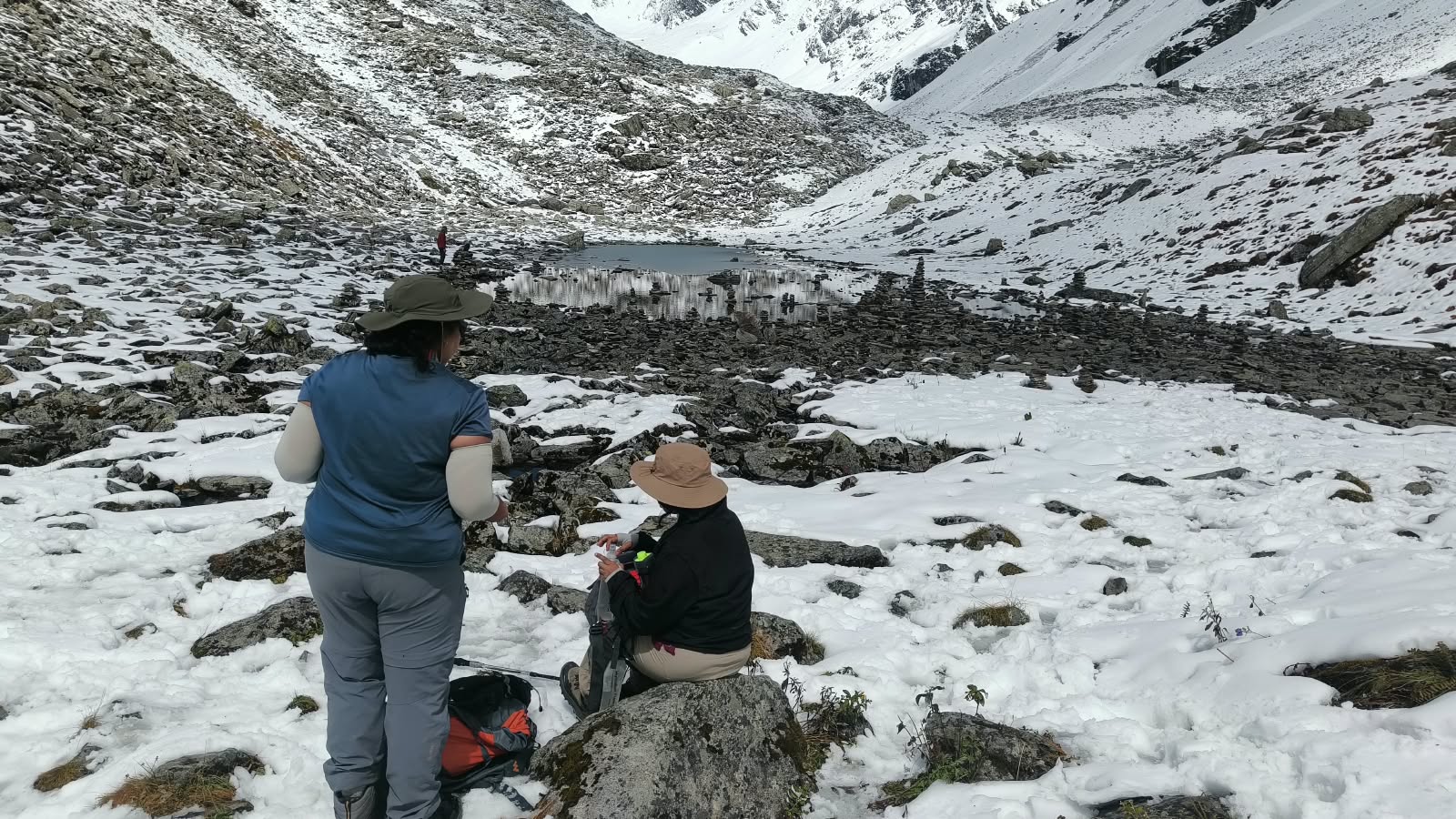
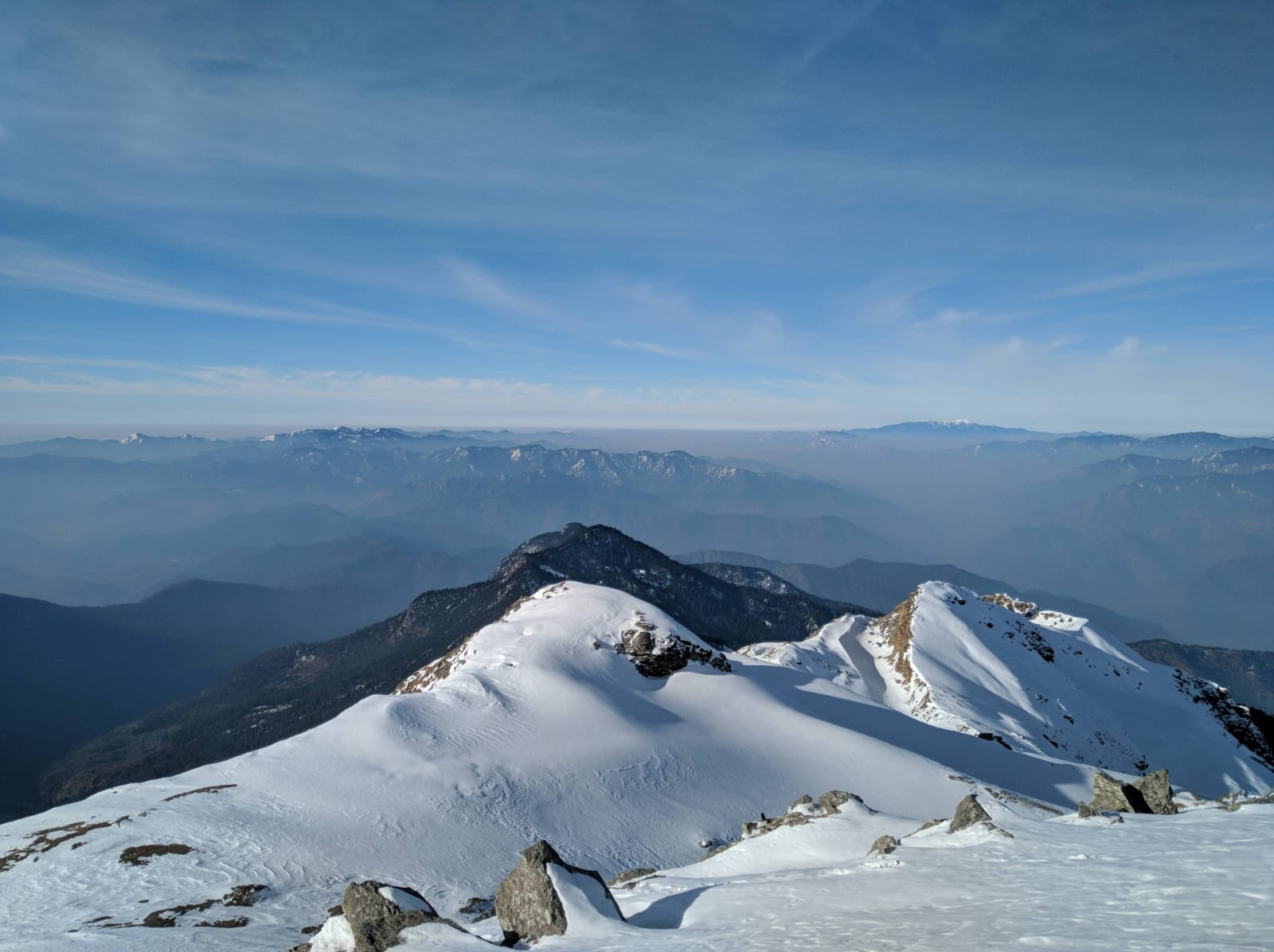
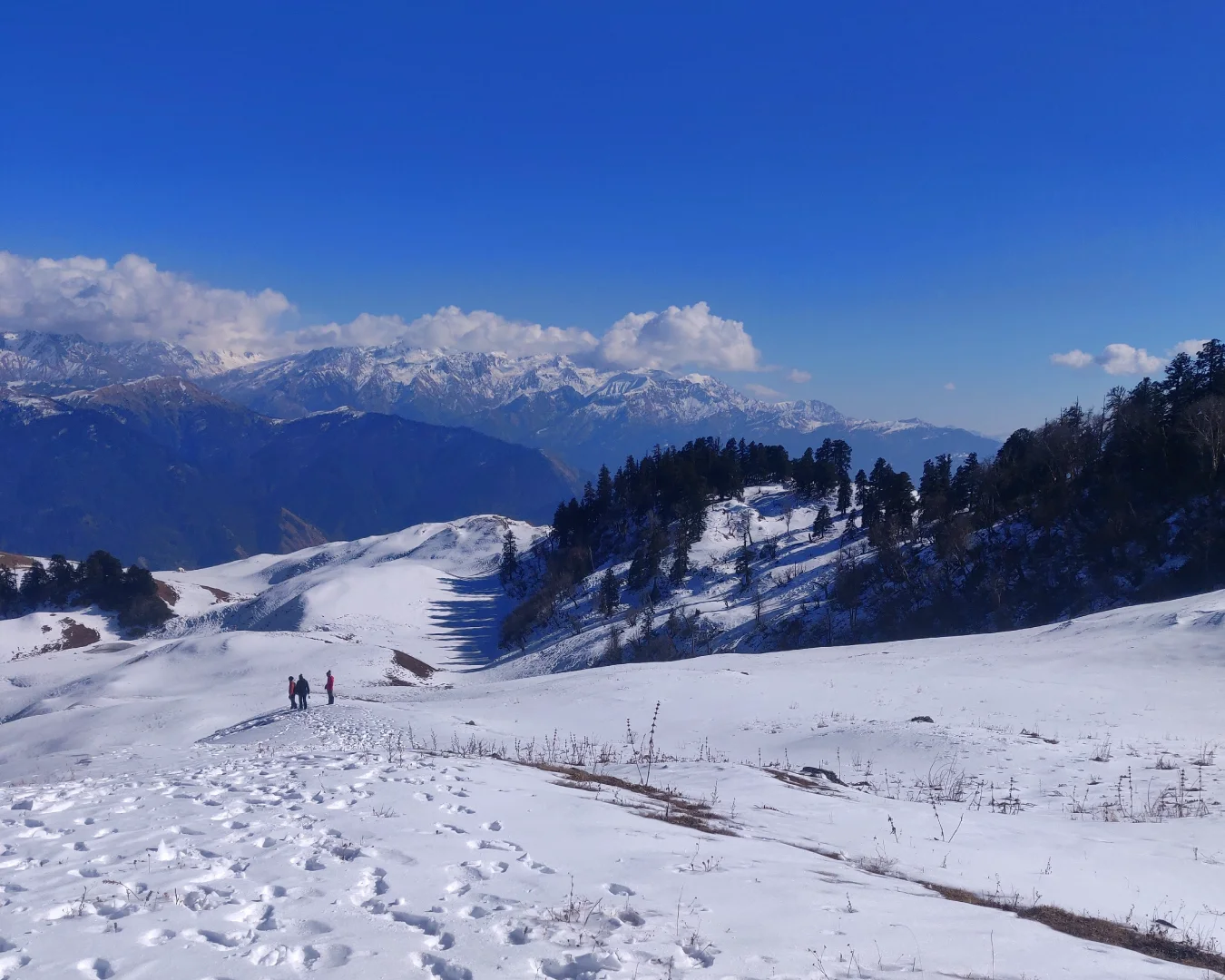
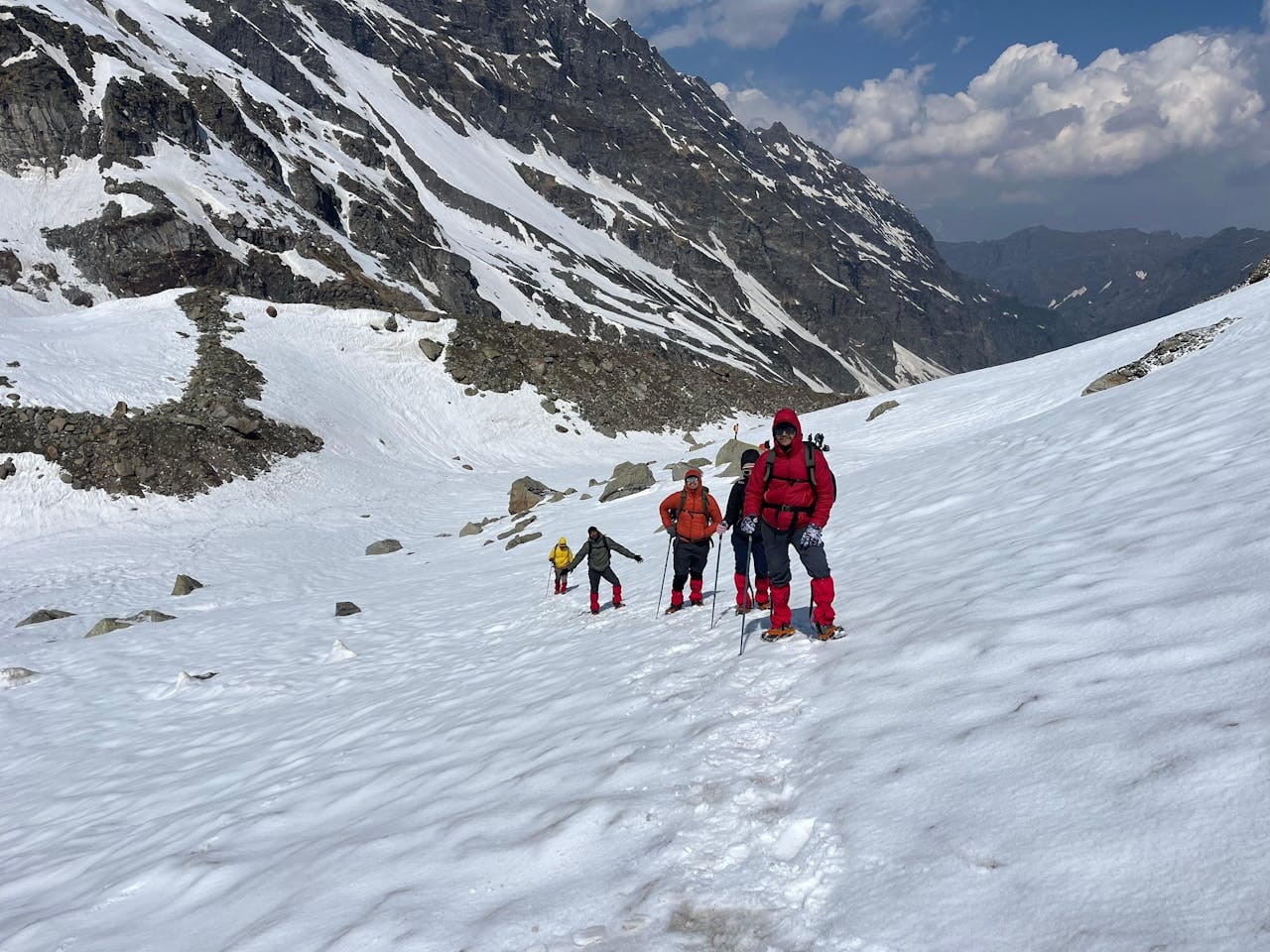
The first major attraction of the Dayara Bugyal winter trek is the snow-covered meadow. As you leave the forest trail and approach the open grassland, the landscape gradually opens into wide white slopes. The familiar green meadow disappears beneath snow, and the rolling terrain resembles a natural winter playground. On clear days, the contrast between the white slopes and the distant Himalayan peaks creates outstanding photography opportunities.
The forest section is equally beautiful during winter. Oak and rhododendron trees stand along the trail, sometimes carrying a layer of fresh snow on their branches. The quiet surroundings, crisp mountain air and crunch of snow beneath your boots make the walk memorable. For many trekkers, this peaceful atmosphere is one of the strongest reasons to choose winter.
Winter temperatures at Dayara Bugyal can be extremely cold, particularly at higher campsites and exposed sections of the meadow. Daytime conditions may feel pleasant when the sun is shining, but temperatures can fall sharply after sunset. Night temperatures at higher camps can drop below freezing and may reach approximately -5°C to -10°C during colder periods. Actual conditions vary with altitude, snowfall, wind and the weather system affecting the region.
The temperature at the base village of Raithal is generally milder than at the higher camps. Trekkers should not use the weather forecast for a lower town as an exact indication of conditions on the meadow. Wind exposure and snow cover can make the upper trail feel significantly colder.
Winter trekking requires proper thermal clothing, insulated jackets, waterproof gloves, warm socks and suitable trekking footwear. A good sleeping bag and an insulated sleeping arrangement are especially important during overnight camping. Your trekking operator should explain which equipment is provided and what you need to carry personally.
Snowfall is the main reason people book the Dayara Bugyal trek in winter. However, snow conditions are not identical every year. Some seasons receive early snowfall, while others experience their most substantial snow cover later in winter. Fresh snowfall can make the meadow beautiful, but it can also slow down the trek and make certain sections more challenging.
The forest approach may have a mixture of dry ground, frozen patches and snow. Higher sections can become slippery, and the trail may be difficult to identify after heavy snowfall. Walking carefully, following the trek leader and using appropriate equipment are essential. Depending on the conditions, guides may recommend microspikes or other traction equipment.
Winter is therefore not simply a summer trek with snow added to the scenery. It requires more preparation, suitable clothing and a flexible itinerary. A professional trek team should assess weather and trail conditions before deciding whether it is safe to proceed towards the upper meadow.
The biggest advantage of winter is the chance to experience Dayara Bugyal as a snow destination. The broad white meadow, snow-covered forest and crisp mountain views create a memorable Himalayan atmosphere. The winter landscape is particularly attractive to photographers and travellers who have never experienced a proper snow trek.
Winter also offers opportunities for snow play and, when conditions and local arrangements permit, snow-related activities. Uttarakhand Tourism describes the winter route as a snow-covered experience and includes the Barsu, Bharnala and Dayara Top region in its winter itinerary.
However, winter is not ideal for everyone. People who dislike extreme cold, have no suitable winter clothing or are uncomfortable walking on snow may find the trek demanding. Beginners can still consider it, but they should choose a responsible operator and prepare properly.
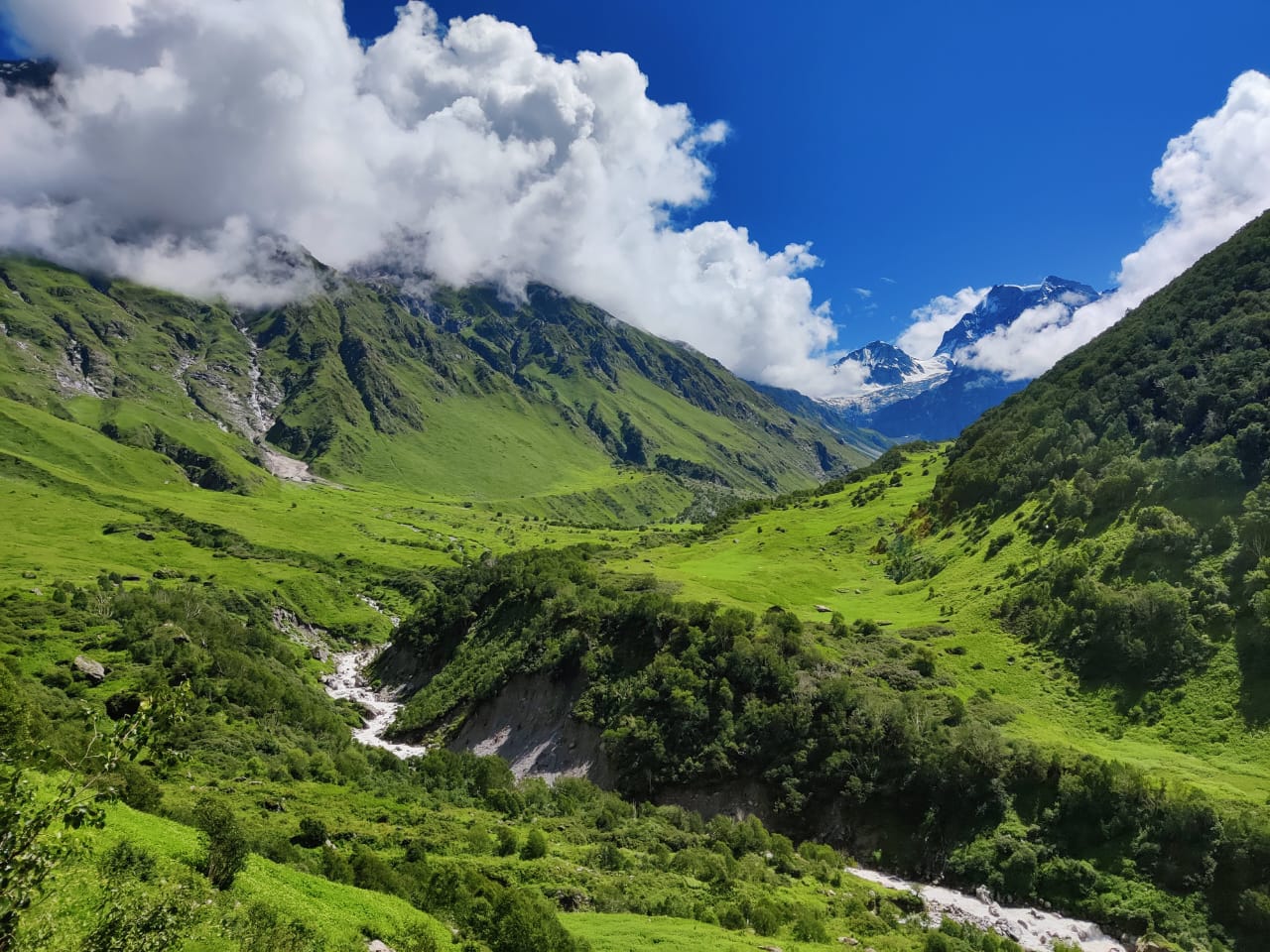
Summer offers a completely different side of Dayara Bugyal. As the snow melts, the alpine grasslands gradually emerge, revealing rolling green slopes and open meadows. The forest becomes lively, wildflowers begin to appear and the landscape takes on a fresh, colourful appearance.
The summer season is especially attractive to trekkers who want to enjoy the natural beauty of the Himalayas without dealing with deep snow. The trail is generally easier to follow than during heavy winter snowfall, and walking conditions are more comfortable when the weather is stable.
The summer trekking season generally covers April, May and June. Temperatures vary between the lower villages, forest sections and higher campsites. Daytime weather is often pleasant, while nights remain cool because of the altitude.
In sunny conditions, walking can feel comfortable in a light trekking layer. However, the weather in the mountains can change quickly. Cloud cover, rain and wind can make the temperature drop even during summer. A warm jacket and rain protection should remain part of your packing plan.
The longer daylight hours are another advantage of summer. Trekkers have more time to enjoy the forest, take photographs and appreciate the meadows without the same early darkness associated with winter.
The most distinctive feature of the summer Dayara Bugyal trek is the transformation of the meadow. As winter snow retreats, fresh grass covers the slopes and the open landscape becomes vibrant green. The wide grassland provides a peaceful setting for walking, relaxing and photography.
The forest route also becomes more colourful. Rhododendron trees are particularly attractive during their flowering period, although the exact timing depends on altitude and local weather. Other seasonal plants and wildflowers add colour to the landscape as spring progresses into summer.
For travellers who want to see Dayara Bugyal as a traditional alpine grassland, the warmer months are an excellent choice. The open meadow, grazing landscapes and surrounding Himalayan scenery offer a different kind of beauty from the dramatic snow-covered winter views.
Summer is generally a more comfortable season for beginners because the trail is less likely to be covered in deep snow. Walking on a visible path is easier than navigating snow-covered sections, and trekkers usually do not need the same level of winter-specific equipment.
This does not mean the trek is effortless. The route includes uphill sections, forest trails and high-altitude walking. Trekkers still need basic stamina, suitable footwear and the ability to walk for several hours. Proper acclimatisation, hydration and a steady pace remain important.
Summer is a good option for first-time Himalayan trekkers who want to experience camping, forest trails and alpine meadows without the additional challenges of a snow trek.
The choice between winter and summer depends on the experience you want from the trek. Winter is best for snow lovers, while summer is more suitable for trekkers who want green meadows, flowers and relatively comfortable walking conditions.
|
Comparison |
Winter |
Summer |
|
Best months |
Late December to February, depending on snowfall |
April to June |
|
Landscape |
Snow-covered meadows and forests |
Green grasslands and seasonal flowers |
|
Weather |
Very cold, especially at night |
Pleasant days and cool nights |
|
Trail conditions |
Snow, ice and slippery sections may occur |
Generally clearer and easier to follow |
|
Trek difficulty |
Can become moderate or challenging in snow |
Usually easier to moderate |
|
Clothing |
Heavy insulation and waterproof winter layers |
Trekking layers, warm jacket and rain protection |
|
Best for |
Snow trekking, winter photography and snow experiences |
Green landscapes, nature walks and beginner-friendly trekking |
|
Main challenge |
Cold temperatures and snow-covered trails |
Sun exposure, changing weather and occasional rain |
If your main goal is to experience snowfall, winter is the better choice. If you want to see the meadow in its green form and enjoy more comfortable trekking conditions, summer is likely to be more rewarding.
Although winter and summer are the two seasons most often compared, spring and autumn also offer excellent trekking conditions. Understanding the month-wise changes can help you select the best time for the Dayara Bugyal trek.
December marks the beginning of the winter experience. Temperatures start falling, and snowfall may begin in the higher areas. Early December does not guarantee a fully snow-covered meadow, so trekkers travelling specifically for snow should confirm recent snowfall reports before booking.
Late December can offer a better chance of seeing a winter landscape, depending on the year's weather.
January is a good month for trekkers seeking a proper winter experience. Snowfall may cover the forest trail, campsites and open meadows, creating a beautiful white landscape. Temperatures are very low, especially at night, so proper winter equipment is essential.
January is suitable for people who are comfortable with cold conditions and want to experience a Himalayan snow trek.
February is often considered one of the most attractive months for a snow experience. Snow cover can remain extensive in the higher meadow, although the amount varies each year. The open slopes, white landscape and mountain views make this month appealing to winter photographers and snow lovers.
Trekkers should remember that fresh snowfall can affect trail conditions and walking time. A flexible schedule is useful during this period.
March is a transition month between winter and spring. Snow may remain at higher elevations, while lower sections begin to show signs of melting. This creates a mixed landscape of snow patches, forest trails and emerging greenery.
March can be a good choice for people who want to experience some snow without travelling during the coldest part of winter. However, conditions can vary considerably from one year to another.
April brings the freshness of spring. Snow retreats from many lower sections, the forest becomes greener and seasonal flowers begin to appear. The weather is generally more comfortable for walking than in midwinter, although nights at higher camps can remain cold.
April is a good month for trekkers who want a combination of spring scenery and the possibility of finding residual snow at higher points.
May is one of the pleasant months for a summer trek. The meadows become greener, the forest trails are lively and daytime temperatures are usually comfortable for trekking. It is a suitable month for beginners, families with older children who meet the operator's requirements, and nature enthusiasts.
The weather can still change quickly, so rain protection and warm clothing are necessary.
June offers beautiful green landscapes and long daylight hours. It is generally part of the summer trekking window, but conditions can become less predictable as the monsoon approaches. Trekkers should check the forecast and confirm that the route is operating safely before departure.
July and August are the main monsoon months in this region. Heavy rainfall can make forest paths slippery, increase the risk of landslides on approach roads and affect visibility. Wet conditions also make camping and high-altitude trekking less comfortable.
Although the landscape may look lush, the monsoon is generally not recommended for the Dayara Bugyal trek. Uttarakhand Tourism lists the main trekking season as January to June and September to November, which excludes the peak monsoon period.
Autumn is another excellent season for this trek. After the monsoon, the skies often become clearer and mountain views can be especially impressive. The meadow changes from its monsoon greenery towards golden and earthy shades as the season progresses.
September may still have occasional rain or lingering wet trail sections, so checking local conditions is important. October and November are often attractive for trekkers who prioritise clear mountain views, pleasant daytime walking and fewer snow-related challenges. Temperatures become colder towards the end of November.
For most first-time trekkers, summer or autumn is the more comfortable choice. The trail is generally easier to identify, walking conditions are less affected by snow and the weather is usually more manageable than in midwinter.
Winter can also be suitable for beginners, but only with proper preparation and a reliable trekking team. Snow-covered trails require careful foot placement, and low temperatures make clothing and camping arrangements especially important. A person who has never trekked in snow should not underestimate the additional effort involved.
If you are new to trekking and mainly want to enjoy the Himalayan landscape, consider April, May, October or early November. If your dream is to walk across snow-covered meadows, choose a winter departure after confirming the current snow conditions.
Packing correctly makes a significant difference to your comfort and safety on the trail. Your clothing should match the season, expected temperatures and the facilities included in your trekking package.
For a winter Dayara Bugyal trek, thermal innerwear, fleece or insulated mid-layers, a warm down or synthetic jacket, waterproof outer layers, insulated gloves, a warm cap and thick trekking socks are important. Waterproof trekking shoes with good grip are essential. Depending on snow conditions, your trek leader may recommend gaiters and microspikes. Sunglasses and sunscreen are also useful because sunlight reflecting off snow can be intense.
For a summer trek, breathable trekking clothes, comfortable trekking trousers, a light fleece, a warm jacket, a rain jacket and quick-drying socks are useful. Sturdy trekking shoes with good grip remain essential. A sun cap, sunglasses, sunscreen and a reusable water bottle help make the journey more comfortable.
In both seasons, carry personal medicines, a small first-aid kit, toiletries, a headlamp and a suitable daypack. Avoid carrying unnecessary weight. Confirm the equipment supplied by your trekking operator before departure so that you do not bring duplicate or unsuitable gear.
The Dayara Bugyal trek is commonly graded easy to moderate, but the actual difficulty depends on the season, route and weather. In summer, the trail is generally more straightforward because the walking surface is usually visible and there is less snow-related resistance.
In winter, the same trail can become more demanding. Walking through snow takes additional energy, and icy or slippery patches require slower movement. Fresh snowfall can also make navigation more difficult. The cold adds another challenge, particularly during early morning starts and overnight camping.
Altitude is another factor to consider in both seasons. Dayara Bugyal is a high-altitude destination, and trekkers should walk at a steady pace, stay hydrated and inform the trek leader if they experience symptoms such as a persistent headache, dizziness, nausea or unusual breathlessness. Anyone feeling unwell should not attempt to push higher without assessment.
A beginner-friendly reputation should never be treated as a reason to ignore mountain safety. Fitness preparation, suitable clothing and a responsible itinerary are important throughout the year.
The most commonly used base villages for the Dayara Bugyal trek are Raithal and Barsu in Uttarkashi district. Dehradun is a major access point for trekkers arriving by train or air. Jolly Grant Airport serves Dehradun, while Dehradun railway station connects the city with several major destinations.
From Dehradun, the road journey towards Raithal or Barsu takes several hours. Uttarakhand Tourism estimates approximately eight to nine hours for the drive to the base villages, depending on the route and conditions. The journey passes through the mountain region of Uttarkashi, where road travel time can be affected by traffic, weather and road maintenance.
The trekking route from Raithal commonly passes through Gui and Chilapada before reaching the meadow and Dayara Top. The exact itinerary may vary according to the operator, weather and whether the trek begins from Raithal or Barsu. In winter, the itinerary may need adjustments due to snowfall or trail conditions.
Choosing the right trekking operator is important, particularly when you are planning a high-altitude journey in winter. A well-organised trek should include a clear itinerary, experienced trek leaders, suitable camping arrangements, appropriate safety equipment and realistic guidance about the weather.
Thin Air Expedition aims to make the Dayara Bugyal trek a memorable experience through careful planning and support throughout the journey. Whether you choose the snow-covered landscape of winter or the green meadows of summer, understanding the trail and preparing for seasonal conditions can make your experience more enjoyable.
Before confirming your trek, ask about the latest route conditions, group size, accommodation, meals, transport arrangements, equipment provided and emergency procedures. For winter departures, confirm whether snow gear and suitable sleeping arrangements are included. For summer departures, ask about weather-related changes and the operator's policy if heavy rain affects the itinerary.
The best trekking experience is not just about reaching the summit or meadow. It is also about travelling responsibly, respecting the local environment and enjoying the mountains without taking unnecessary risks.
Winter is better for trekkers who want snow-covered meadows, winter scenery and a snow trekking experience. Summer is better for those who prefer green alpine grasslands, blooming seasonal plants and more comfortable walking conditions. Both seasons offer beautiful but very different experiences.
Late December, January and February are generally the preferred months for a winter snow experience. However, snowfall varies every year. Check recent weather updates and confirm trail conditions with your trekking operator before travelling.
Yes, beginners can consider the winter trek if they have reasonable fitness, suitable winter clothing and support from an experienced trekking team. Snow-covered trails can make the route more demanding than it is during summer.
Snow may remain in the higher sections during March, while lower parts of the route may begin to clear. The amount of snow depends on the winter snowfall and temperatures that year. March is a transitional month rather than a guaranteed full-snow season.
Yes. Summer is an excellent time to visit Dayara Bugyal if you want to see green meadows, forest scenery and seasonal flowers. April to June is a popular trekking window, although weather conditions should always be checked before departure.
July and August are generally not recommended because heavy rain can cause slippery trails, poor visibility and road disruptions. It is safer to plan the trek outside the main monsoon period.
The trek becomes more challenging in winter because snow and ice can slow walking and make the trail slippery. The level of difficulty depends on snowfall, temperature and the condition of the route on the day of the trek.
Winter is excellent for snow-covered landscapes and dramatic white scenery. Summer is ideal for green meadows, forest details and seasonal flowers. Autumn is particularly attractive for clear mountain views and golden meadow colours.
The walking itinerary and total trip duration depend on the route and starting point. Uttarakhand Tourism publishes a 21-kilometre route through Raithal, Gui, Chilapada, Dayara Bugyal Top and Nayata, while its winter itinerary includes a six-day programme from Dehradun. Confirm the exact schedule with your trekking operator before booking.
The Dayara Bugyal trek in winter vs summer is not a competition between two seasons; it is a choice between two distinct Himalayan experiences. Winter transforms the meadow into a beautiful snow-covered world, offering a memorable adventure for people who love cold weather and snowy landscapes. Summer reveals the natural grassland in its green form, with forest trails, seasonal flowers and comfortable trekking conditions.
For a classic snow trek, plan your journey between late December and February, while keeping in mind that actual snowfall cannot be guaranteed. For green meadows and a more relaxed walking experience, choose April to June. If clear mountain views are your priority, consider October and November.
Whichever season you select, prepare well, check the latest weather and trail updates, and travel with a team that takes mountain safety seriously. With the right timing and preparation, the Dayara Bugyal trek in Uttarakhand can become one of the most memorable experiences of your Himalayan journey.