Friendship Peak Expedition Guide
Friendship Peak Expedition Guide
20
Jul

For many trekkers, there comes a point when completing high-altitude treks is no longer enough. The next challenge is stepping into the world of mountaineering in India, where glacier travel, snow-covered terrain, and summit expeditions replace well-defined trekking trails. Among the many expedition peaks in the Indian Himalayas, the Friendship Peak Expedition has earned a reputation as one of the best starting points for aspiring mountaineers.
Unlike a conventional trek, Friendship Peak introduces climbers to the fundamentals of a Himalayan expedition. It combines physical endurance with technical learning, giving participants their first experience of snow climbing, glacier travel, and the discipline required for high-altitude mountaineering. This balance between challenge and accessibility is what makes it one of the most sought-after expedition peaks in the country.
In this Friendship Peak Guide, you'll discover everything you need to know before attempting the climb—from the Friendship Peak location and altitude to its difficulty level, fitness requirements, route, and the skills you'll develop along the way. Whether your goal is to complete your first Himalayan expedition or prepare for more demanding peaks in the future, this guide will help you understand why Friendship Peak is often considered the perfect classroom for learning the art of mountaineering.
The Friendship Peak location lies in the Pir Panjal Range of the Indian Himalayas, within Himachal Pradesh, overlooking the beautiful Solang Valley near Manali. Rising to an altitude of 5,289 meters (17,352 feet), the peak is surrounded by some of the region's most iconic mountains, glaciers, and alpine landscapes, making it one of the most popular destinations for peak climbing in India.
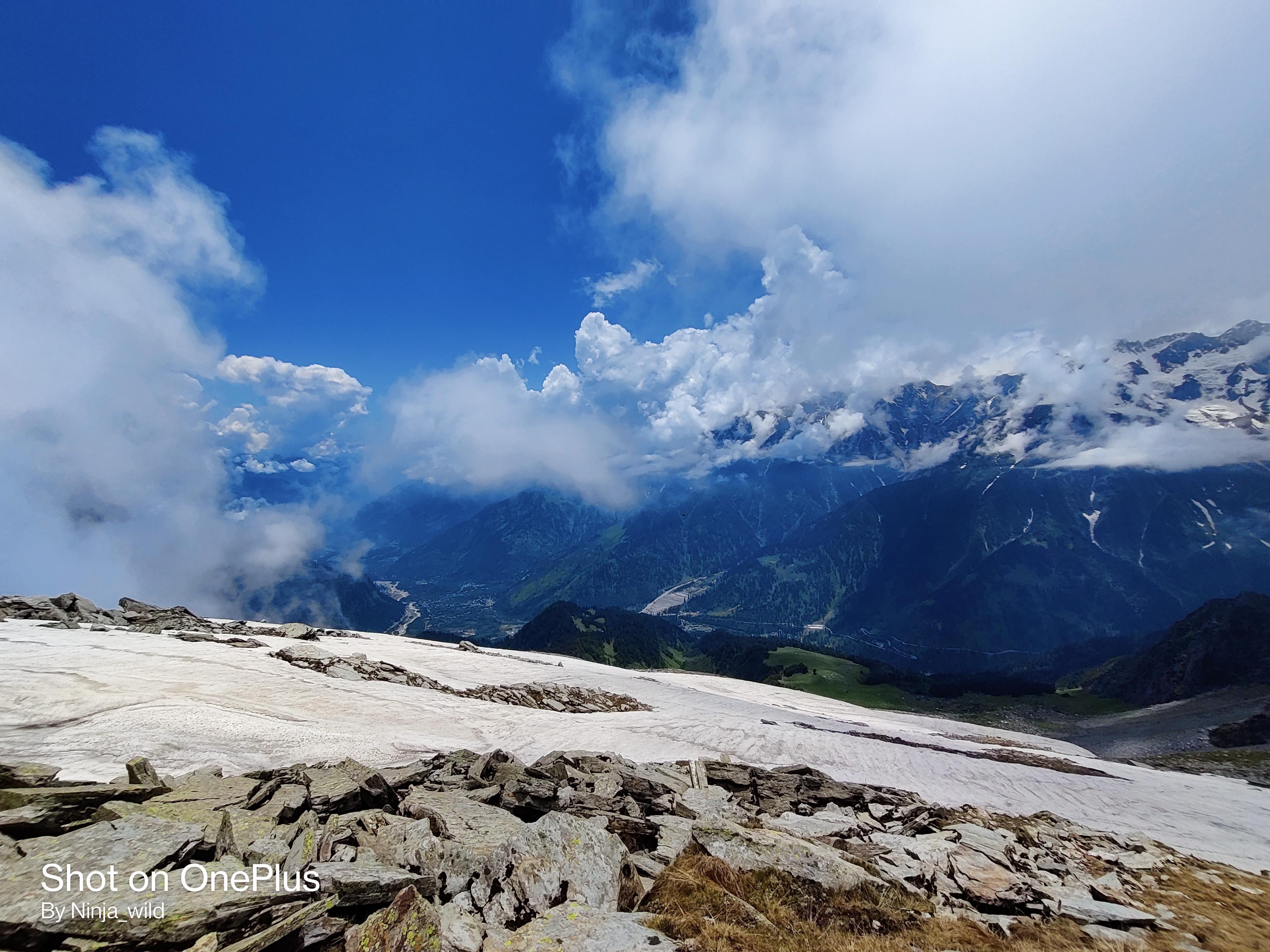
The expedition begins from Manali, one of India's most established adventure hubs, before gradually ascending through Solang Valley into increasingly rugged mountain terrain. As the route climbs higher, dense forests give way to alpine meadows, rocky moraines, permanent snowfields, and glaciers, offering climbers a complete Himalayan experience within a relatively compact expedition.
Its location is one of Friendship Peak's greatest advantages. The mountain is remote enough to provide an authentic Himalayan expedition while remaining accessible from Manali, allowing climbers to focus on learning expedition skills rather than spending days reaching the base of the mountain. The surrounding Pir Panjal Range also creates an ideal environment for developing high-altitude confidence, making Friendship Peak a preferred training ground for aspiring mountaineers before attempting larger Himalayan objectives.
Before planning your Friendship Peak Expedition, here are the essential facts every climber should know:
|
Peak Name |
Friendship Peak |
|
Altitude 5,289 m |
(17,352 ft) |
|
Location |
Pir Panjal Range, Himachal Pradesh |
|
Nearest Town |
Manali |
|
Starting Point |
Solang Valley |
|
Expedition Duration |
6–8 Days (average) |
|
Difficulty |
Moderate to Difficult |
|
Technical Sections |
Snow slopes, glacier travel, rope-assisted climbing |
|
Best Time |
May–June & September |
|
Ideal For |
Trekkers transitioning into mountaineering |
Although Friendship Peak altitude is below 6,000 meters, it offers many of the elements found on larger Himalayan expeditions, including glacier crossings, snow-covered slopes, and high-altitude camping. Rather than being defined solely by its elevation, the mountain is known for the valuable mountaineering experience it provides.
One of the reasons the Friendship Peak Expedition remains so popular is its ability to combine technical learning with achievable objectives. Climbers gain exposure to expedition-style climbing while developing the confidence needed for future ascents of higher and more demanding Himalayan peaks.
Every experienced mountaineer remembers one expedition that changed the way they looked at the mountains. For many climbers in India, that mountain is Friendship Peak.
What makes the Friendship Peak Expedition unique is that it doesn't simply test your fitness—it teaches you how to think and move like a mountaineer. Unlike a trekking trail where the path is often straightforward, Friendship Peak introduces climbers to real expedition environments. You'll encounter snow-covered slopes, glacier sections, changing weather conditions, and the importance of teamwork, patience, and decision-making at high altitude.
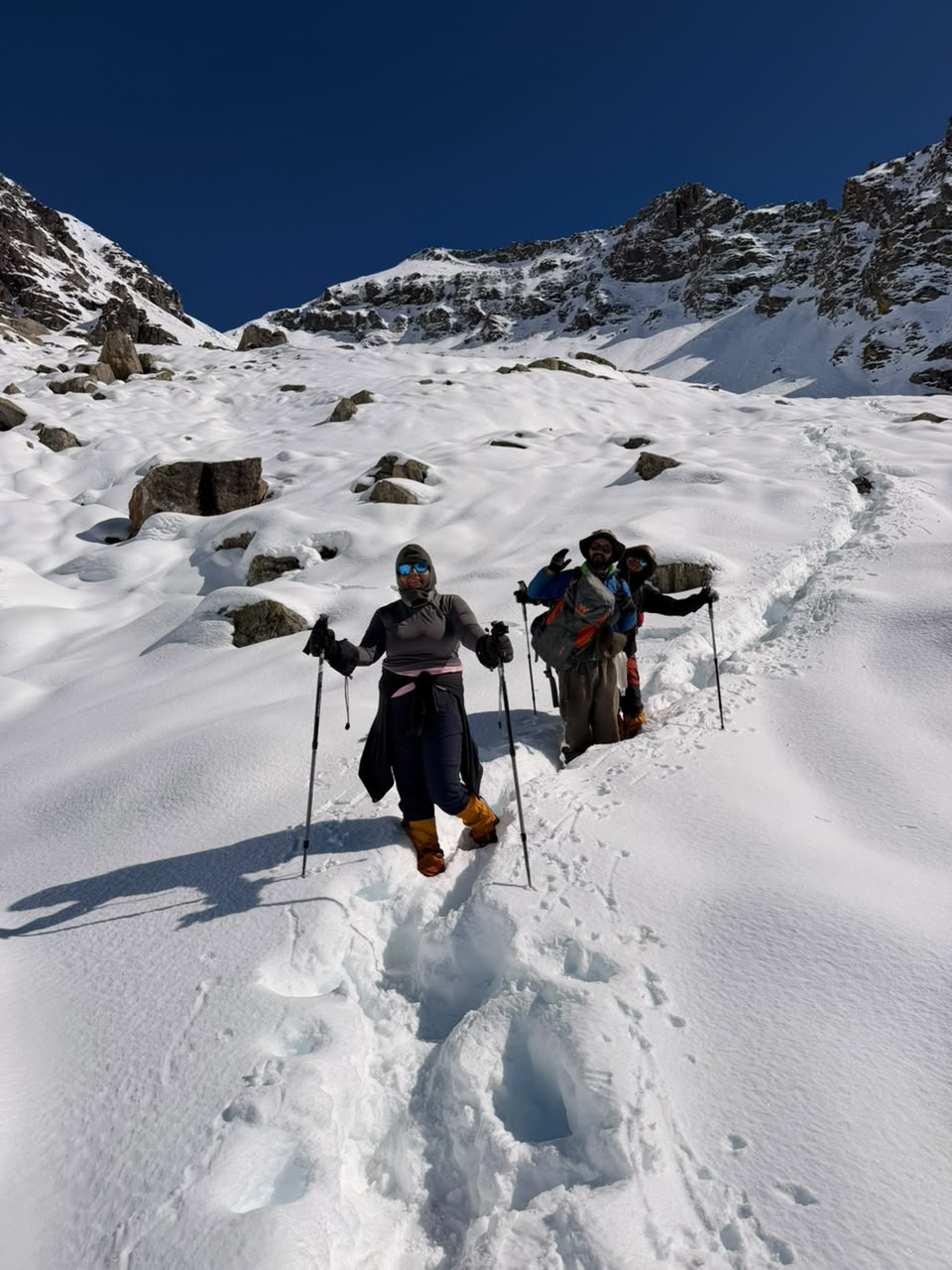
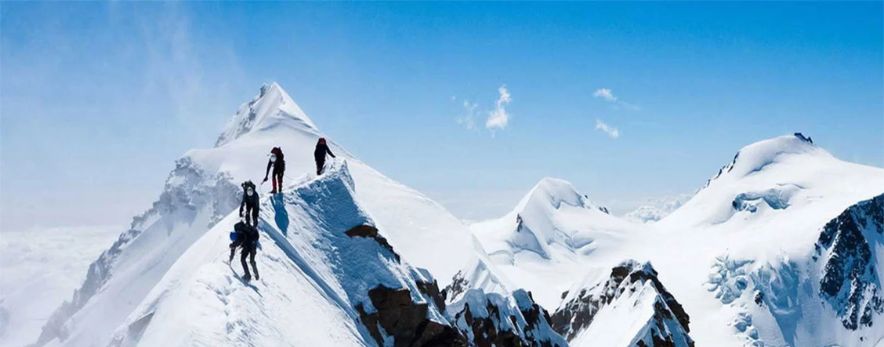
The expedition also provides practical exposure to essential mountaineering skills. Under the guidance of experienced leaders, climbers typically learn how to walk confidently in snow using crampons, handle an ice axe, move safely on glaciers, and use ropes where required. These aren't just techniques for reaching one summit—they become the foundation for every future Himalayan expedition.
Another reason Friendship Peak is considered one of the best beginner mountaineering expeditions is its gradual learning curve. The mountain is physically demanding but not overwhelmingly technical, allowing trekkers with good fitness to experience expedition life without immediately facing the complexity of larger peaks like Black Peak. It bridges the gap between trekking and alpine climbing in India, helping climbers understand how altitude, weather, and terrain influence every decision in the mountains.
Perhaps the greatest lesson Friendship Peak offers is that mountaineering is not about reaching the summit at any cost. It is about preparation, discipline, teamwork, and knowing when to move forward—and when to wait. These lessons stay with climbers long after the expedition ends, making Friendship Peak not just a mountain to climb, but a mountain that shapes future mountaineers.
The Friendship Peak Expedition route begins from Manali, with a short drive to the picturesque Solang Valley, one of Himachal Pradesh's most popular adventure destinations. From here, the journey gradually leaves behind bustling tourist trails and enters the quieter landscapes of the Pir Panjal Range.
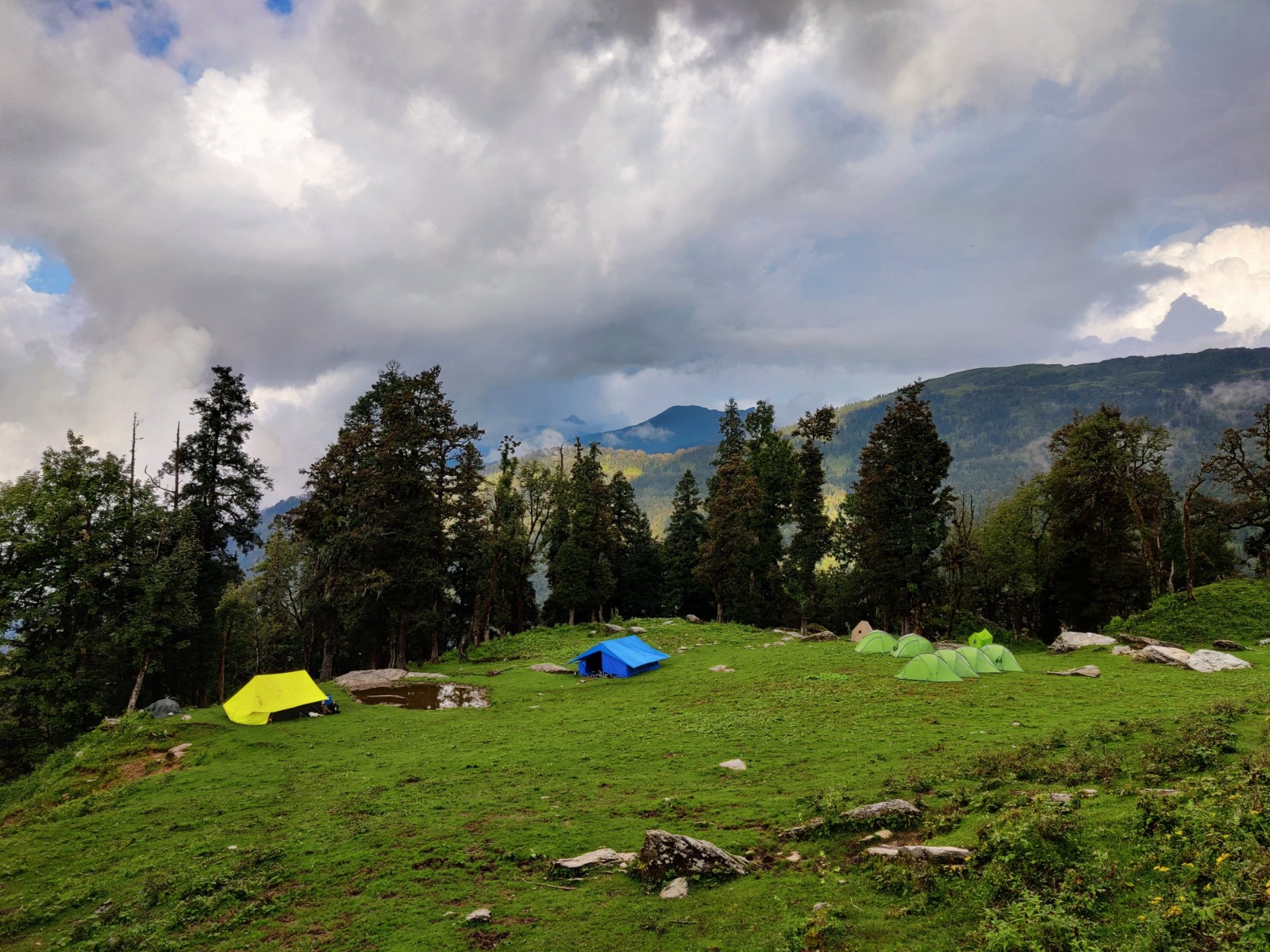
The initial section passes through alpine meadows before reaching Bakarthach, a beautiful campsite surrounded by towering peaks. As the expedition progresses, the terrain becomes more rugged, transitioning from grassy slopes to rocky moraines shaped by ancient glaciers. Higher up, the route reaches Lady Leg, an important campsite where climbers spend time acclimatizing before moving to Friendship Peak Base Camp.
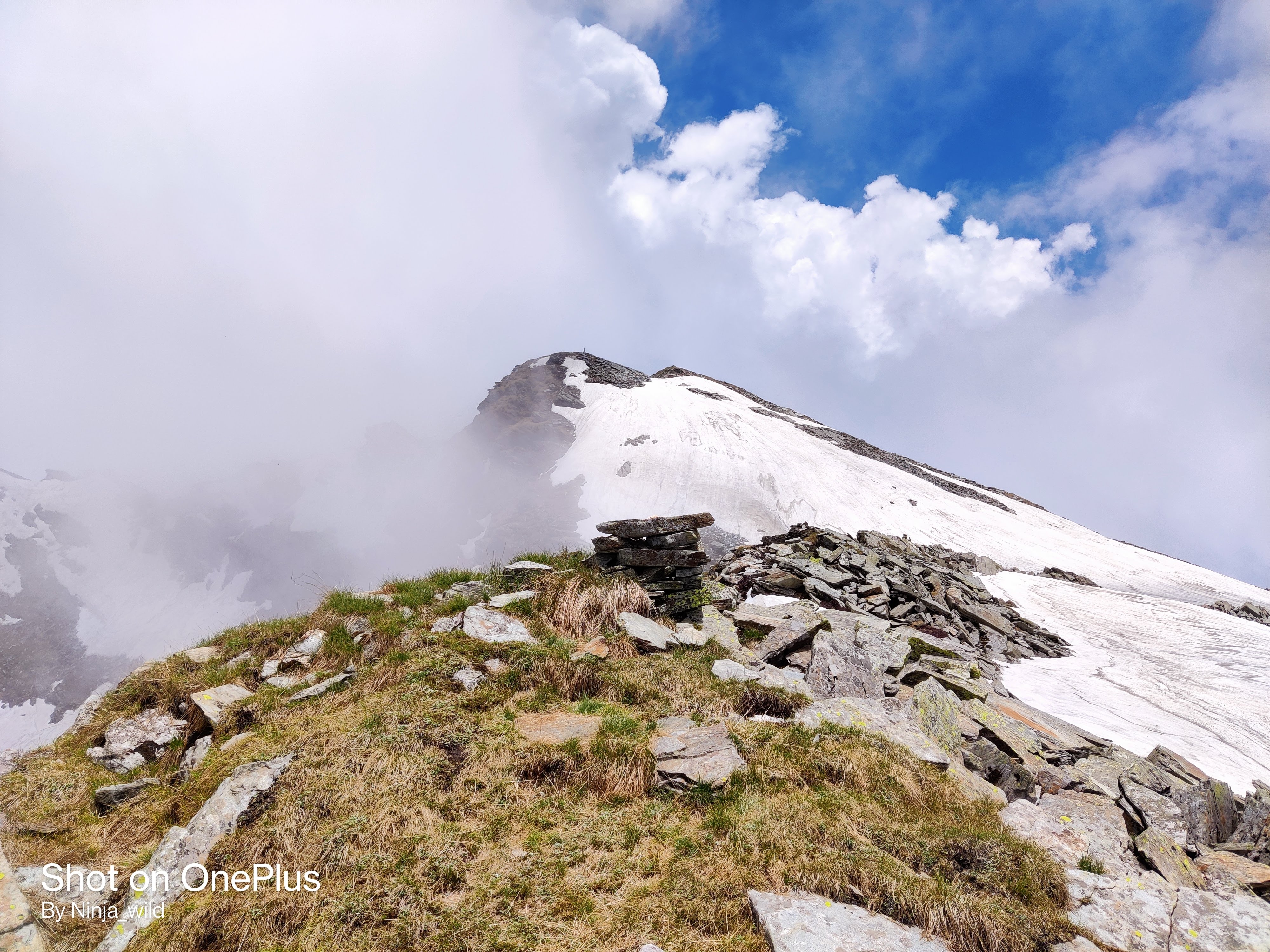
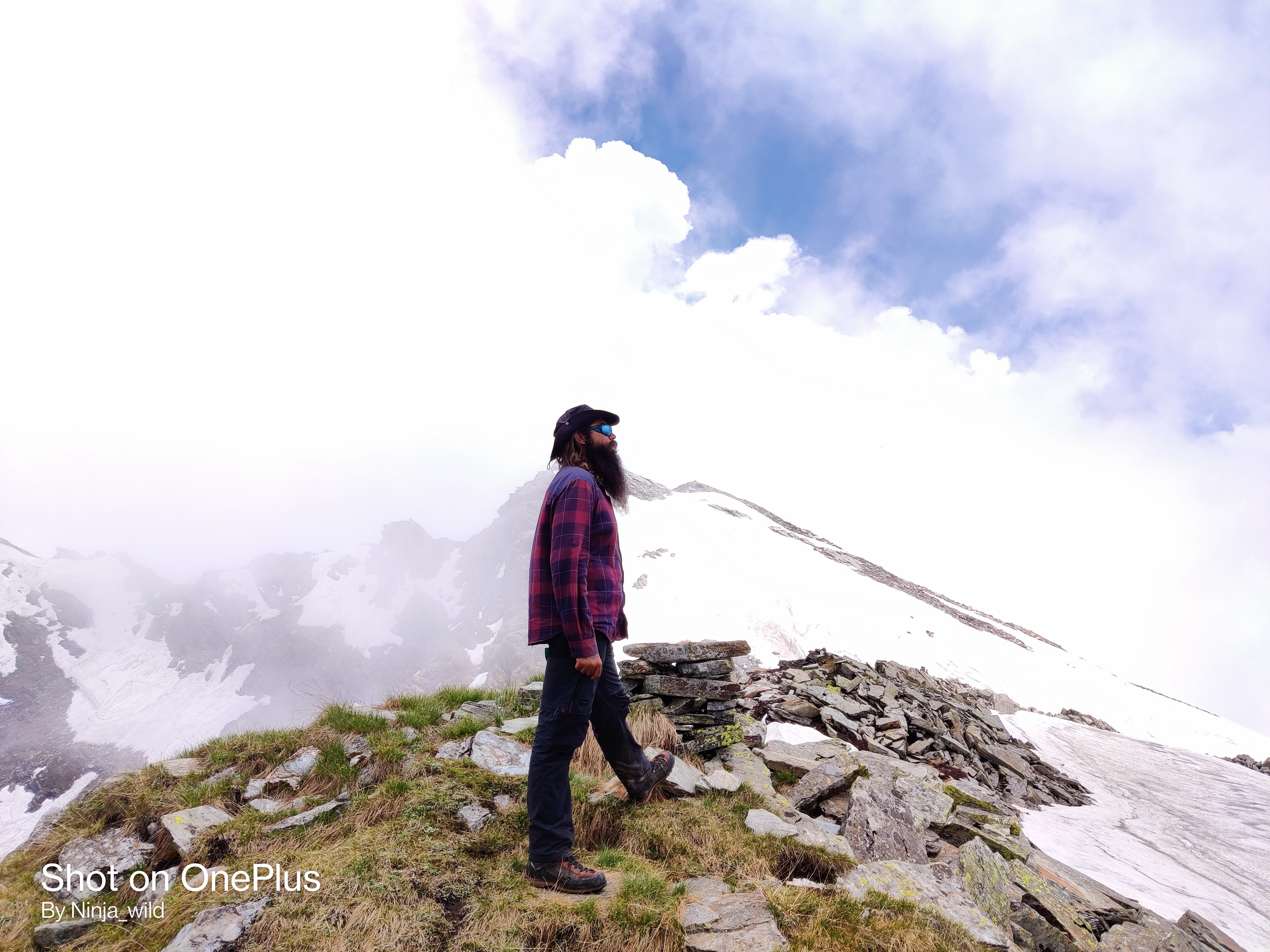
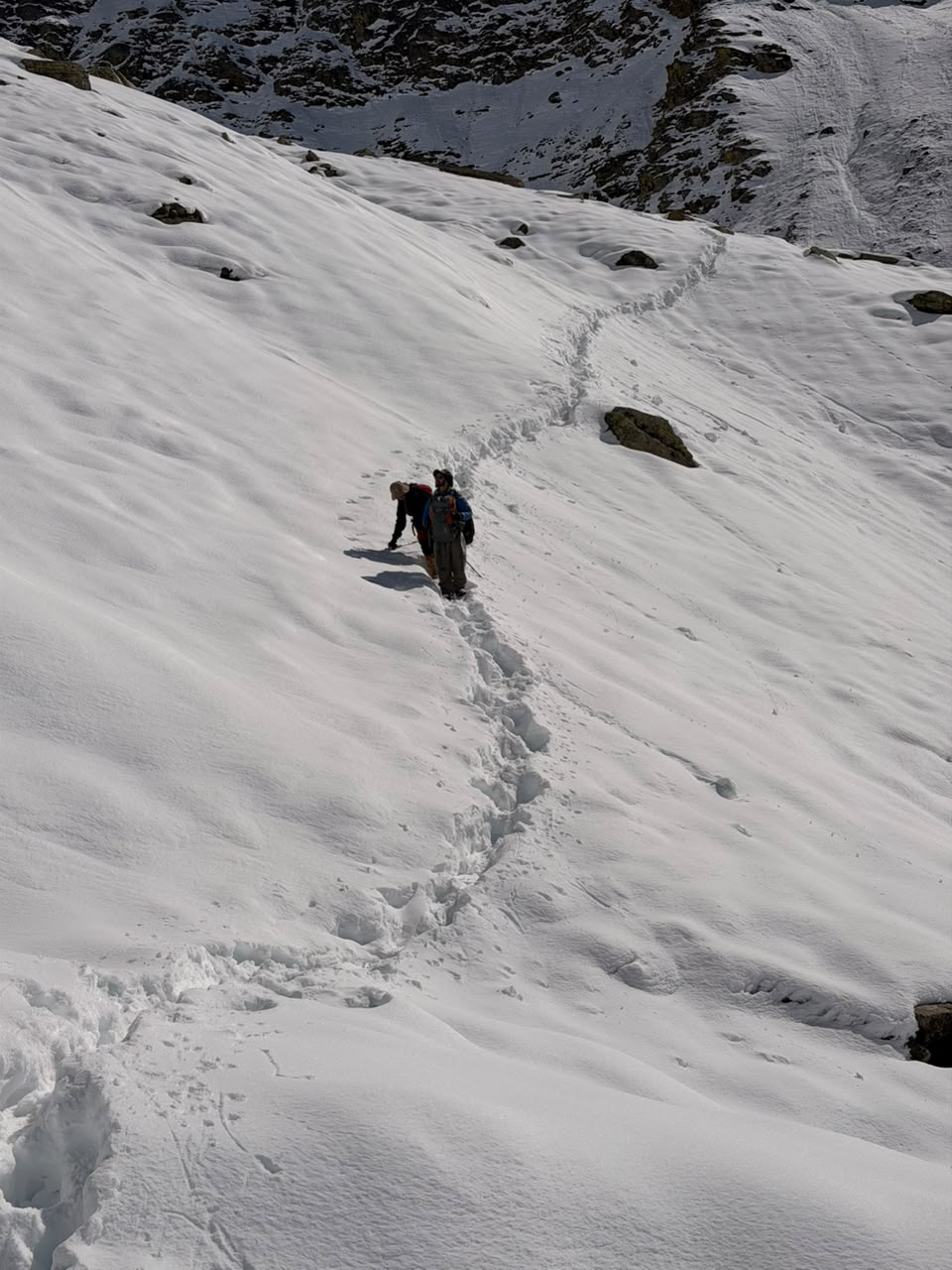
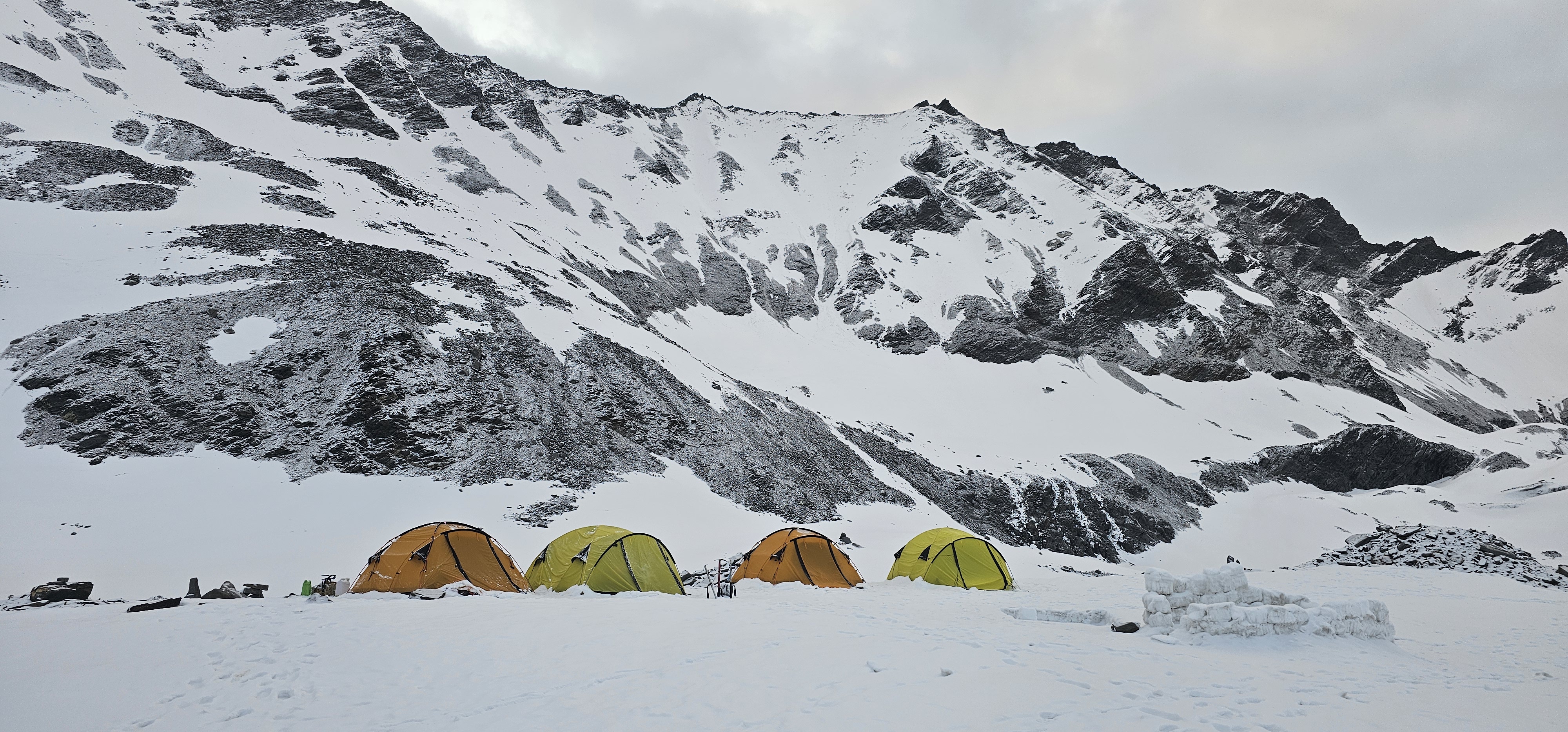
Beyond the base camp, the landscape changes dramatically. Snowfields replace rocky trails, and the climb becomes more technical as mountaineers move across glacier sections using appropriate safety equipment. The final summit push usually begins well before sunrise, when frozen snow offers better footing and weather conditions are generally more stable. As dawn breaks, climbers are rewarded with breathtaking panoramic views of the Pir Panjal Range, Hanuman Tibba, Shitidhar Peak, and countless Himalayan summits stretching across the horizon.
What makes the Friendship Peak route special is its diversity. Within a few days, climbers experience forests, meadows, moraines, glaciers, and snow-covered ridges—making it an ideal introduction to a rue Himalayan expedition.
The Friendship Peak Difficulty is often described as moderate to difficult, but that description only tells part of the story. The expedition is designed for beginners entering mountaineering in India, yet it still demands serious preparation, physical endurance, and respect for the mountains.
Physically, climbers should be prepared for long trekking days, steep ascents, and the challenge of carrying personal gear at high altitude. Technically, Friendship Peak introduces participants to glacier travel, snow climbing, crampons, and rope-assisted sections under expert supervision. While these techniques are beginner-friendly, they require focus and a willingness to learn.
The greatest challenge, however, is often mental rather than technical. Changing weather, freezing temperatures, early morning summit attempts, and reduced oxygen levels can test even experienced trekkers. Success depends less on speed and more on maintaining a steady pace, staying calm under pressure, and following the instructions of expedition leaders.
So, is Friendship Peak for beginners? Yes—but only for beginners who have good fitness, previous Himalayan trekking experience, and the determination to learn. It is not an easy climb, but it is one of the safest and most rewarding ways to begin your journey into peak climbing in India.
A successful Friendship Peak Expedition begins months before reaching the mountains. Since this is a high-altitude expedition, endurance is far more important than short bursts of strength. Regular running, stair climbing, cycling, and long-distance hiking help build the cardiovascular fitness needed for sustained climbs at altitude. Strength training should focus on the legs, core, and shoulders, as these muscle groups carry most of the workload during the expedition.
Preparation isn't only physical. Climbers should become comfortable walking with a loaded backpack and, if possible, complete at least one high-altitude trek before attempting Friendship Peak. Equally important is recovery—adequate sleep, proper hydration, and balanced nutrition play a major role in performance during the expedition.
Remember, the mountain doesn't reward the strongest climber; it rewards the one who arrives well-prepared, adapts to the altitude, and climbs with patience.
Many first-time climbers assume that reaching the summit depends only on fitness, but the Friendship Peak Expedition teaches otherwise. One of the most common mistakes is ignoring acclimatization and trying to move faster than the body can adjust to the altitude. Others carry oversized backpacks, wear brand-new trekking shoes without breaking them in, or underestimate how quickly mountain weather can change.
Another frequent mistake is focusing only on the summit. Experienced mountaineers know that a successful expedition is measured not just by reaching the top, but by making safe decisions throughout the journey. Respecting the mountain, listening to your guides, and maintaining a steady pace will always contribute more to success than rushing toward the summit.
The best time for the Friendship Peak Expedition is during May to June and September. In late spring and early summer, climbers encounter snow-covered slopes, stable weather, and ideal conditions for learning mountaineering techniques. September offers clearer skies, excellent visibility, and cooler temperatures after the monsoon, making it another popular climbing window.
The expedition is generally avoided during the peak monsoon because of unstable weather and slippery trails, while winter brings heavy snowfall that significantly increases the technical difficulty. Choosing the right season not only improves summit chances but also ensures a safer and more enjoyable Himalayan expedition.
1. Is the Friendship Peak Expedition suitable for beginners?
Yes, the Friendship Peak Expedition is considered one of the best introductory Himalayan expeditions for trekkers who already have high-altitude trekking experience. While it is beginner-friendly from a mountaineering perspective, it still requires good fitness, mental resilience, and a willingness to learn technical skills.
2. How difficult is Friendship Peak?
The Friendship Peak difficulty is generally rated as moderate to difficult. The expedition involves long trekking days, glacier travel, snow-covered slopes, and rope-assisted sections. Although the technical challenges are manageable with guidance, altitude and weather can make the climb physically demanding.
3. Do I need a mountaineering course before attempting Friendship Peak?
A formal mountaineering course is not mandatory. However, previous Himalayan trekking experience and a good level of fitness are strongly recommended. During the expedition, participants are introduced to basic mountaineering techniques such as using crampons, ice axes, and moving safely on snow and glaciers.
4. What is the best time for the Friendship Peak Expedition?
The best time for the Friendship Peak Expedition is from May to June and September, when weather conditions are generally stable and snow conditions are suitable for climbing.
5. How long does the Friendship Peak Expedition take?
Most Friendship Peak Expeditions are completed in 6 to 8 days, depending on the itinerary, acclimatization schedule, and weather conditions.
6. What should I do before attempting Friendship Peak?
Prepare by building cardiovascular endurance, strengthening your legs and core, completing at least one high-altitude trek, and learning the basics of expedition gear. Proper preparation significantly improves both safety and summit success.
The Friendship Peak Expedition is much more than a climb to 5,289 meters—it is the first real step into the world of mountaineering in India. It introduces trekkers to glacier travel, snow climbing, expedition camping, and the discipline required to move safely in high-altitude environments. More importantly, it teaches lessons that no classroom or guidebook can fully explain—patience, teamwork, decision-making, and respect for the mountains.
Unlike many Himalayan adventures that focus solely on reaching the summit, Friendship Peak focuses on developing the climber. Whether you dream of attempting Yunam Peak, Black Peak, or even higher Himalayan expeditions in the future, the skills and confidence gained here become the foundation for every mountain that follows.
The summit may be the destination, but the knowledge, resilience, and experience you gain along the way are what truly define a successful mountaineer.
At Thin Air Expedition, we believe an expedition should do more than help you reach the summit—it should help you become a better mountaineer. Every climb is planned with a strong emphasis on safety, acclimatization, skill development, and responsible mountain travel, ensuring that participants gain confidence as well as experience.
Our experienced expedition leaders guide climbers through every stage of the journey, from preparation and acclimatization to glacier movement and summit strategy. We focus on maintaining a safe climbing pace, encouraging informed decision-making, and creating an environment where participants understand not just how to climb, but why certain techniques and mountain practices matter.
Whether you're attempting your first Himalayan expedition or preparing for more challenging peaks in the future, Thin Air Expedition is committed to providing an authentic, learning-focused mountain experience. Because the true success of an expedition isn't measured only by standing on the summit—it's measured by returning with the skills, confidence, and respect that inspire your next adventure in the Himalayas.