Pangarchulla Trek Why This Summit Trek Belongs on Your Bucket List
Pangarchulla Trek Why This Summit Trek Belongs on Your Bucket List
31
Aug

Introduction: More Than Just Another Himalayan Trek
There are Himalayan treks where the journey itself is the destination. You walk through forests, cross meadows, watch the mountains change colour with the light, and eventually return with a collection of memories. Then there are treks that ask for something more from you—a little more endurance, a little more preparation, and the determination to keep going when the trail becomes steep.
The Pangarchulla Trek belongs to the second category.
Located in the Garhwal Himalayas of Uttarakhand, Pangarchulla takes trekkers to an altitude of approximately 15,069 feet (4,593 metres). What makes it particularly special is that this is not simply a trek to a beautiful viewpoint. It is a genuine Himalayan summit trek, where the landscape gradually changes from forested trails to open high-altitude terrain before the final climb towards the peak.
The experience brings together many things trekkers look for in the Himalayas: dense mountain forests, expansive meadows, snow-covered terrain, challenging ascents, dramatic ridgelines and wide views of some of the great peaks of the Garhwal Himalayas.
But the real attraction of the Pangarchulla Summit Trek is not simply the number written beside its altitude.
It is the feeling of knowing that you have climbed there.
Pangarchulla is particularly appealing to trekkers who have already experienced conventional Himalayan trails and now want to understand what it feels like to work towards a summit. The approach may begin calmly, but as you gain altitude, the character of the trail changes. The final section demands patience, balance, stamina and the ability to remain focused even when the mountain stops making things easy.
That combination is exactly why Pangarchulla Trek in Uttarakhand deserves a place on the bucket list of anyone looking for a serious Himalayan adventure.
What Makes the Pangarchulla Trek Special?
1. It Gives You the Experience of a Himalayan Summit
One of the biggest differences between Pangarchulla and an ordinary mountain trek is the objective.
You are not simply walking towards a campsite, a meadow or a pass. The ultimate goal is the Pangarchulla Peak, standing at around 15,069 feet.
That changes the character of the entire journey.
As the summit gets closer, the trek becomes less about simply covering distance and more about managing your energy, your breathing and your pace. The mountain demands that you stay present. You cannot rush your way through a high-altitude summit climb.
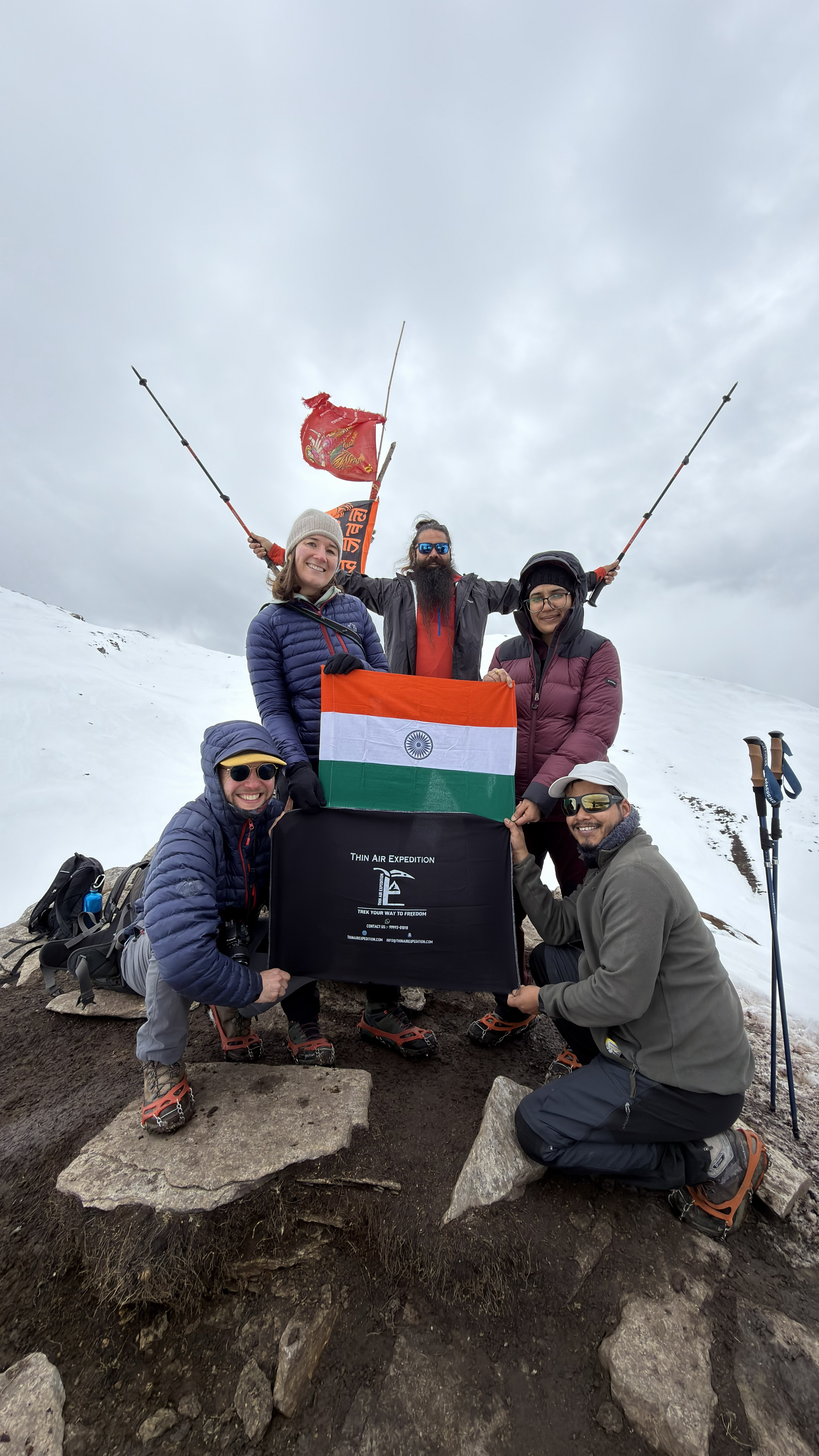
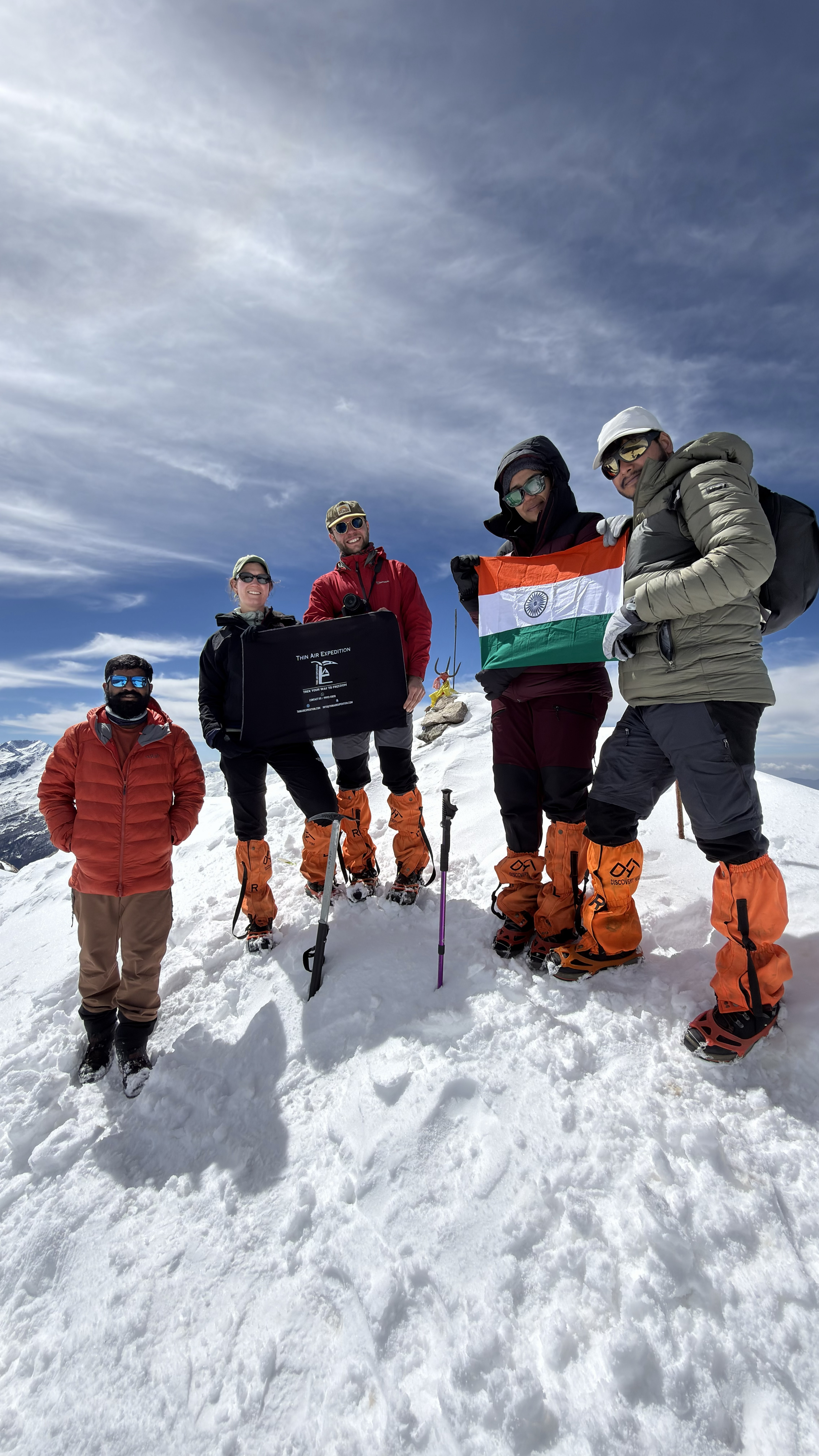
This is what makes the Pangarchulla Summit Trek so rewarding. Reaching the top feels like an achievement rather than merely the completion of a route.
For trekkers wondering, “Why should I do the Pangarchulla Trek?”, the answer is simple: it offers the opportunity to experience the transition from trekking to summit climbing without turning the entire adventure into a technical mountaineering expedition.
The challenge is real, but so is the sense of accomplishment.
2. The Landscape Keeps Changing as You Climb
Another reason the Pangarchulla Trek stands out is the variety of terrain.
The lower sections take you through Himalayan forests, where the trail feels enclosed and shaded. As you gain altitude, the trees gradually give way to more open landscapes. Eventually, the mountain opens up into broad high-altitude terrain where the horizon becomes much larger than it was at the beginning of the trek.
Depending on the season and conditions, you may encounter:
- Dense oak and rhododendron forests in the lower and middle sections.
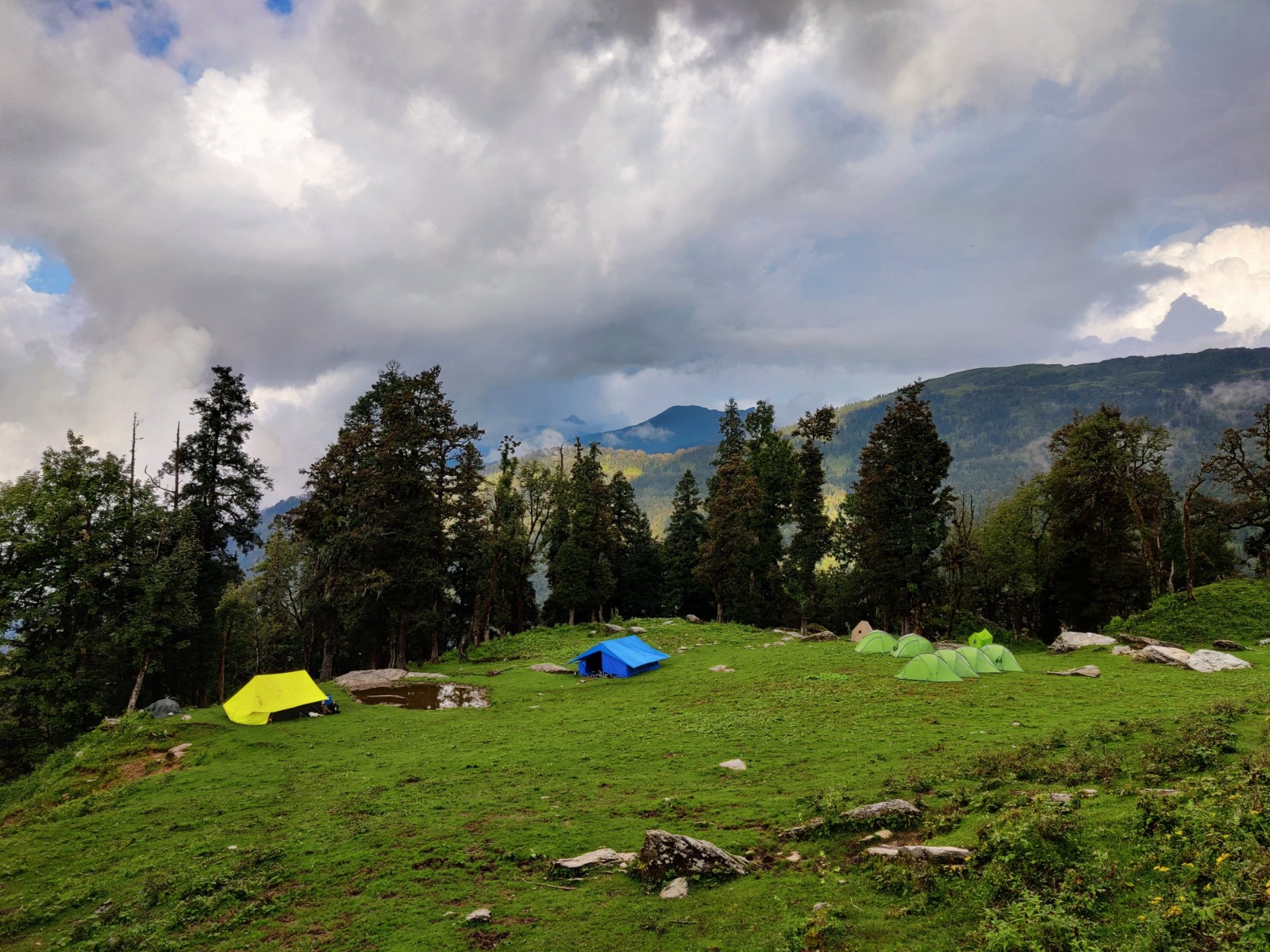
- Open alpine meadows and high-altitude clearings.
- Snow-covered sections during the snow season.
- Rocky and boulder-filled terrain closer to the summit.
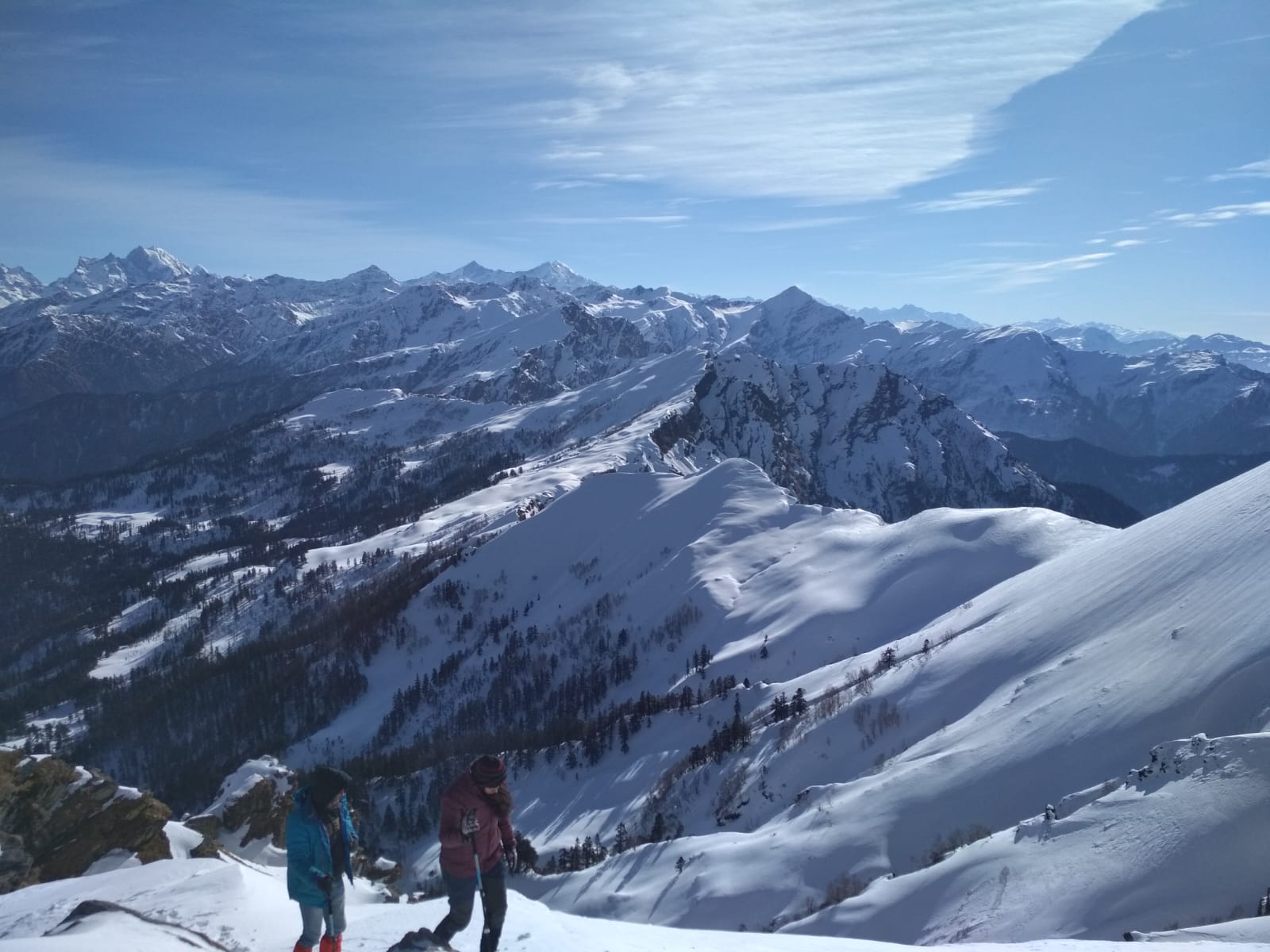
- Exposed ridges where the surrounding Himalayan landscape becomes visible.
- Vast mountain panoramas featuring prominent Garhwal peaks.
This changing landscape is one of the reasons the trek never feels visually repetitive.
The forest gives you a sense of being surrounded by the mountain. The meadows give you space. The snow changes the entire character of the trail. And the upper ridges finally give you the feeling that you are standing inside the Himalayas rather than simply looking at them from a distance.
For anyone searching for a high altitude trek in Uttarakhand that combines multiple types of Himalayan terrain, Pangarchulla offers an unusually varied experience.
3. The Summit Push Is What Makes It Memorable
The final ascent is where Pangarchulla reveals its true personality.
The approach to the peak is considerably more demanding than the easier sections of the trek. Depending on the season, the upper terrain can involve snow, large boulders, steep sections and exposed ridges. Established trekking sources classify the trek as difficult largely because of its high altitude, long summit day and challenging terrain.
This is also why the Pangarchulla Trek difficulty should not be underestimated.
The challenge isn't necessarily technical climbing in the conventional mountaineering sense. Instead, it comes from the combination of several factors:
- Altitude: The summit reaches around 15,069 feet, where the thinner air makes sustained physical effort more demanding.
- Steep ascent: The gradient becomes significantly more challenging as you approach the summit.
- Uneven terrain: Rocky and boulder sections require careful foot placement.
- Snow conditions: When snow is present, the surface can alter the difficulty considerably.
- Long summit day: The summit attempt can require several hours of continuous effort, followed by the descent.
- Weather: Conditions in the high mountains can change quickly, making flexibility and good judgement essential.
This is why physical preparation matters so much for anyone planning the Pangarchulla Peak Trek.
The mountain is not impressed by how quickly you walked on a treadmill or how many kilometres you covered in a city. It rewards steady endurance, strong legs, balance and the ability to conserve energy.
And that is precisely what makes the summit feel earned.
Pangarchulla Trek Height & Location
The Pangarchulla Peak rises to approximately 15,069 feet (4,593 metres) in Uttarakhand's Garhwal Himalayas. The trek is associated with the Joshimath–Auli region and shares parts of its approach with the wider Kuari Pass landscape.
The location is significant because this part of the Garhwal Himalayas is surrounded by an extraordinary collection of high peaks.
From the upper sections of the trek, depending on weather and visibility, trekkers can encounter views of major Himalayan giants including Nanda Devi, Dronagiri, Chaukhamba, Trishul, Kamet and other surrounding peaks. Uttarakhand Tourism specifically highlights views of Nanda Devi, Trishul and Chaukhamba from the Pangarchulla route.
The altitude also explains why Pangarchulla should be approached differently from a low-altitude hiking trip.
At 15,000 feet, the mountain environment is fundamentally different. Oxygen availability is lower, temperatures can drop sharply, and physical exertion feels harder than it does at sea level. A trekker who is comfortable completing a long walk at home may still find the same distance surprisingly demanding at high altitude.
That is why Pangarchulla Trek altitude is not just an interesting number to mention in a travel guide. It is one of the factors that defines the experience.
The higher you climb, the more important it becomes to maintain a controlled pace, stay hydrated, listen to your body and follow proper acclimatization practices.
Pangarchulla Trek Difficulty: Is It Really Difficult?
If you are searching “Is Pangarchulla Trek difficult?”, the honest answer is yes—it is a demanding Himalayan trek and should not be treated like a casual beginner's trail.
The difficulty is not concentrated entirely in the first few days. In fact, much of the attraction lies in how the trail gradually builds towards the summit challenge.
The biggest test comes when altitude, steepness and terrain begin working together.
Altitude Makes Every Step Different
At lower elevations, your body has access to more oxygen and recovery is relatively easier. As you climb towards 15,000 feet, the reduced oxygen availability can make even a moderate pace feel strenuous.
You may notice that your breathing becomes heavier, your recovery takes longer and your normal walking speed no longer feels sustainable.
This is why the Pangarchulla Trek height needs to be considered alongside its difficulty level. It is not simply the vertical number that matters; it is how quickly your body has to adapt to the changing altitude.
The Summit Day Is the Real Test
The summit attempt is generally the most demanding part of the Pangarchulla Trek.
The day can involve a substantial elevation gain, long hours on the trail and challenging terrain. Established route descriptions note that the summit section can involve prolonged movement over snow and boulders, making it physically and mentally demanding.
This is where endurance becomes more important than speed.
You may take dozens of small steps where you would normally take ten. You may stop more frequently. You may have to carefully choose where to place your feet. And when the summit finally appears close enough to touch, there may still be more climbing ahead.
That is normal.
A successful summit attempt is not about racing towards the top. It is about maintaining enough energy and concentration to climb safely and return.
Snow Can Change the Entire Experience
For people specifically looking for a Pangarchulla snow trek, snow is one of the biggest attractions—but it is also one of the factors that can make the trek significantly harder.
Snow can conceal uneven terrain and boulders, alter traction and slow down movement. Depending on conditions, appropriate winter equipment and experienced supervision become especially important.
This is also why the idea that Pangarchulla is simply a “winter trek” can be misleading. Snow conditions vary significantly through the season, and deep winter is not necessarily the easiest or safest time to attempt the summit. Some established trekking operators specifically recommend the post-winter spring window when the snow conditions become more manageable.
Fitness Matters More Than You Think
You do not need to be an elite athlete to appreciate Pangarchulla, but you do need a solid level of endurance.
Preparation should ideally include:
- Long-distance walking to build aerobic endurance.
- Stair climbing to strengthen the legs.
- Squats and lunges for climbing strength.
- Regular uphill walking whenever possible.
- Practice carrying a daypack.
- Gradually increasing walking duration rather than suddenly attempting very long sessions.
- Adequate rest between training sessions.
More importantly, previous Himalayan trekking experience is valuable. Several established sources recommend good physical fitness and prior trekking experience because of the altitude, steep sections and demanding summit day.
So, is Pangarchulla suitable for beginners?
It depends on what “beginner” means.
Someone completely new to trekking and high-altitude environments should not choose Pangarchulla simply because it looks beautiful in photographs. Someone who is relatively new to trekking but has excellent fitness, has trained properly and is accompanied by an experienced professional team may have a different starting point.
The important thing is to respect the mountain rather than the label.
The Landscape: What You Actually See on the Pangarchulla Trek
One of the strongest reasons to put Pangarchulla on your bucket list is that the trek offers much more than a summit photograph.
The scenery changes progressively as you move higher.
At the beginning, the forest creates a completely different atmosphere. The trail passes beneath trees and through mountain vegetation, with occasional openings that allow glimpses of the surrounding landscape.
As you climb higher, the forest gradually becomes less dominant. The trail begins to feel wider and more exposed, and the mountains start taking over the horizon.
Then come the open alpine sections.
These are the places where you begin to understand why people fall in love with Himalayan trekking. Instead of looking at the mountains through gaps in the trees, you suddenly have an enormous landscape in front of you.
Forests and Mountain Trails
The lower sections provide a quieter, greener side of the Himalayas.
Depending on the season, oak and rhododendron forests create a rich mountain environment. In spring, flowering rhododendrons can add colour to the trail, while the forested sections provide a welcome contrast to the exposed upper terrain.
Alpine Meadows and Open Spaces
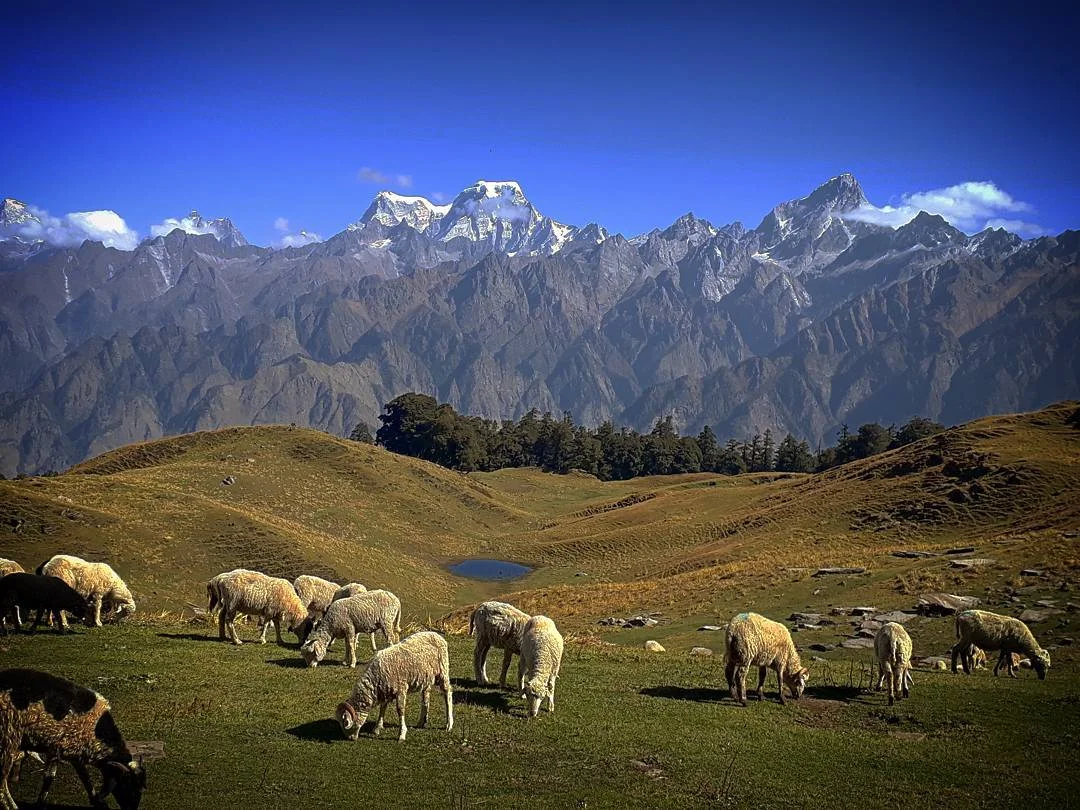
As the altitude increases, the landscape opens into meadows and high clearings. These spaces create some of the most memorable visual moments of the trek. The feeling changes from walking through the mountain to walking across it.The surrounding peaks become increasingly prominent, and the scale of the landscape becomes difficult to capture in a photograph.
Snow-Covered Landscapes
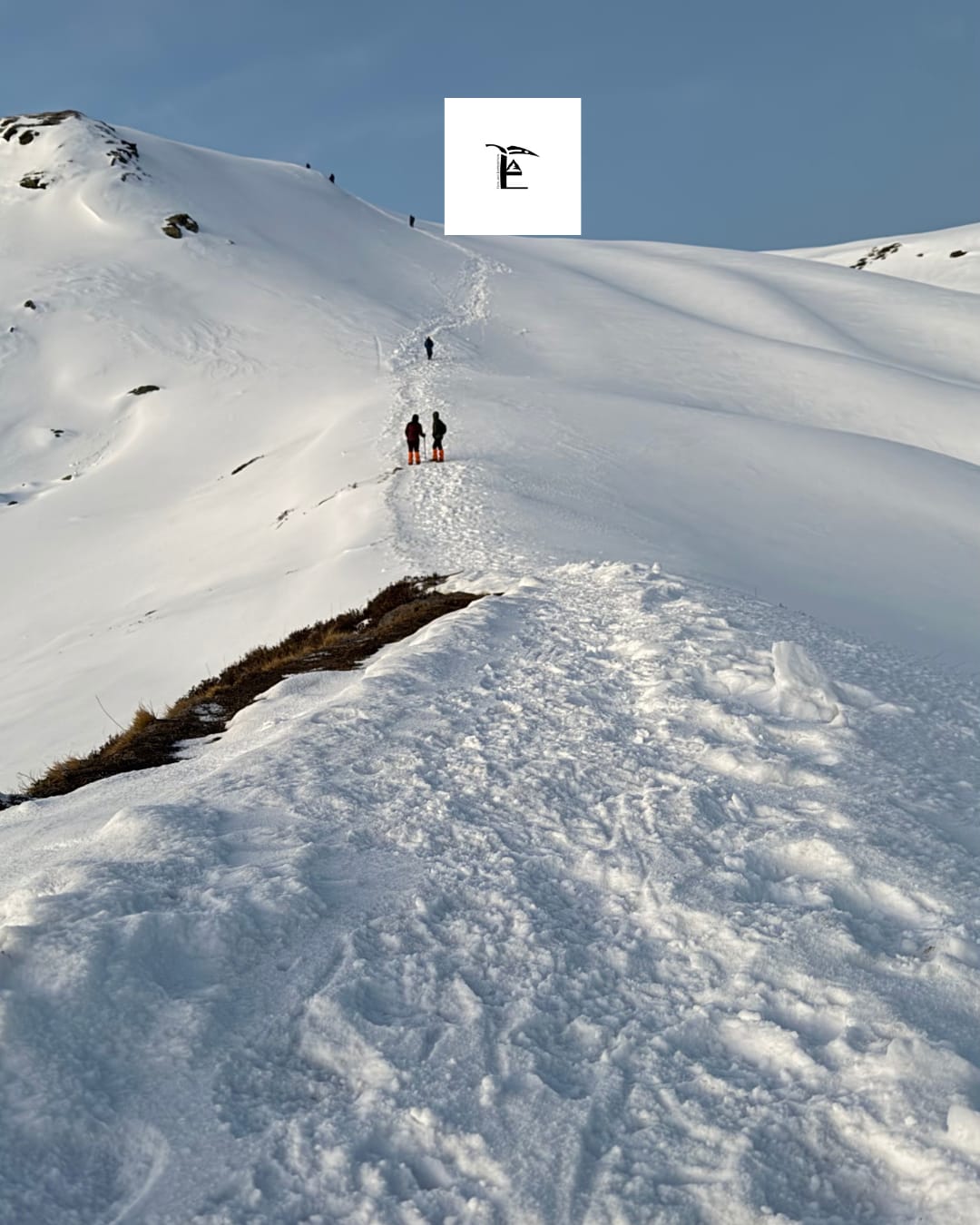
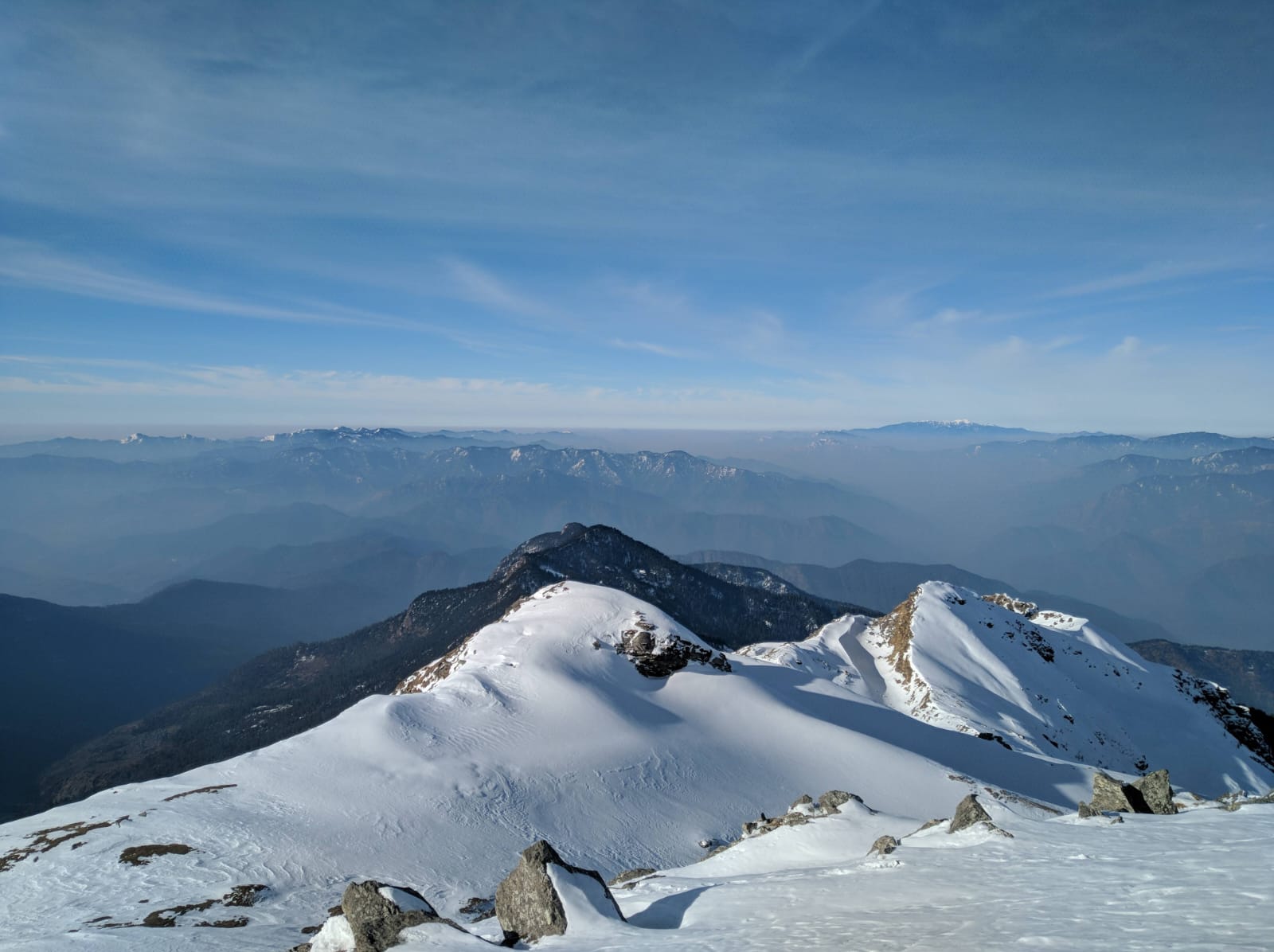
For trekkers planning a Pangarchulla snow trek, the upper mountain can become dramatically different when covered in snow.The familiar trail disappears beneath white slopes. Boulders become partially buried, ridges become more visually defined, and the summit approach takes on a completely different character.But snow should never be viewed only as scenery. It changes the way you walk and increases the importance of equipment, route knowledge and careful decision-making.
Himalayan Peaks on the Horizon
And then there are the mountains themselves.On clear days, the views from the Pangarchulla region can include some of the most recognisable peaks of the Garhwal Himalayas. Nanda Devi, Chaukhamba, Trishul and Dronagiri are among the prominent mountains associated with views from the route.
This is perhaps the most powerful part of the entire experience.
You begin the trek thinking about the summit ahead.But as you climb, you realise that the summit is only one part of the story.
The forests below you, the ridges around you and the enormous Himalayan peaks in the distance become part of the experience—and by the time you finally stand at the top of Pangarchulla, you have already travelled through several different versions of the mountain.That is what makes the Pangarchulla Trek worth putting on your bucket list.It doesn't simply take you to a higher point.It makes you earn the view.
6. Pangarchulla Trek Route: What the Journey Looks Like
The Pangarchulla Trek is not simply about reaching a summit. The route gradually changes character as you gain altitude, taking you through forests, open meadows, snow-covered trails and finally a steep summit approach.
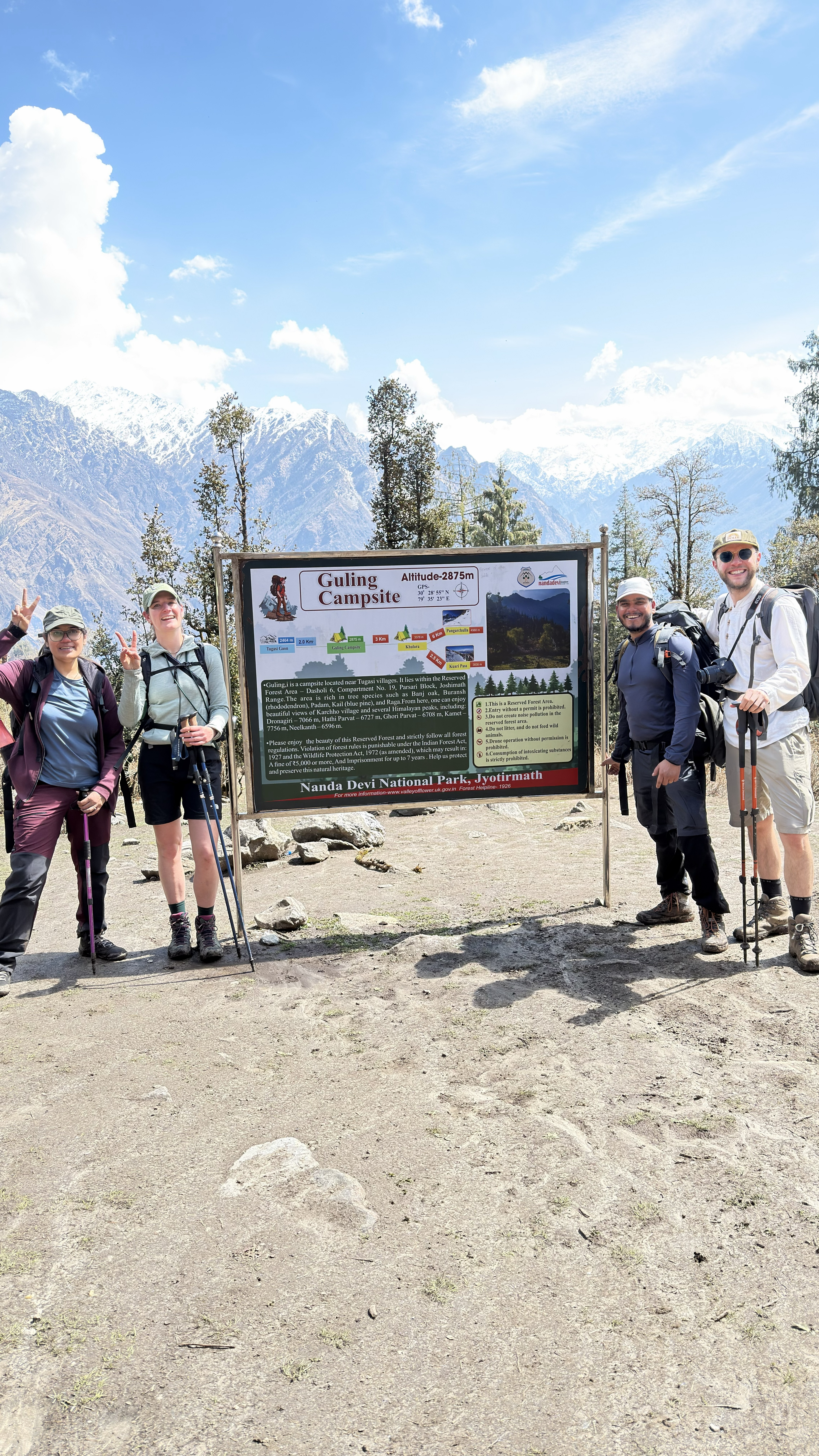
A typical Pangarchulla Trek itinerary begins from Dhak village, near Joshimath in Uttarakhand. From here, trekkers gradually enter the mountain terrain and follow trails leading towards the Kuari Pass region.
Dhak to Gulling Top
The initial section of the trek takes you through a forested trail. The climb is steady, giving your body time to adjust to the altitude.As you gain height, the landscape begins opening up, and the dense forest gradually gives way to more expansive mountain views.
Gulling Top to Khullara
The trail continues through beautiful Himalayan forests before reaching the Khullara campsite.This section is particularly rewarding because the surroundings begin to feel distinctly alpine. Depending on the season, you may encounter patches of snow along the trail.
Khullara to Pangarchulla Summit
This is the most demanding section of the Pangarchulla Trek.
The summit day usually starts early, often before sunrise. The reason is simple: the summit climb is long and physically demanding, and starting early provides sufficient time to ascend and descend safely.The terrain becomes steeper as you approach the summit. Snow conditions can make the climb considerably more challenging during winter and spring.The final ascent requires determination rather than speed. Each step becomes deliberate as the altitude increases.And then, after hours of climbing, the Pangarchulla summit comes into view.
At approximately 4,590 metres, the summit offers an extraordinary panorama of the Garhwal Himalayas.
7. Pangarchulla Trek Difficulty: Is It Really Difficult?
The Pangarchulla Trek is generally considered a moderate to difficult Himalayan trek, particularly because of its summit-day ascent.
It isn't necessarily the longest trek in Uttarakhand, but the combination of altitude, steep sections, changing terrain and summit-day endurance makes preparation important.
What Makes Pangarchulla Difficult?
Several factors contribute to the difficulty of the trek:
- High altitude: The summit is around 4,590 metres, so altitude becomes a significant factor.
- Steep summit approach: The final climb can be physically demanding.
- Snow conditions: Winter and spring can bring substantial snow, making the trail slower and more strenuous.
- Long summit day: Trekkers need to maintain energy for both the ascent and descent.
- Weather changes: Himalayan weather can change rapidly, particularly at higher elevations.
- Cold temperatures: Early-morning summit attempts can be extremely cold.
However, difficulty is relative. A trekker with good cardiovascular fitness, adequate preparation and previous trekking experience may find Pangarchulla challenging but manageable.The key is not to underestimate the mountain.
8. Best Time to Do the Pangarchulla Trek
One of the reasons Pangarchulla is so popular is that the trek changes dramatically with the seasons.
Winter and Early Spring
For trekkers looking for a genuine snow trek in Uttarakhand, the winter and early spring months can be particularly attractive.Snow transforms the trail, campsites and surrounding peaks into a completely different landscape.However, snow also increases the difficulty of the trek. The trail may become slippery, and the summit climb can require greater technical awareness and physical effort.
Spring
Spring brings a transition in the landscape.Snow gradually begins retreating from lower sections, while higher areas can still remain snow-covered. The contrast between forests, snowfields and mountain peaks makes this period visually spectacular.
Autumn
Autumn is another excellent period for Himalayan trekking.The monsoon generally leaves the skies clearer, improving mountain visibility. The trails are often more stable, and the surrounding peaks can appear exceptionally sharp against the blue sky.For trekkers prioritising clear Himalayan views, autumn is often a highly rewarding season.
Which Season Should You Choose?
Your choice should depend on what you want from the trek.
Choose the snow season if:
- You specifically want a Himalayan snow trek.
- You are comfortable with colder temperatures.
- You are prepared for more demanding trail conditions.
Choose the clearer post-monsoon season if:
- Mountain views are your priority.
- You prefer more stable trail conditions.
- You want to focus on the landscapes rather than deep snow.
9. Pangarchulla Trek Weather and Temperature
Weather at Pangarchulla can vary considerably depending on the season and altitude.Lower sections of the trek may feel relatively comfortable during the daytime, while temperatures at higher camps and the summit can drop significantly after sunset.During a summit attempt that begins in the early hours, trekkers should be prepared for freezing conditions.Weather can also change quickly in the Himalayas. Sunshine at the campsite does not guarantee similar conditions at the summit.
This is why proper layering is essential.
A good trekking clothing system should include:
- Moisture-wicking base layers
- Warm insulating layers
- A waterproof and windproof outer layer
- Trekking trousers
- Warm socks
- Gloves
- A woollen or fleece cap
- Sunglasses
- A reliable rain or snow protection layer
Always follow the advice of your trek leader regarding weather-related decisions. Mountain safety should take priority over reaching the summit.
10. Pangarchulla Trek Preparation: How to Train
Preparation can make a major difference to your experience on Pangarchulla.
You don't need to become an athlete, but you should develop enough endurance to walk uphill for several hours while carrying a backpack.
Cardiovascular Training
Begin with activities such as:
- Brisk walking
- Jogging
- Cycling
- Stair climbing
- Incline treadmill walking
Gradually increase the duration rather than trying to build endurance overnight.
Strength Training
Focus particularly on your:
- Quadriceps
- Hamstrings
- Glutes
- Calves
- Core
Exercises such as squats, lunges, step-ups and calf raises can help prepare your legs for sustained uphill and downhill movement.
Practice With a Backpack
One mistake many first-time trekkers make is training without considering the weight they will carry.
Include occasional walks with a backpack so your body becomes accustomed to the additional load.
Don't Ignore Recovery
Training every day without adequate recovery can be counterproductive.
Give your body sufficient time to recover between demanding sessions, especially as the trek approaches.
The goal isn't to arrive at Pangarchulla exhausted from training. The goal is to arrive prepared.
11. What to Pack for the Pangarchulla Trek
Packing for a Himalayan trek requires a balance between preparedness and weight.
Carrying everything you own isn't preparation—it is unnecessary weight.
Essential Clothing
Carry layers rather than one extremely heavy jacket. Layering allows you to adjust your clothing according to temperature and activity.
Your clothing should include:
- Thermal innerwear
- Trekking T-shirts
- Fleece or insulating layer
- Down or synthetic jacket
- Waterproof jacket
- Trekking pants
- Warm socks
- Gloves
- Cap
- Sunglasses
Trekking Essentials
Your backpack should also contain:
- Sturdy trekking shoes with good grip
- Headlamp
- Water bottles
- Personal medication
- Sunscreen
- Lip balm
- Personal toiletries
- Small first-aid kit
- Power bank
- Identity documents
- Waste bags
Snow Trek Essentials
If you're trekking during heavy snow conditions, your trek operator may recommend or provide additional equipment depending on the route and conditions.
Always check the specific packing list provided by your trekking company before departure.
12. What You See on the Pangarchulla Trek
The scenery is one of the strongest reasons to choose Pangarchulla. The trek offers a remarkable transition between different Himalayan landscapes.You begin among forests and gradually move towards open terrain where the mountains dominate the horizon.From higher sections, trekkers can witness impressive Himalayan peaks, including views towards prominent summits of the Garhwal region.The experience becomes particularly magical around sunrise and sunset.Early morning light slowly reaches the mountain faces, turning the landscape from dark silhouettes into layers of snow-covered peaks.On a clear day, the panorama from the summit can make the entire climb feel worthwhile.But perhaps the most memorable part is not a single viewpoint.It is the gradual transformation of the landscape as you walk.
13. Pangarchulla Trek vs Kuari Pass: Which One Should You Choose?
Pangarchulla and Kuari Pass are often discussed together because they share parts of the broader trekking region.
However, they offer different experiences.
Pangarchulla is better suited for trekkers who want:
- A summit experience
- A steeper and more challenging climb
- Snow trekking during the appropriate season
- A stronger sense of reaching a mountain peak
Kuari Pass is better suited for trekkers who want:
- A classic Himalayan pass-crossing experience
- Long mountain panoramas
- A comparatively gentler trekking objective
- A trail focused more on landscapes than summit climbing
If your dream is to stand on a Himalayan summit after a demanding ascent, Pangarchulla has a distinct appeal.
If you prefer a more gradual journey through Himalayan landscapes, Kuari Pass may be the better choice.
14. Is Pangarchulla Trek Suitable for Beginners?
Yes, but with an important qualification.
Pangarchulla can be attempted by beginners who are physically fit, properly prepared and trekking with a reliable professional team.
However, it should not be treated as an easy introductory hike.
A first-time trekker should ideally build basic endurance before attempting the trek, especially if they have never experienced sustained uphill walking.
The most important beginner mistake to avoid is confusing walking experience with trekking fitness.
Being able to walk around a city for several hours does not necessarily mean your body is ready for steep Himalayan terrain at altitude.
Start training several weeks before the trek and gradually increase your walking distance, elevation gain and endurance.
15. Pangarchulla Trek Safety Tips
The mountains deserve respect.
A successful trek isn't simply one where you reach the summit. It is one where you return safely.
Keep these principles in mind:
- Follow your trek leader's instructions.
- Maintain a steady pace instead of racing uphill.
- Stay hydrated.
- Eat regularly even when you don't feel particularly hungry.
- Protect yourself from excessive sun exposure.
- Never ignore unusual symptoms at altitude.
- Don't separate yourself from the group unnecessarily.
- Follow designated trails.
- Avoid littering.
- Respect local communities and the mountain environment.
- Be prepared for plans to change because of weather.
Most importantly, understand that the summit is optional; your safety isn't.
If weather or trail conditions make the summit unsafe, turning around is not failure. It is responsible mountaineering.
16. Responsible Trekking: Leave the Himalayas Better Than You Found Them
The Himalayas are not merely a backdrop for photographs.
They are fragile ecosystems supporting forests, wildlife, villages and communities that have lived alongside these mountains for generations.
As trekking tourism grows, responsible travel becomes increasingly important.
Carry Your Waste Back
Everything you carry into the mountains should be brought back out.
Avoid leaving plastic wrappers, tissues, bottles or other waste along the trail.
Avoid Single-Use Plastic
Use reusable water bottles wherever possible and minimise unnecessary packaging.
Respect Local Communities
Interact respectfully with villagers, guides, porters and local businesses.
Remember that the trail passes through someone's home and livelihood.
Stay on the Trail
Do not unnecessarily create shortcuts through vegetation.
Small shortcuts multiplied by thousands of trekkers can cause serious trail erosion.
Leave Nature Undisturbed
Don't pick flowers, disturb wildlife or remove rocks and plants as souvenirs.
The best souvenir from a Himalayan trek is the memory—not something taken from the mountain.
17. Why Pangarchulla Trek Belongs on Your Bucket List
So, why should Pangarchulla be on your Himalayan trekking bucket list?
Because it combines many things trekkers search for in one journey.
You get dense Himalayan forests, open mountain landscapes, snow-covered trails during the right season, high-altitude camps and the satisfaction of climbing towards a summit.
But beyond the checklist, Pangarchulla offers something more meaningful.
It forces you to slow down.
On the trail, the noise of everyday life gradually becomes less important. Your attention narrows to your next step, your breathing, the person walking ahead and the mountains surrounding you.
The summit isn't just a geographical point.
It becomes a reminder of what happens when you keep moving despite discomfort.
That is perhaps the real attraction of a Himalayan summit trek.
You don't return exactly the same person who started walking from the first village.
18. Frequently Asked Questions About Pangarchulla Trek
How high is Pangarchulla?
Pangarchulla reaches approximately 4,590 metres above sea level.
How difficult is the Pangarchulla Trek?
It is generally considered a moderate-to-difficult Himalayan trek because of its altitude, steep summit section and demanding summit day.
What is the best time for the Pangarchulla Trek?
The ideal season depends on your objective. Snow lovers may prefer the winter and spring period, while trekkers looking for clearer mountain views may prefer the post-monsoon autumn season.
Is Pangarchulla suitable for beginners?
Fit beginners can attempt it with proper preparation and professional guidance, but it should not be treated as an easy trek.
How should I prepare for Pangarchulla?
Focus on cardiovascular endurance, leg strength, uphill walking and gradually increasing your trekking stamina before the trip.
Is Pangarchulla a snow trek?
It can be a snow-covered trek during the winter and spring season, although actual snow conditions vary from year to year.
What makes Pangarchulla different from Kuari Pass?
Pangarchulla focuses on a summit climb, whereas Kuari Pass offers a classic Himalayan pass-crossing experience. Both provide spectacular mountain scenery but differ in their trekking objectives.
19. Final Thoughts: More Than Just a Summit
Pangarchulla is not a trek you complete merely by counting kilometres.It is a journey of gradual transformation—from forest trails to open ridges, from comfortable walking to demanding climbs, and finally from doubt to the moment when the summit comes within reach.
There will be moments when your legs feel heavy.There may be moments when the weather changes.
There may even be moments when you wonder why you chose to climb in the first place.And then you look around.The mountains are still there.Silent. Vast. Unmoved.
You take another step.And then another.
That is what makes a summit trek memorable.
Pangarchulla isn't just about standing higher. It's about discovering how far you can keep going.
If you're looking for a Himalayan trek that combines snow, high-altitude adventure, dramatic mountain views and a rewarding summit experience, Pangarchulla deserves a place on your bucket list.