Ropes knots himalaya
Ropes knots himalaya
30
Apr

1.The Rope is the lifeline of a climber. A good mountaineer should be aware of the properties of ropes used in the mountains, and their proper use. Misuse of ropes can lead to disastrous accidents due to early wear and tear of ropes. Modern climbing ropes are of two kinds—dynamic & static,
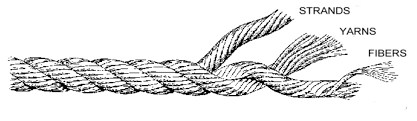
Until the 1950s/50s rock climbing ropes were of laid or twisted type, and were mostly made of hemp or other non-elastic fibers. At that time there was one rule for rock climbing: Don't fall. Twisted ropes are built in three steps. First, fibers are gathered and spun into yarns. A number of these yarns are then formed into strands by twisting The strands are then twisted together to lay the rope.
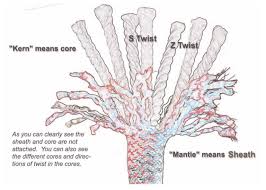
The German company Edelrid introduced the first Kernmantel rope in 1953, which revolutionized fall prevention. Today, Kernmantle ropes are being manufactured specifically for climbing. Kernmantle ropes are composed of a core of braided or parallel nylon filamenta engaged in a smooth wall sheath of Nylon. Nylon benefit of elasticity. The core is the load beati and the main purpose of the mantle (outer the core. A Single braid consists of an e eight or twelve being typical, braided int cunds, on with half of the strands going clockwise half going anticlockwise.
A dynamic rope has elasticity and stretches when loaded. It absorbs impact of the fall of a climber. Dynamic ropes for rock climbing range in length from 30M 80M. A 50M rope is the standard length of ropes and will meet your needs most of the time.
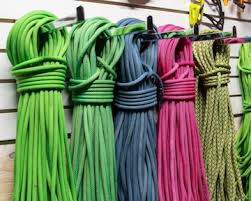
Static ropes are not designed to have elasticity and should not be used for le climbing. These ropes are more suited for rescue work, caving, climbing fixed lines v ascenders, hauling loads, rappelling, and top rope belaying.
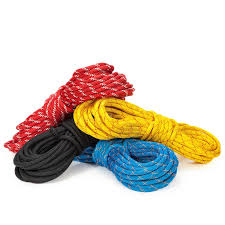
The name 'Single' indicates that the rope is designed to be used by i and not with another rope. Ropes suited for single rope method are marked with a Circled each end of the rope. These are best for traditional climbing, sports climbing, big-wall climb and top roping.
These are best for traditional climbing on wandering, multi-pitch routes, mountaineering, and ice climbing. In this method, one uses two ropes. As you ascenc rope is clipped to protection on the left and the other to protection on the right. Half ropes h Circled ½ symbol on each end.
Advantages
(1) Half-rope technique reduces rope drag on wandering routes
(2) Joining the two ropes together when rappelling allows you to go twice as far as you can with a single rope.
(3) Two ropes provide redundancy.
Disadvantages.
(1) Half ropes require more skill and effort.
(2) The combined weight of two ropes is heavier than a single rope.
These are best for traditional climbing on non-wandering, multi-pitch rock routes, mountaineering, and ice climbing. Similar to half ropes, twin ropes are a two-rope system. However, with twin ropes, the climber always clips both strands through each piece of protection, same like with a single rope. Twin ropes have a circled infinity symbol (∞) on each end.
(1) Tying the two ropes together when rappelling allows the climber to go twice as far, as with a single rope.
(ii) Two ropes provide redundancy
(iii) There will be more rope drag than with half ropes, making twin ropes a good option for non-wandering routes.
(IV) Twin ropes tend to be a bit thinner than half ropes, making for a lighter and less bulky system.
(1) Twin ropes require more skill and effort to manage.
(2) The combined weight of two ropes is heavier than a single rope.
(a) Weight. Though climbers try to use ropes with minimum weight, especially on alpine routes, due care has to be taken to ensure the strength or weight bearing capacity, as per requirement of the climb, should not be compromised for lighter ropes.
(b) Fall Rating. The rating given during UIAA tests to see how many falls the rope can sustain.
(c) Static Elongation. Static elongation is also called as Working Elongation. It is the distance the dynamic rope stretches with an 80 kg weight hanging from it. Elongation on single and twin ropes cannot exceed 10% of the total rope length, and in case of half ropes, it cannot exceed 12%.
(d) Dynamic Elongation. Dynamic elongation is the distance the rope stretches during the first UIAA fall. The UIAA allows ropes, which stretch no more than 40% of the length of the entire rope.
(e) Impact Force. Impact force is the amount of force in Kilo-Newtons that is exerted on the falling weight during the first UIAA fall. The higher the dynamic elongation, the lower the impact force.
(f) Fall Factor. The fall factor is the length of a fall divided by the length of the active rope during the fall. Fall factors can only range between 0 and 2. A fall factor of 2 constitutes a fall with the most impact force and is considered very serious. It is advisable that once a rope has witnessed a fall with a fall factor of 2, that particular rope should be discarded and not used for climbing.
(a) The climbing rope should never be stored or kept on ground and direct contact with dirt mud should be avoided as for as possible.
(b) Check your rope regularly. Just like the rest of your rock climbing gear, visual inspection is very important. Check your rope for signs of wear and tear before and after each climb.
(c) Climbing ropes should be washed occasionally, in lukewarm (and not hot) water and non-detergent soap.
(d) Climbing rope should be dried in air and not in direct sunlight, as the UV rays damage the fibers in the rope.
(e) Rope should be stored in a cool, dry, and dark place.
(f) Use your rope only for what it is designed for. In other words, climbing ropes should be used for climbing purposes only.
(g) Climbing rope must be protected from chemicals and acids.
(h) Always change end sides between two climbing sessions.
(i) Protect the rope from any sharp edges on the rock/ ice, as it can damage the sheath.
(j) Never step on the rope and be especially careful when you are wearing crampons
(k) A point to be noted is that these are just guidelines, a climber must use his/her judgment and experience to decide when to decommission a rope. A rope need not look damaged from outside, but depending on the falls it has taken and other like factors, a climber must take a call on the safety of the rope.
(a) Direct roping up knots.
(b) Indirect roping up knots.
(c) Joining knots.
(d) Hitches.
(e) Friction Knots.
These knots can be tied directly to a climber without any equipment..
(a) Guideman Knot. This is a knot that the lead climber uses for roping up with the team, such as in a crevasse-prone area. He uses this when he/she does not have a harness.
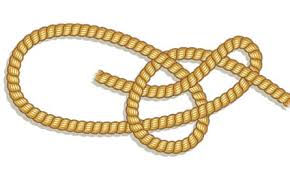
(b) Middleman Knot. The climbers in the middle of the rope use this knot while being roped up if they do not have a harness.
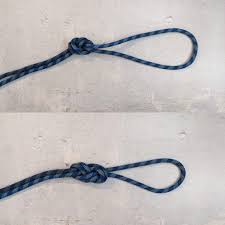
(c) End Man Knot. This one is used by the last roped up climber. This is used in the absence of a harness.
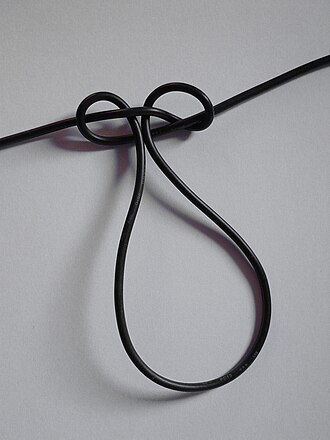
(a) Thumb Knot. It is also known as Safety Knot or Mother Knot. It is used to add safety after any other knot, or if the rope is weak or about to break.
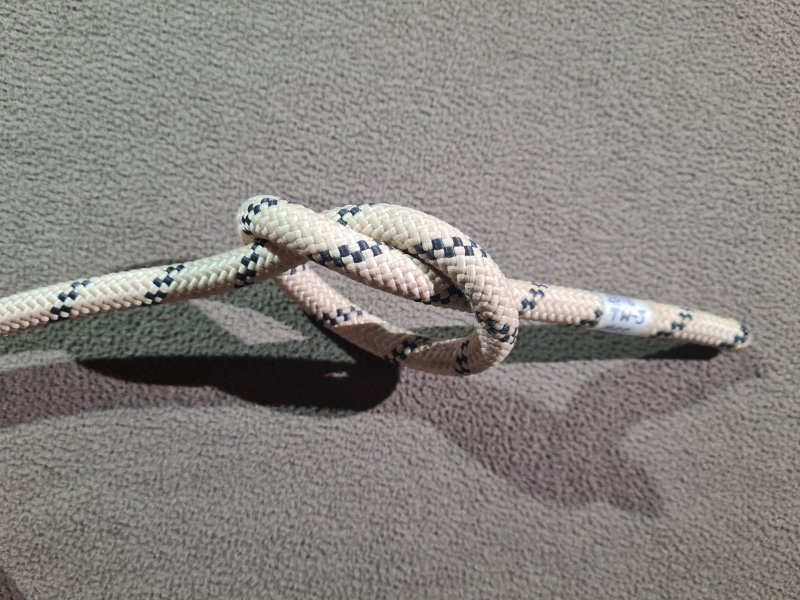
(b) Figure of Eight. It has various uses including as fixed rope anchor, to make a ladder, to anchor ice axe, to secure the harness to the rope, etc.
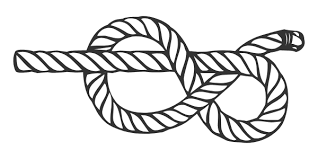
(c) Alpine Butterfly. Used for anchoring.
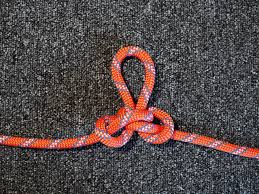
(d) Bowline Knot. This knot is also used as end man knot. Safety knot is a must after this knot. It can also be used to tie a loop on an anchor like a tree. It is easy to tie and untie even after handling heavy loads.
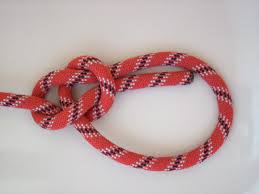
(e) Bowline on the Bight. This knot is used for an emergency or to anchor the rope in an equal manner.
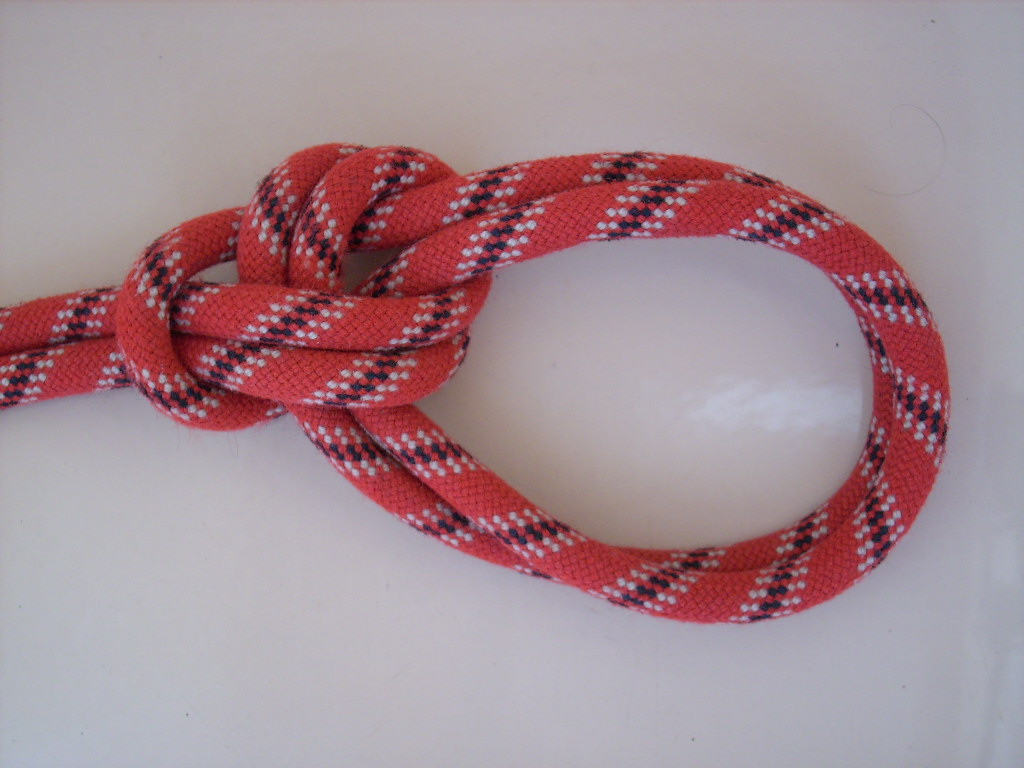
(d) Spanish Bowline. The Spanish Bowline is used in rescue work, load hauling, and river crossing, especially when heavy load is involved.
(f) Coil Bowline. The rope is rotated around the waist of the climber, a bowline knot is made over the coils, a screw gate carabiner is then passed through the knot. It provides additional support because of the coils.
11. Joining Knots.
(a) Knots used to tie ropes of the same diameter:-
(i) Fisherman Knot.
(ii) Double Fisherman Knot.
(!!!) Reef Knot/ Square Knot.
(b) Knots used to join ropes of different diameters.
(i) Sheet Bend Knot.
(ii) Double Sheet Bend Knot.
(c) Tape Knot Water Knot. This knot is used for tying tape slings.
12.Hitches
(a) Timber Hitch. The timber hitch is a knot used to attach a single length of rope to a cylindrical object. It is secure while tension is maintained, and it is easily untied even after heavy loading. It is used to ascertain the load taking capacity of a rope
(b) Clove Hitch. To anchor fixed rope, or to make a rappelling hase. This knot does not loosen and further tightens on application of weight.
(c) Italian Hitch/ Munter Hitch Friction Hitch. Used for belaying and rappelling.
(a) Prussik Knot. This knot is used as an ascending knot.
(b) Bachmann Knot. Used for the same purpose as a Prussik knot. This knot is made around a carabiner, therefore, it is easier to use and loosen compared to a Prussik knot.
(c) Machard French Prussik. Used as an alternative to ascender. Can also be tied with a tape sling.
(d) Machard Tress. It is also used as an alternative to a Machard Knot.
(c) Valdotain Knot. It is used when no equipment is available. Works both as an ascending and descending knot.
Used for storing and carrying the rope comfortably. Coils are of four major types:-
(a) Casualty Coil. Causality coil is important for a climber and the rescuer too, in that it is easy for the climber to use it to provide assistance to any injured person as well.
(b) Climbing coil.
climbing coil usually fit snugly around the waist and shoulders of the climber. This cool in wed when a Climbing Coil Climbing cous usually fit smugly around climber has extra rope, and wearing it keeps both the hands of the climber free
(c) Butterfly/Alpine Coil. The Butterfly Alpine Coil is a traditional method used by climbers to store and transport a climbing rope
(d) Rappelling Coil. Generally useful during rappelling and it makes it quick and convenient to anchor the rope, when using the rope in double from half length.
(e) Chain Coil. It is a traditional method of coiling ropes. This type of coil is tangle free and used for rope fixing/ climbing.
(a) Shoulder Carry.
(b) Sling Carry
(c) Cross Belt Carry.
(d) Inside Rucksack.
Climbers have to fix themselves to a single rope while traversing on hazardous terrain; each climber becomes an anchor for the rest of the climbers who are roped up. Climbers are fixed to the rope at equal distances. Climbers are generally roped up by two techniques:-
(a) Direct Rope Up. Climbers fix themselves i.e., their bodies to the rope directly. Knots used are bowline on the bight, bowline, guideman knot, middleman knot, and end man knot
(b) Indirect Rope Up. The rope is attached through a carabiner to the climber's harness.
(a) If there are 2 members, the rope is fixed to the climbers at both the ends.
(b) If there are 3 members the rope is put on the ground and placed like the alphabet "V" each climber then fixes himself at each end.
(c) If there are four members, a "N" shape is made.
(d) If there are five members a figure of "W" is made.
(e) There should ideally be only a distance of 7-8 mtrs between each climber
(f) The extra rope is carried on the shoulders by the guide man or the end man
(a) Rope should be of equal length between cach climber.
(b) The knots should be tied properly, and the climbers should check each other's knots.
(c) If roped up directly, the knots should be tight but not too tight, knots must not make the climbers uncomfortable.
(d) In the case, the climbers are roped up indirectly, the carabiner should be a screw gate carabiner
(e) The rope should be protected from sharp rocks.
(f) There should be no extra knots in the rope when climbers are roped up.
(g) When crossing crevasses or walking on a glacier, tension in the rope should be maintained between the climbers.