Camping Tent Pitching Himalaya
Camping Tent Pitching Himalaya
30
Apr

Tents are essential for camping in the mountains. They serve as light-weight temporary shelters and provide protection from weather and natural hazards in the mountains. Earlier canvas/cotton fabrie tents were in vogue. Canvas being heavy and bulky, nylon/ gore-tex made tents are now widely in use for climbing.
These are large tents with a capacity of 8-10 persons. They are made of two layers for better insulation with a single aluminum pole in the centre for support. The tent weighs around 40. 80 kg with all accessories, depending on the material used. Tents manufactured by high brand value companies are light in weight, but more expensive and less durable.
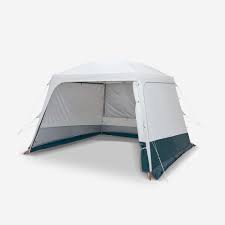
Mainly, it is made of nylon with two vertical poles, and one ridge pole. It has a capacity of 2-4 persons and the total weight of the tent is approximately 5 to 8 Kg. It has one inner and outer larger with several loops for pegs/nails for pitching.
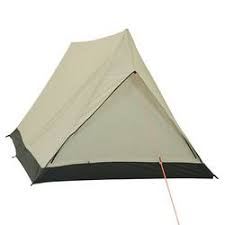
It' is designed for high altitude and its capacity is 2-4 people. These are made in single/ double layers, and have a strong outer larger which protects it from high velocity winds. These are light weight (3 to 8 kg) and most suited for extreme alpine climbing.
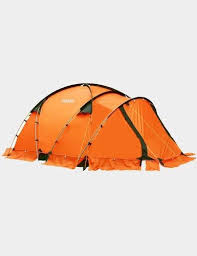
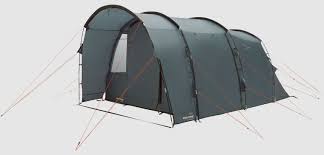
These are mainly nylon tents and are of different size designed in a tunnel shape with 5 or 6 small fiber glass poles. These tents are designed for steep slopes the windy faces of mountains.
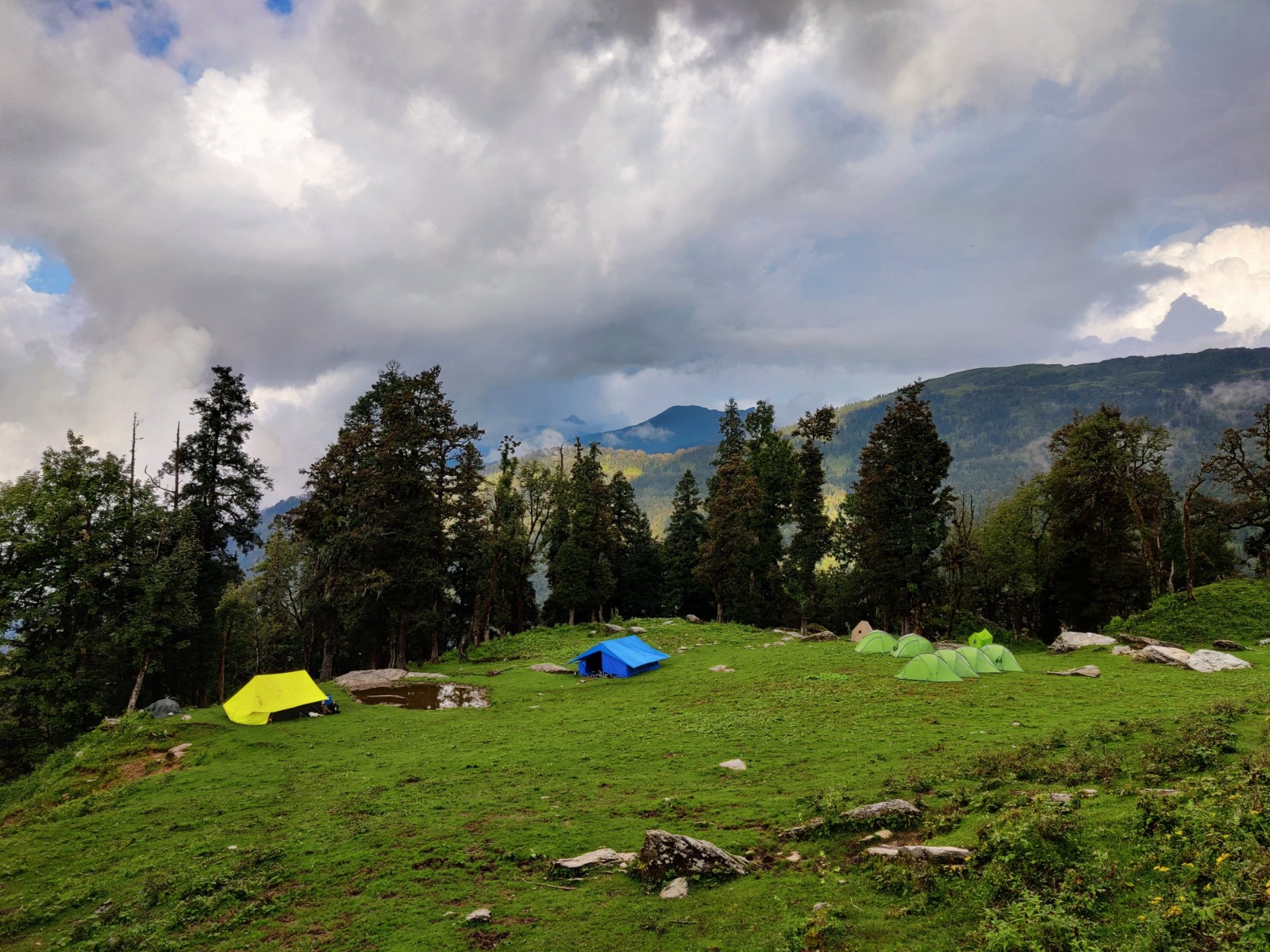
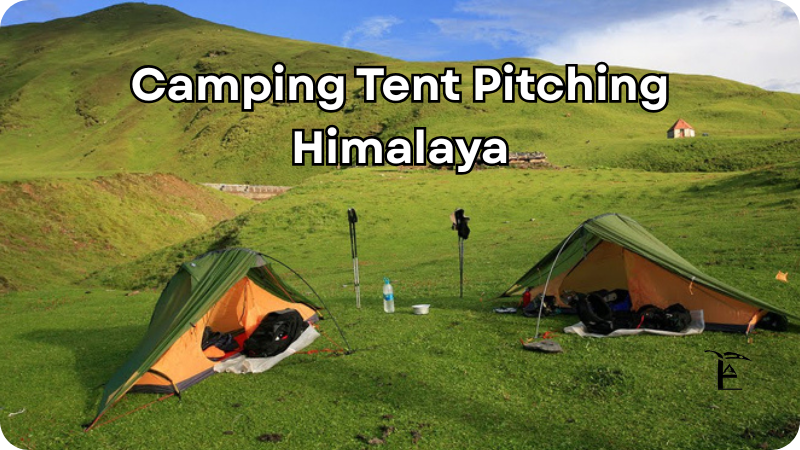
Important points to be adhered to while pitching tents or for camp-siting are as under-
(a) The ground should have a low gradient natural slope so that water may drain out naturally.
(b) The ground should be firm, even, and free of any stones.
(c) The location should have an easily accessible water source nearby, but the camp should be at least 200 feet away from the water source, to avoid water pollution and as protection from floods.
(d) Should be away from sites prone to natural hazards, e.g., river beds, dry streams, landslide area, rock fall area, etc.
(e) Tent entrance should be placed 90 degrees to the direction of winds. In mountains, winds blow down the valley in the morning, and up in the evening.
(f) Trees may provide some protection from wind, but don't pitch the tents directly underneath.
(g) All cords of the tent tethered with pegs, should be firmly tight.
(h) Dig drainage around the tent to prevent rain water from flowing below the tent floor. In the case of threat of snakes, a snake pit should be dug around the tent. The snake pit should be at least 1 feet in breadth and depth, with vertical walls.
(i) Always keep sharp objects like ice axe & crampons outside the tent, to avoid damage to the tent from sharp edges.