Camp Hygiene Sanitation Outdoors
Camp Hygiene Sanitation Outdoors

30
Apr
(a) Hygiene refers to the conditions and practices that help to maintain health and prevent the spreading of diseases. The term "hygiene" is derived from Hygeia, the Greek Goddess of health, cleanliness, and sanitation.
(b) Cleanliness and Hygiene can get easily ignored in high altitudes due to harsh conditions and fatigue. Hence, it is very necessary for a mountaineer to remain vigilant and particular about maintaining good hygiene.
It is the practice of keeping places around free from dirt and infection, by removing waste, trash and garbage, and maintaining cleanliness.
Leave No Trace provides a framework for outdoor recreational decision making with the aim of minimizing environmental impact. There are seven principles to be followed:-
(a) Plan ahead and prepare. Good planning ensures better logistics, as they are reduced to the minimum essentials, and improved waste management.
(b) Travel and camp on durable surfaces. Camping in slush or bushes will damage the natural habitat and also compromise on health and hygiene.
(c) Dispose off waste properly.
(d) Leave what you find. Do not take things from the natural habitat, surrounding while returning. Cause minimum impact on the habitat.
(e) Minimize campfire impacts.
(f) Protect and do not disturb wildlife.
(g) Be considerate to other visitors.
(a) Clean water should be available nearby.
(b) Water source should be away from conservancy area.
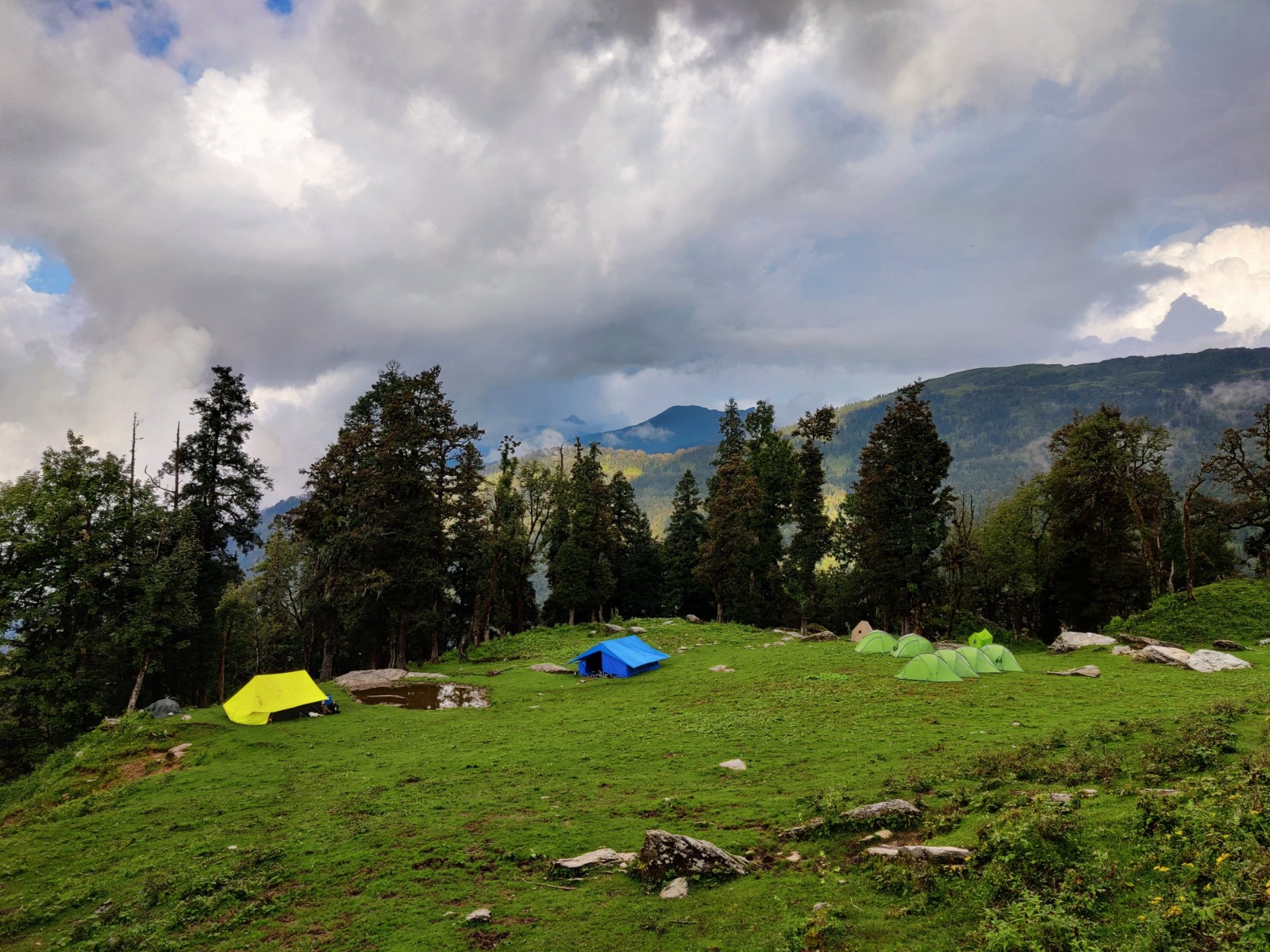
(c) Tents used for living and kitchen should be well ventilated.
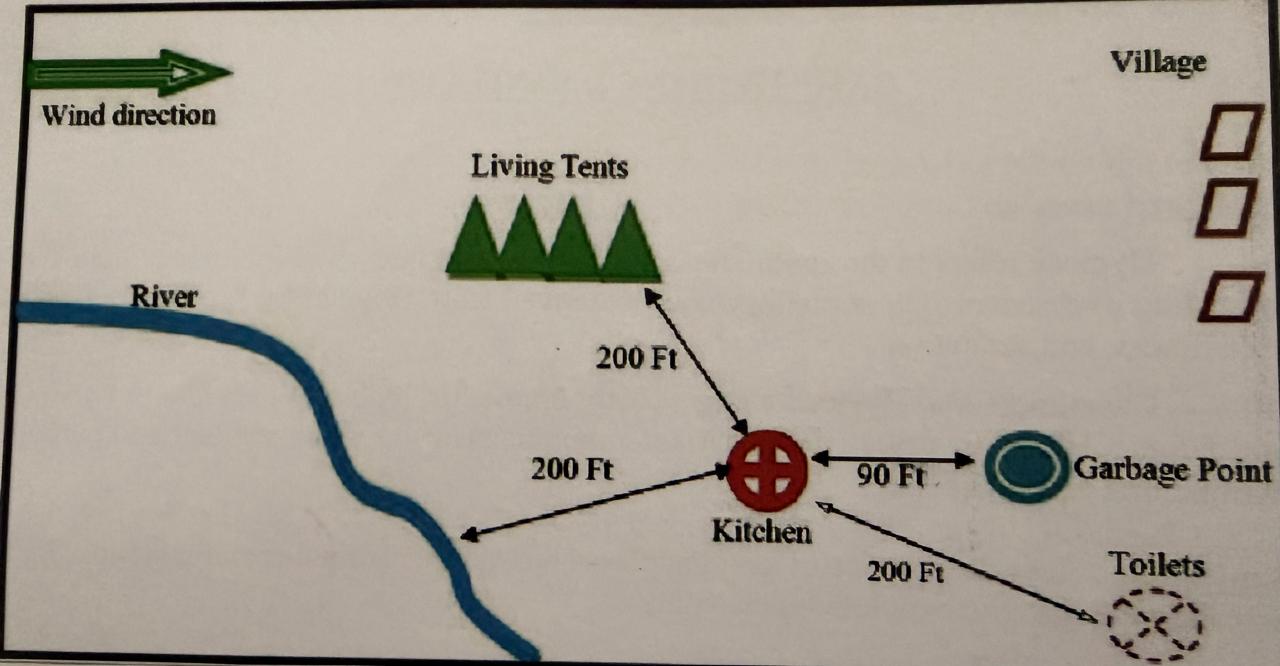
(d) Wind direction should be from the camp area towards the village, and not vice versa.
(e) Should be well drained.
(f) Avoid overcrowding.
(g) Living tent should be away from kitchen, dining area, bathing and washing areas.
(h) Avoid camping at areas which are prone to avalanches, floods, and landslides.
(i) Area should be protected from poisonous plants and animals.
(j) Away from garbage disposal point.
(k) Avoid camping under trees.
Good hygiene is more than just looking neat and clean. Good hygiene practices can reduce the spread of diseases. Therefore, they affect your health as well as the people with whom you interact.
(a) Wash your hands frequently, which will reduce spreading illness.
(b) Wash your feet daily and dry them.
(c) Use of sanitizer, when there is shortage of water.
(d) Brush your teeth regularly.
(e) Take baths or sponge bath whenever possible.
(f) Trim your nails periodically.
(g) Change your socks and undergarments regularly.
(h) Sun your clothes and air them regularly.
(i) Do not share personal belongings like towel, inner wear, comb, etc.
Food hygiene includes safe ways to handle, store, prepare, serve, and eat food so as to prevent food contamination, prevent food poisoning, and minimize the transmission of diseases.
(a) Wash your hands before touching any food.
(b) Use clean utensils for eating meals.
(c) Food handlers should take special precautions including personal hygiene.
(d) Wash fresh vegetables and meat thoroughly before being used.
(e) Store food properly.
(f) Cooking utensils and plates should be cleaned properly after every meal.
(g) Don't share personal utensils.
(h) Clean the cooking area thoroughly.
(i) Keep utensils away from birds and animals.
(j) Dispose uneaten food properly.
During camping outdoors, plenty of fresh and pure water should be consumed This water helps to cool off, digest food, and maintain health. Drinking 4 to 5 liters of water every day is recommended in high altitude.
(a) Use filters to remove cloudiness of water.
(b) Use of sedimentation, decantation, and boiling methods before using water
(c) Store water in clean containers.
(d) Mark points for drinking water, cooking, and washing clothes and utensils.
(e) Water from fast flowing streams at high altitudes is usually clean and pure.
(f) In snow bound areas, un-contaminated snow can be melted and used.
In order to drink water in an unknown outdoor area, you must be prepared to treat it. There are several ways of treating water at camp or along the trail. They are:-
Heat kills harmful micro-organisms. Water should be boiled for at least ten minutes.
A single tablet of chlorine (500mg) is sufficient to disinfect 20 liters of water. Wait for 30 minutes before consuming.
02 TSF in 10-12 liters of water or 4 to 5 milligram for one liter.
Two/five drops of 2% of iodine and 47% of alcohol tincture solution in one liter of water. Wait for 30 minutes before drinking.
Any process that removes foreign particles, sediment, bacteria, and chlorine taste, should be used for water filtration, like use of clean cloth, etc.
(a) Water for drinking and cooking should be drawn from an upstream location from the camp.
(b) Downstream water points can be used for washing, bathing, etc.
(c) Area marking can be done with flags.
(d) For washing and bathing, water should be carried away from the source, to avoid soap or chemicals to be transmitted into the water source. Waste water should be disposed in the soil and not in the stream or river.
(e) If using stream water for cooking, keep distance of kitchen about 200 ft away from the water source point.
Garbage should be segregated into two categories; degradable and non degradable for management of garbage in the camp site.
(a) Garbage dumping point should be located towards the leeward side of living and kitchen area.
(b) Garbage disposal should be at least 90 feet away.
(c) Pick and pack all litter especially for non degradable waste, like tin and plastic, etc, and carry it back after the expedition for suitable disposal.
(d) "Dig and bury" method can be used for degradable waste, like vegetables and leftover food etc.
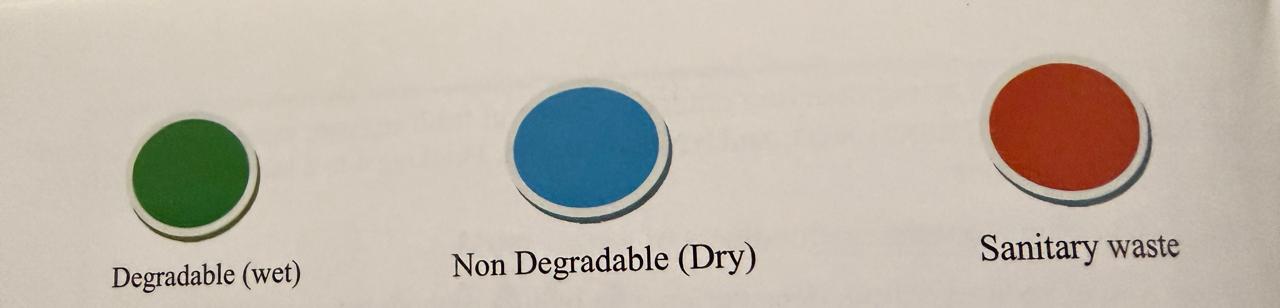
(e) International colour codes for degradable (wet) and non degradable (dry) waste are green and blue respectively. And red is used for sanitary waste.
Pit toilets are the most viable samitary option to help prevent the pillation of camping areas and water sources. Points to remember for siting and digging willets are as under
(a) Mark the area at least 200 fi from water point and camping arch
(b) Mark a fixed spet for urinal.
(c) Dig a 4-6 inches deep pit (Cat hoile), use it and cover it, each time with mud
(d) Trench latrines (1 x 2 x 4 feet) are more sumible if saying for longer period at camp
(e) The earth dug out should be pilled separately beside the trench to cover escret
(f) When the trench becomes nearly fill, it should be covered with earth and a fresh one should be dug
(g) Wash hands properly after using niet
(h) If camping in snow, deeper pits are required.