29
May

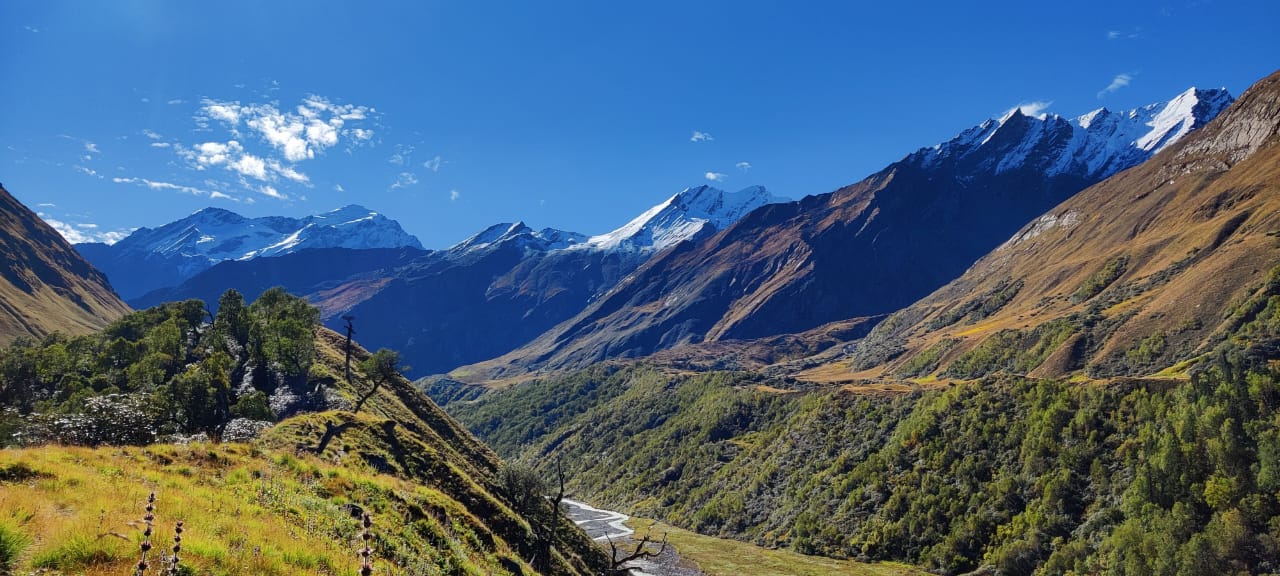
A Valley Route Through Forests, Villages & The Swargarohini Region There are Himalayan treks where the landscape changes abruptly every few hours. Har Ki Dun is not one of them.
The valley reveals itself slowly.
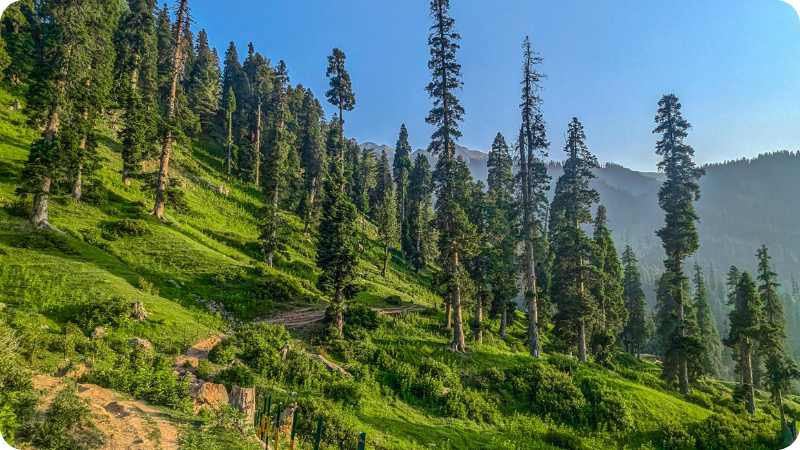
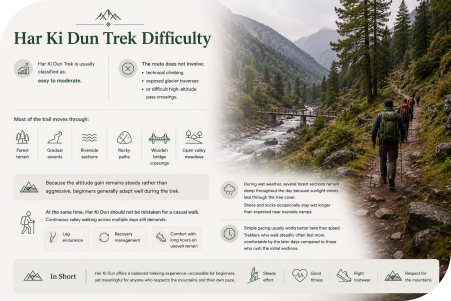
The forests remain for long stretches. Rivers continue beside the trail almost throughout the route. Villages appear without feeling separated from the mountains around them. Even after several hours of walking, the feeling is less about “crossing terrain” and more about moving deeper into an older Himalayan landscape that still feels inhabited.
That gradual continuity becomes one of the strongest parts of Har Ki Dun Trek.
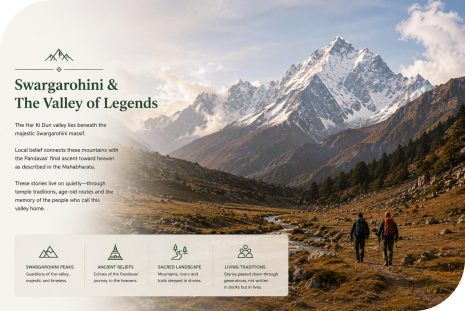
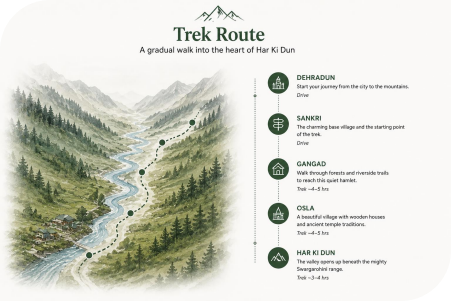
The route begins from Sankri in Uttarkashi district and moves into Govind Wildlife Sanctuary through forests, riverside paths, wooden bridges, shepherd trails, and old Himalayan settlements like Osla and Gangad before opening toward the upper Har Ki Dun valley beneath the Swargarohini massif.
Local belief connects the Swargarohini region with the Pandavas’ final ascent toward heaven described in the Mahabharata. Even today, these stories survive quietly across the valley — not through performance, but through memory, temple traditions, and the older rhythm of the settlements themselves.
Har Ki Dun Trek is often considered beginner-friendly because the altitude gain remains gradual compared to alpine pass routes. But the trek is remembered less for difficulty and more for the way the valley stays emotionally consistent throughout the journey.
Nothing feels rushed here.

Most Himalayan trekking routes are built around:
Har Ki Dun moves differently.
The valley rarely forces dramatic change. Instead, the environment keeps evolving in smaller ways:
That slower unfolding changes how people experience the trek.
By the third day, many trekkers stop checking distance repeatedly. The valley begins creating its own rhythm:
These moments are small individually.
But together, they become the memory of the trek.
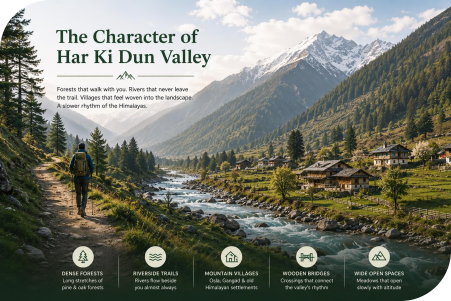
Har Ki Dun Trek is usually classified as:
The route does not involve:
Most of the trail moves through:
Because the altitude gain remains steady rather than aggressive, beginners generally adapt well during the trek.
At the same time, Har Ki Dun should not be mistaken for a casual walk. Continuous valley walking across multiple days still demands:
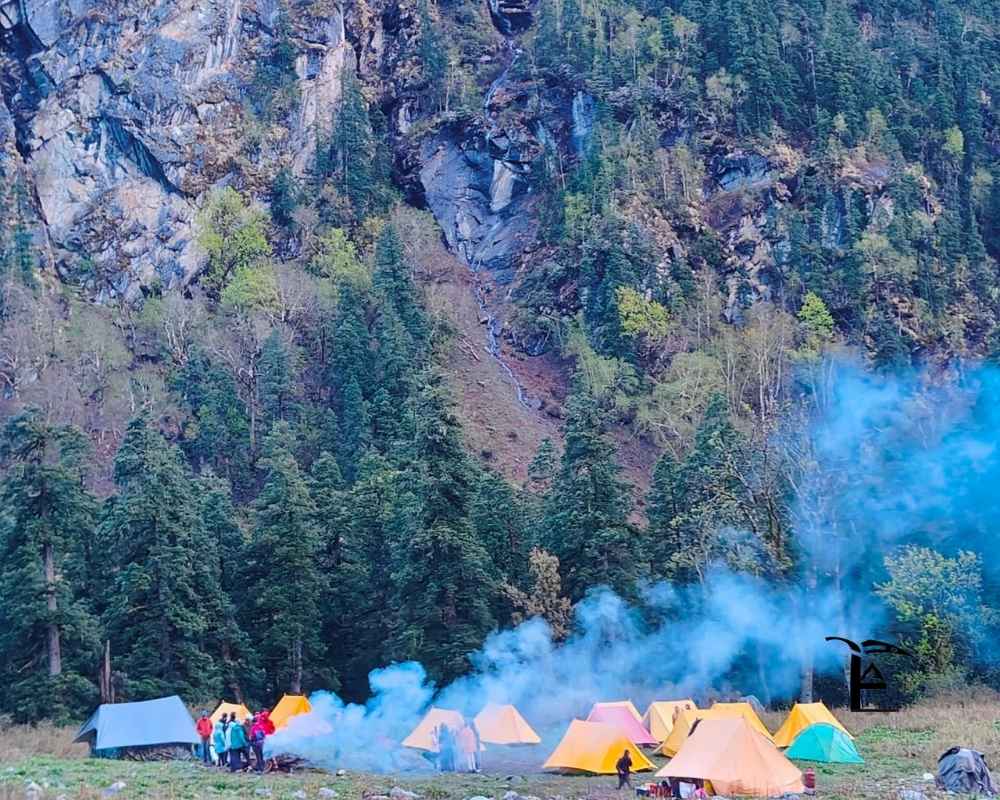
During wet weather, several forest sections remain damp throughout the day because sunlight enters late through the tree cover. Shoes and socks occasionally stay wet longer than expected near riverside camps.
Simple pacing usually works better here than speed.
Trekkers who walk steadily often feel more comfortable by the later days compared to those who rush the initial sections.
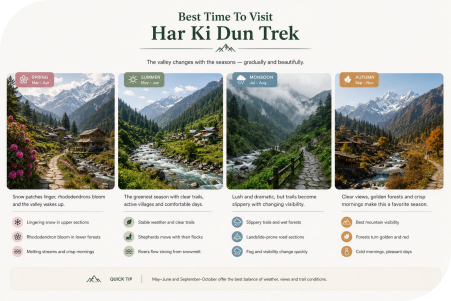
The valley changes noticeably across seasons.
Not dramatically.
Gradually.
That gradual seasonal shift matches the character of the trek itself.
Spring usually brings:
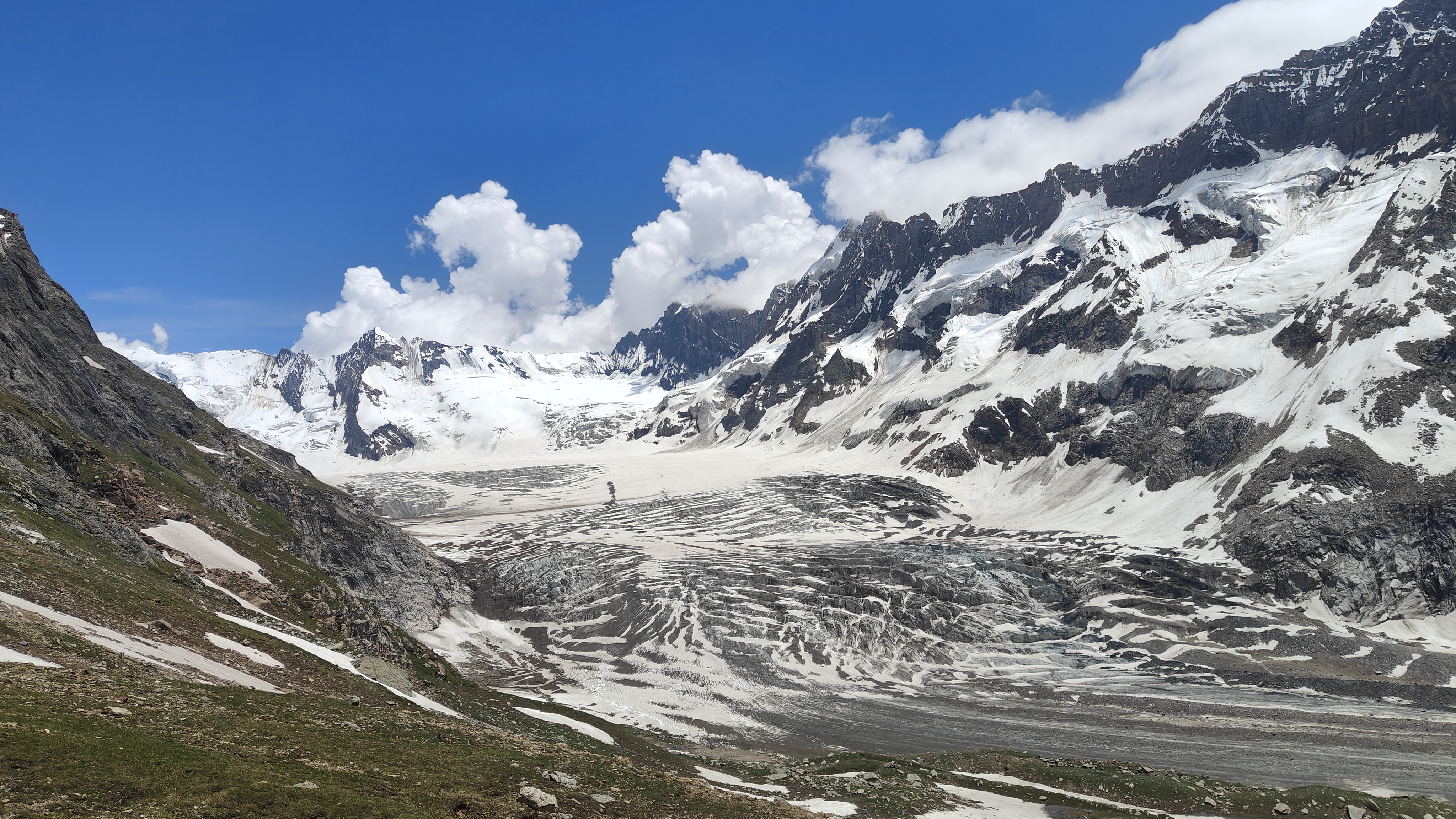
Several upper areas near Har Ki Dun continue holding snow depending on winter conditions.
Early mornings during spring often feel quieter than expected because fog and colder air remain trapped longer inside the forests.
Summer is generally considered one of the most stable periods for the trek.
The valley becomes greener, trails remain clearer, and village activity increases across the region.
This is also when:
Monsoon changes the valley completely.
The forests become dense and deeply green, but trail conditions also become more unpredictable:
A clear valley section can disappear behind fog within minutes.
Autumn brings:
Swargarohini views usually appear sharpest during stable autumn mornings before clouds begin building later in the day.
The forests also begin changing color gradually during late autumn.
Day 1 — Dehradun To Sankri
The drive from Dehradun to Sankri takes most of the day and gradually transitions from busier towns into narrower mountain valleys beside the Tons and Supin river systems.
The final sections near Mori and Netwar begin introducing the atmosphere of the region:
Sankri itself remains one of the last major settlements before entering the deeper trekking routes inside Govind Wildlife Sanctuary.
Evenings cool down quickly here once sunlight disappears behind the ridgelines.
Day 2 — Sankri To Seema / Pauni Garaat
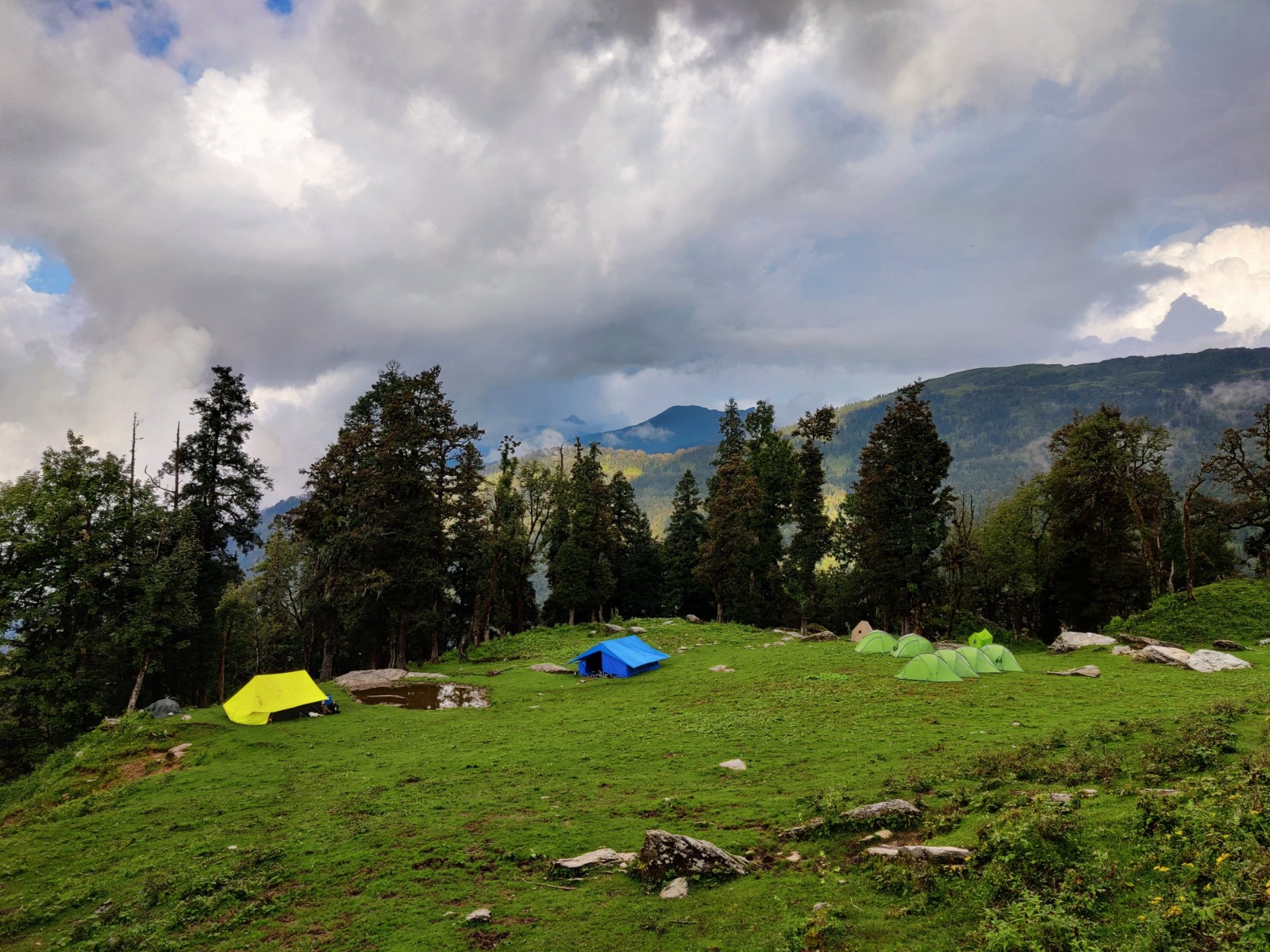
The trail gradually follows the Supin River through forests, riverside sections, wooden bridges, and smaller village pathways.
Unlike alpine treks where the climb becomes noticeable immediately, Har Ki Dun begins quietly.
The forests remain close for long stretches.
Several shaded sections continue holding moisture through the day because sunlight reaches the trail slowly beneath dense tree cover.
Gangad village appears along the route with older wooden homes and terraced sections overlooking the valley.
The walking rhythm stays steady rather than steep.
Day 3 — Seema To Har Ki Dun Valley Via Osla
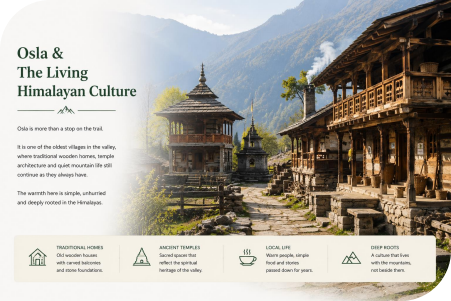
This is usually the day where the cultural side of the valley becomes strongest. The route passes through:
Osla Village
Osla is known for:
The village still feels functional rather than tourism-built.
Children continue using the same pathways trekkers walk through. Wood remains stacked beside homes. Livestock movement remains part of the village rhythm.
Beyond Osla, the valley slowly widens.
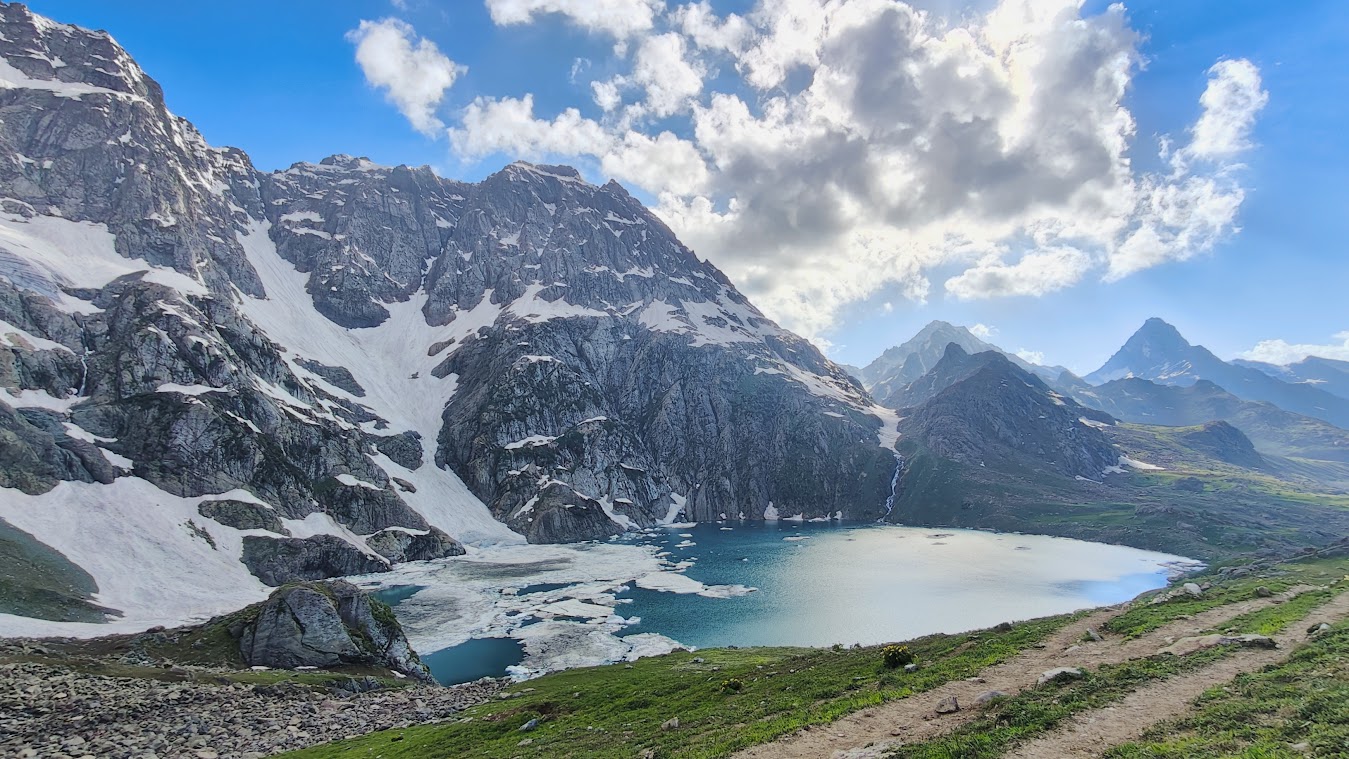
During stable weather, the Swargarohini massif begins appearing more clearly above the upper valley.
Local mythology connects this region with the Pandavas’ final ascent toward heaven after the Mahabharata war.
The mythology survives here quietly — more through local familiarity than performance.
Day 4 — Explore Upper Har Ki Dun Valley
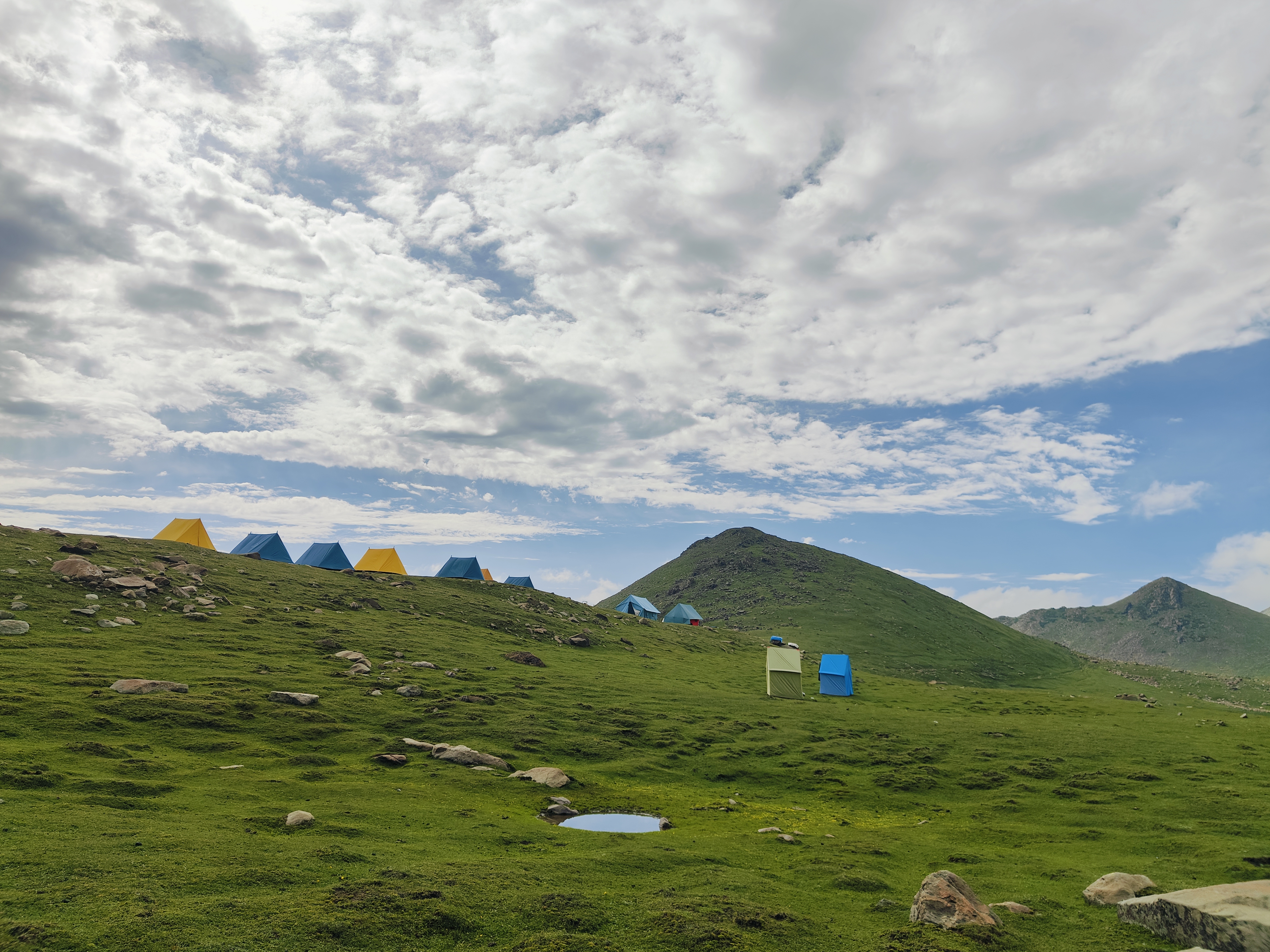
The upper valley sections near Har Ki Dun feel more open compared to the lower forested stretches.
Trekkers move through:
Many trekkers naturally slow down here.
The valley encourages it.
People spend longer sitting beside streams, walking shorter distances around camp, or simply watching weather movement across the ridgelines.
Day 5 — Return To Sankri
The descent follows the same valley route back toward Sankri.
The return journey often reveals details missed during ascent:
Long walking hours still make the day physically tiring by the final stretch. But the body usually feels more settled into the rhythm of the trail by this point.
Day 6 — Sankri To Dehradun
The return drive gradually leaves behind the quieter upper valleys and reconnects with busier towns toward Dehradun.
After multiple days inside slower mountain settlements, even ordinary roadside movement begins feeling louder than before.
That contrast becomes part of the return experience itself.
Har Ki Dun is deeply connected with:
Local belief associates the Swargarohini region with the route taken by the Pandavas during their final ascent toward heaven.
These stories remain present across the valley through:
Another important cultural layer is the temple tradition in Osla village.
The village contains old wooden temple architecture associated locally with Someshwar and Duryodhana worship traditions.
Interpretations vary historically across the region, but the traditions continue remaining an important part of local identity.
ThinAir Expedition was founded by: Subodh Choudhary
With more than a decade of Himalayan trekking and mountain experience, Subodh continues remaining personally involved in route movement, team preparation, and expedition handling instead of operating only through logistics systems.
His background includes:
The company also works closely with:
The approach remains focused on:
Last Updated: May 2026