A Guide to Winter Trek 2026 2027 High Altitude Expeditions
A Guide to Winter Trek 2026 2027 High Altitude Expeditions
26
Sep

The Himalayas are not simply a destination for adventure. They are a landscape where altitude changes the meaning of every step. A trail that feels comfortable at 3,000 metres can become demanding at 5,000 metres, and once a climber approaches the 7,000-metre mark, the mountain demands an entirely different level of preparation, discipline and respect.
A 7,000 meter peak is not simply a taller version of a regular Himalayan trek. At this altitude, the thin atmosphere, severe cold, changing weather, snow and ice conditions, and prolonged exposure to altitude can transform a climb into a serious mountaineering expedition.
India is home to several remarkable Himalayan peaks in and around this altitude range. Mountains such as Satopanth Peak and Nanda Devi East represent the scale of the Indian Himalayas and demonstrate why high-altitude mountaineering requires far more than enthusiasm.
At the same time, not everyone needs to begin with a major expedition. For someone planning a winter trek 2026, the journey can start much lower—with building endurance, learning how to move in snow, understanding cold-weather equipment and gradually developing experience in Himalayan environments.
This guide explains what makes 7,000-metre peaks different, how climbers prepare for them, what equipment and skills are important, and how winter trekking can become part of a longer Himalayan progression.
A 7,000-metre peak is a mountain whose summit rises to approximately 7,000 metres above sea level. In feet, that is roughly 22,966 feet. The difference between a 6,000-metre and a 7,000-metre mountain may appear to be only a number on paper, but the environmental difference can be significant.
As altitude increases, atmospheric pressure decreases. The amount of oxygen available with each breath also becomes considerably lower than at sea level. The body therefore has to work harder simply to perform tasks that would feel ordinary at lower elevations. Walking, eating, sleeping and recovering can all become more difficult.
This is one reason a 7,000-metre expedition cannot be approached like an ordinary trek.
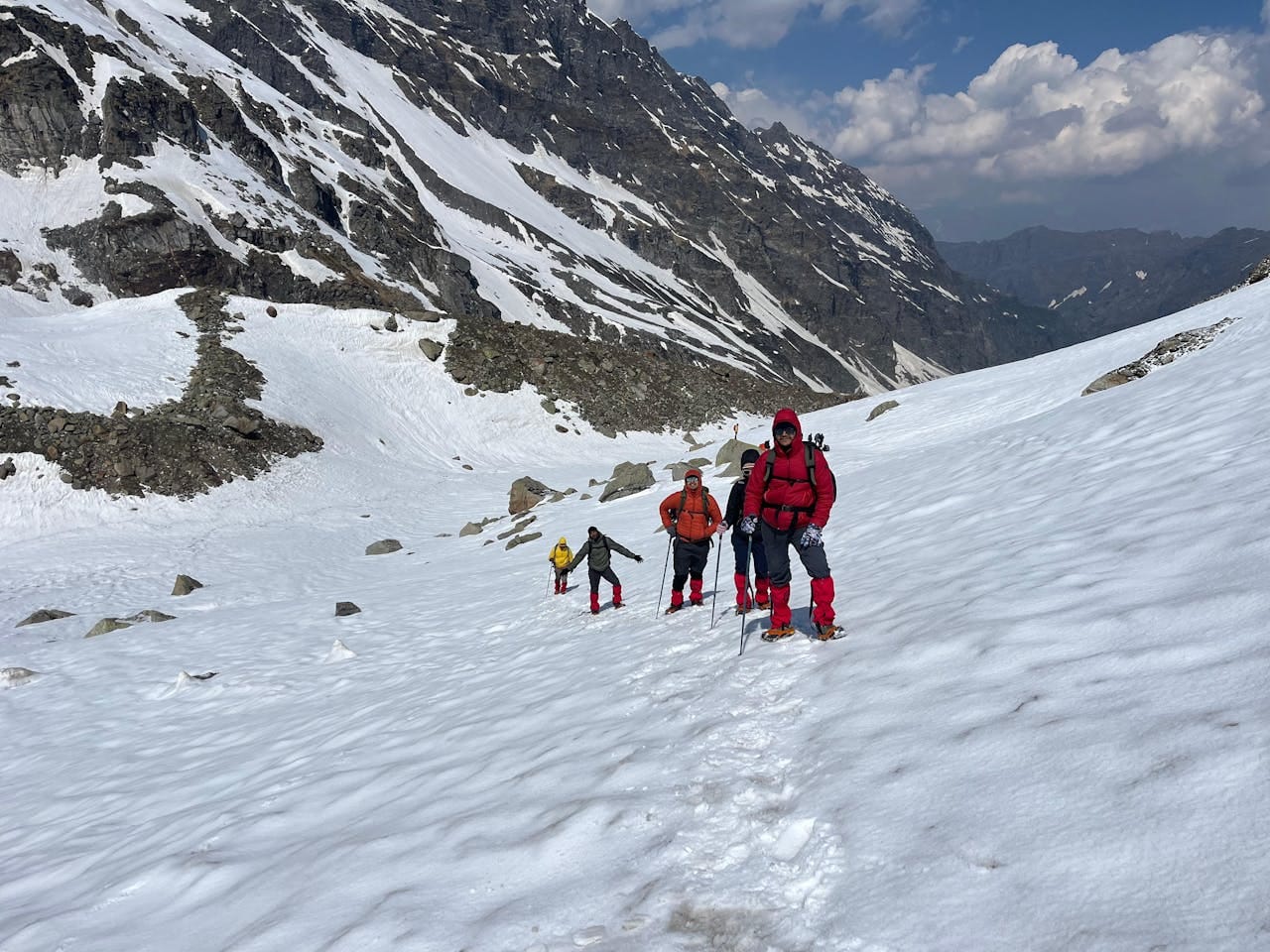
A trek generally focuses on moving through a landscape along an established route. A high-altitude expedition can involve glacier travel, snow slopes, technical climbing, fixed ropes, high camps, load management, acclimatization rotations and carefully selected summit windows.
Weather is another major factor. At extreme altitude, a change in wind or visibility can have consequences for the entire team. A summit attempt is therefore not simply a test of physical strength. It involves decision-making, patience, technical ability and the willingness to turn around when conditions are unsafe.
India's Himalayan landscape provides a remarkable range of objectives, from high-altitude trekking routes to technical climbing expeditions. Thin Air Expedition's expedition portfolio, for example, includes objectives ranging from introductory mountaineering experiences such as Friendship Peak and Yunam Peak to significantly higher Himalayan objectives.
The important lesson is simple: height should be earned progressively.
India's Himalayas contain several peaks that rise into the 7,000-metre range. Each mountain has its own geography, approach, climbing characteristics and level of technical difficulty.
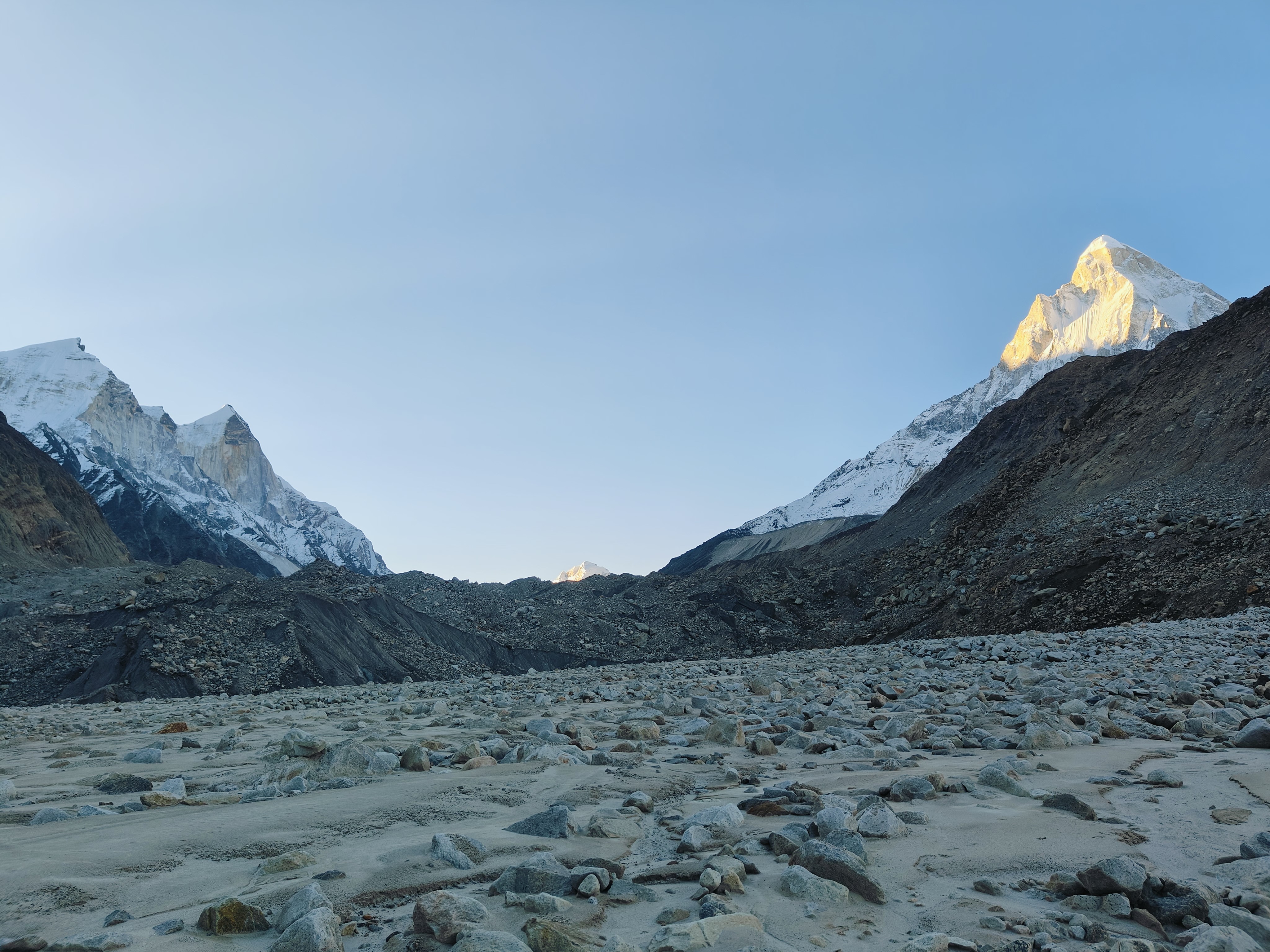
Satopanth Peak, rising to approximately 7,075 metres in the Garhwal Himalayas, is one of the notable peaks in this category. Its triangular profile and dramatic high-altitude surroundings have made it an important objective for serious mountaineering teams. The mountain also carries cultural significance because of its association with the sacred landscape around Satopanth Tal.
Another major Himalayan giant is Nanda Devi East, which rises to approximately 7,434 metres. The mountain belongs to the Nanda Devi massif and stands in the Kumaon Himalayas. Its scale, steep terrain and demanding high-altitude environment place it firmly in the realm of serious mountaineering rather than ordinary trekking.
These mountains also demonstrate why the phrase “7,000 meter peak” should never be treated as a simple tourism category. Two mountains at similar elevations can present completely different challenges.
The altitude is only one part of the equation.
The route, technical grade, glacier conditions, approach, weather window, climbing season, acclimatization schedule and experience of the team all influence the character of an expedition.
For aspiring mountaineers, this is an important distinction. Choosing a peak should not begin with the question, “Which mountain is the highest?” It should begin with questions such as:
What experience do I already have?
Have I trekked above 4,000 metres?
Have I experienced snow and sub-zero camping?
Do I know how to use crampons and an ice axe?
Have I received formal training in rope techniques?
Can I handle several consecutive days of physical exertion at altitude?
The answers help determine whether a climber is ready for the next step.
The biggest challenge of a 7,000m peak is not necessarily one dramatic section of climbing. Often, the difficulty comes from the accumulation of multiple factors.
The first is altitude. As you climb higher, the body receives less oxygen. Acclimatization becomes essential because the human body needs time to adapt to reduced oxygen availability. A strong athlete at sea level is not automatically prepared for extreme altitude.
The second challenge is cold. At high camps, temperatures can fall dramatically, especially at night. Cold affects dexterity, energy expenditure and recovery. Keeping hands, feet and the core warm becomes part of expedition management.
The third is terrain. Depending on the mountain and route, climbers may encounter glaciers, steep snow slopes, exposed ridges, rock sections, ice and mixed terrain. Movement techniques need to change with the terrain.
Then comes weather.
Mountains create their own weather systems, and conditions can change quickly. Wind can become stronger, visibility can disappear and snowfall can alter the condition of a route. A good expedition therefore requires flexibility rather than a blind commitment to a predetermined summit date.
There is also the psychological dimension of prolonged exposure. A climber may spend days away from normal comforts while sleeping at altitude, eating simple food, carrying equipment and following a disciplined routine.
At this height, small mistakes can become serious problems.
That is why high-altitude mountaineering is fundamentally a team activity. Communication, route management, weather assessment, acclimatization and emergency planning all matter.
A summit is never the only objective.
Returning safely is part of the expedition's success.
Preparation for a 7,000 meter peak should begin months before the expedition. The mountain does not care how motivated someone feels on the first day of the expedition. What matters is whether the body, mind and technical skills have been prepared beforehand.
Physical preparation should focus on endurance rather than simply building gym strength. Long uphill walks, stair climbing, running, cycling and loaded hikes can help develop cardiovascular capacity and leg strength.
Back-to-back training days can also be useful because expedition fatigue is different from the tiredness experienced after a single workout. A climber may have to walk for several hours, sleep at altitude and then repeat the effort the following day.
Experience at progressively higher altitudes is equally important.
Someone planning a major expedition may first develop experience through high-altitude treks, followed by more demanding snow routes and then introductory mountaineering objectives. For example, peaks such as Yunam Peak provide exposure to high-altitude expedition environments, while Friendship Peak introduces climbers to skills such as crampon use, self-arrest and basic rope techniques.
Technical preparation may include:
- Crampon movement
- Ice-axe techniques
- Self-arrest
- Rope management
- Glacier travel
- Crevasse awareness
- Fixed-rope techniques
- Snow and ice movement
- High-altitude camping
- Emergency procedures
Mental preparation is equally important.
A climber needs to understand that progress at altitude can be slow. The strongest person in the group is not necessarily the fastest person on the mountain. Controlled pacing, patience and listening to the expedition team are critical.
Preparation should also include medical assessment and a clear understanding of personal limitations. High altitude should never be treated casually.
Equipment requirements vary according to the mountain, route and expedition style, but high-altitude mountaineering demands significantly more than a standard trekking kit.
A proper layering system is essential. A moisture-managing base layer helps regulate sweat, an insulating layer provides warmth, and an outer shell protects against wind and precipitation. At higher camps, additional insulation becomes necessary.
Footwear is particularly important. High-altitude mountaineering boots need to be appropriate for the conditions and compatible with the crampons being used.
Technical equipment may include crampons, ice axe, climbing harness, helmet, carabiners, ropes and other safety equipment depending on the route.
Personal equipment also matters. Sunglasses or glacier glasses protect the eyes from intense reflected sunlight. Sunscreen and lip protection are important because ultraviolet exposure increases at altitude.
A suitable sleeping system is essential for high camps. Sleeping bags must be rated appropriately for expected temperatures, while insulated sleeping mats reduce heat loss to the ground.
A headlamp with spare batteries, gloves, balaclava, warm socks, gaiters, personal medication and a properly organised backpack are basic parts of expedition preparation.
The key principle is not to carry equipment simply because it appears on an internet checklist.
Every item should have a purpose.
More importantly, climbers should know how to use their equipment before arriving at high altitude. Practising with crampons or an ice axe for the first time during an expedition is not ideal preparation.
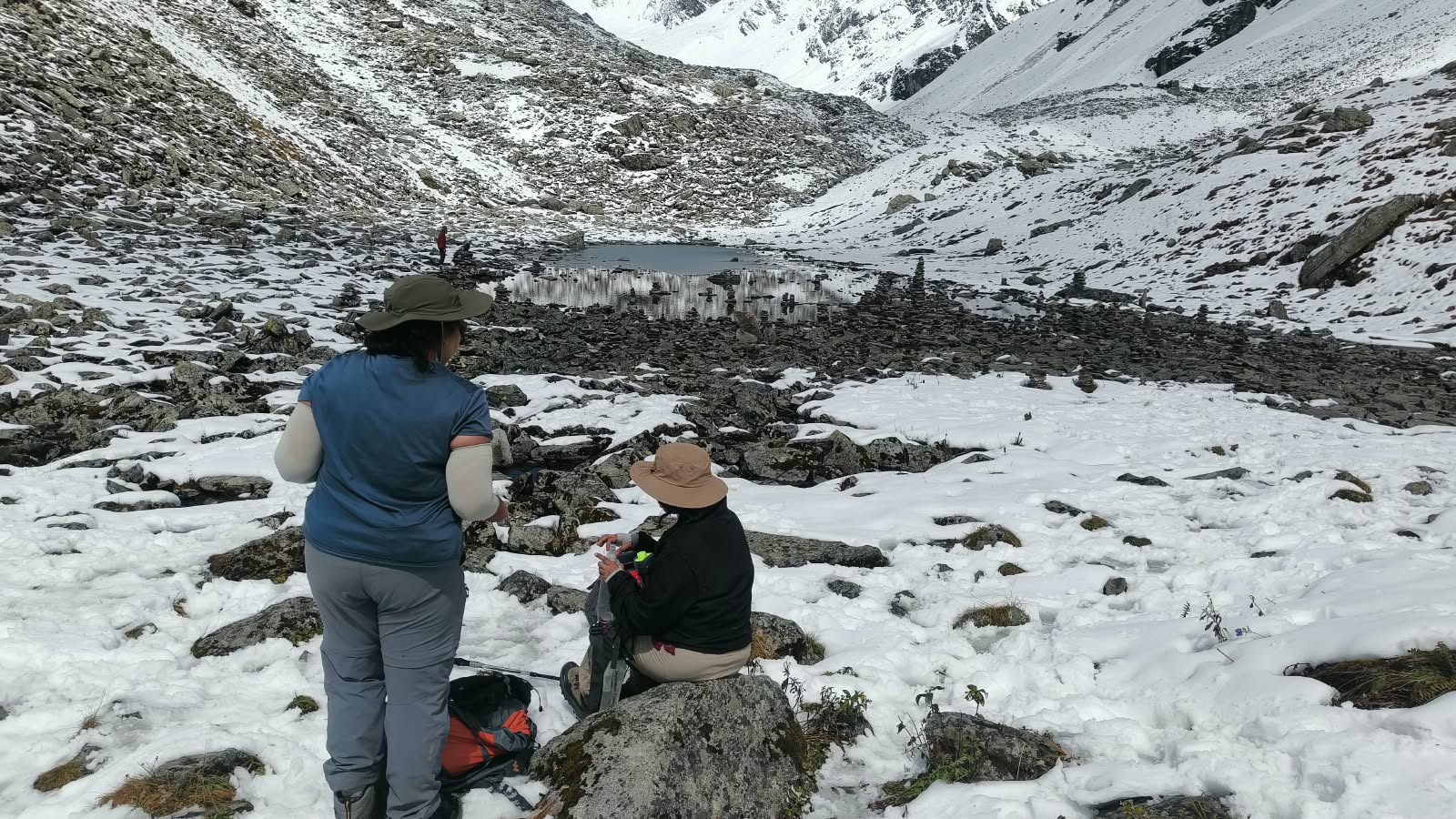
A winter trek 2026 can be an excellent way for aspiring Himalayan adventurers to understand how their body and mind respond to cold, snow and mountain environments.
But winter trekking and a 7,000-metre expedition should not be treated as equivalent experiences.
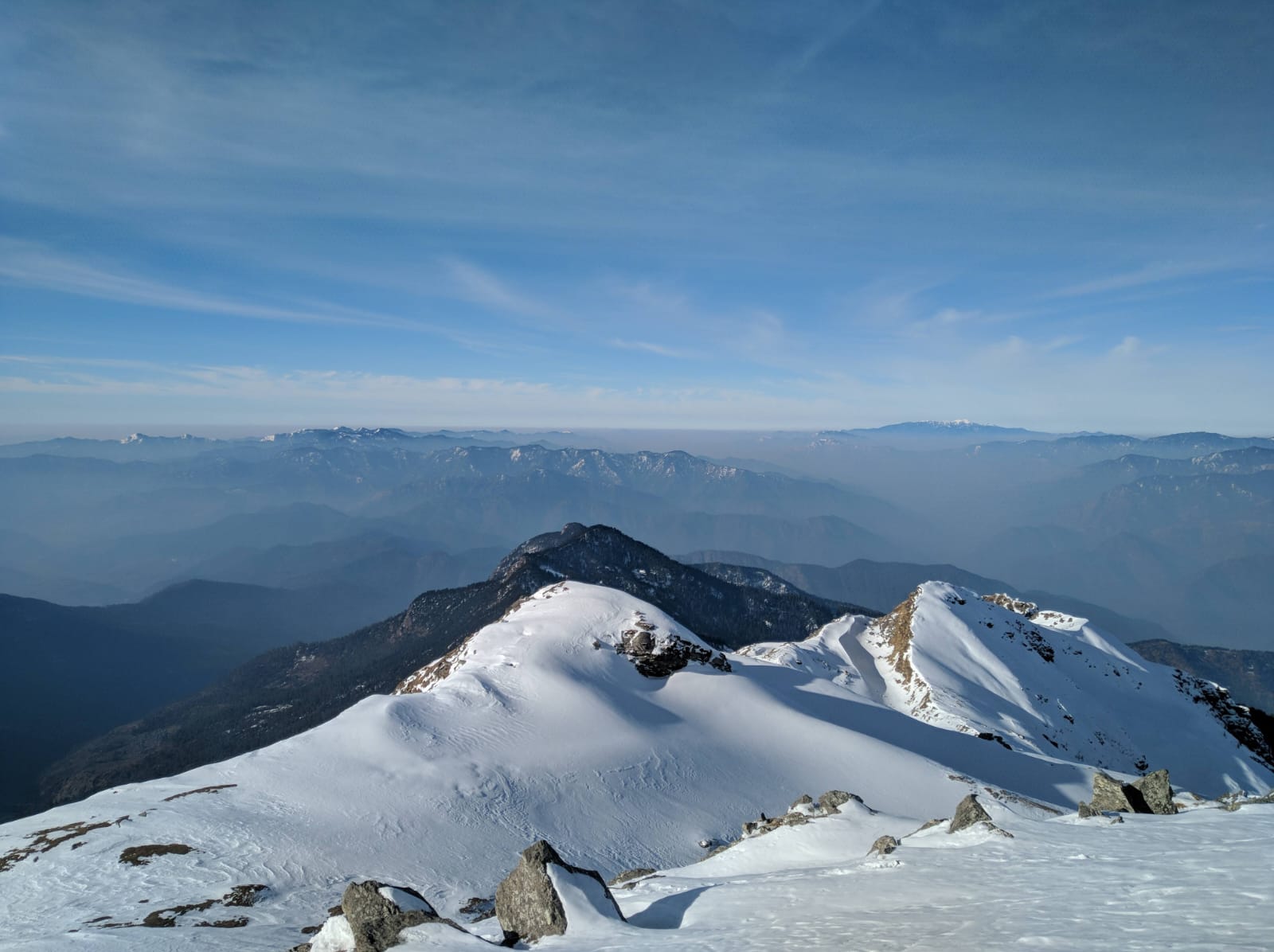
A winter trek generally takes place at substantially lower elevations and follows a trekking route rather than a technical mountaineering route. The objective is often to experience snow-covered forests, alpine meadows, frozen lakes, ridgelines and winter landscapes.
For example, popular winter routes such as Kedarkantha offer exposure to snow, cold temperatures and summit-style trekking without the technical demands of a 7,000-metre mountaineering expedition. Thin Air Expedition describes Kedarkantha as a winter summit trek reaching approximately 3,810 metres.
This makes winter trekking valuable as part of a progression.
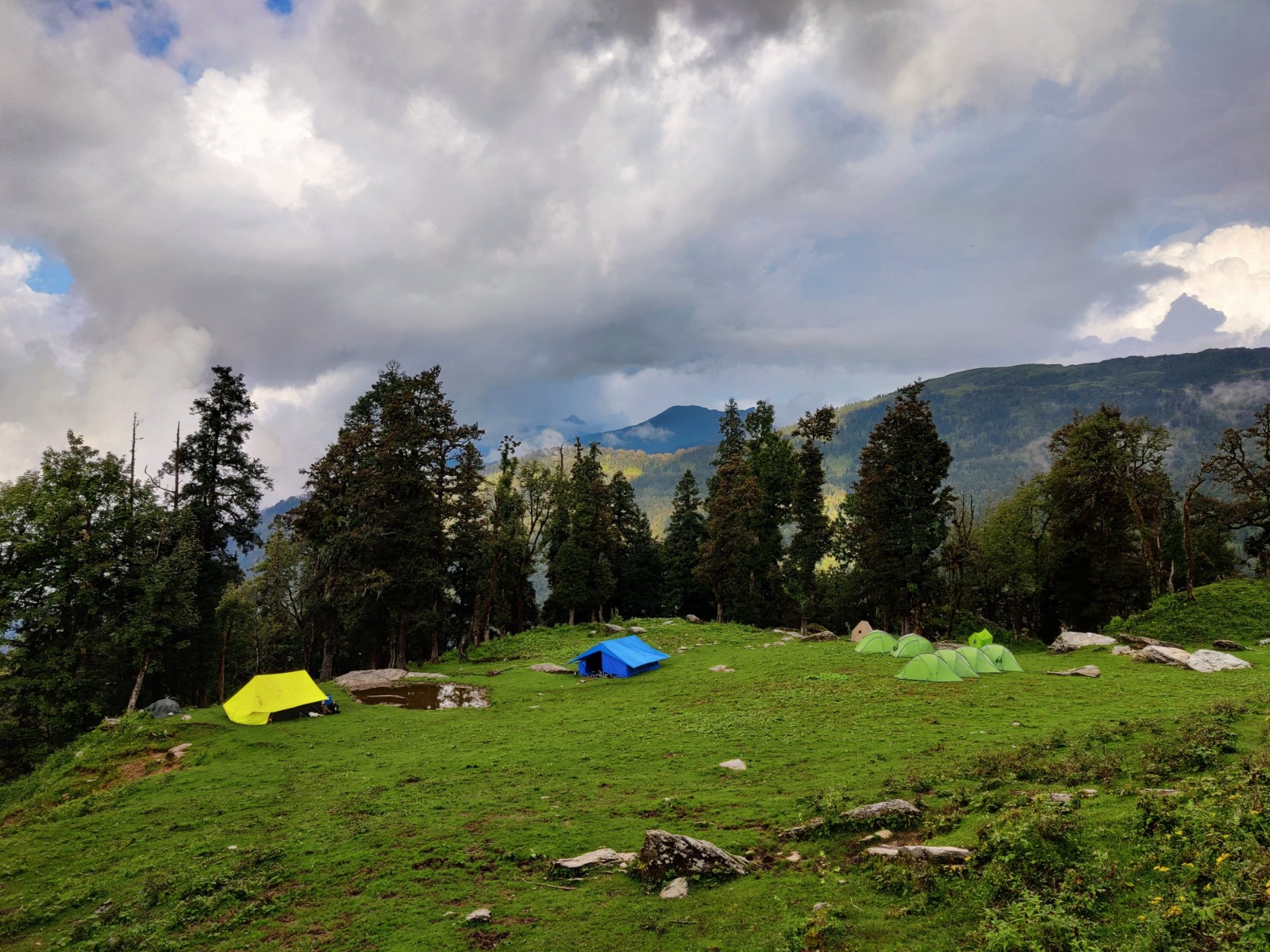
A person considering a winter trek in India 2026 can use the experience to learn how to layer clothing, manage hydration in cold weather, walk on snow, maintain energy levels and live comfortably in a tent during freezing conditions.
From there, the progression can become more demanding.
Winter trek → high-altitude trek → snow expedition → introductory peak → technical expedition → higher Himalayan objective.
There is no requirement to rush through this progression.
Mountains reward experience more than impatience.
For someone searching for the best winter trek 2026, the right choice should therefore depend on current experience, fitness, altitude history and the kind of environment they want to learn in—not simply the popularity of a destination.
The transition from trekking to mountaineering is gradual.
A trekker learns how to walk efficiently over long distances, manage a backpack, conserve energy and understand mountain weather. A mountaineer must add another layer of skills.
That may include technical movement on snow and ice, rope systems, glacier travel, crampon technique and understanding the risks associated with exposed terrain.
This is why introductory expedition peaks can be useful.
They allow experienced trekkers to enter a more structured mountaineering environment before attempting significantly higher objectives. Yunam Peak, for example, is positioned by Thin Air Expedition as a 6,111-metre expedition and as an introduction to high-altitude mountaineering.
Friendship Peak similarly combines high-altitude climbing with introductory mountaineering training, including crampon technique, self-arrest and rope skills.
The progression matters because altitude is unforgiving of gaps in preparation.
A climber who has already learned how to move efficiently on snow, use technical equipment and manage prolonged exertion has a stronger foundation for future objectives.
The goal should not be to collect summit photographs as quickly as possible.
The goal should be to become a better mountaineer.
Every high-altitude expedition involves uncertainty. Weather can change, routes can become unsafe and individual health can vary from one day to another.
That is why responsible expedition planning should always include acclimatization, experienced leadership, appropriate equipment, weather monitoring and emergency procedures.
Acclimatization cannot be replaced by physical fitness.
Someone can be extremely fit and still experience altitude-related problems. Conversely, moving slowly and allowing the body adequate time to adjust can make a major difference.
Teams should also maintain a culture where turning around is acceptable.
A summit is a destination.
Safety is the priority.
This philosophy is especially important when discussing 7,000m peaks because the environment becomes progressively less forgiving as altitude increases.
Responsible mountaineering also means respecting the mountain environment. Expedition teams should minimise waste, avoid unnecessary damage to fragile landscapes and follow local regulations and responsible trekking practices.
The Himalayan landscape is not merely a backdrop for adventure photography. It is a living environment supporting communities, wildlife, rivers, glaciers and cultural traditions.
The future of Himalayan adventure depends on protecting the mountains that make these journeys possible.
Why Choose Thin Air Expedition?
Thin Air Expedition approaches trekking and mountaineering as more than simply reaching a destination. Its philosophy, reflected in its “Trek Your Way to Freedom” identity, focuses on outdoor experiences, mountain exploration and meaningful time in nature.
The organisation has experience across different levels of Himalayan adventure, from winter trekking to high-altitude expeditions. Its current expedition portfolio includes objectives such as Friendship Peak, Yunam Peak and other Himalayan climbing routes.
This range matters because every climber begins somewhere.
Someone starting with a winter trek may eventually want to attempt a higher-altitude trek. An experienced trekker may want to learn mountaineering skills. A climber with technical experience may eventually look towards a much higher Himalayan objective.
Thin Air Expedition can be part of that progression.
Its expedition approach also places importance on preparation rather than simply promising a summit. Training, equipment awareness, acclimatization and experienced support are particularly important when moving from trekking into mountaineering.
The company's existing Himalayan experience includes Friendship Peak, where mountaineering skills such as crampon technique, self-arrest and rope management are incorporated into the expedition experience.
For winter trekkers, the journey can begin with a snow-covered Himalayan trail. For aspiring mountaineers, it can gradually move towards higher and more technical objectives.
The important thing is to choose a route that matches your experience rather than choosing a mountain simply because its altitude looks impressive.
Because in the Himalayas, the real achievement is not only standing higher.
It is learning how to move through the mountains with preparation, humility and respect.
Thin Air Expedition — Trek Your Way to Freedom.
A 7,000-metre peak is a mountain whose summit rises to approximately 7,000 metres above sea level. These mountains require serious preparation because altitude, cold, weather and terrain can create significantly greater challenges than conventional trekking.
Generally, a 7,000-metre expedition should not be treated as a beginner-level trek. Climbers should develop high-altitude experience, physical endurance and relevant technical skills progressively before considering such an objective.
A Himalayan trek generally involves walking along established trails, while a high-altitude expedition can involve glaciers, snow slopes, technical climbing, ropes, high camps and specialised mountaineering equipment.
Preparation should include cardiovascular endurance, leg strength, loaded hiking, high-altitude experience and technical mountaineering training. Medical preparation, acclimatization knowledge and mental readiness are also important.
Yes, a winter trek can provide valuable experience with snow, cold-weather clothing, winter camping, energy management and movement in snowy conditions. However, it does not replace technical mountaineering training.
The appropriate winter trek depends on your previous experience, fitness, preferred difficulty and altitude experience. Kedarkantha is one example of a Himalayan winter summit trek, while other winter routes offer different combinations of snow, forests, alpine landscapes and ridge walking.
Depending on the route, climbers may require high-altitude mountaineering boots, crampons, ice axe, harness, helmet, ropes, insulated clothing, technical gloves, sleeping systems and other expedition equipment.
No. Physical fitness is important but does not replace acclimatization, technical skills, altitude experience, equipment knowledge and responsible decision-making.
Yes. A gradual progression can take you from winter trekking to high-altitude trekking, introductory mountaineering and eventually more demanding climbing objectives. The exact progression should depend on experience and the requirements of each mountain.
Thin Air Expedition works across trekking and Himalayan expedition experiences, including winter trekking and high-altitude objectives. Its expedition portfolio includes peaks such as Friendship Peak and Yunam Peak, giving adventure seekers opportunities to build experience progressively.