Aancha Top Best Snow Winter Trek in India
Aancha Top Best Snow Winter Trek in India
03
Oct

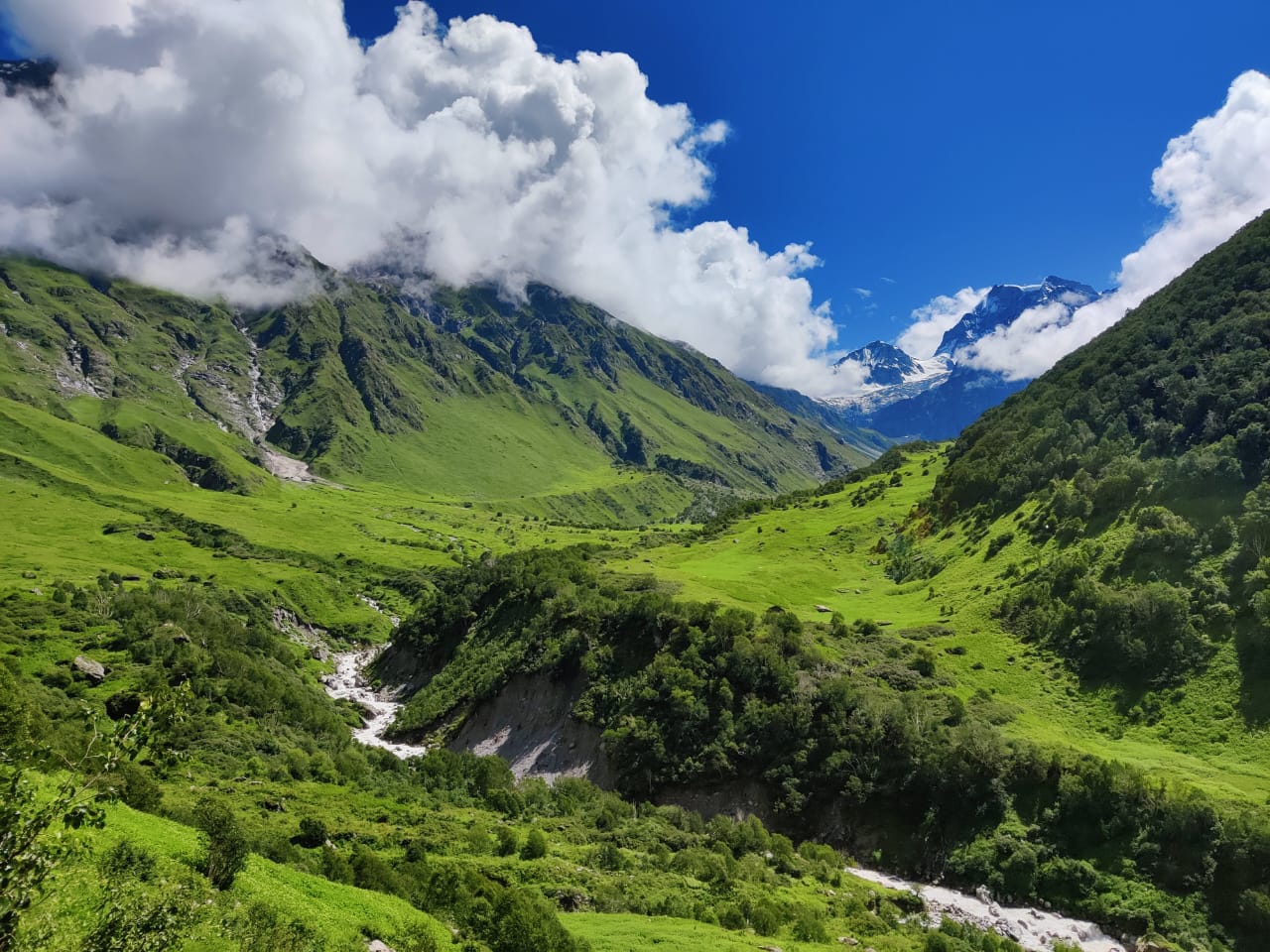
Aancha Top Winter Trek 2026–27 is an emerging Himalayan snow trek in Uttarakhand's Yamunotri Valley, offering a combination of snow-covered meadows, forest trails, ridge walking, mountain panoramas and an offbeat winter trekking experience.
Organised by ThinAirExpedition, the Aancha Top Trek takes you from Ranachatti through Bamsingh and Dinnala Bugyal to Aancha Top, before descending through Aancha Camp and returning to Ranachatti. The summit reaches approximately 12,500 ft (3,810 m), while the complete trekking route is around 25–28 km, depending on the route and seasonal trail conditions.
Unlike some of India's heavily frequented winter trekking routes, Aancha Top offers a quieter Himalayan setting. During winter, the Dinnala meadows and surrounding forests can become snow-covered, creating a completely different character from the spring and autumn versions of the trek.
Planning the 2026–27 winter season? The December–February window is particularly suitable for trekkers looking for snow, cold-weather camping and a quieter Himalayan trail. Actual snow conditions vary with snowfall, weather and local trail conditions.
| Trek Feature | Details |
|---|---|
| Trek Name | Aancha Top Winter Trek |
| Region | Yamunotri Valley, Uttarakhand |
| Base Camp | Ranachatti |
| Nearest Major City | Dehradun |
| Maximum Altitude | Approx. 12,500 ft / 3,810 m |
| Trek Distance | Approx. 25–28 km |
| Duration | 5–6 days |
| Difficulty | Easy to Moderate |
| Winter Season | December to February |
| Route | Ranachatti – Bamsingh – Dinnala Bugyal – Aancha Top – Aancha Camp – Ranachatti |
| Highest Point | Aancha Top |
| Region Highlights | Snow, forests, alpine meadows, ridge walk, mountain views |
| Ideal For | Beginners with good fitness, winter trekkers and experienced hikers |
| Starting Point | Dehradun/Ranachatti |
| Package | Fixed departure and private/custom options |
ThinAirExpedition currently describes the trek as an easy-to-moderate Himalayan trek of approximately 28 km, with Ranachatti as the base camp and a summit around 3,810 m.
Aancha Top is located in the Yamunotri Valley of Uttarakhand, an area better known for the Yamunotri pilgrimage and high Himalayan landscapes.
The trek moves through several distinct environments:
Ranachatti → Forests → Bamsingh → Dinnala Bugyal → Aancha Top Ridge → Summit → Aancha Camp → Ranachatti
The changing landscape is one of the major attractions of the trek.
You begin in a lower-altitude mountain environment surrounded by villages, agricultural land and forests. As you climb higher, the trail opens into the expansive Dinnala Bugyal, followed by a ridge section leading towards Aancha Top.
During winter, snow changes the appearance of these landscapes dramatically.
The meadows become white, streams can freeze, forest trails become snow-covered and the surrounding Himalayan peaks appear against a much sharper winter sky.
Winter trekking in the Himalayas is different from trekking during spring or autumn.
At Aancha Top, the winter experience can include:
Trek The Himalayas describes December to February as the winter snow period and notes that the route can become considerably more challenging when heavy snow covers the trail.
ThinAirExpedition also describes December to February as the winter season, with snowy trails, lower crowds and temperatures that can become significantly colder at higher camps.
Drive: Approximately 160–175 km
Drive Time: Approximately 6–8 hours
Stay: Ranachatti
The journey begins from Dehradun.
The road travels through the Garhwal region towards the Yamunotri Valley. Depending on the weather and road conditions, you can experience changing landscapes ranging from foothill forests to deeper Himalayan valleys.
Ranachatti serves as the base village for the trek.
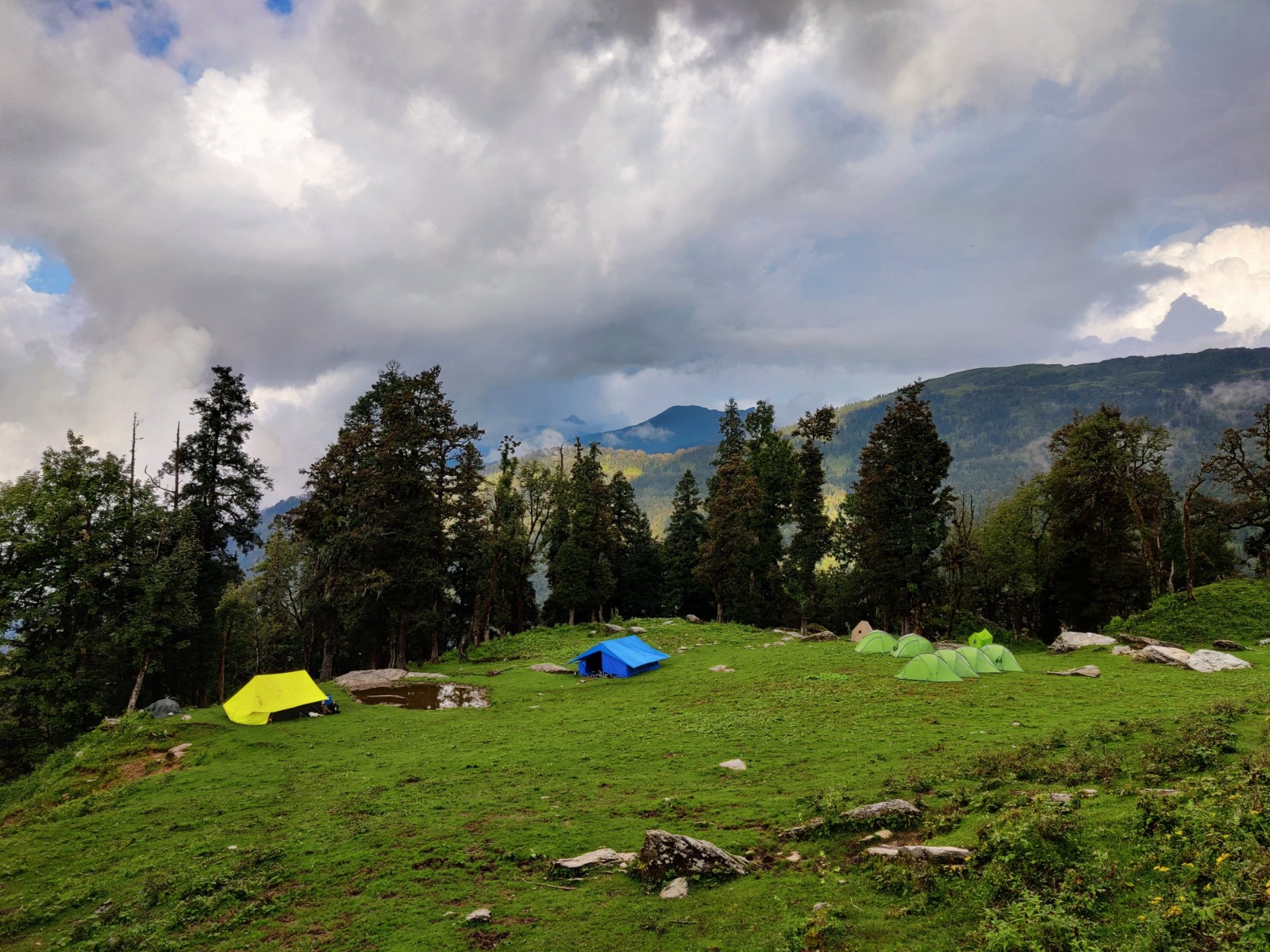
After reaching Ranachatti, trekkers can settle into their accommodation, complete the trek briefing and prepare equipment for the following days.
The route and driving distance vary slightly between operators; for example, Trek The Himalayas lists approximately 160 km, while Himalayan Dream Treks lists approximately 175 km.
Trek Distance: Approximately 4 km
Trek Time: 3–4 hours
Altitude: Approximately 9,200 ft
The first trekking day introduces you to the forest section of the Aancha Top route.
The trail gradually climbs through mountain forests towards Bamsingh. In winter, patches of snow can appear along shaded sections, with deeper snow possible depending on the season's snowfall.
This relatively short day allows trekkers to settle into the rhythm of Himalayan walking while gaining altitude gradually.
Overnight: Bamsingh Camp
Trek Distance: Approximately 4 km
Trek Time: Approximately 4 hours
Altitude: Approximately 10,750 ft
The landscape begins changing as the forest gives way to the open spaces of Dinnala Bugyal.
Dinnala is one of the visual highlights of the trek.
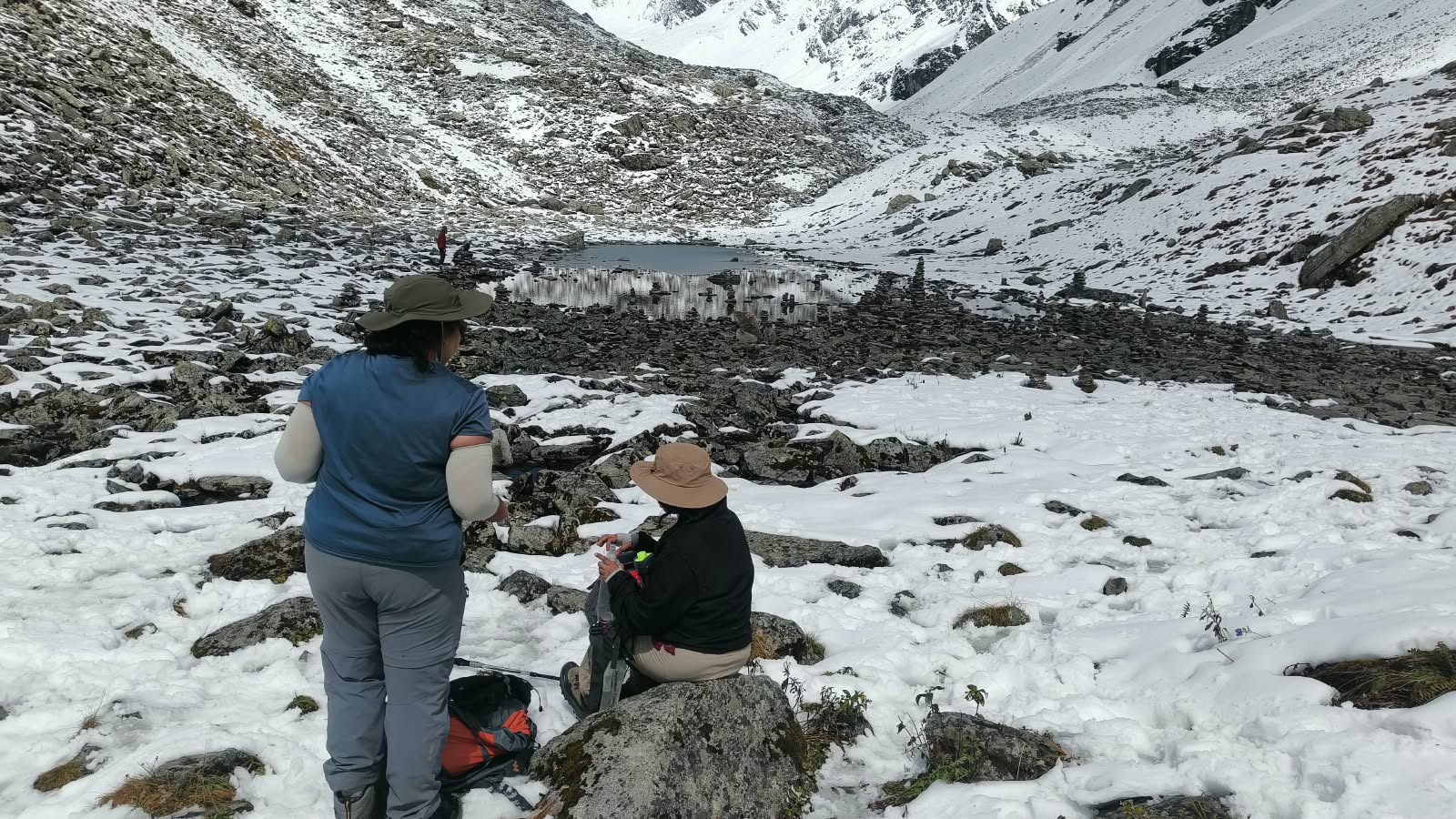
During the warmer months, the meadow opens into broad grassland. In winter, snow can cover the meadow and transform the landscape into a white Himalayan expanse.
The gradual ascent also provides opportunities to see surrounding mountain ranges.
Overnight: Dinnala Camp
Trek Distance: Approximately 8 km
Trek Time: 6–8 hours
Highest Point: Approximately 12,500 ft / 3,810 m
This is the summit day.
After an early breakfast, the trail climbs from Dinnala Bugyal towards Aancha Top.
The route includes a combination of meadow walking, steeper sections, rocky terrain and ridge walking.
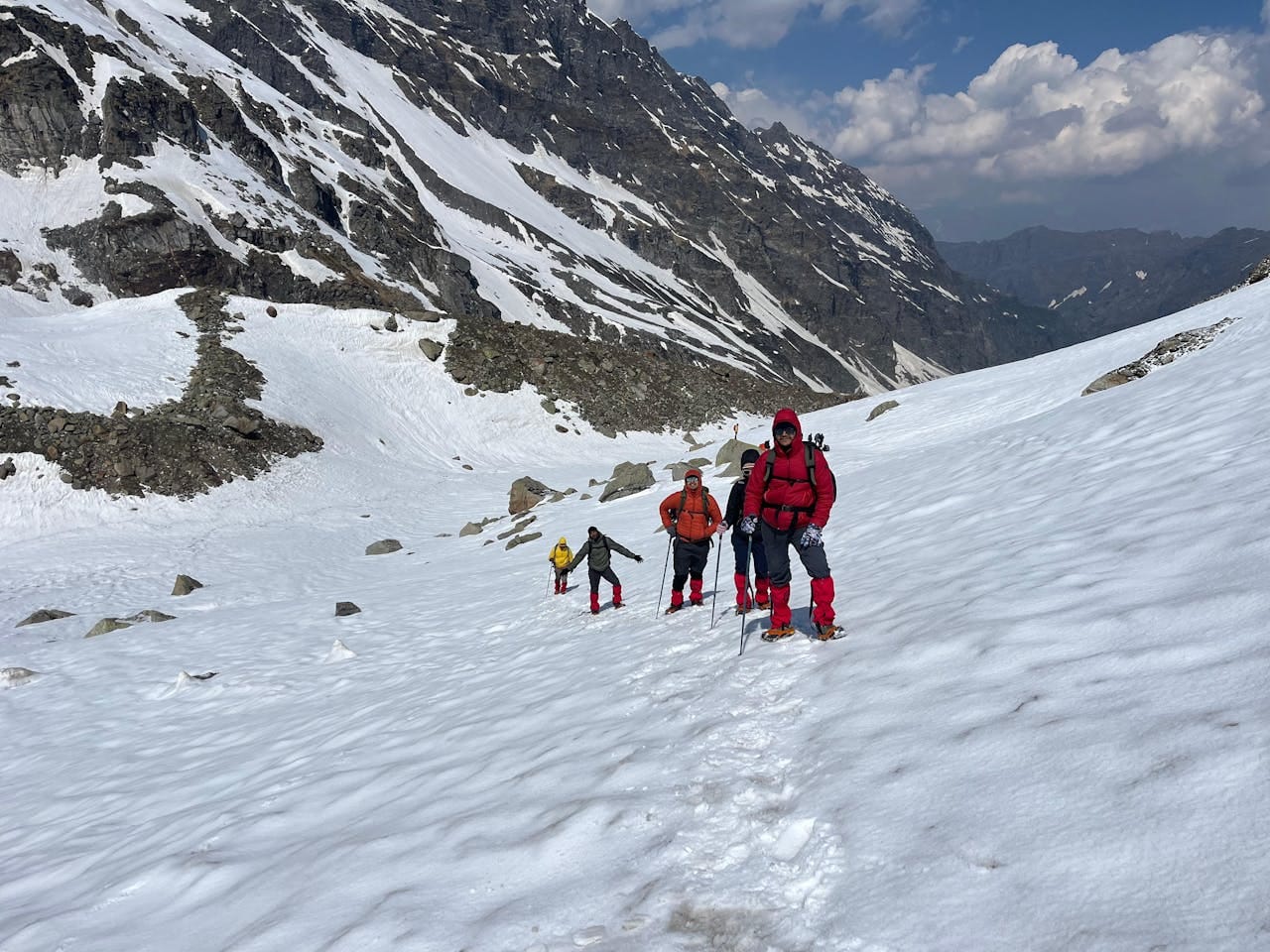
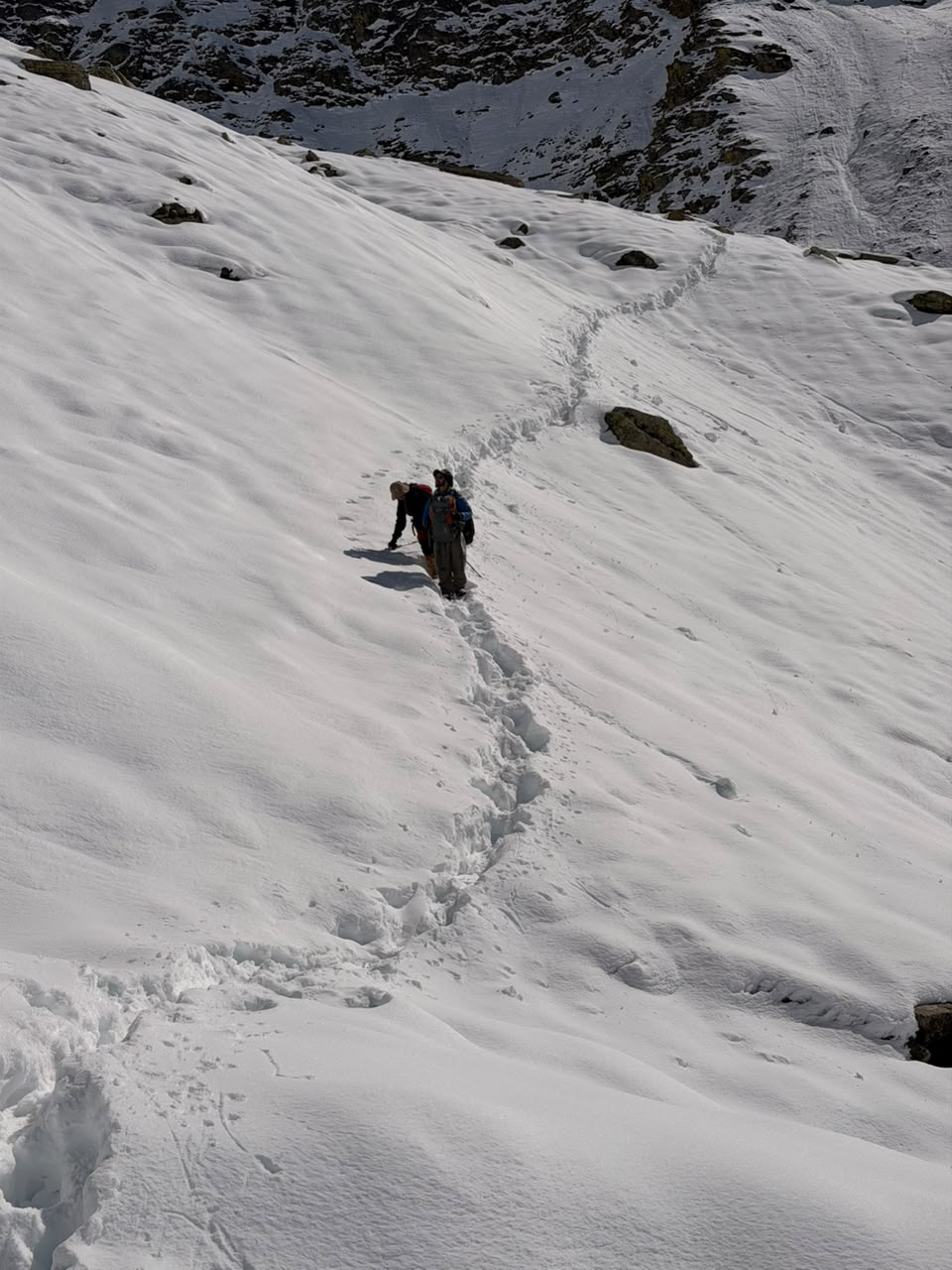
In winter, snow can make this section considerably more demanding. The exact difficulty depends on recent snowfall, wind, temperature and trail conditions.
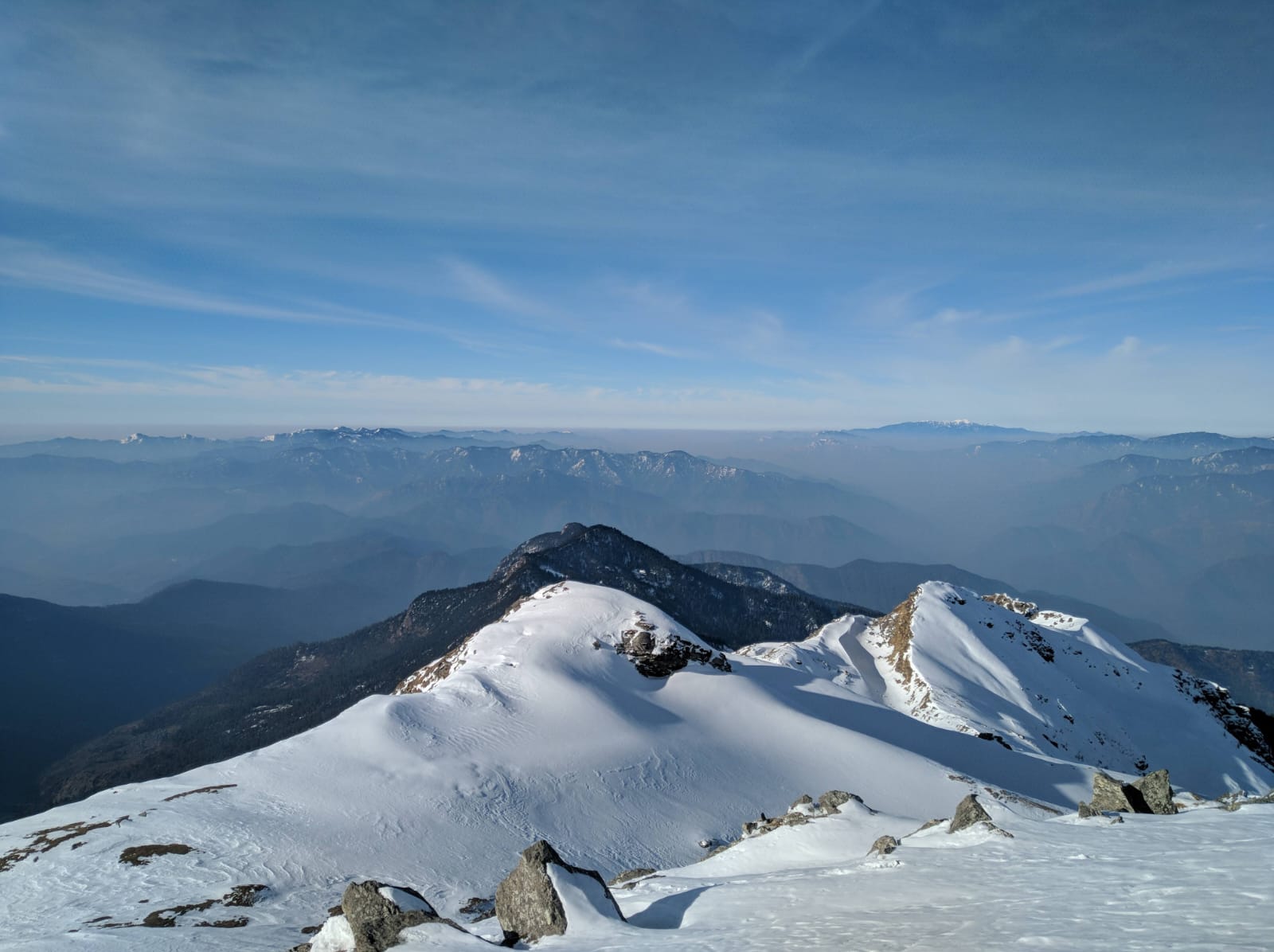
At the summit, trekkers can experience wide Himalayan views.
Depending on visibility, the surrounding panorama can include prominent Garhwal Himalayan peaks and ranges such as:
Indiahikes describes Aancha Top as a high viewpoint around 12,500 ft with extensive views across the Garhwal Himalayas, while Trek The Himalayas also identifies the summit as approximately 12,500 ft.
After spending time at the summit, the route descends towards Aancha Camp.
Overnight: Aancha Camp
Trek Distance: Approximately 6 km
Trek Time: Approximately 5–6 hours
The final trekking day follows a descending trail towards Ranachatti.
As altitude decreases, the landscape gradually changes from open alpine terrain towards forests and lower-altitude Himalayan surroundings.
Winter descent can require additional caution because snow, ice and frozen trail sections can make foot placement difficult.
After reaching Ranachatti, trekkers can rest and celebrate the completion of the Aancha Top summit trek.
Drive: Approximately 160–175 km
After breakfast, the group travels back to Dehradun.
The trip normally concludes in Dehradun, making it convenient for trekkers planning onward journeys by train, bus or flight.
Aancha Top is generally described as an Easy to Moderate trek.
However, winter Aancha Top should not be treated exactly like the spring version.
The difficulty can increase because of:
Trek The Himalayas describes the route as Easy to Moderate and recommends basic fitness and prior walking/light trekking experience.
Himalayan Dream Treks similarly categorises it as Easy to Moderate while noting steep, rocky and narrow ridge sections.
Yes, with preparation.
A reasonably fit beginner can consider Aancha Top, particularly when trekking with a professional team.
For the winter 2026–27 season, however, beginners should understand that snow can change the trail conditions considerably.
You should be comfortable walking for several hours, climbing uphill and walking on uneven or slippery terrain.
Start preparing approximately 4–6 weeks before the trek.
Include:
Focus on:
Before the trek, try to complete weekend hikes of increasing duration.
Practise walking with a 5–8 kg backpack if your trek package requires you to carry your personal backpack.
The objective is not speed. It is maintaining a steady pace for several hours.
Aancha Top can be experienced in different seasons, but each season provides a different landscape.
| Season | Approx. Period | Experience |
|---|---|---|
| Spring | April–June | Green meadows, rhododendrons, pleasant weather |
| Monsoon | July–August | Wet/slippery trails; generally avoided |
| Autumn | September–November | Clear skies, golden meadows |
| Winter | December–February/March | Snow, cold weather and winter trekking |
The three operators reviewed broadly agree that monsoon is less suitable, while winter offers snow and a quieter experience. Trek The Himalayas specifically identifies December–February as the snow period. Himalayan Dream Treks gives December–March as its winter window and describes snow-covered trails and meadows during this period.
For trekkers specifically searching for snow treks in India, the December–February period is the key window to consider.
However, snowfall is weather-dependent.
You should not book a winter trek based solely on the assumption that every section will always be covered in deep snow.
Snow depth can vary according to:
For this reason, ThinAirExpedition should confirm current trail conditions before the departure date.
Winter temperatures can fall substantially below freezing, particularly during nights at higher camps.
Published operator information varies somewhat. ThinAirExpedition notes temperatures around -5°C to -10°C at higher camps, while Trek The Himalayas says winter temperatures can fall to -10°C or lower, particularly at night.
Trekkers should therefore carry proper winter clothing rather than relying only on ordinary cold-weather jackets.
Depending on trail conditions and the trek operator's equipment plan:
ThinAirExpedition's published packing guidance also recommends winter-specific items such as a down jacket, insulated gloves, gaiters, trekking poles and waterproof trekking footwear.
ThinAirExpedition currently lists a standard Aancha Top package starting at:
The published package includes accommodation, meals, professional trekking support, transportation between Dehradun and Ranachatti, camping equipment and safety provisions.
Important: Package price and inclusions can change for the 2026–27 winter season. Confirm the final price, GST, transportation, insurance and equipment inclusions before booking.
A useful comparison of the three reference pages and ThinAirExpedition's published information is below.
| Feature | ThinAirExpedition | Indiahikes | Trek The Himalayas | Himalayan Dream Treks |
|---|---|---|---|---|
| Duration | 5–6 days | 6 days | 6 days | 6 days |
| Base | Ranachatti | Ranachatti | Ranachatti | Ranachatti |
| Altitude | Approx. 12,500 ft | 12,525 ft | 12,500 ft | Page overview states 3,475 m, while detailed content gives 3,818 m |
| Distance | Approx. 28 km | 22 km/route figures vary by presentation | 24 km | 24 km |
| Difficulty | Easy–Moderate | Easy–Moderate | Easy–Moderate | Easy–Moderate |
| Winter | Dec–Feb | Winter availability shown | Dec–Feb | Dec–Mar |
| Summit | Aancha Top | Aancha Top | Aancha Top | Aancha Top |
| Key landscape | Forests, meadows, ridge, snow | Meadows, glacial streams, ridge | Forests, Dinnala, ridge, summit | Forests, Dinnala, streams, ridge |
| Transport | Dehradun–Ranachatti–Dehradun | Optional organised transport | Package-dependent | Package-dependent |
| Published package price | ₹13,500 + GST | ₹10,950 + GST, plus listed transport/insurance | Check current departure | Check current departure |
The figures differ slightly because operators use different route measurements, itinerary structures and definitions of trekking distance. Indiahikes currently publishes a six-day schedule with four trekking days, including an 8 km summit day. Trek The Himalayas publishes 24 km and six days. Himalayan Dream Treks also publishes 24 km and six days but has some altitude figures that differ between its overview and detailed itinerary.
ThinAirExpedition's published package is positioned around a combination of:
The itinerary includes local guides and support staff familiar with the region.
The standard package published by ThinAirExpedition includes transportation between Dehradun and Ranachatti.
For the 2026–27 winter season, trekkers can be prepared for snow and freezing temperatures with appropriate winter equipment.
ThinAirExpedition's published page states a group size of approximately 12–15 trekkers, with an emphasis on personalised support.
For families, friends, corporate groups or photography groups, a customised itinerary can provide greater flexibility around dates, transport and pacing.
Aancha Top is sometimes compared with Kedarkantha because both provide a summit-style Himalayan trekking experience and similar maximum elevations.
However, the experiences are not identical.
| Feature | Aancha Top | Kedarkantha |
|---|---|---|
| Region | Yamunotri Valley | Govind Wildlife Sanctuary region |
| Summit | Approx. 12,500 ft | Approx. 12,500 ft |
| Character | Offbeat | Established/popular |
| Main attraction | Ridge + Dinnala Bugyal + mountain panorama | Summit + forests + snow |
| Winter experience | Snow-dependent | Established winter trekking route |
| Landscape | Forest, meadow and ridge | Forest, meadow and summit |
| Suitable for | Trekkers seeking a quieter route | Trekkers seeking a well-established winter trek |
This comparison is descriptive rather than a ranking: the better choice depends on whether a trekker prioritises route character, snow conditions, familiarity, crowds, accessibility or other factors.
For people researching Best Snow Treks in India, Aancha Top can also be considered alongside Brahmatal and Dayara Bugyal.
Best suited to trekkers interested in:
Known for:
Known for:
For winter 2026–27, snow conditions should be checked close to the departure date for all three routes.
Winter trekking requires additional caution.
Follow the planned ascent profile and avoid rushing.
Possible symptoms include:
Tell your trek leader immediately if you develop symptoms.
Use trekking poles and appropriate traction equipment when required.
Cold weather does not eliminate the need for hydration.
Drink regularly throughout the day.
Mountain weather can change quickly.
The summit attempt should always depend on the actual weather and trail conditions.
ThinAirExpedition's published safety information includes health monitoring, oxygen, first-aid support, weather monitoring and emergency planning.
Aancha Top lies in a sensitive Himalayan environment.
Trekkers should:
A successful winter trek is not only about reaching the summit. It is also about leaving the landscape in good condition for the next group.
Aancha Top can be considered by:
For complete beginners, spring can offer easier trail conditions. Winter requires more preparation because snow and ice can increase difficulty.
You should reconsider or seek medical advice before participating if you are not comfortable with:
People with medical concerns should obtain appropriate professional medical advice before undertaking a high-altitude trek.
Yes. December through February is generally identified as the main winter period, and snow can cover the trail, campsites and meadows. Actual snowfall varies by season.
Aancha Top is approximately 12,500 ft / 3,810 m. Different websites may show slightly different figures because of rounding or different route references.
It is generally classified as Easy to Moderate, although winter snow can make the trek more challenging.
Most published itineraries describe a 6-day trip, including travel days, with approximately four trekking days. ThinAirExpedition's published overview gives a 5–6 day duration and approximately 28 km of trekking.
The trekking base is Ranachatti in the Yamunotri Valley. Dehradun is the usual roadhead for the organised itinerary.
Snow is possible from December onward, but the amount depends on actual weather and snowfall. The peak winter period is generally December to February.
Fit beginners can consider the trek, but winter conditions require additional preparation and appropriate equipment.
Published trek descriptions mention views towards major Garhwal Himalayan peaks and ranges, including Bandarpoonch, Swargarohini, Gangotri-region peaks and Kedarnath-region peaks.
Connectivity becomes limited or unavailable after entering the trekking section. Trekkers should not depend on mobile connectivity for communication.
Carry thermal layers, a down jacket, waterproof outer layers, insulated gloves, woollen socks, a warm cap, waterproof trekking shoes, gaiters, trekking poles, sunglasses, sunscreen and personal medicines.
ThinAirExpedition's currently published standard package starts at ₹13,500 + 5% GST per person. Pricing should be reconfirmed for the specific 2026–27 departure because seasonal package rates and inclusions can change.