Kedarkantha vs Kedarnath Why Do Their Names Sound So Similar
Kedarkantha vs Kedarnath Why Do Their Names Sound So Similar
23
Aug

If you have ever heard the names Kedarkantha and Kedarnath for the first time, you may have wondered whether they are connected. Both names begin with “Kedar,” both belong to the Himalayan landscape of Uttarakhand, and both are strongly associated with Lord Shiva. Yet one is known primarily as a pilgrimage destination and the other as one of India's most popular winter trekking destinations. So, why do Kedarkantha and Kedarnath sound so similar? Is Kedarkantha another form of Kedarnath, an extension of the same Shiva tradition, or is the similarity simply a coincidence?
The answer is more interesting than a simple yes or no. Kedarkantha and Kedarnath are completely different places, but their names exist within a much larger cultural and spiritual landscape of the Himalayas. To understand the connection, we have to look beyond modern trekking routes and travel maps and explore the meaning of “Kedar,” the traditions associated with Shiva, and the local stories that have grown around the Kedarkantha mountain.
Kedarkantha and Kedarnath Are Not the Same Place
Let us begin with the most important clarification. Kedarnath and Kedarkantha trek are separate destinations in Uttarakhand. Kedarnath is situated in the Rudraprayag region and is one of the most revered Shiva pilgrimage centres in India. The Kedarnath Temple is traditionally associated with the Panch Kedar, the five sacred manifestations of Lord Shiva in the Garhwal Himalayas.
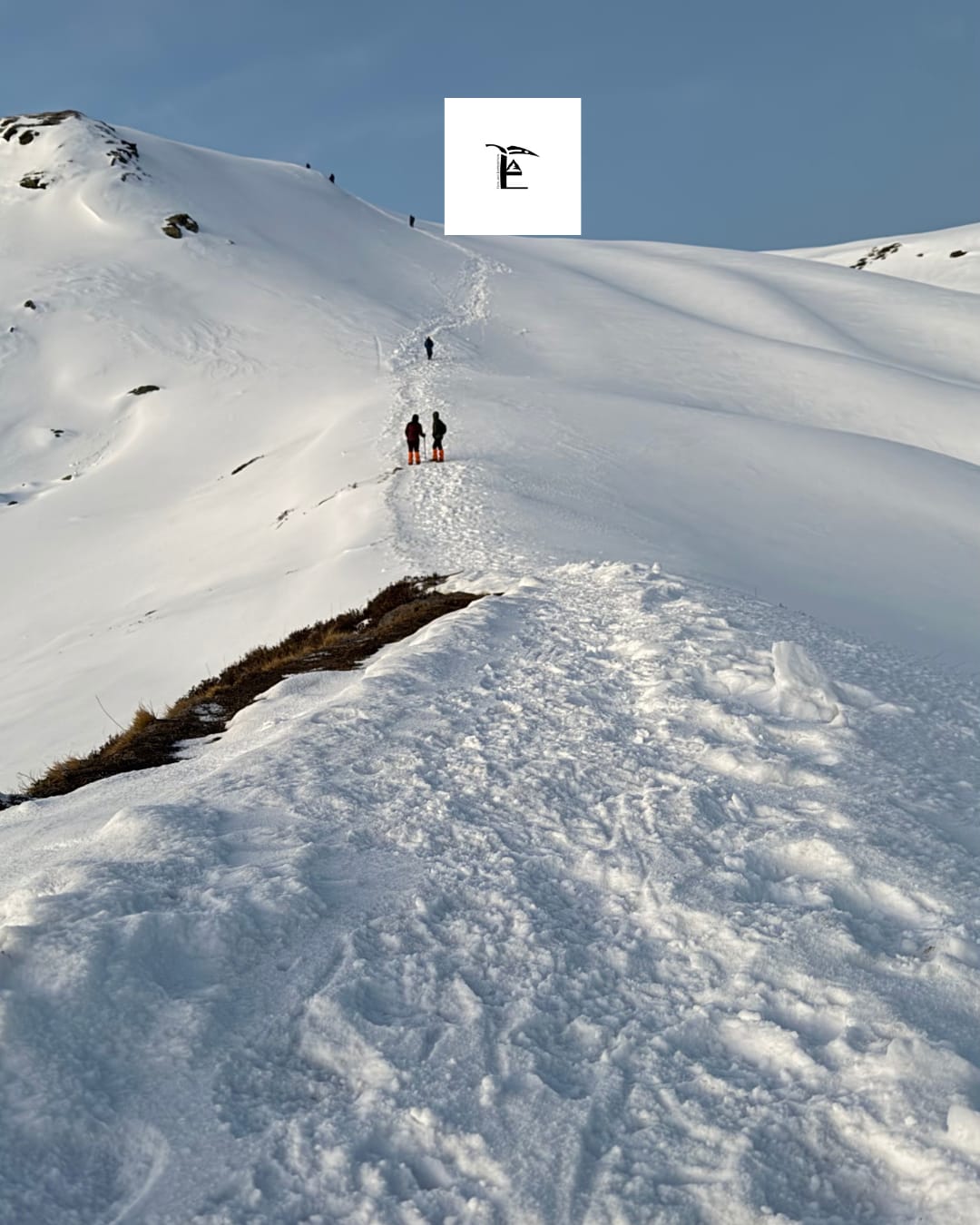
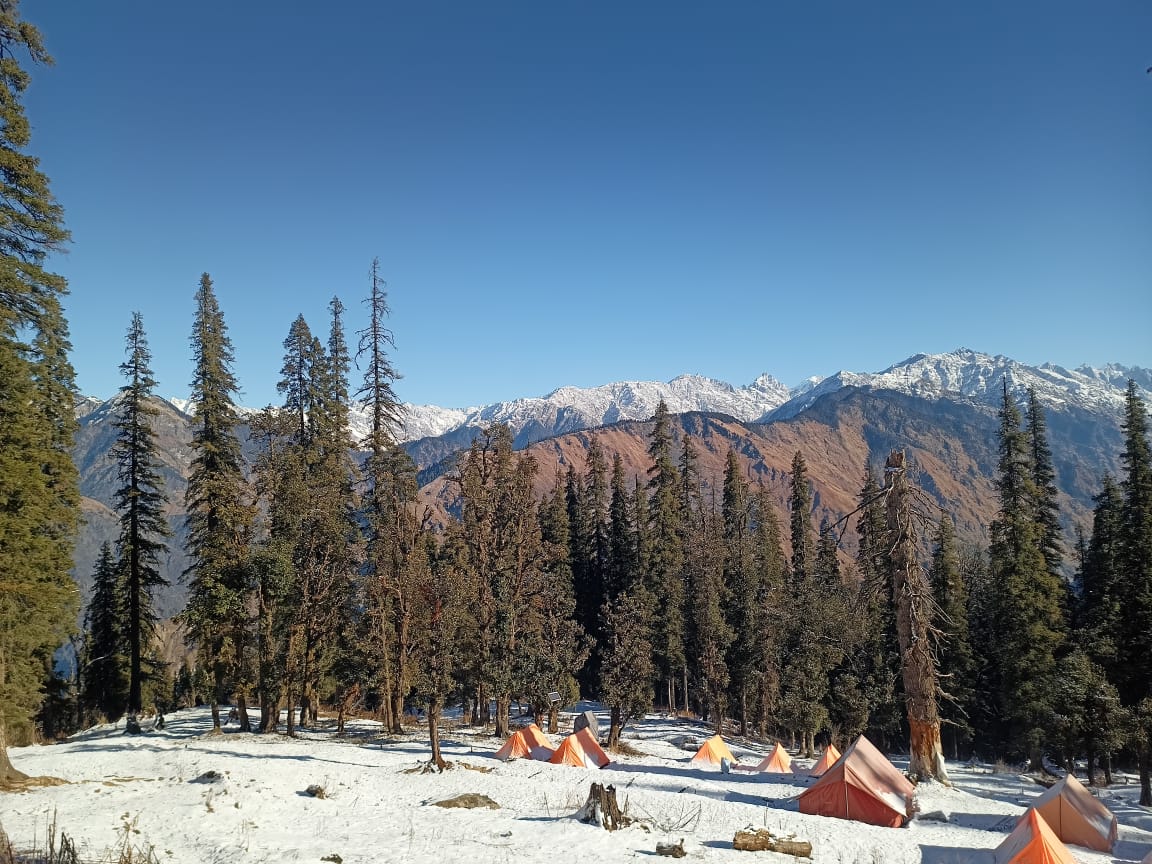
Kedarkantha, on the other hand, is a mountain in the Uttarkashi region, approached through the Sankri area. Today, the Kedarkantha trek is particularly famous for its winter landscape, dense forests, snow-covered meadows and relatively accessible summit. Thousands of trekkers know the mountain through its trail rather than through pilgrimage.
So, if you are planning a Kedarkantha winter trek, you are not travelling to Kedarnath. The two destinations are geographically distinct and have different identities. The connection begins with one word that appears in both names: Kedar.
What Does “Kedar” Have to Do With Shiva?
The word “Kedar” has a deeper history than simply being another name for Lord Shiva. In Sanskrit, kedara has associations with cultivated or fertile land, but over time the word became deeply embedded in the sacred geography of the Himalayan region. The area historically associated with Garhwal and its religious traditions contains several places whose names carry this word.
The strongest modern association, of course, comes from Kedarnath. The name has become inseparable from Shiva worship because of the temple's importance and its place in the Panch Kedar tradition. This is why, when people hear “Kedar,” they naturally think of Shiva.
But this does not mean that every Himalayan place containing the word Kedar is automatically another Shiva temple or part of the Panch Kedar pilgrimage. That distinction is particularly important when discussing Kedarkantha mythology.
Kedarkantha has its own local traditions associated with Shiva, but it is not one of the five Panch Kedar shrines. The similarity in the names therefore should not be interpreted as proof that Kedarkantha is a sixth Kedar or another name for Kedarnath.
Then What Does Kedarkantha Mean?
This is where the story becomes uncertain—and therefore much more interesting.
The name is commonly interpreted as Kedar + Kantha, with kantha understood as throat or neck. This has led to the popular explanation that Kedarkantha can be interpreted as something like “the throat of Kedar” or “the throat of Shiva.”
However, this interpretation should be treated carefully. There is no single universally established historical record that conclusively proves this to be the original etymology of the mountain's name. Instead, the interpretation is closely connected with local folklore surrounding the summit and the stories associated with Shiva.
One of the most fascinating traditions speaks of an unfinished structure at the top of the mountain. According to the story, a structure associated with Shiva was being constructed but remained incomplete. The idea that the construction stopped around the “throat” gives the word kantha a symbolic connection with the mountain's name.
It is a compelling explanation, especially when you are standing at the summit and seeing the stone structure for yourself. But there is an important difference between a traditional explanation of a place name and a historically proven etymology. The unfinished-temple story belongs to the realm of local tradition and should not be presented as archaeological fact.
That does not make the story meaningless. Quite the opposite. It tells us how people have understood and remembered the mountain over generations.
Why Is Shiva Associated With Kedarkantha?
The Shiva connection makes cultural sense even before we examine individual legends.
Shiva is traditionally imagined as a yogi who seeks solitude, meditation and the wilderness of the mountains. The Himalayas therefore occupy an extraordinary place in Shaiva imagination. A remote forest, a silent ridge or a snow-covered summit naturally becomes an appropriate setting for stories about a deity who chooses isolation over worldly comfort.
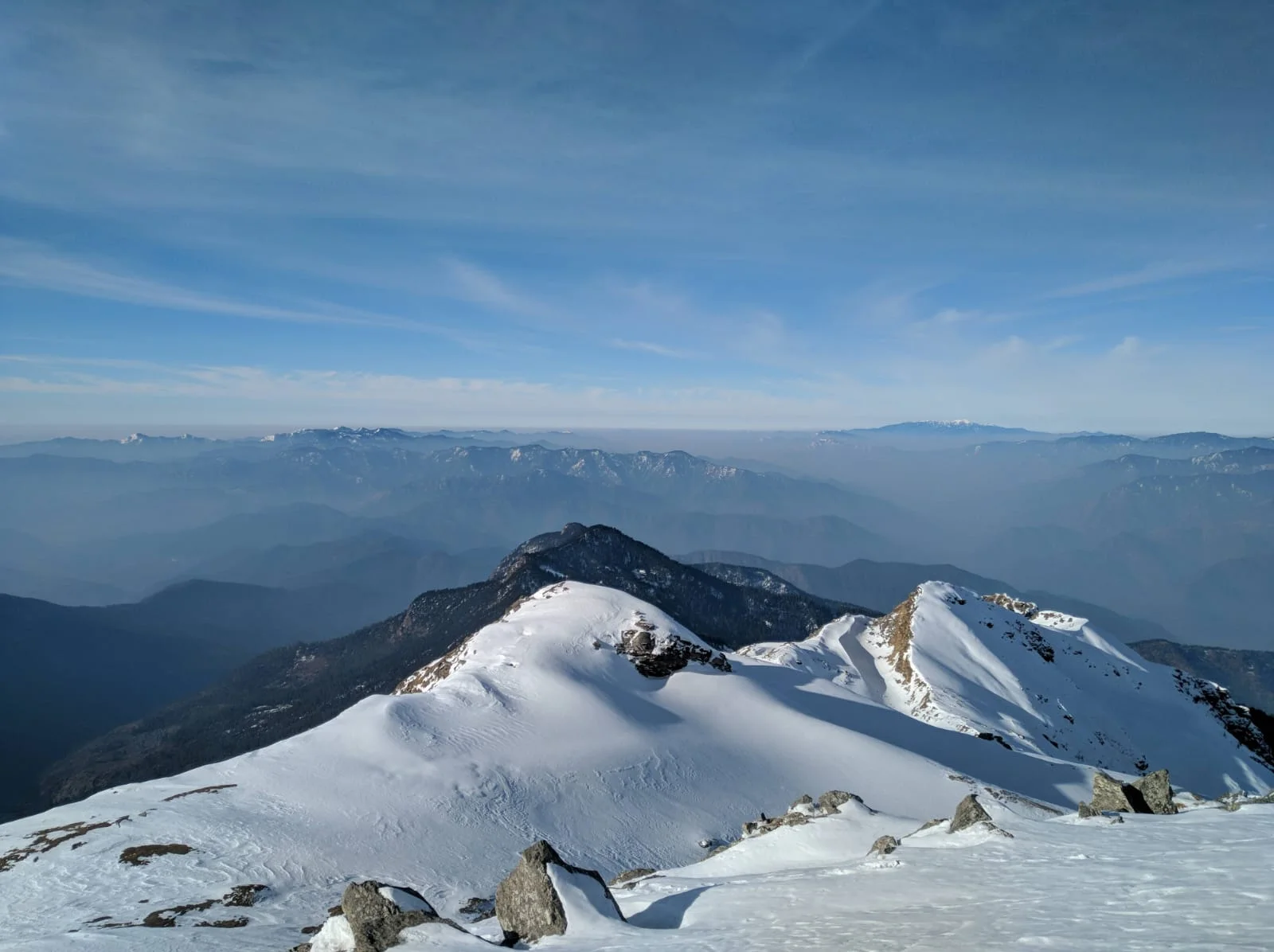
Kedarkantha fits that imagery perfectly. The trail passes through forests before reaching open alpine landscapes, and the summit offers an expansive view of the surrounding Himalayan ranges. Long before the mountain became famous as a Kedarkantha trekking destination, the landscape already had meaning for the communities living around it.
Local stories describe Shiva being associated with the mountain and seeking a secluded place there. In some versions, he eventually leaves because the area does not provide the complete solitude he desires. Some traditions then connect his movement with the region of Kedarnath.
This is probably one of the reasons the two names have become so strongly linked in popular imagination. A story involving Shiva appears at Kedarkantha, and another, much more firmly established Shiva tradition centres on Kedarnath. The two narratives begin to overlap.
But they should not be treated as one historical journey. The connection belongs to Himalayan folklore and sacred imagination, not to a documented geographical account of Shiva travelling from one mountain to another.
Where Do the Pandavas Enter the Story?
The Pandavas appear frequently in the sacred stories of Uttarakhand, and Kedarkantha is no exception. Their importance here becomes especially interesting because the Pandavas are also central to the traditional story of the Panch Kedar.
According to that tradition, the Pandavas searched for Lord Shiva after the great war of the Mahabharata. Shiva attempted to avoid them by taking the form of a bull. Bhima eventually recognised him, and the encounter led to the appearance of Shiva's different manifestations at the five locations that became known as Panch Kedar.
Kedarnath is traditionally identified with the hump of Shiva in this story.
Kedarkantha, however, is not one of these five sacred sites.
The appearance of similar characters in Kedarkantha folklore does not change that fact. Instead, it shows how the wider Pandava-Shiva tradition has become deeply woven into the cultural landscape of Uttarakhand. Stories associated with major religious traditions can acquire local versions as they move through different valleys and communities.
This is why it is important not to turn every Pandava-related mountain legend into a claim that the mountain is officially part of the Panch Kedar tradition.
What About the “Throat of Shiva” Story?
The phrase “throat of Shiva” is perhaps the most attractive explanation for the name Kedarkantha, but it is also the one that requires the most careful wording.
The interpretation comes from the meaning associated with kantha and from local stories that connect the summit's unfinished structure with Shiva. Over time, these elements have formed a coherent explanation of the mountain's name.
But the existence of a beautiful explanation does not necessarily prove that it was the original source of the name.
Place names can survive even after their original meanings become unclear. Later generations may interpret those names through stories, physical features or religious beliefs. A structure on a summit may become part of a legend; the legend may then be used to explain the name; and eventually both become inseparable in popular memory.
That may be what makes Kedarkantha name meaning so difficult to establish with absolute certainty.
Rather than saying “Kedarkantha definitely means the throat of Shiva,” it is more accurate to say that the name is traditionally interpreted through Kedar and Kantha, and the throat-related explanation has become part of the mountain's local mythology.
Why Kedarkantha Is Not Just Another Kedarnath
The comparison between the two mountains becomes much clearer when we stop trying to make them the same.
Kedarnath represents an established pilgrimage tradition centred around a temple and the worship of Shiva. Kedarkantha represents a mountain landscape where trekking, local culture, oral traditions and Shiva-related folklore come together.
One is approached through pilgrimage.
The other is approached through a trail.
One is famous for its temple.
The other is famous for its summit, forests, meadows and winter snow.
Yet both exist within the larger Himalayan cultural world in which Shiva is associated with mountains, meditation and sacred landscapes.
That is the real connection.
Not that Kedarkantha is Kedarnath.
Not that Kedarkantha is part of Panch Kedar.
But that both names belong to a region where language, mythology, geography and spirituality have been intertwined for generations.
So, Why Do Kedarkantha and Kedarnath Sound So Similar?
The simplest answer is that both names contain Kedar, a word with a long-standing presence in the sacred and geographical vocabulary of the Himalayas. Kedarnath developed a powerful and well-established association with Shiva and became one of the Panch Kedar sites. Kedarkantha, a completely different mountain, developed its own Shiva-related traditions and interpretations of its name.
The exact historical origin of the name Kedarkantha remains less certain than the popular stories might suggest. The “Kedar + Kantha” interpretation is fascinating, and the legends surrounding Shiva and the unfinished summit structure give it cultural depth, but they should remain identified as tradition rather than proven historical fact.
Perhaps that uncertainty is what makes the mountain's name so fascinating.
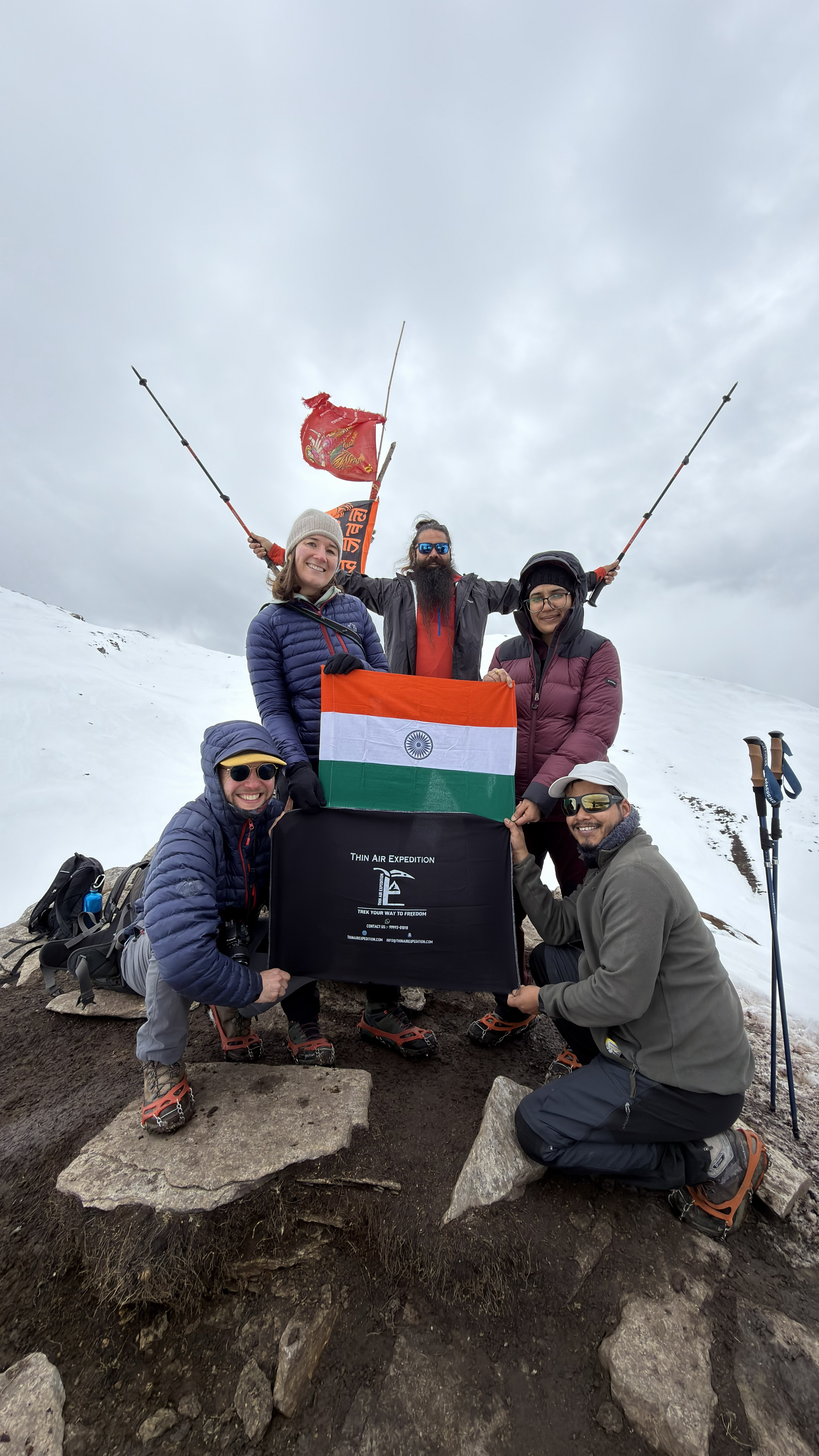
A trekker may begin the journey thinking only about snow and the summit. But somewhere along the trail, the name starts to mean something more. The forests, the high-altitude lake, the summit shrine, the surrounding peaks and the stories associated with Shiva become part of the experience.
And suddenly, Kedarkantha is no longer just the name of a trek.
It becomes the name of a mountain carrying layers of memory.
Kedarnath and Kedarkantha may be different destinations, but their names remind us of something the Himalayas have always done exceptionally well: they turn geography into stories.
Kedarnath is a sacred destination built around Shiva. Kedarkantha is a mountain whose landscape has gathered its own stories of Shiva.
The names sound similar.
The places are different.
And somewhere between the two lies one of the most fascinating mysteries in Uttarakhand's mountain folklore.