Why is Pin Bhaba Pass Trek considered to be the best monsoon trek
Why is Pin Bhaba Pass Trek considered to be the best monsoon trek
15
Jun

Trekking at an altitude of 16,100 ft. is not an easy task; it will take time to get yourself prepared for the high altitude trek. The Pin Bhaba Pass Trek will be the geographical shape shifter. It seems almost unbelievable: going from being in an incredibly dense, wet, neon green fairy tale into a quiet, colorful, multi-hued volcanic desert. Being one who absolutely loves the enchantment that comes along with the mountains during the months of July and August, let us take a seat and discuss, point-by-point, why the monsoon journey through Pin Bhaba is simply unbeatable.
Total Distance: 50 Km approx.
Duration: 7 Days
Highest Altitude: 16,100 ft.
Difficulty Level: Difficult
Best Time: July to September
Landscape: Emerald forest to alpine meadows to volcanic desert
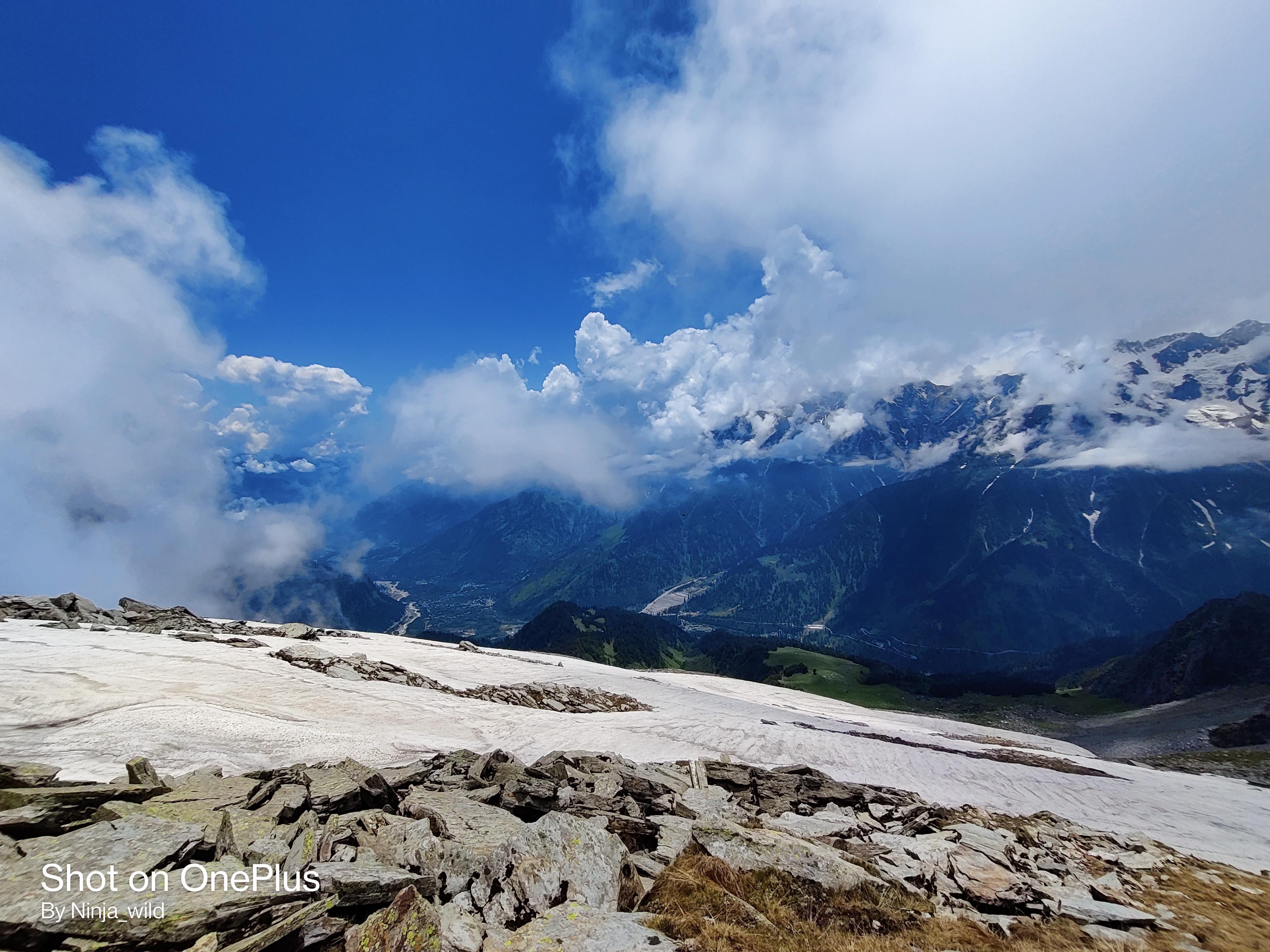
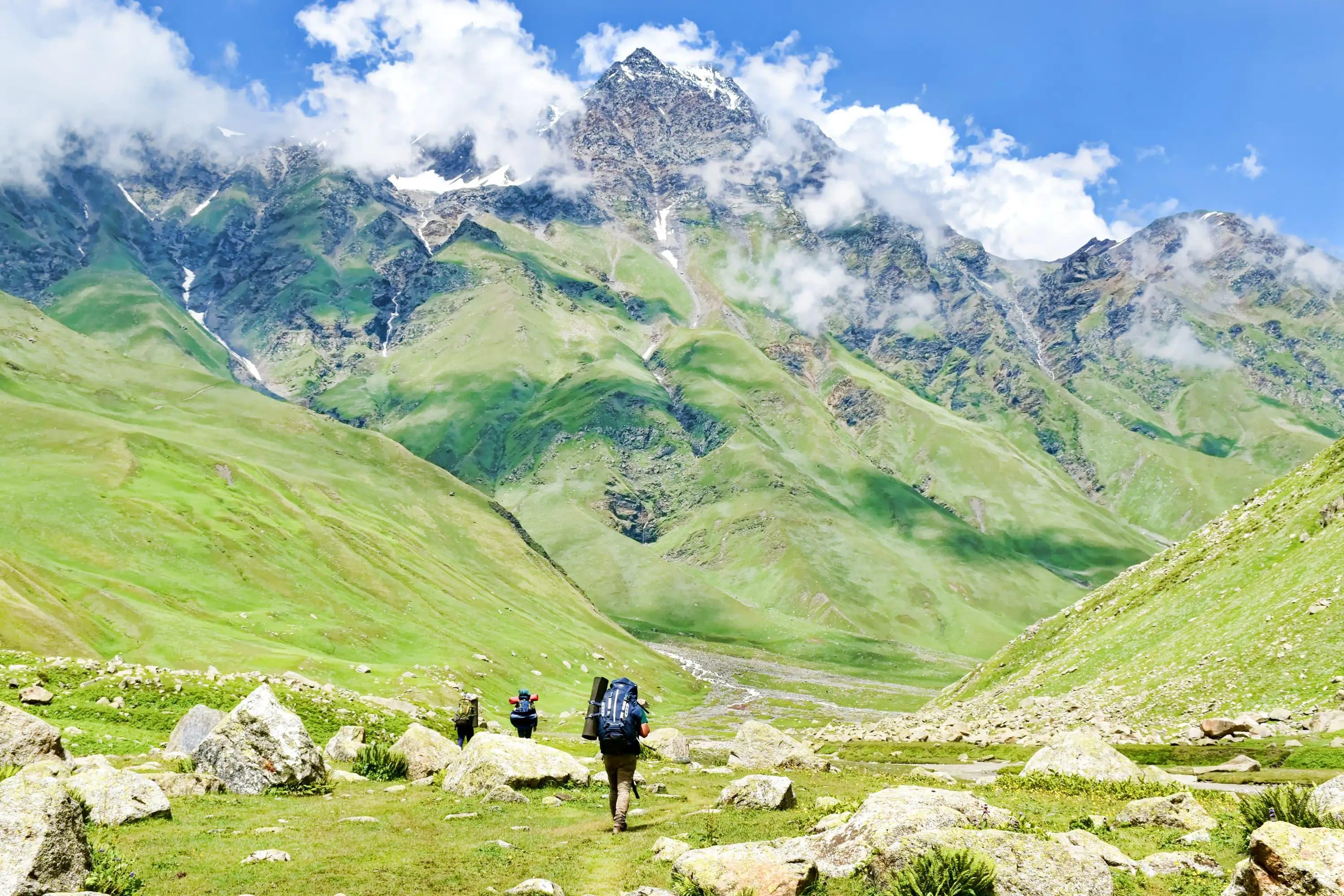
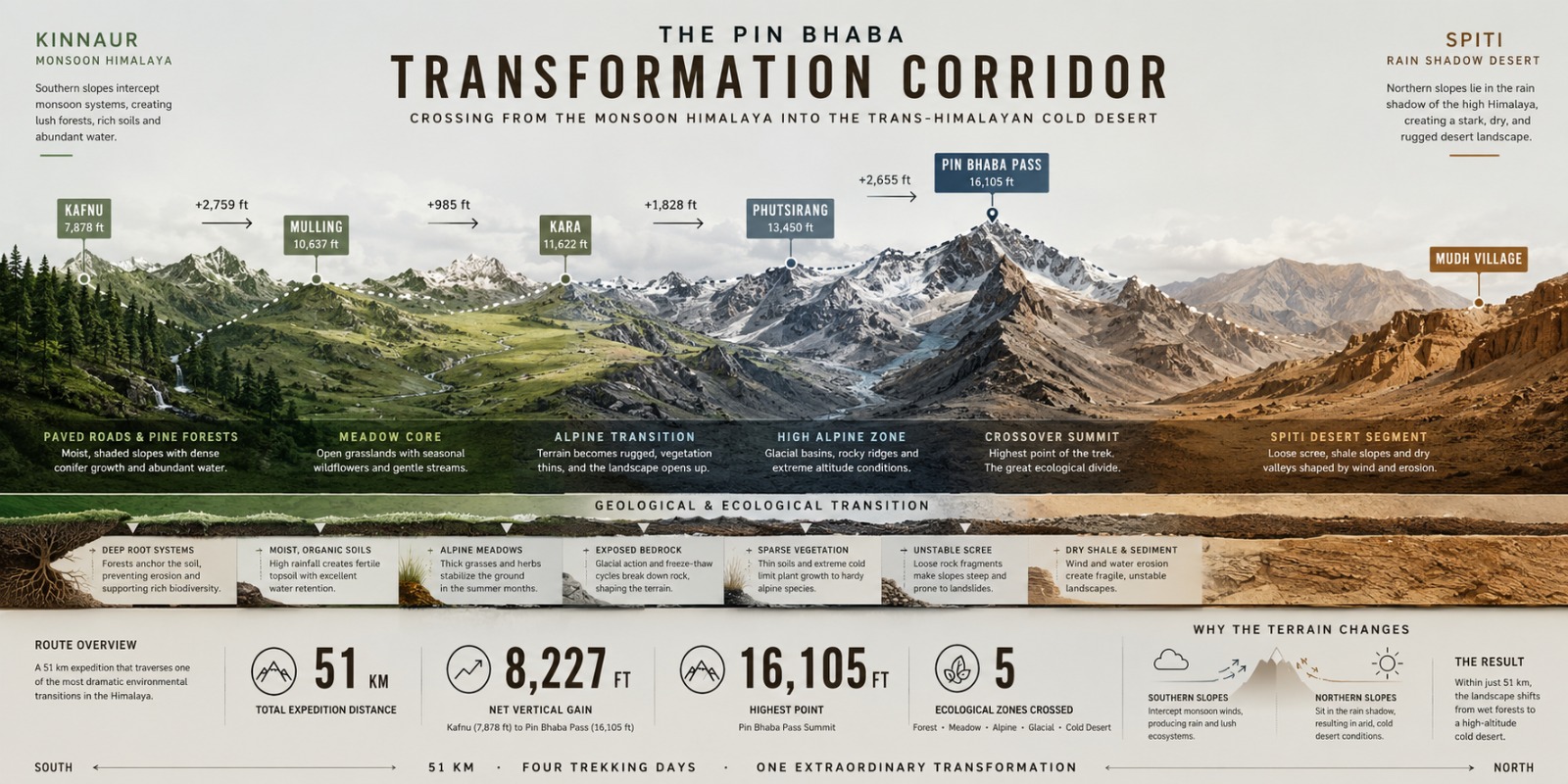
The headline for this trek, undoubtedly, is its location. Most monsoon treks will take you into a single, consistent mood from beginning to end. During the first three days of trekking, you trek in the Bhaba Valley of Kinnaur. Being directly exposed to the rain-bearing monsoons of the Himalayas, it is drenched in the rich, deep, thick cloud cover. The effect is a landscape saturated to the point where your eyes hurt trying to see all the colors. You are trekking amid dense and misty forests of pine and silver birches, stepping on mossy logs lying around and reaching an alpine clearing where the ground is decorated by thousands of little flowers that glitter in the sunlight.
Then you get the Pass Day.
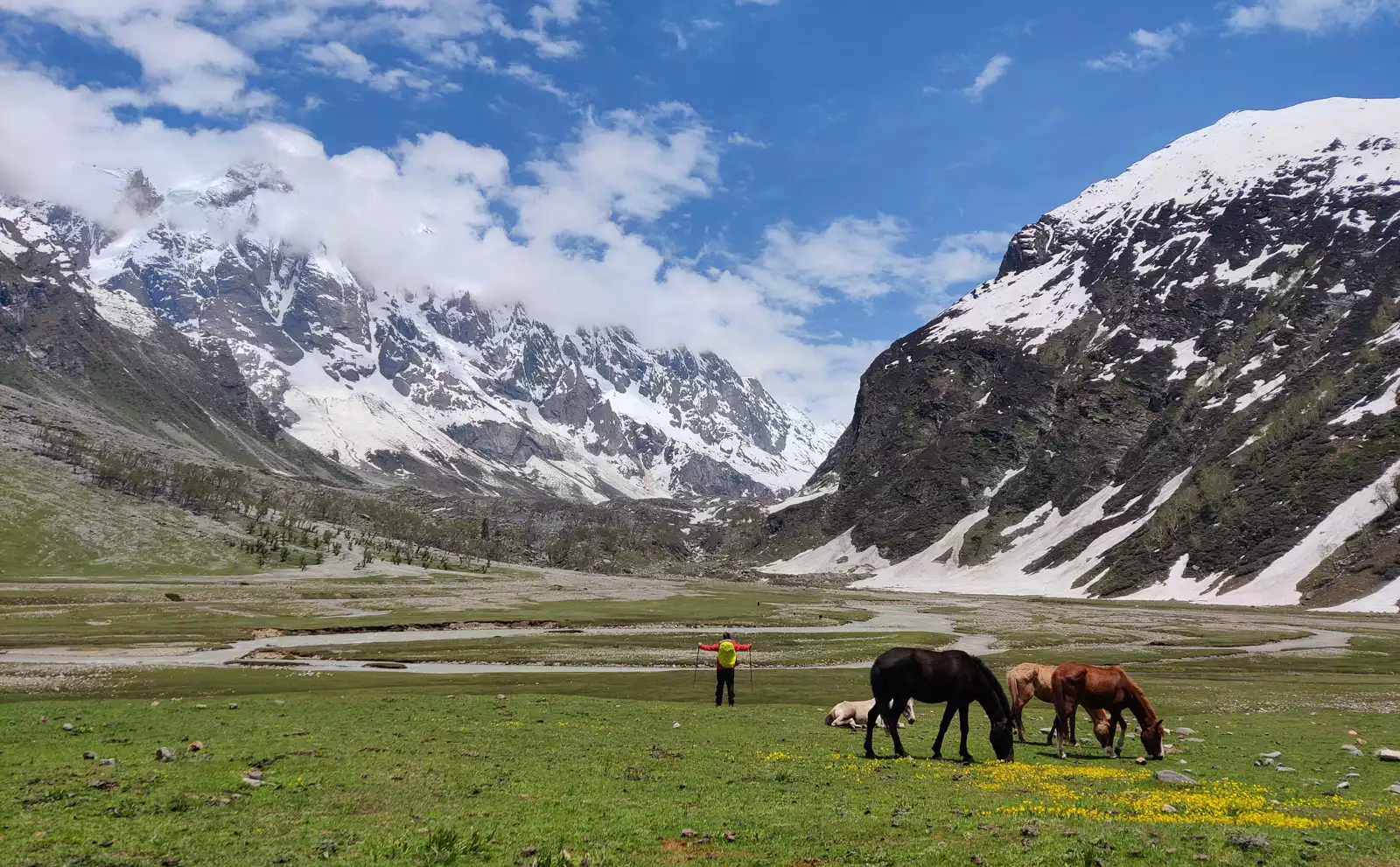
Green? Gone. The whole place seems as though it is cut into two halves by a sharp knife. What you see right in front of you now is the valley of Pin Valley, Spiti, which is that part of the world where the monsoons can't enter. It feels so fresh out here because the mist is gone, and what remains is the barren, brown, purple, and ocher mountain peaks. This is a true ecological shock trekking experience.
It can be daunting indeed trying to trek in July and August. Nobody wishes to spend five days in wet weather conditions with their footwear drenched for days, making all the equipment a soggy mess, confined to a tent due to continuous rains. The Pin Bhaba route comes to your rescue once again:
You Leave the Rains Behind: While the low foothills of Himachal Pradesh face the wrath of the monsoon, Pin Bhaba trail will make sure that you leave the rains behind in just two days. In less than two days since your journey along this trail began, you will find yourself above the monsoon and enjoying gentle showers only. It is not the kind of weather that will make you uncomfortable; instead, it will make you snug.
Safe Zone for Trekking: As soon as you cross the pass around Day 5, you enter Spiti Valley. Being an arid region at high altitude, monsoon winds fail to reach here. Thus, you will have sunny skies throughout your trekking days and drive out via Mudh and Kaza.
I have camped in many valleys, but the campsites in the Kinnaur side of this trail in the monsoons are simply magical.
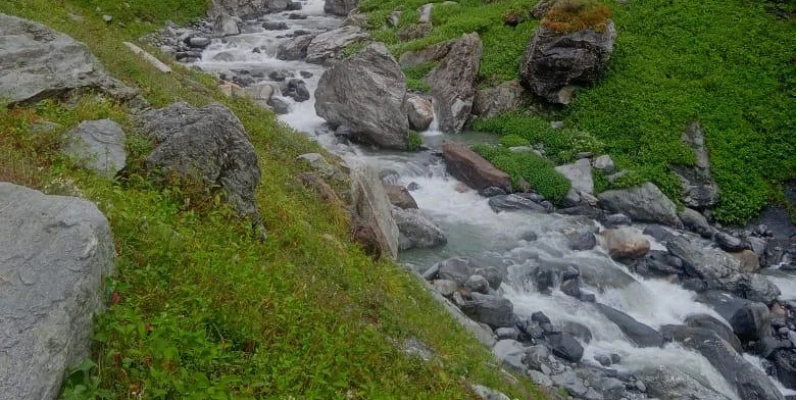
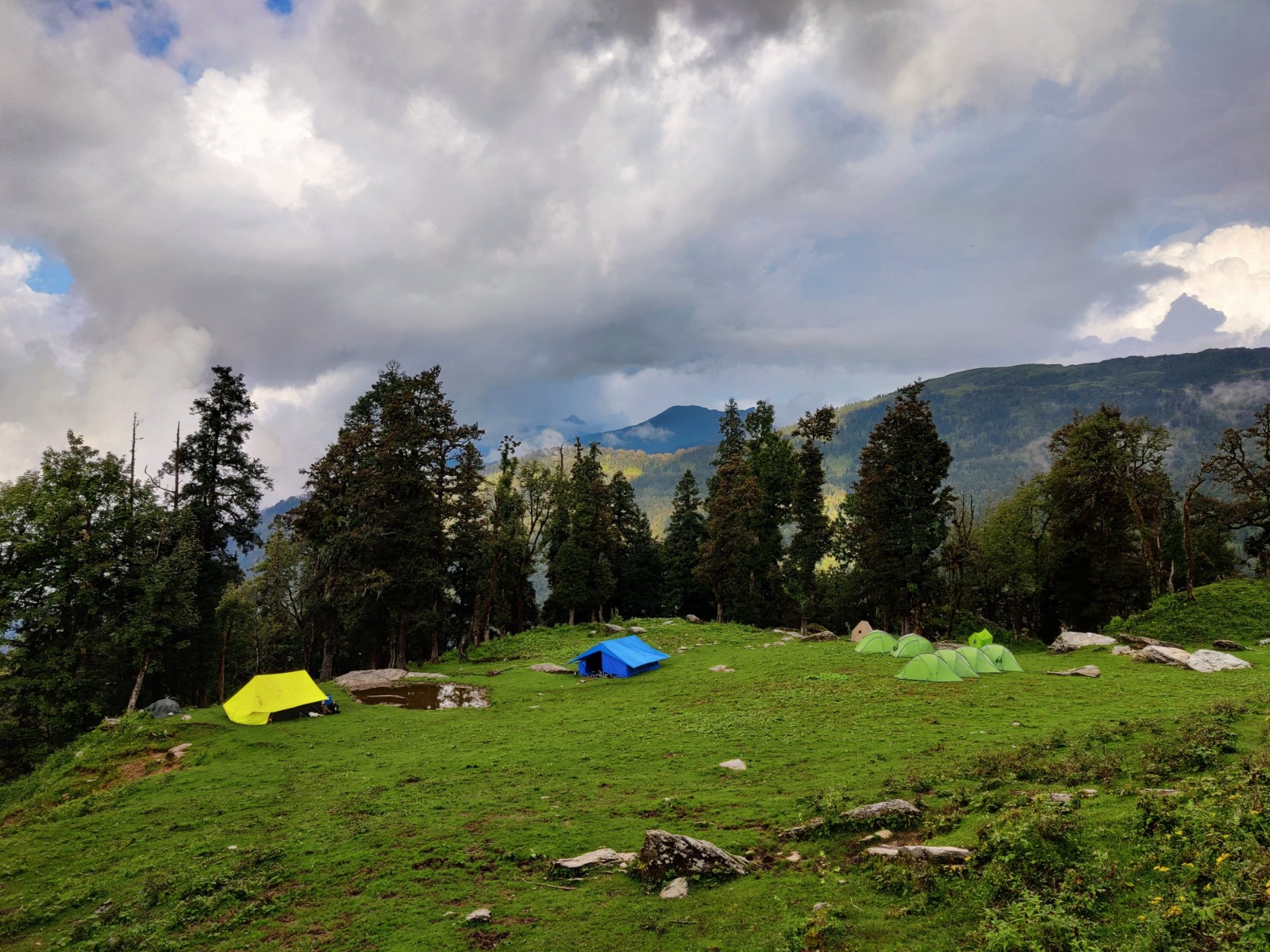
At Kara Campsite: You find the most ideal spot to pitch your tent right on a leveled carpet of soft green grass. And then the river Bhaba divides into a beautiful delta system made up of a dozen clear ice-cold glacial streams that run along the bed of the valley. As far as the mountain ranges are concerned, they spring alive with the movement of the local herds moving from one place to another. The fragrance of damp earth and thyme assaults your nose.
At Mulling Campsite: This particular campsite is right at the fringe of the forest and it's surrounded by imposing granite walls complete with a few falls brought about by the monsoon rain.
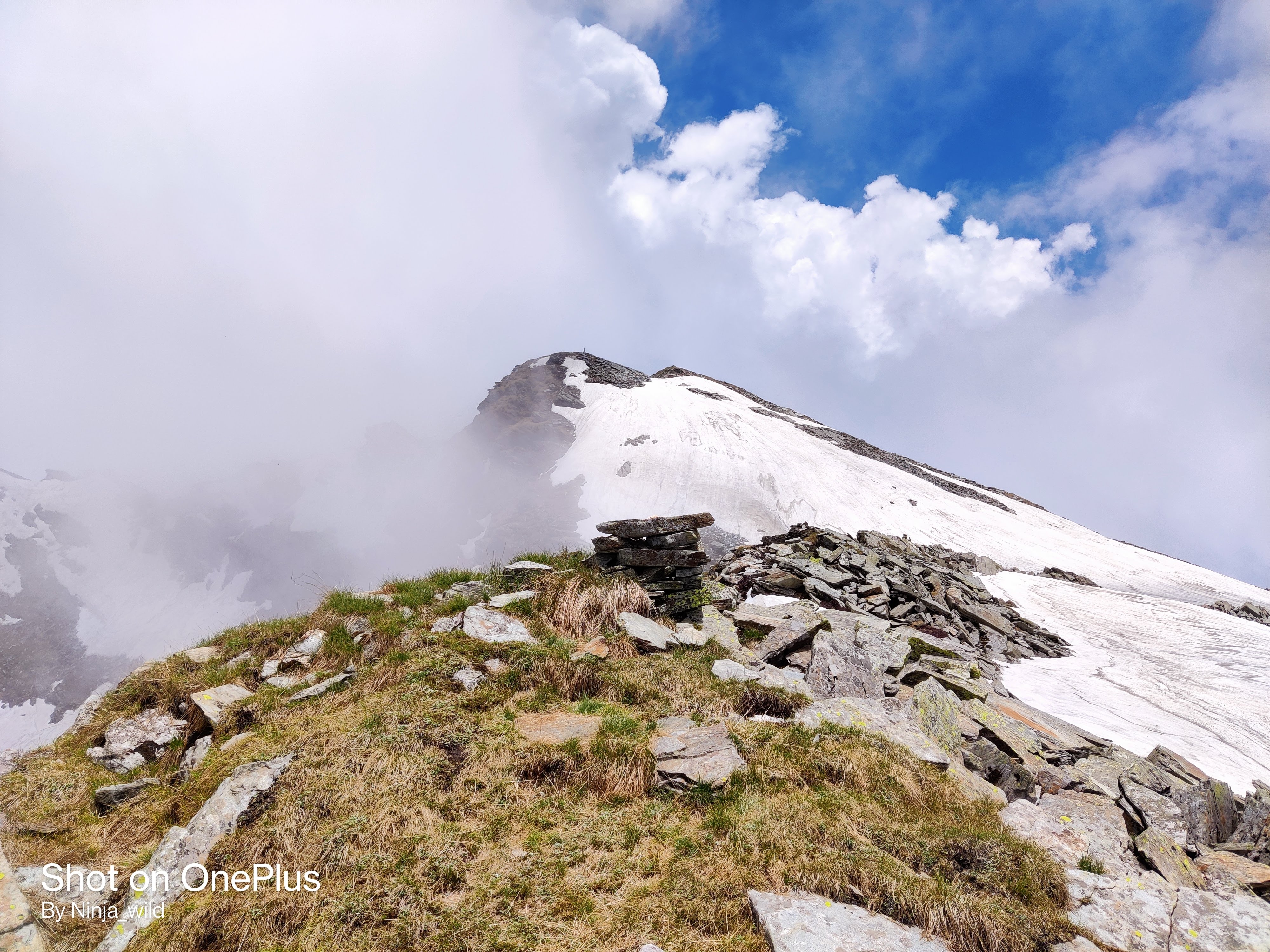
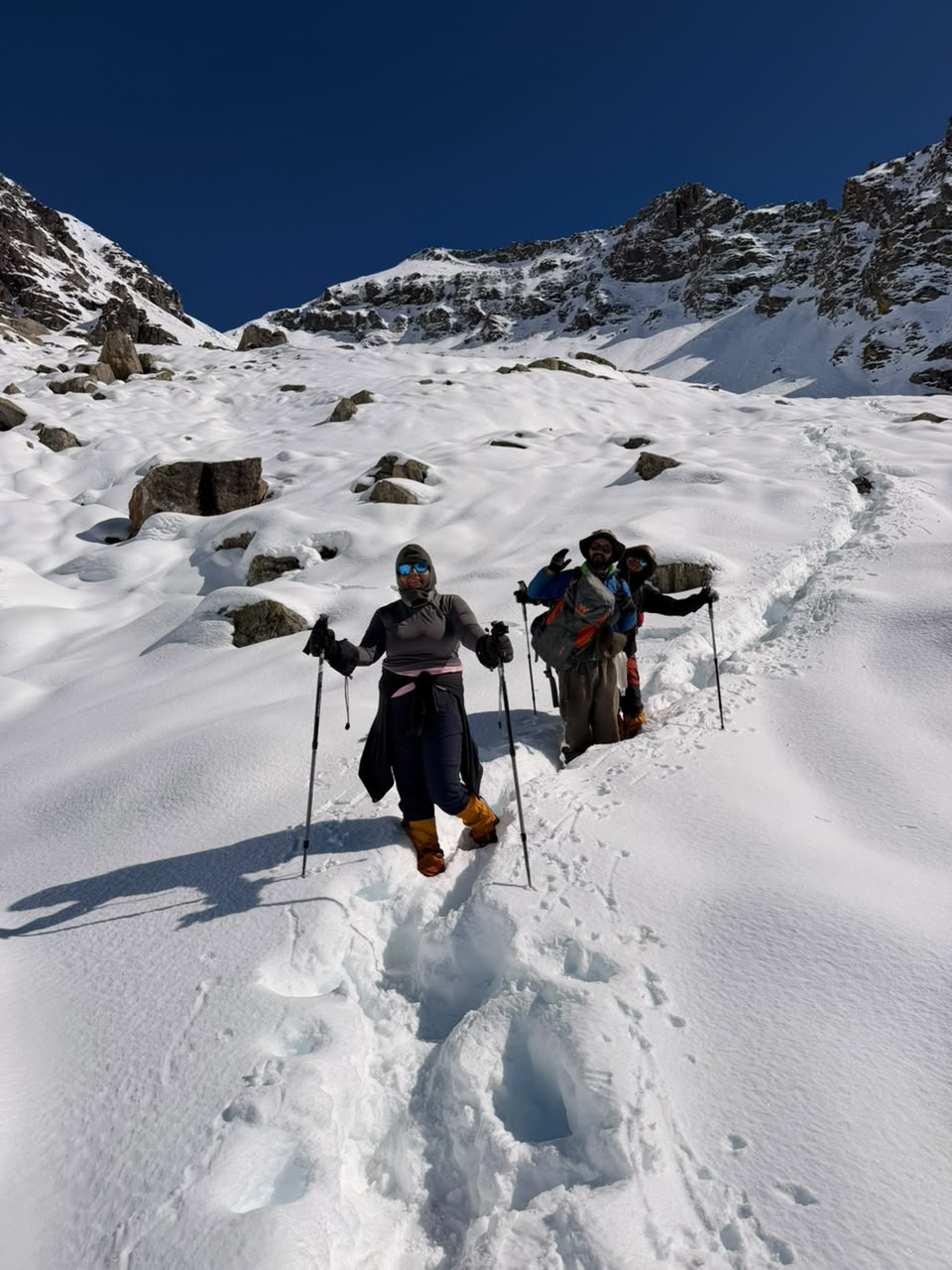
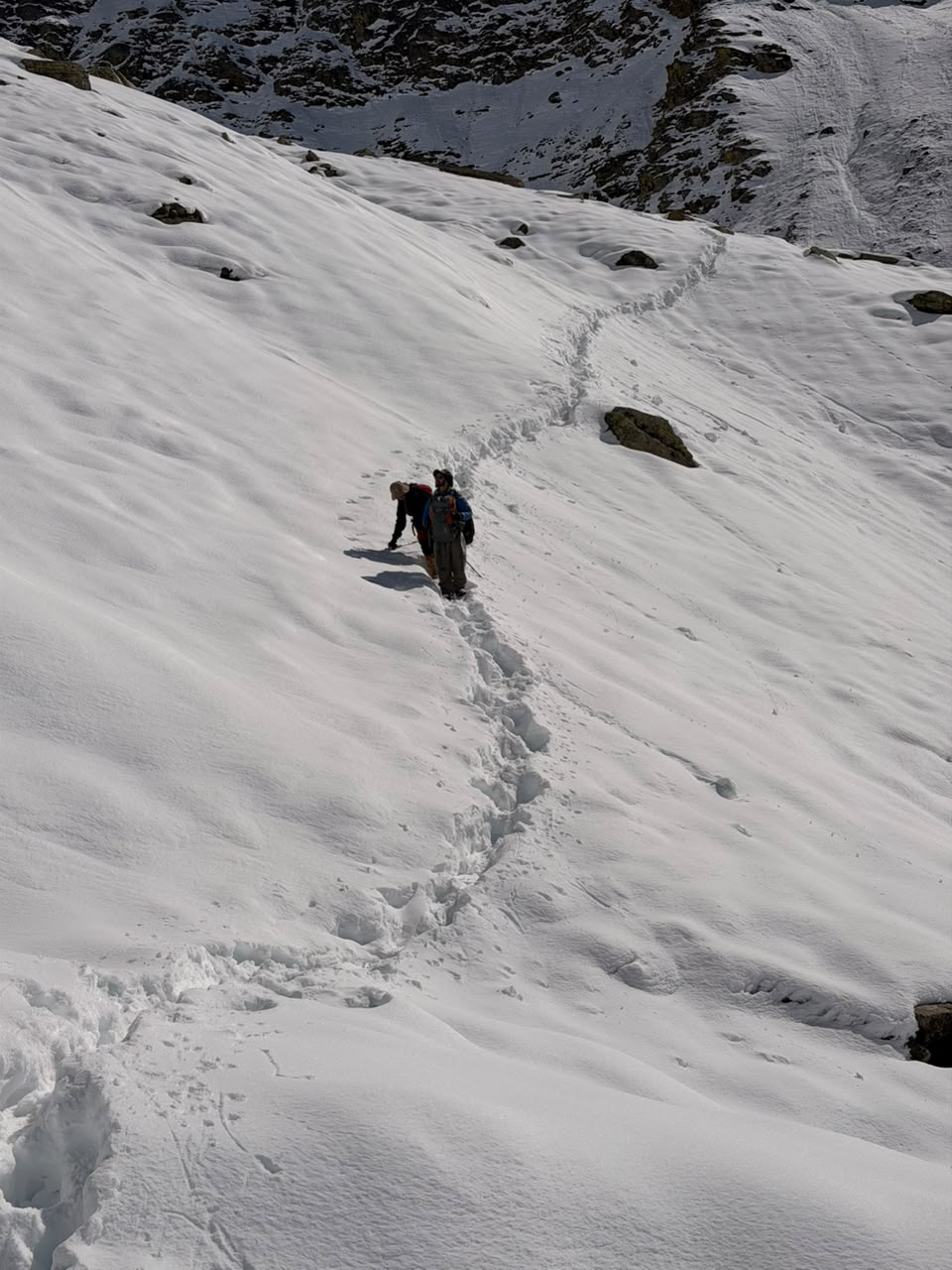
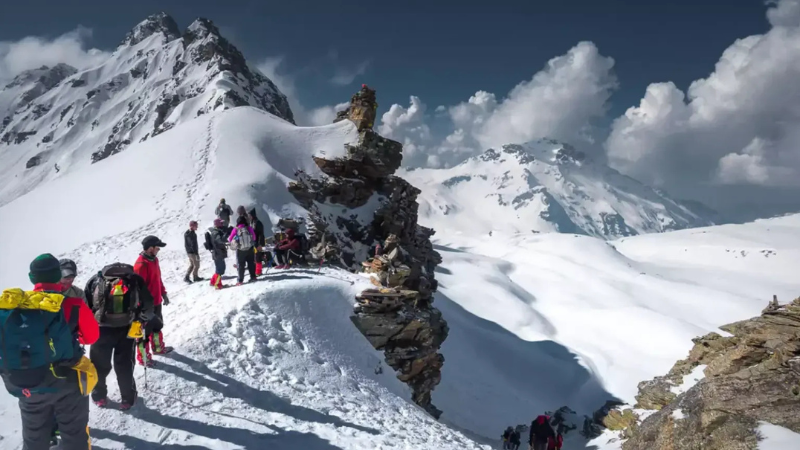
It can be said with certainty that there is a certain moment during this trek that epitomizes its spirit and charm. This would be the Phutsang camp, which precedes the actual passage. The chill will be biting your nose while the beautiful green valley that you've been trekking for so many days lies below you, buried under the ever-moving sea of white clouds.The outline of the pass itself rises above you, stark against the darkening sky ahead. There is no crowd of other trekkers around you; only yourself and your breath and the majestic mountains. And that is exactly why all your efforts have been worth it.
For anyone who wants to experience a monsoon trek like no other, from challenging the leg muscles to witnessing some of the most spectacular geographical sights on earth, the only thing left to say is—take out your poncho and start trekking towards Pin Bhaba.
Trekking in the Himalayas in July and August requires the use of certain methods of packing. Using an ordinary backpack will definitely be inadequate if you intend to trek the moist climate of the Bhaba Valley and the chilling conditions at 16,105 feet above sea level. If you want your clothes to stay dry, your feet to remain blister-free, and your camera protected from rain, then the following packing guide will help.
Though an expensive waterproof jacket would provide a good shield against wind, in case of prolonged monsoon spells as it allows water droplets to penetrate through your neck and soak your backpack straps.
Solution: Get yourself a high-quality poncho for rain. A poncho ensures a watertight cover over your body and your backpack that may be of 50-60L capacity.
Internal Waterproofing: Place your clothing in a huge (at least 50 liter), tough plastic bag. A raincover can be easily blown off in case there are strong winds, however no water droplets will be able to enter inside your backpack.
The Pin Bhaba Trail presents two very distinct surfaces underfoot. The terrain in Kinnaur requires traction when dealing with wet grass and slippery log crossings. However, the terrain in Spiti requires stability from loose stones as well as sharp and volcanic stones.
The Boots: Your footwear must be mid or high-cut trekking boots having deep lugs made up of Vibram or rubber. Before you start your trek, remember to spray them with DWR spray.
The Socks: Four pairs of synthetic or merino wool socks will serve the purpose very well. Never use cotton socks since they absorb moisture, and make your feet more prone to blisters.
Extra Tip: Pack a pair of lightweight sandals or floater shoes in advance for campsite wear only to give your boots a breather during the night hours.
As you will be shifting from one humid environment to one that is frozen and windy in nature, you need some flexible clothing to survive.
Base Layer: Wear either Polyester or Merino wool (sweat-absorbing fabric)
Insulation layer: Take a fleece jacket or down feathers (to trap body heat)
Outer layer: Pack either waterproof poncho or windcheater (to protect from rain and windy conditions)
Never wear jeans and cotton garments but rather take lightweight and fast-dry trekking pants that dry up on trekking. Pack one more set of thermal wear in a zip lock bag in your backpack. Such clothes are meant to be slept in and never to get wet in rain.
Dust from the Bhaba Valley might find its way into your electronics through the charging port and lens of the camera. Dry dust from Spiti may be damaging to your gadgets' screen.
Double-Layered Ziploc Bags: Put your phone, batteries, power banks, and documents in double-layer Ziploc bags for protection against any dust or wet conditions.
Silica Gel Packs: Put some packs of silica gel inside your electronics' case. These packs will absorb all the moisture accumulated at night.
Golden Rules of Rainy Season Trekking: Prepare for the worst, be sure everything gets wet, and ensure protection of your sleeping equipment because a good sleep at night determines your morale for the coming day’s trek.
1. What is the starting and ending point of the trek?
This is a point-to-point crossover trek that begins at Kafnu village in Kinnaur area and ends at Mudh village in Spiti Valley. This trek would require separate transportation to enter and exit the location of trekking.
2. Is this trek suitable for a first-timer?
No, this is quite a challenging trek since it is of moderate difficulty and altitude of 16,105 feet which requires great physical endurance, and hence a trekking person should have completed several days trekking previously.
3. Why is it the best monsoon trek?
As the name of the trek itself says that it is in the rain shadow area and provides the opportunity to trek across green misty pastures and then into totally rain-free terrain of Spiti valley.
4. What kind of temperatures are experienced on the trail?
While low camps maintain their temperatures between 5°C and 10°C, temperatures during high camps and the pass drop way below freezing point 0°C to -5°C.
5. Will there be any mobile network connectivity?
No, there will be absolutely no mobile connectivity on the entire trek until the last camp of Mudh Village.