An Iconic Teahouse Markha Valley Trek in Ladakh
An Iconic Teahouse Markha Valley Trek in Ladakh
12
Aug

If you ask those seasoned Himalayan trekkers to name the ultimate multi day trail in North India, one answer comes up like, over and over: The Markha Valley Trek in Ladakh. It’s located not too far from the high-altitude hub of Leh just a short drive away and this classic 6 to 7 day trek carries you through the heart of Hemis National Park, a widely known sanctuary with dramatic rock landscapes, rare high-elevation wildlife, and a lively Buddhist way of life.
People also call it Ladakh’s Teahouse Trek, and honestly, the Markha Valley part has a special ascent for walkers: you get an established community-run homestay network. Instead of the more usual remote-style expeditions that really need horses, cooks, and heavy camping gear, Markha lets you travel lighter, just with a daypack. Each evening, trekkers end up being received into actual Ladakhi homes in villages like Skiu, Markha, and Hankar, for warm home style meals, and a comfy place to rest. The total distance comes out to roughly 65 to 75 kilometers, and the trek finishes at the astonishing Kongmaru La pass. It’s a pleasant mix of moderate fitness efforts, the excitement of crossing those bigger passes, and a truly rooted cultural immersion.
The Markha Valley isn’t only a mountain trek, it is a kind of sensory geological and atmospheric happening. Since the valley sits in a high altitude cold desert (above 3,500 m) right inside the Himalayan rain shadow, it throws out five separate special effects you almost never find along any other trekking route on Earth.
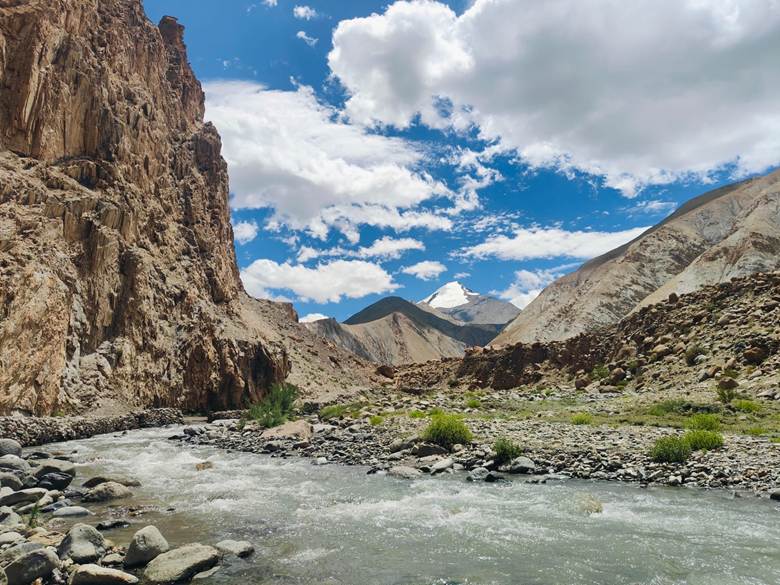
The Markha River cuts straight through the Indus Suture Zone, basically the tectonic fault line where the Indian plate collided with Eurasia about 50 million years ago. That collision lifted old Tethys Ocean layers up, so mineral-rich subterranean rock strata get exposed to daylight.
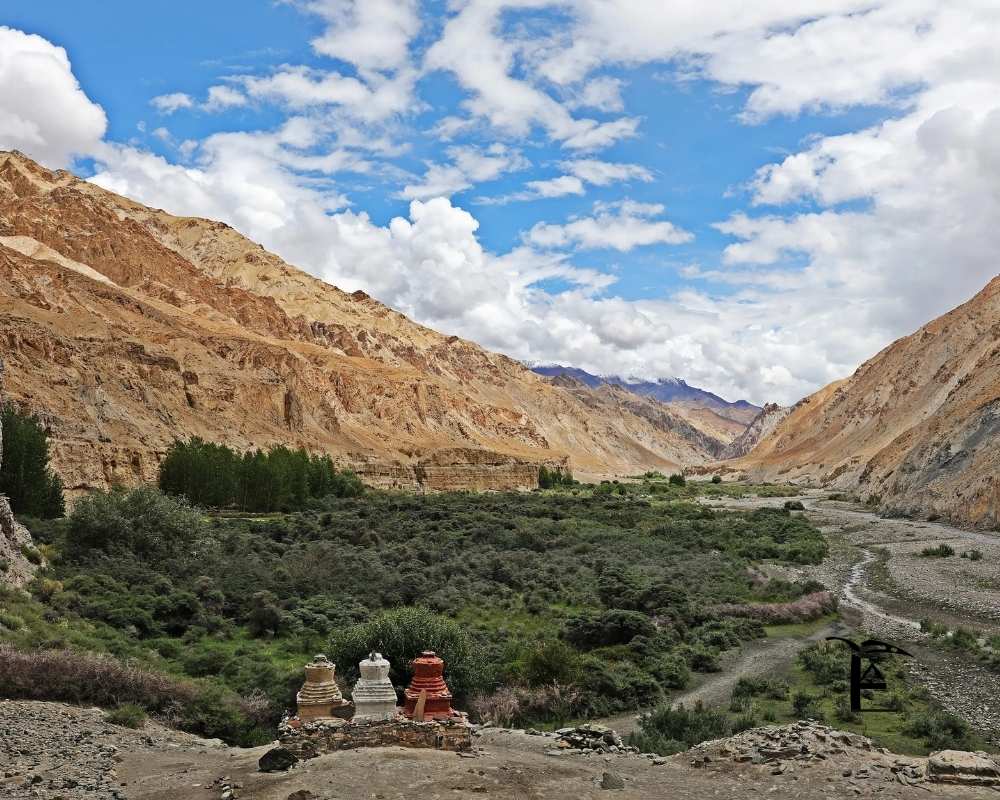
● Rainbow slate walls: When you walk through the canyons you see cliff faces shift color fairly fast, largely because of mineral oxidation. You get rust red (iron oxide), turquoise-mint (copper slate), obsidian black (carbonaceous shale) and ochre gold (sulfur deposits) too , which sounds dramatic but it really shows.
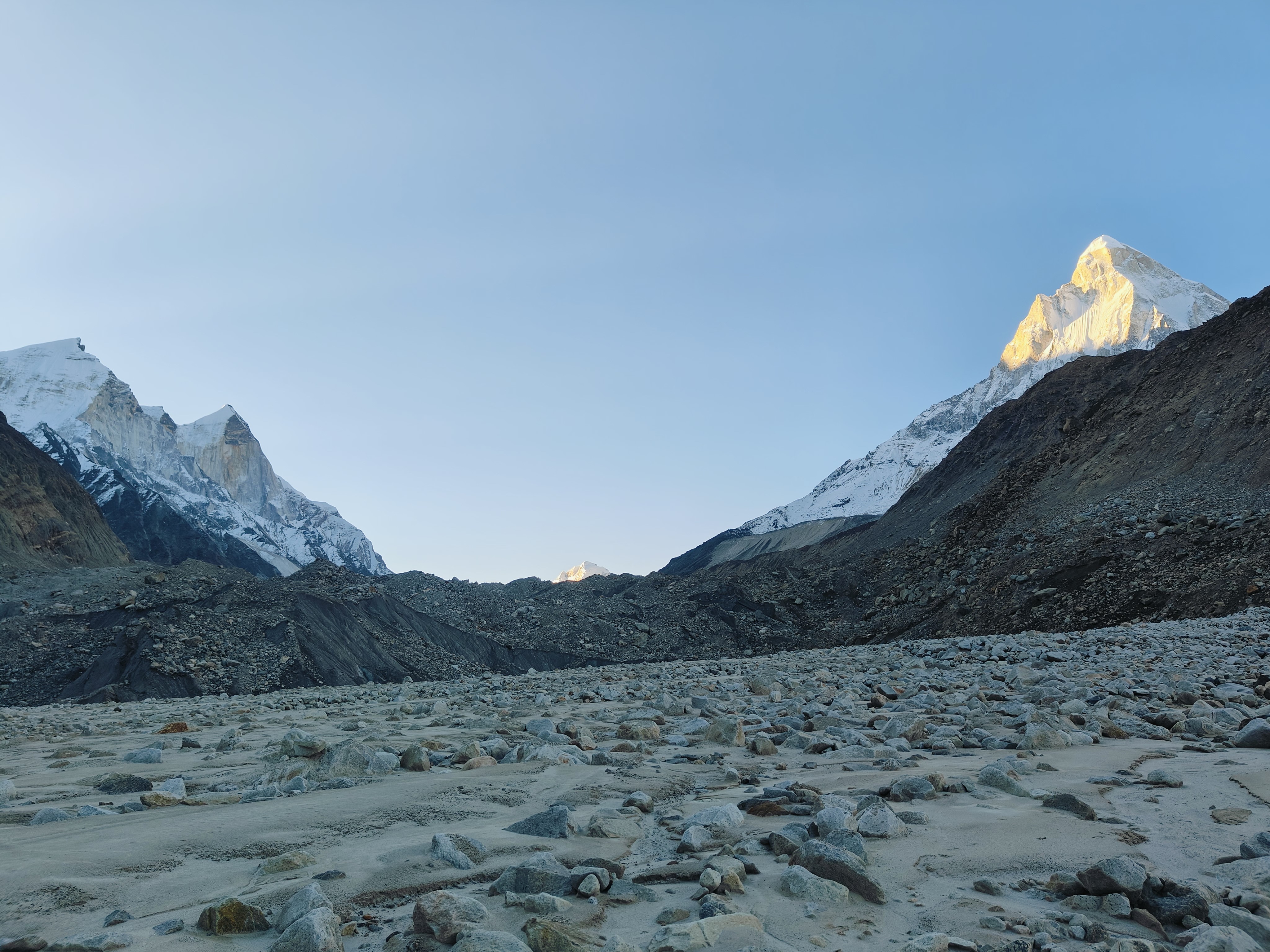
● The luminous hour: At sunrise and sunset the sun strikes those bare mineral walls at a low angle, something like 15°–30°. With nearly no trees and very little atmospheric haze to soften the beam, the rock surfaces bounce the light back in hyper saturated shades, and the canyons start to look like they’re glowing from the inside even if you know it isn’t.
In that constant rain shadow, the air over the Markha Valley is basically bone-dry, with hardly any humidity, very little dust, and this strangely thin feel to the density, like it’s quietly leaving parts of itself out.
● Loss of depth perception: when you’re down lower, atmospheric moisture scatters the light (Rayleigh scattering) so distant ridgelines start to look softer, and a bit more blue. In Markha, that filter is almost not happening. Peaks like Kang Yatse II (6,400m), roughly 15 to 20 kilometers away, come off razor-sharp and suspiciously nearby, as if your brain decided they’re a quick detour, not distance.
● Sharp shadow dynamics: because the air is thin and it doesn’t hold ambient warmth well, heat mostly arrives straight from sunlight. So if you step out of the sun into a cliff shadow, the temperature drops fast around 10°C to 15°C (18°F–27°F)—and you’re adjusting layers in real time, before you even fully think about it.
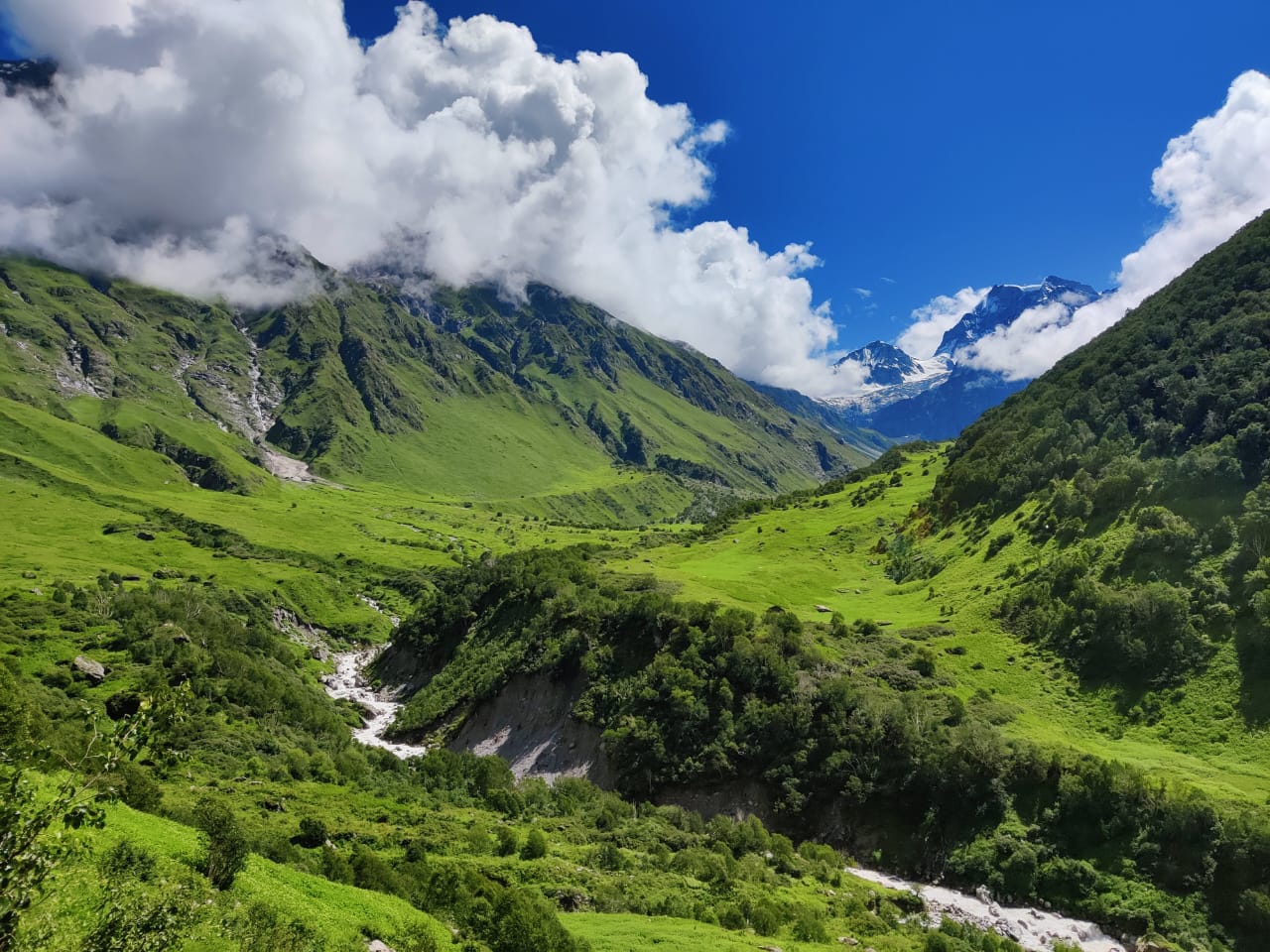
The valley floor shows one of the strongest ecological contrasts you’ll see across the Trans-Himalayas: bright green farmland sits right beside bone-dry gray slate scree, almost like the whole scene got switched mid-breath, no warning.
● Indigenous hydraulic engineering: with under 100 mm of rain per year, places such as Skiu, Markha, and Hankar endure largely because of glacial snowmelt, guided and redirected by old stone channels— the yuras.
● Visual mirage effect: when you swing around tight canyon bends, that harsh, desolate dryland mood disappears abruptly, then it’s replaced by lush irrigated plots of mountain barley (Nai) and alpine willows. It’s a vivid shift ,and honestly it feels a little unreal, especially when you keep remembering how barren the ground looked just a moment earlier.
At 4,747 meters (15,574 feet) the high alpine meadow of Nimaling gives a pretty direct looking up in the night kind of spot, one of the purest astronomical viewpoints across Asia.
● Zero Light and Air Haze: Located more than 80 kilometers from the nearest city center (Leh), and shielded by huge mountain massifs, there is basically no light pollution.
● Bare-Eye Skies: Standing above nearly half of Earth’s dense atmosphere, and nearly all water vapor too, the night sky feels hyper-detailed. You can spot the core of the Milky Way, those interstellar dust streaks like the Great Rift, zodiacal light, and also orbiting satellites, all without any optical aid.
Coming down off the high pass of Kongmaru La (5,260m) toward Chogdo, the open alpine flats kind of pinch together over time, turning into really tight vertical slot canyons, carved over millennia by glacial meltwater floodings.
● Natural Sound Mirrors: The rock walls shoot straight up for hundreds of feet, and after that, they narrow down to only a few meters in some spots. The hard polished slate surfaces bounce sound waves back with almost no energy loss.
● Boosted Sonic Hum: The glacial stream keeps rushing below, and it ricochets off those canyon walls over and over, making an amplified acoustic resonance that fills the gorge, sort of smothering outside wind, and leaving you in this immersive soundscape that’s hard to forget.
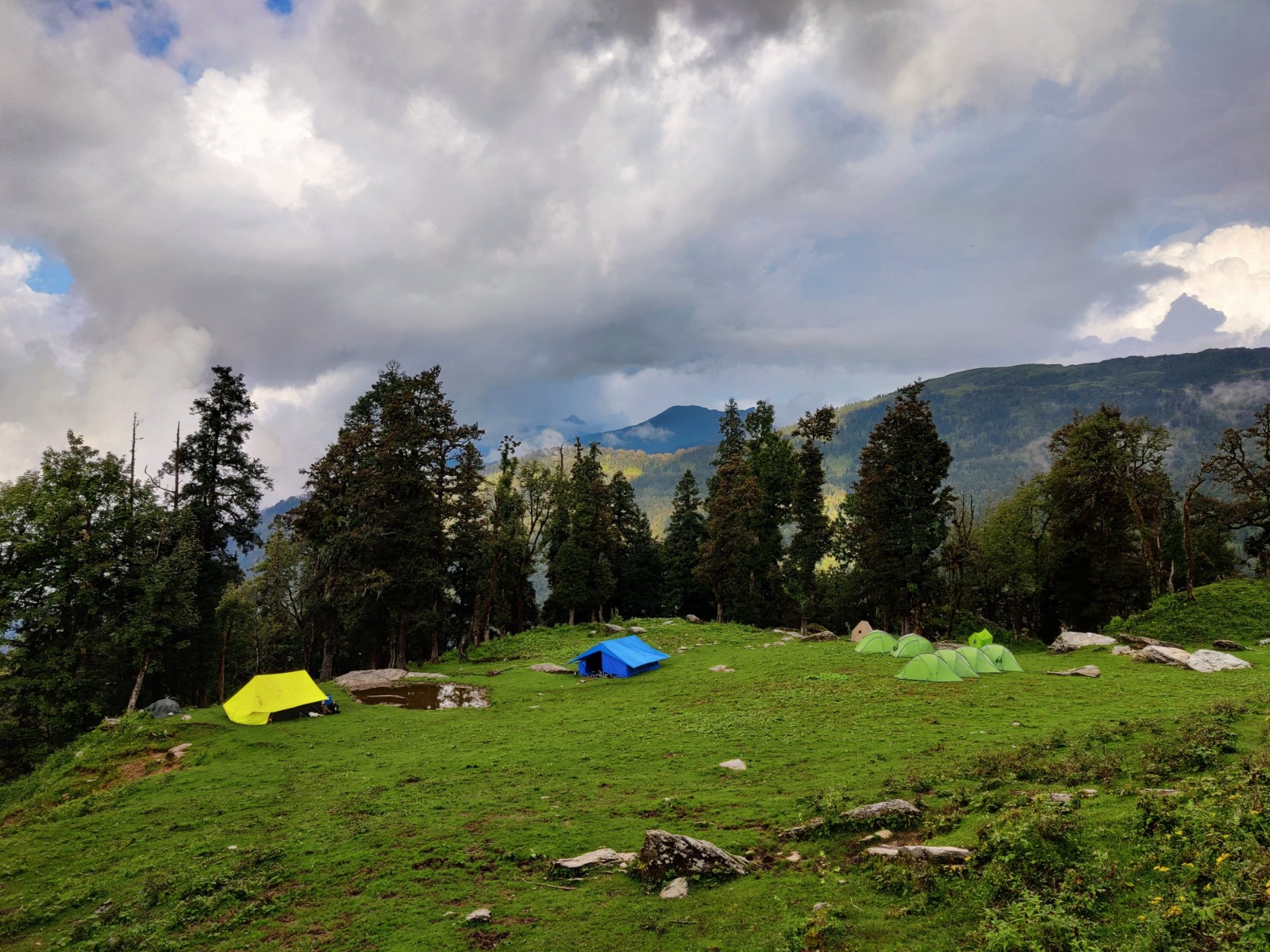
While those classic Himalayan expeditions used to mean pitching tents and lugging along those heavy supply trains, the Markha Valley ends up feeling pretty different. Not just another trek, but a living, community-run homestay scene. Switching from a more traditional camping expedition to a teahouse style trek, changes the whole mood on the trail that’s hard to put in words. Like, you’re still hiking hard but the way you move from one stop to the next feels a lot more local, more lived-in, and less like a big planned camp thing. Here is why picking teahouse homestays over camping can really level up the entire journey:
In a traditional camping setup, trekkers have to haul heavy four-season tents, sleeping pads, liquid-fuel stoves, plus days of rations.
● The Teahouse Advantage: With homestays hosted by local families in villages like Skiu, Markha, and Hankar, most essentials are already sorted. In practice, you’re mainly carrying personal layers, hydration, and a sleeping bag liner in a 28 L – 35 L daypack.
● Physical Energy: Walking at 4,000+ meters with about a 6 kg daypack rather than a 15 kg expedition load can make a noticeable difference in fatigue. And honestly, it also helps acclimatization feel calmer, because you’re not constantly dragging extra weight up and over everything.
Camping honestly insulates you from the land; teahouse trekking kinda drops you right into it, like no filter.
● Living the Ladakhi Way: You end up spending your evenings parked around traditional mud-brick hearths (Gyakhsa), inside genuine stone and timber houses. Sometimes it feels quieter than expected, and yeah you just sit there.
● Delicious Food: that actually connects instead of rehydrated camp meals, you get hot, fresh, home-style cooking with local families. You might have skyu (a traditional vegetable and dough stew), thukpa, freshly made local flatbreads and endless cups of warm salted butter tea (Gur Gur Chai).
Bigger camping operations are often dependent on outside urban agencies so the real money from the trek doesn't always reach the village level. In other words, a lot of the financial benefit lingers in places like Leh or Delhi, rather than staying nearby.
● Equitable Income: In the Markha Valley the villages run a community-controlled homestay rotation thing. It makes sure that trekking earnings are shared in a level manner among basically all the families involved, not only a handful of people who somehow end up chosen all the time.
● Preserving Mountain Villages: That steady flow of income, it’s not just nice to have but it actually helps households keep their inherited homesteads and long-used farming practices. Otherwise, some folks would be pushed to leave, head toward the city, for wages and then the old way quietly disappears.
Markha is kind of a dry, cold desert but at 4,000+ meters the situation can pivot pretty fast. By night, the temperatures drop well below freezing, and strong winds can come sliding down from the mountain passes with zero patience or mercy.
● Cozy warmth and shelter: Sleeping inside a mud brick house with thick walls, which has been refined through centuries to keep heat in against those cold desert gusts, feels way less grim than a canvas tent that keeps flapping over frozen ground, most of the time you never really settle.
● Rest and adjust yourself: Getting one real warm night indoors helps your body rebound, and it also supports your adjustment to the thinner air. It can even reduce the odds of altitude fatigue hitting you in a more brutal way because your system gets a bit more time to calm down.
When you set up big camps, you end up leaving heavier localized effects like ground compaction, fuel smoke, and the messy work of solid waste management, especially near the clean river stretches where people don’t want trash.
● Reduced impact: Homestays rely on what the villages already have existing services, solar-powered setups, and traditional dry-compost toilet systems that use water very carefully in this rain-shadow desert.
● No single-use of plastic: When you stay in homes, you can refill your bottles with boiled, filtered water straight from the kitchen stove. That way you don’t need to purchase those one-time plastic bottles along the trek so the trail stays plastic free.
The Markha Valley Trek is usually described as moderate but it can get pretty demanding. It really doesn’t require hard technical climbing, but the main trouble tends to come from extreme altitude and those sharp cold desert style weather shifts, plus the fact that the trail can feel pretty rugged, and a bit uneven too. A few of the bigger problems you might run into along the way, and how people usually deal with them are listed below.
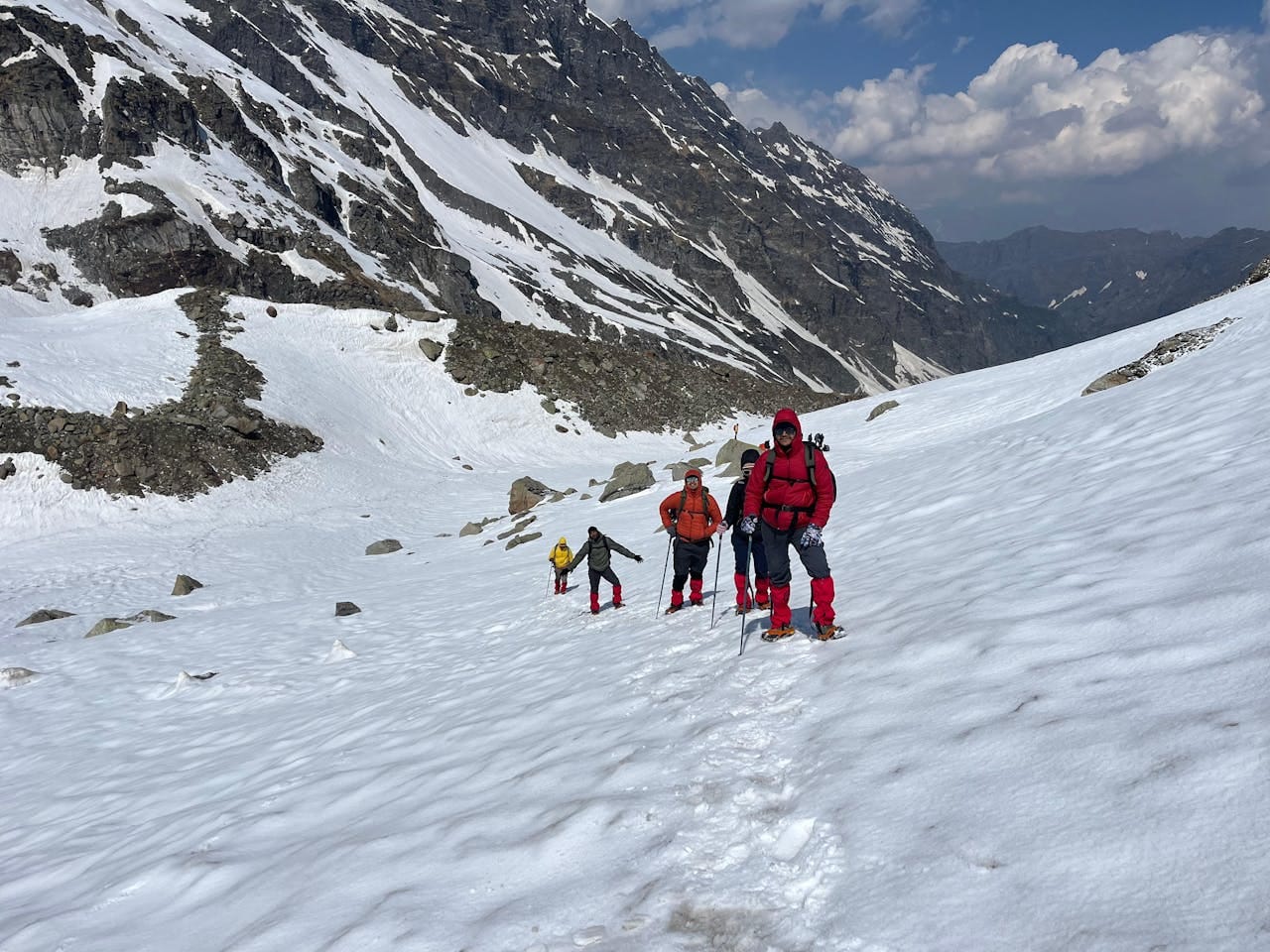
The Challenge: You start at about 3,500m near Leh, then you climb toward a higher point of roughly 5,260m (17,250 ft) at Kongmaru La. After that, the air feels a lot lighter, thinner than before. If you go too fast, or push too hard, too early you can end up with a headache , nausea , restless sleep, or sometimes even stronger signs of altitude sickness.
How to Overcome It:
● Mandatory rest: Try to allow 48 hours for real resting in Leh before you take your first step on the trail.
● Pacing (Sol-Sol): Keep to a slow, steady rhythm, almost like a trance walk—especially on the climb toward Nimaling and Kongmaru La . If you feel winded or like you’re getting pushed, don’t push through just ease off right away.
● Hydration: you should aim for about 3–4 liters of fluids each day. The dry mountain air can dehydrate you pretty fast, even if you aren’t sweating much, or maybe not at all.
● Medication: it’s probably smart to talk with a doctor before you take or carry Diamox (Acetazolamide), so the acclimatization can go along quicker.
The Challenge:Depending on the season and how the snow actually decides to melt, you may end up through the Markha River, or one of its smaller tributaries. The water is bone chilling cold, and the currents can look almost harmless until you’re already stepping on those loose, slippery river stones.
How to Overcome It:
● Footwear strategy: unclip your backpack’s waist strap before you start crossing, so if you slip you can get rid of it fast. Don’t cross even barefoot for a few seconds—carry light river sandals or water shoes, with a strap that really stays snug and secure.
● Trekking poles: use two trekking poles to keep a dependable three point base, basically hands and feet placed like you mean it, so the current can’t push you around so easily.
● Timing: cross early in the morning, when glacial melt is at its lowest, before afternoon temperatures start swelling the river again.
The Challenge: you’re walking 6 to 8 hours each day for multiple days, so endurance gets tested in a steady way. On top of that, descending from Kongmaru La includes steep loose scree (it’s like gravel) that really can strain your knees, and also cause sudden little slips that feel unfair.
How to overcome it:
● Pre-trek training: about 6–8 weeks ahead, build cardiovascular fitness, think running or cycling, and also do leg strengthening like squats, lunges, and step-ups with a weighted backpack.
● Trekking poles: these are essential for absorbing impact on steep downhill segments. When they’re used properly, they can reduce up to around 20–25% of the load on your knees, and honestly that is a pretty big difference over time.
● Proper footwear: wear sturdy high ankle trekking boots, and make sure they’re fully broken in before you go. It helps avoid blisters too, and it also supports less ankle rolling when the ground gets kinda awkward.
The Challenge: In cold desert areas at high altitude it ’s all about this sharp back and forth. Like, direct midday sun feels scorching, but once night comes at Nimaling the temperature can drop below freezing, roughly 0°C to -5°C. And because the UV is so high, you can get sunburn or even sunstroke pretty fast, even if you think you’re fine.
How to Overcome It:
● The Layering System: Use a moisture-wicking base layer, then an insulating fleece mid-layer, and for the outside go with a windproof and waterproof down jacket shell.
● Sun Protection: Bring Category 3 or 4 UV protected sunglasses, a wide brim sun hat ,a neck buff for dust and wind, and reapply SPF 50+ sunscreen consistently, like every so often during exposure.
The Markha Valley isn’t only a physical workout, it’s kind of a masterclass in slow travel, you know. It strips away the digital noise and then basically forces you to tweak your inner clock to the pace of a walking stick hitting stones, river currents rolling along, and sunrises spilling over those mountain walls. When you finally head back to Leh, dusty, sunburnt, and honestly worn out, you’ll notice the trail gave you a lot more than just another notch on your trekking belt.