Crossover Trek in Himachal Pradesh Buran Ghati Pass Trek
Crossover Trek in Himachal Pradesh Buran Ghati Pass Trek
18
Jul

The Buran Ghati Trek is the ultimate crossover wonder of the Himalayas in the region of Himachal Pradesh. It pulls you into a high speed, adrenaline rush kind of excursion from the rich greenery of Pabbar Valley all the way up to the stony, wind battered heights in Sangla Valley. You start this 41 km trek at 9,200 feet, from the heritage-ish village of Janglik, and you keep going until you reach a top height of 15,000 feet, more or less, over the full route. People often call it the most enchanting alpine meadow in India, especially when it’s tied with those seven sacred glacial lakes that together form the Chandranahan Lake. The most actual pass crossing, it’s like a near vertical 70 degree snow face, and it sets up this grand run of serious technical rappels, and then sliding over ice too, which drops you about 3,000 feet in just one afternoon. Overall the trek is categorised as easy to moderate and it’s a 8 day trek that really asks for strong heart, lung endurance, because you’ll be dealing with over 6,000 feet of vertical ascent. If you want, you can do it in June, because the big snow bridges can make crossings a bit more manageable, or in the last of spring when the air is clearer and the Kinnaur-Kailash Mountain Range shows itself more sharply. In the end, this trek promises an unmatched, mind blowing kind of 360 degree panoramic views and a truly standout trekking experience.
The Buran Ghati trek is famous because it manages to pack a whole lifetime’s worth of varied Himalayan scenery into just one week. If you ask people who actually finished it, they’ll usually mention five big, legendary moments—like they can’t really leave them out:
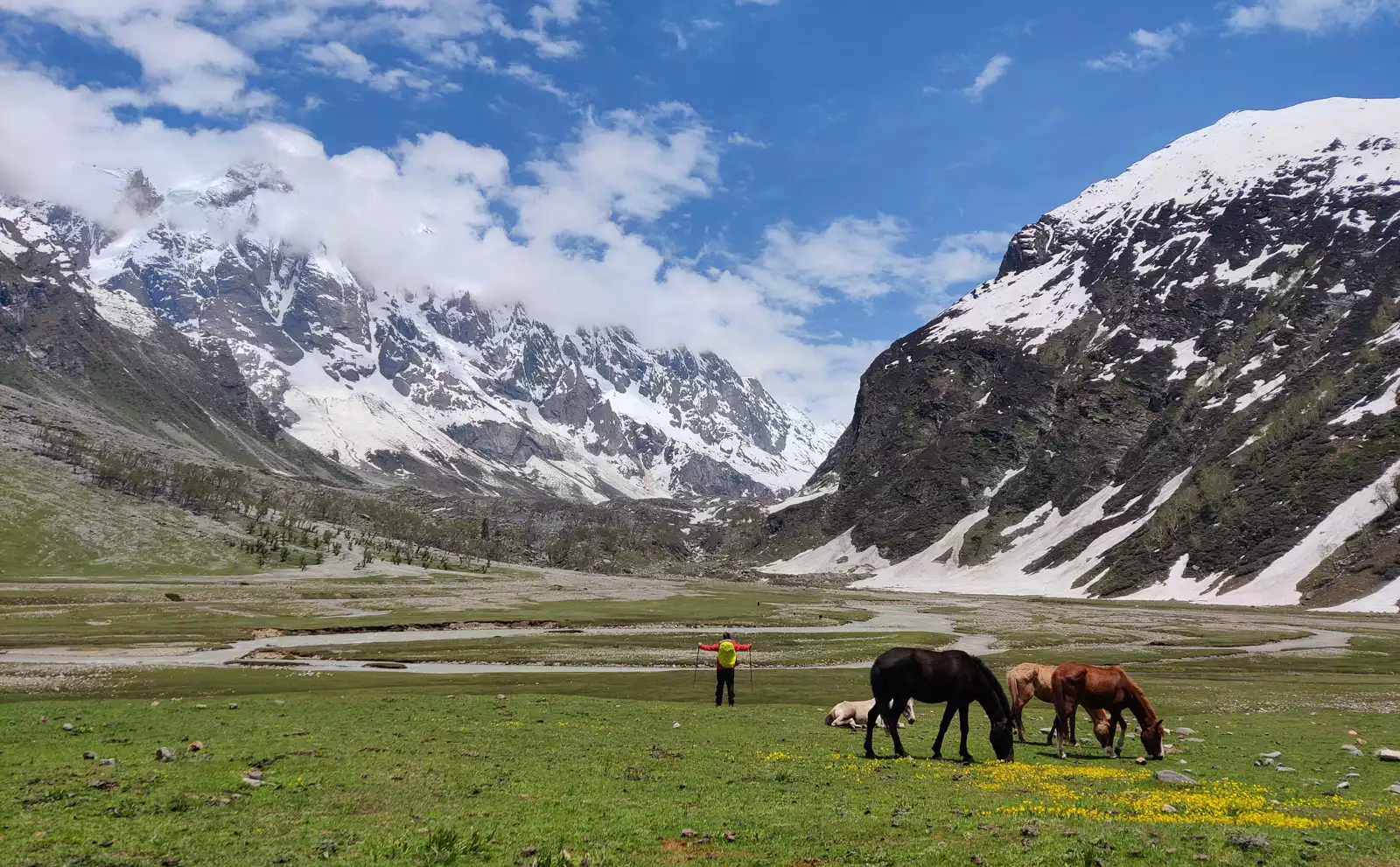
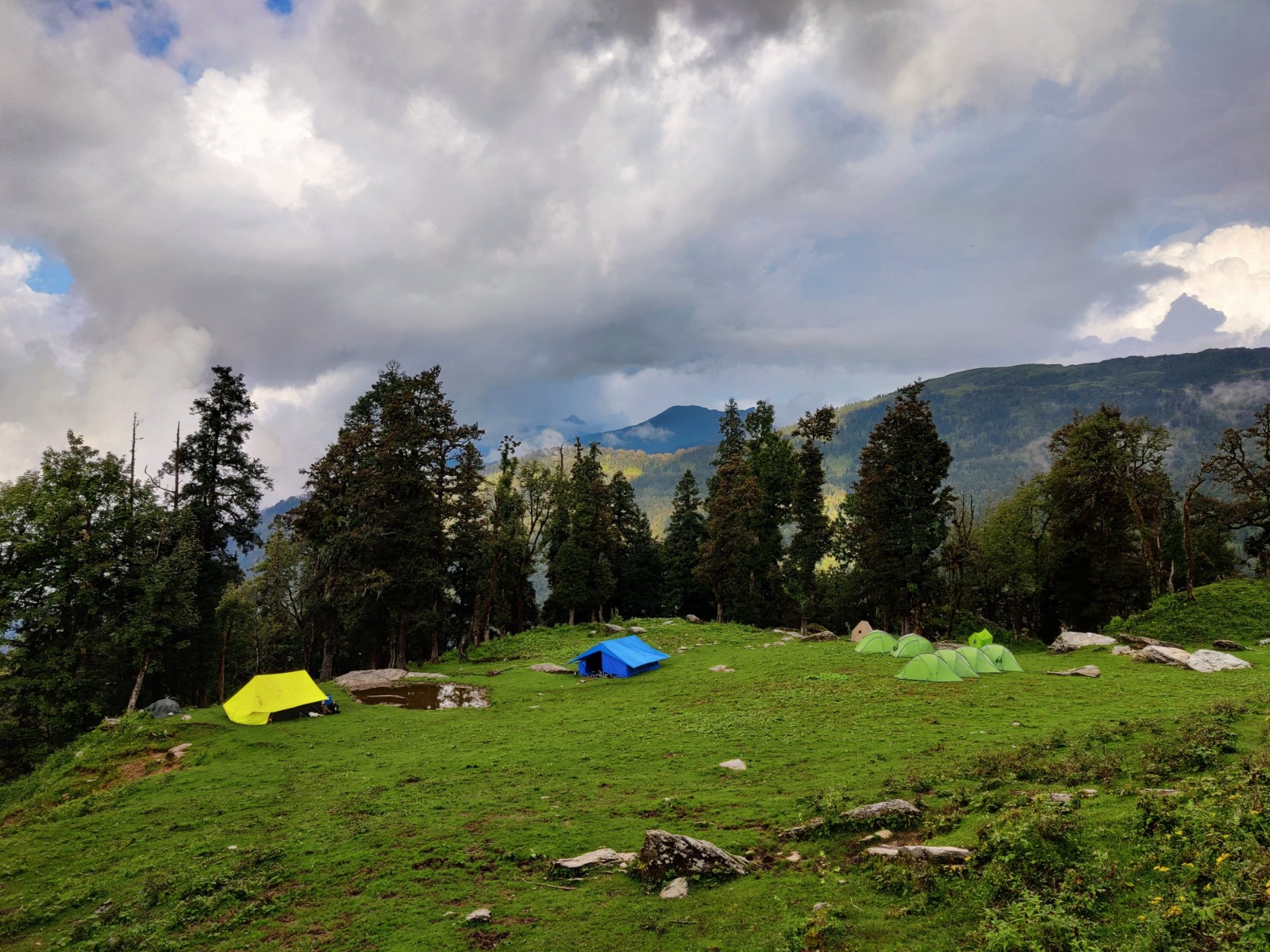
Before you hit the harder rock and ice parts, you spend your second day trekking through Dayara Thach ( meadow ). It’s a huge, rolling carpet of deep green grassland, it really feels like some manicured golf course, but with dark pine forests on the sides and snow-capped summits sitting far away.
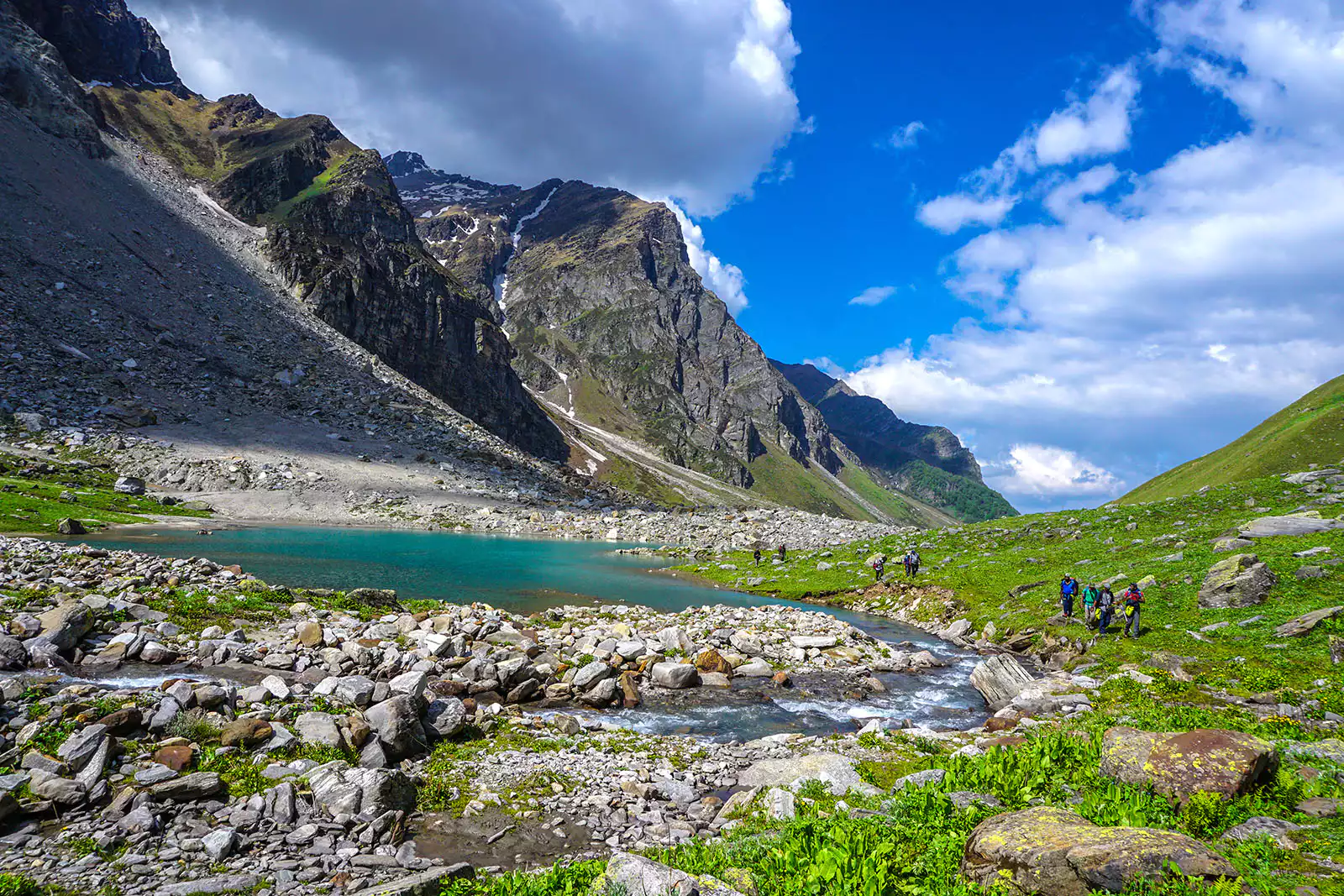
Settled inside of dark, jagged rock, Chandranahan is not just one lake. It’s a cluster of six pristine glacial tarns, like little mirrors tucked together. Locals consider it the holy origin of the Pabbar River, so the climb to reach those quiet, emerald-blue waters becomes a kind of visual payoff, and also an essential acclimatization stretch.
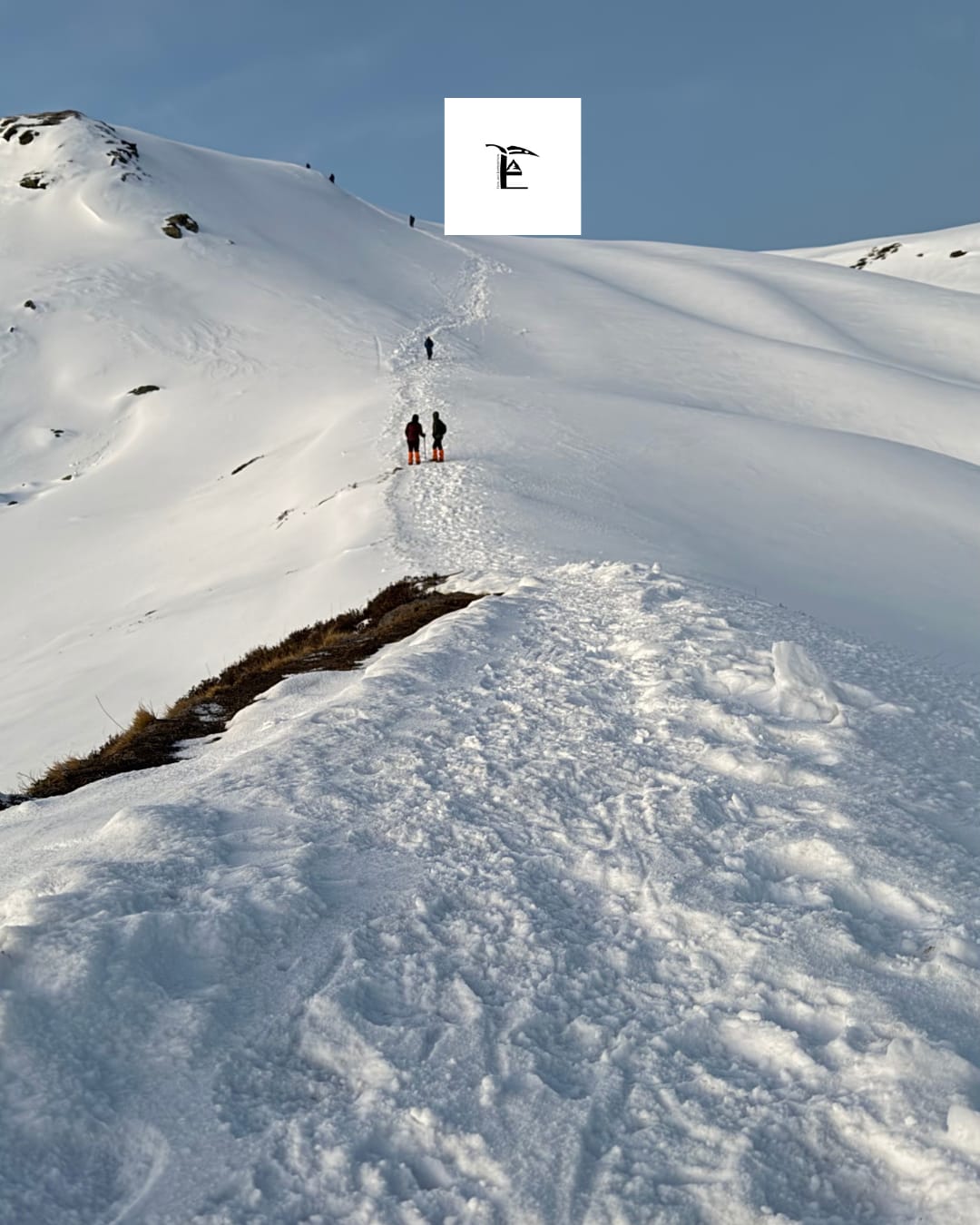
During spring and early summer, getting over the real Buran Ghati Pass feels like a proper mountaineering adventure which you have not forgotten. On the Kinnaur side, the drop is basically near-vertical, a 400-foot sheet of ice. Trekking guides set up the safety ropes, so you can rappel down the steep face and it’s an incredibly thrilling moment.
This is a real crossover trek, you start in the lush, muggy, deeply forested Pabbar Valley close to Shimla, and you end up in the stark, wind-scoured, Tibetan-influenced Baspa Valley in Kinnaur. The abrupt change in landscape, climate, and environment, like it’s happening in one continuous run of day which seems to be awful.
On the last descent, the higher altitude snow slowly gives way to lower valley forests, and those paths eventually bring you right through the lively apple and apricot orchards of Barua Village. You walk under branches that feel heavy with fresh mountain fruit, all while traditional Kinnauri wooden homes sit around you, and it becomes this warm, calm, quietly grounding way to end an intense journey.
Location: Himachal Pradesh
Base Camp: Janglik
Max. Altitude: 15,000 ft.
Duration: 8 Days
Trek Distance: 41 Km
Difficulty Grade: Easy to Moderate
Best Time: May to July
Experience: Stepping into the trail you feel like you bumped into something older. Once you leave the smooth patch of Rohru behind and start steering over rough dirt tracks, following the roaring Pabbar River, you finally reach Janglik. Honestly the first thing that grabs you is the village traditional wood and stone structured house.
Experience: You climb through a dense, shaded cover of pine and blue cedar trees, and it feels long enough to forget time. The view from Dayara Thach, a massive, rolling stretch of velvet-green grass that goes all the way to the feet of the snow peaks.
Experience: The whole day is about shifting landscapes as you walk alongside rare silver birch (Bhojpatra) trees , one after another. But the real moment comes when you reach the Litham campsite. It sits at a dramatic mountain meeting point, and it feels wild right away on your left, a huge roaring waterfall drops down from Chandranahan Lake.
Experience: After that vertical ridge climb, you kind of get this wow moment, when you keep on slogging along the tumbling waterfall side and then, eventually you reach the sacred Chandranahan Lake. At 13,000 feet, when you look down into pristine, mirror-like glacial water with dark jagged mountain walls all around framing it, it just feels spiritual, honestly.
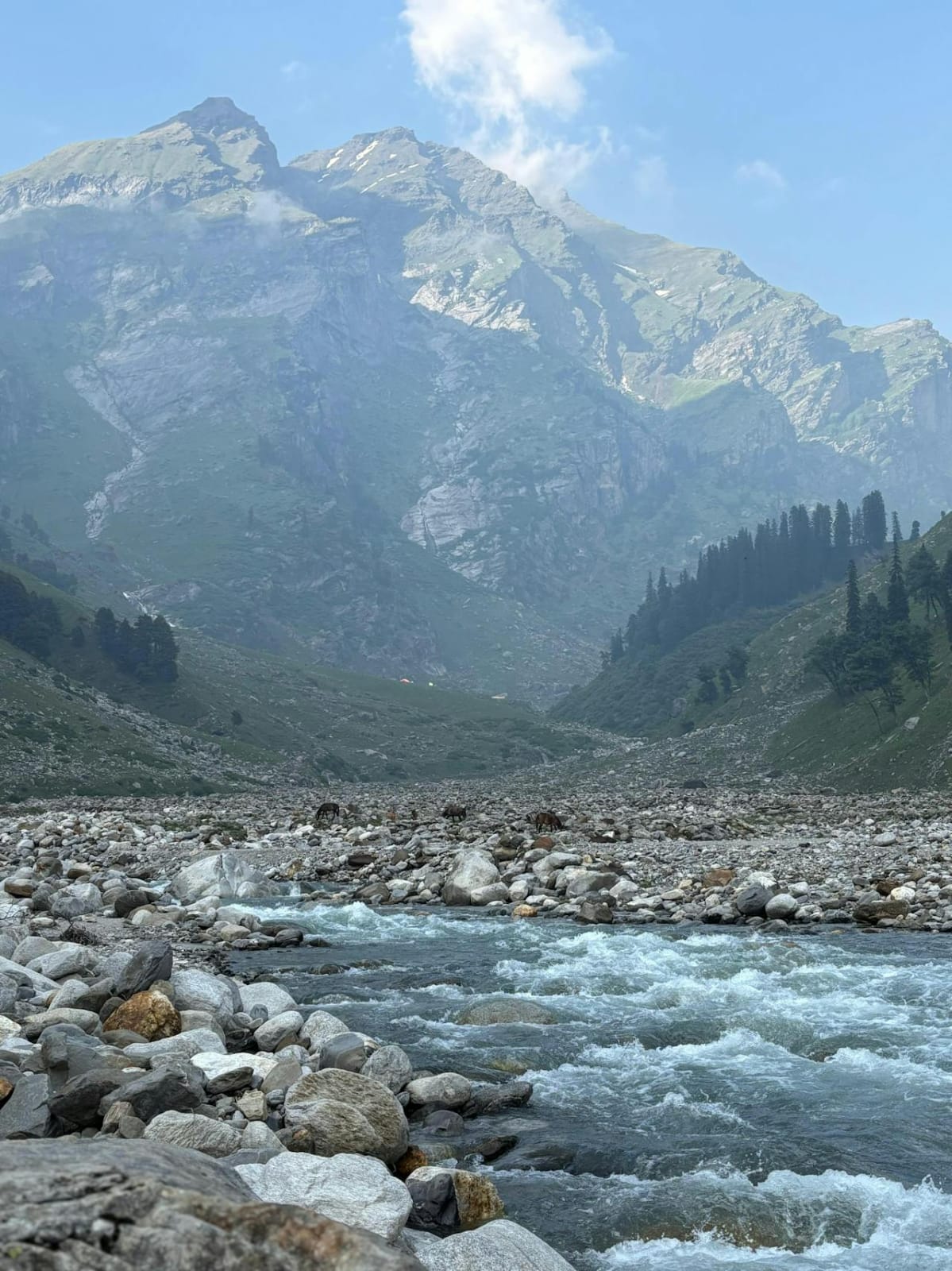
Experience: On this day, you leave the last traces of green behind. The big moment is the sharp, dramatic switch into a moon landscape of grey boulder beds and alpine moraine, then it ends at cold, wind-cut Dhunda base camp where the narrow V-notch of the Buran Ghati Pass sits right above your campsite.
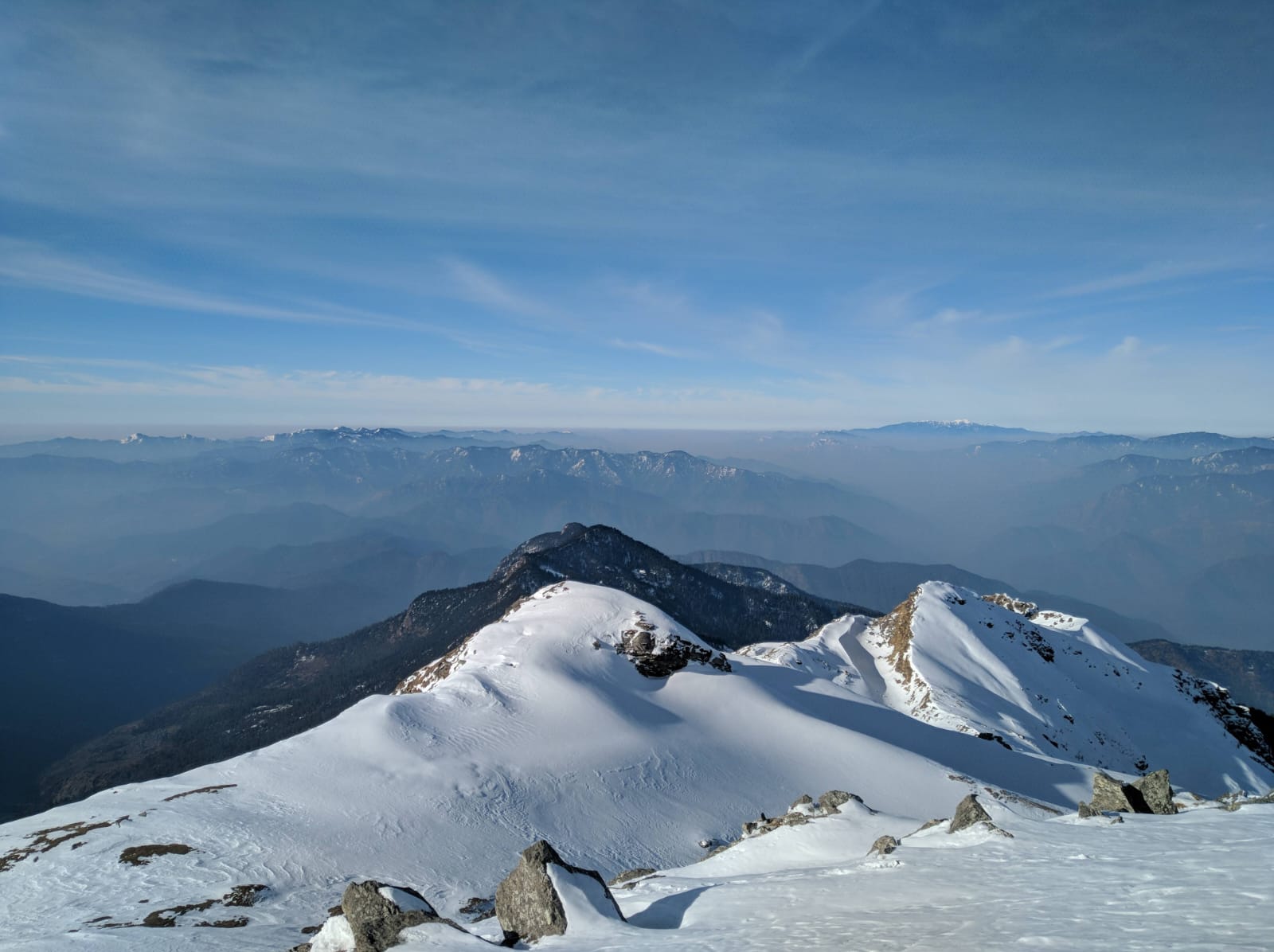
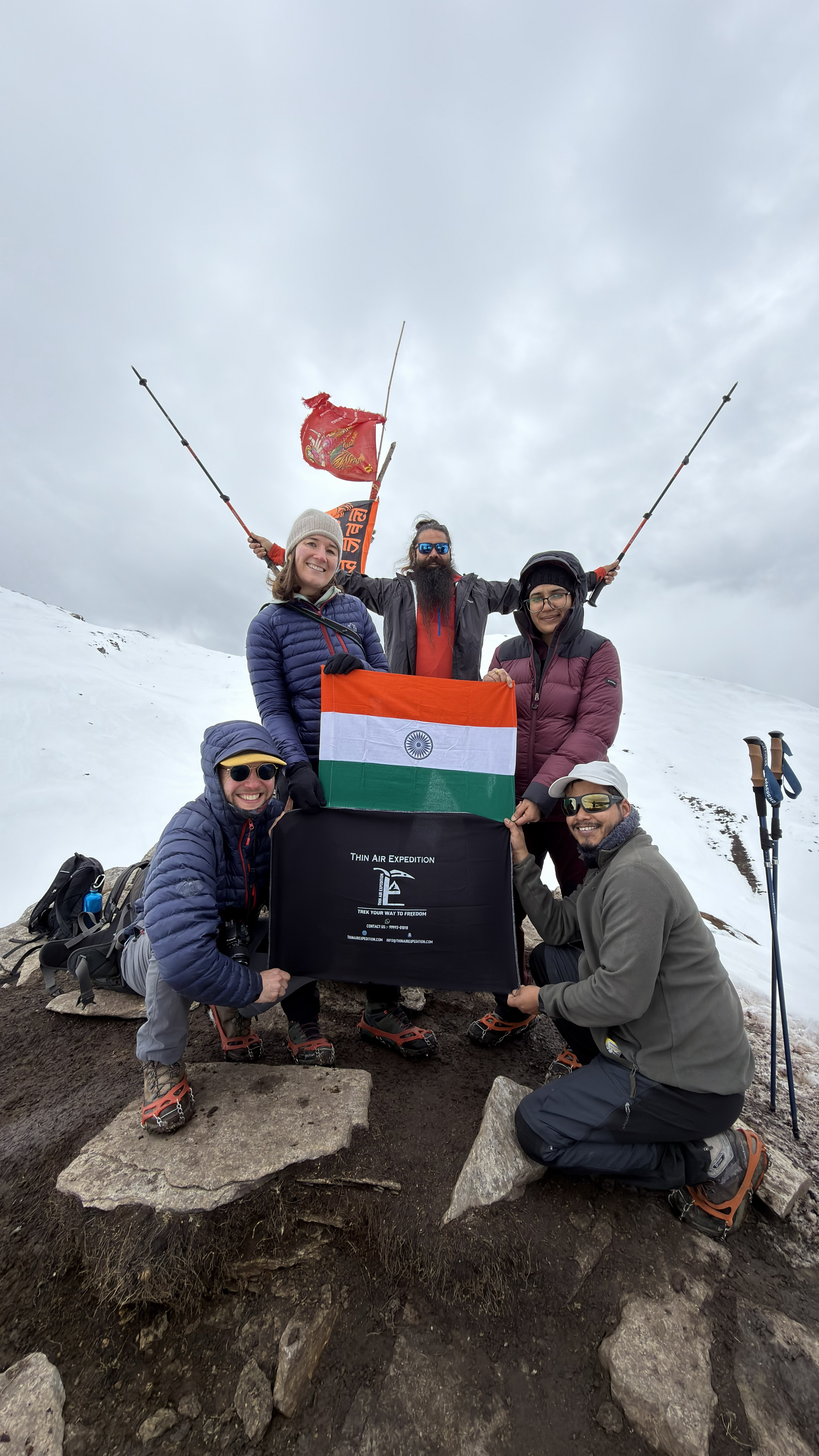
Experience: This is basically the top of the entire trek. First you push through that lung-bursting summit of the 15,000-foot pass to get a view of the massive Kinnaur Kailash range. Then there’s the legendary adrenaline rush: you rappel down a 400-foot snow wall, and after that you go through a chain of quick, exciting snow slides that drop you straight into the Munirang River camp, on the Kinnaur side.
Experience: Walking Through Apple Orchards. Once the final descent is done , the harsh alpine vibe eases into lush hazelnut woodland and eventually lands you right in Barua Village, in the middle of apple and apricot orchards. It’s quiet here, you walk under branches heavy with mountain fruit, and then your drive back to Shimla feels like a gentle, calm closing note to a pretty intense mountain journey.
When you’re planning your trek across the Buran Ghati Pass, that early summer to mid-summer stretch in May through July. Here’s the month by month detailing if you decide to explore during this window:
If you’re after a high intensity, proper alpine mountaineering vibe, May is basically the best month to choose.
The Terrain & Snow Cover: Snow fields take over the trail starting from the Litham campsite and continuing all the way up toward the pass. The well known 400-foot ice wall near the Buran Ghati summit is fully formed, and it tends to be at its thickest.
The Experience: Expect to step across firm, crisp morning snow crusts, use frozen snow bridges to cross, and do some careful route finding around glacial streams. The steep drop through the pass really leans on the anchor ropes, and over on the Kinnaur side you may end up seeing massive fast snow slides.
Weather & Temperature: Most days feel bright and clear, still the nights are honestly quite biting. In the lower camps you might catch temperatures around 5°C to 15°C in the daytime, while the higher camps like Dhundi can fall to roughly -5°C to 5°C once the sun goes down.
The Highlight: That real winter wonderland look, but with the lower valleys just starting to stir again after winter, it feels like everything is slowly coming back.
June is, in most accounts, the absolute sweet spot for the Buran Ghati trek. It balances serious adventure with a lot more comfort.
The Terrain & Snow Cover: the snow pulls back up towards the higher elevations. While the base camps do open out, there’s still enough snow lingering at the pass so the famous 400-foot snow-wall rappel actually stays on, and the later snow slides still feel fully functional.
The Experience: the lower valleys basically wake up. The rolling Dayara and Litham meadows turn into a vibrant velvety green, and they’re heavily scattered with alpine wildflowers. With glacial melt happening, rivers and the waterfall leading to Chandranahan Lake run full, loud and pretty spectacular.
Weather & Temperature: this is the most pleasant season for moving on the trail. Daytime temperatures stay comfortably warm, around 10°C to 18°C, so you can hike in light layers without too much fuss. Nights at higher elevations remain cold 0°C to -3°C but it’s still way more manageable than in May.
The Highlight: going from a lush blooming green flower bed straight into a thrilling wall of ice in about 48 hours, it’s honestly a shock in the best way.
July is when the South Asian monsoon starts showing up, and it completely changes how the trek feels.
The Terrain & Experience: early July might still give you open windows sometimes, but the pass is generally avoided by mid to late July. The snow wall melts away fully, leaving loose wet rocks and scree, which are gravelly slopes, and that makes the steep Kinnaur descent slippery and kind of unstable.
Weather & Challenges: the biggest threat in July isn’t really the mountain trail conditions only. The long 150 km road from Shimla to Janglik, and on the way back from Kinnaur too, is really vulnerable to major landslides and sudden flash floods, so you end up getting stuck pretty easily.
The Highlight: If you happen to catch a rare, clear stretch in very early July, then the meadows look at their absolute greenest, the mist sits over the valleys, and the weather is both humid and warm.
Pack out all trash: bring your own waste pouch so you can pack out every tiny bit of plastic , wrapper, and even wet wipe. Don’t just leave it later anywhere, especially not at fragile, high altitude camps like Dhundi—leave no trace.
Keep water clean: carry reusable bottles and use purification tablets rather than those disposable bottles. And for the toilet situation, set your tent at least 200 feet away from natural streams, so runoff won’t mess with the water downstream.
Respect sacred spaces: don’t step into, don’t swim in, and don’t clean your gear near the holy waters of Chandranahan Lake. It’s treated as a deeply revered spiritual place by local villagers, so yeah, keep your distance.
Honor local culture: ask for clear permission before photographing local residents or traditional wooden homes in Janglik and Barua. Also dress modestly when moving through villages, because it shows respect.
Support the crew fairly: pick agencies that give ethical wages and provide decent warm gear for guides and porters. And stick hard to the 10–12 kg weight limit for offloaded bags, that helps protect pack animals and the staff too.
Keep the wilderness calm. Don’t go blasting loud tunes on Bluetooth speakers, it sorta ruins the silence, and it really helps keep the mountain quiet. Also it reduces stressing local wildlife, something people tend to overlook but it actually matters a lot.
The Buran Ghati Pass Trek is like a masterclass in the way mountains change as you go. One moment you’re sort of walking through the green living forests of the Pabbar Valley and then suddenly, you’re staring at wind carved rock faces in Kinnaur it feels less like merely crossing a ridge around 15,000 feet and more like you’re watching the Himalayas grow in real time, raw and still evolving. Step into this trek with real physical preparation, keep a grounded, kind humility about the high altitude, and quietly promise yourself you’ll treat the valleys gently. Leave everything in the same condition you found it, no shortcut, no careless trace. If you do that, this rather big shift across the region will give you, like a lifelong sense of getting back up power and honestly some of the most eye catching views on Earth.
So lace up your boots, pack with intention, and just step onto the trail. The mountains are waiting for you.