Kedarkantha Trek Packages
Kedarkantha Trek Packages

11
Sep

There is something different about walking through the Himalayas in winter. The familiar landscape changes completely when snow settles over the forests, trails and mountain meadows. The air becomes sharper, the mornings quieter and every step feels like a small achievement. Among the many winter trekking experiences in Uttarakhand, the Kedarkantha Trek has become a favourite for people who want to experience snow, high-altitude camping and a Himalayan summit in one journey.
The Kedarkantha Winter Trek is especially appealing because the adventure begins well before the summit. The journey towards Sankri takes you deeper into the mountains, away from the noise of everyday life. From there, the trail moves through beautiful forests, snow-covered landscapes and high-altitude camps before leading towards the summit.
Whether you are searching for Kedarkantha Trek Packages, planning a Kedarkantha Trek from Dehradun, or travelling from Delhi for your first Himalayan snow trek, knowing what the journey involves can help you prepare better. This guide takes you through the experience, route, itinerary, difficulty, preparation, packing essentials and important things to consider before booking your Kedarkantha adventure.
Why Choose the Kedarkantha Winter Trek?
Kedarkantha is not attractive simply because it receives snow. Its real charm lies in the way the entire landscape unfolds during the trek. You begin in the Himalayan village environment around Sankri and gradually move into forests, open stretches and higher mountain terrain. With every day, the surroundings become quieter and the feeling of being away from ordinary life becomes stronger.
For someone experiencing a Himalayan trek for the first time, this gradual progression can be particularly rewarding. You get to experience several aspects of mountain trekking within one journey: travelling through remote mountain roads, walking through forests, camping in cold conditions, dealing with altitude and eventually attempting a summit.
The winter season adds another dimension to the experience. Snow changes the appearance and texture of the trail, making even familiar-looking landscapes feel completely new. Early mornings at camp, frozen surroundings and walking through snow-covered forests become memories that stay long after the trek is over.
The summit is, of course, one of the biggest attractions. After days of walking, reaching the higher slopes and looking across the Himalayan landscape gives the journey a sense of purpose. It is not just about standing at the top; it is about remembering every step that brought you there.
Kedarkantha Trek Packages: What Should Your Package Include?
When people search for Kedarkantha Trek Packages, the first thing they often compare is price. However, the price alone does not tell you whether a trekking package offers good value. Two packages can have very different prices because their inclusions, transportation, accommodation, staff support and equipment arrangements may differ.
A well-planned Kedarkantha trekking package should clearly explain the entire journey. This generally includes the starting point, transportation arrangements, accommodation, meals, trekking support and camping arrangements. Depending on the operator and package selected, certain equipment, permits and local operational charges may also be included.
Before booking, read the inclusions and exclusions carefully. Find out whether transportation begins from Dehradun, whether accommodation at Sankri is included, what meals are provided, whether camping equipment is arranged and what personal equipment you are expected to bring.
It is also worth understanding how the operator approaches safety and changing mountain conditions. A responsible trekking team should be willing to adjust the plan when weather or trail conditions require it rather than treating a fixed schedule as more important than the safety of trekkers.
At Thin Air Expedition, we believe a trekking package should give you clarity before you begin your journey. You should know where you are going, what is included, what you need to carry and what kind of support you can expect along the trail.
Kedarkantha Trek from Dehradun
Dehradun is one of the most convenient gateways for trekkers heading towards Kedarkantha. For travellers booking a Kedarkantha Trek from Dehradun, the journey usually continues by road towards Sankri, the mountain village associated with the trekking route.
The drive itself becomes part of the adventure. As you leave Dehradun behind, the landscape slowly changes from the familiar surroundings of the city to winding mountain roads, valleys, forests and small Himalayan settlements. By the time you reach Sankri, the atmosphere feels completely different from where the journey began.
Starting from Dehradun also makes things simpler for people joining an organised trek. Instead of arranging separate transportation for every section of the journey, you can meet the expedition team at the designated point and continue together towards the mountains.
If you are planning your Kedarkantha trek from Dehradun, avoid keeping your arrival schedule too tight. Mountain travel can take longer than expected because of road conditions, traffic and weather. Giving yourself some buffer makes the beginning of the trek much more comfortable.
Kedarkantha Trek from Delhi
For travellers coming from the capital, the Kedarkantha Trek from Delhi can be planned through Dehradun. Delhi has several transportation options connecting it with Dehradun, after which the journey continues towards Sankri.
A simple travel plan is Delhi to Dehradun, Dehradun to Sankri, and then the trekking route towards Kedarkantha. Depending on the package, transportation may be arranged from Dehradun or may be available from Delhi as well.
If you are travelling independently, plan your journey so that you reach the designated meeting point with sufficient time. Avoid depending on a last-minute connection, especially when your mountain transfer is scheduled for a particular morning.
The best part of beginning from Delhi is that the contrast becomes part of the experience. Within a relatively short span of travel, you move from one of India's busiest urban environments into a quiet Himalayan landscape where the rhythm of the day is determined by the mountains.
Kedarkantha Trek Route
The Kedarkantha Trek Route is appealing because the landscape changes progressively as you gain altitude. The journey generally begins from Sankri and moves towards the higher camps before reaching the summit.
A commonly followed progression is Sankri to Juda Ka Talab, followed by the higher camping area towards Kedarkantha Base Camp and then the summit. After the summit, the route descends towards the lower camps before returning to Sankri.
The forest section gives the trek much of its character. During winter, trees covered with snow create a completely different atmosphere from what you might experience during other seasons. As you climb higher, the forest gradually opens up and the views become broader.
The final approach to the summit feels different again. The terrain becomes more exposed, the climb requires greater concentration and the cold can be more noticeable, particularly during an early-morning summit attempt.
One of the pleasures of the route is that you are never experiencing the same landscape repeatedly. The trail keeps changing, and that gradual transformation is an important part of the Kedarkantha experience.
Kedarkantha Trek Itinerary
Day 1: Dehradun to Sankri
Your Kedarkantha adventure begins with the road journey from Dehradun towards Sankri. Rather than thinking of this simply as transportation, consider it the first stage of your Himalayan experience.
The route takes you deeper into the mountains, and the scenery gradually changes as the altitude and landscape change. Once you arrive at Sankri, you can settle into the accommodation, meet your trek team and prepare your equipment for the walking days ahead.
This is a good time to organise your backpack, check your winter layers and keep the things you will need the next morning easily accessible. A comfortable evening and proper rest can make a significant difference to the first trekking day.
Day 2: Sankri to Juda Ka Talab
The first trekking day takes you into the forest. After leaving Sankri, the trail gradually gains height, allowing your body to adjust to the change in terrain and altitude.
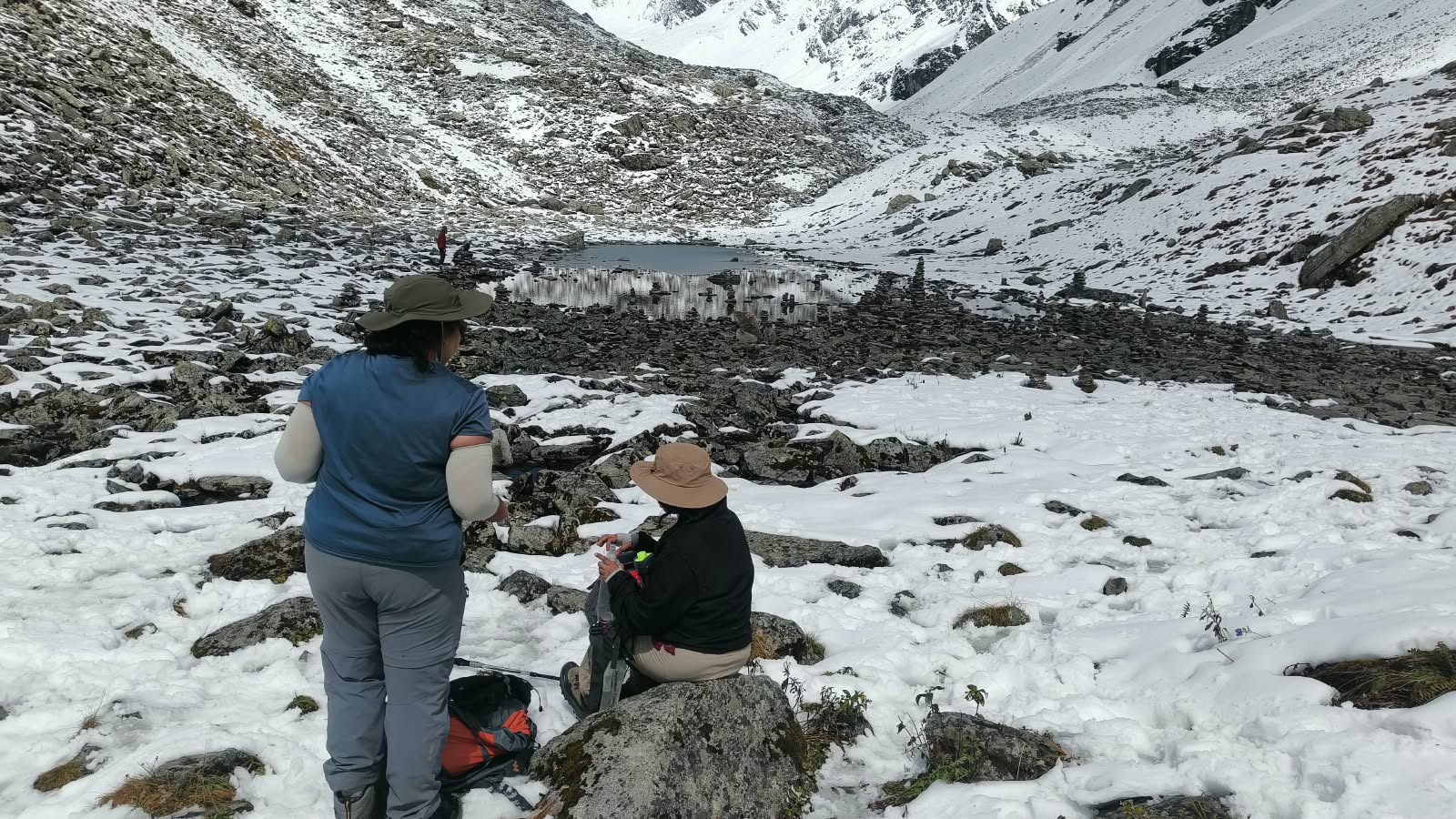
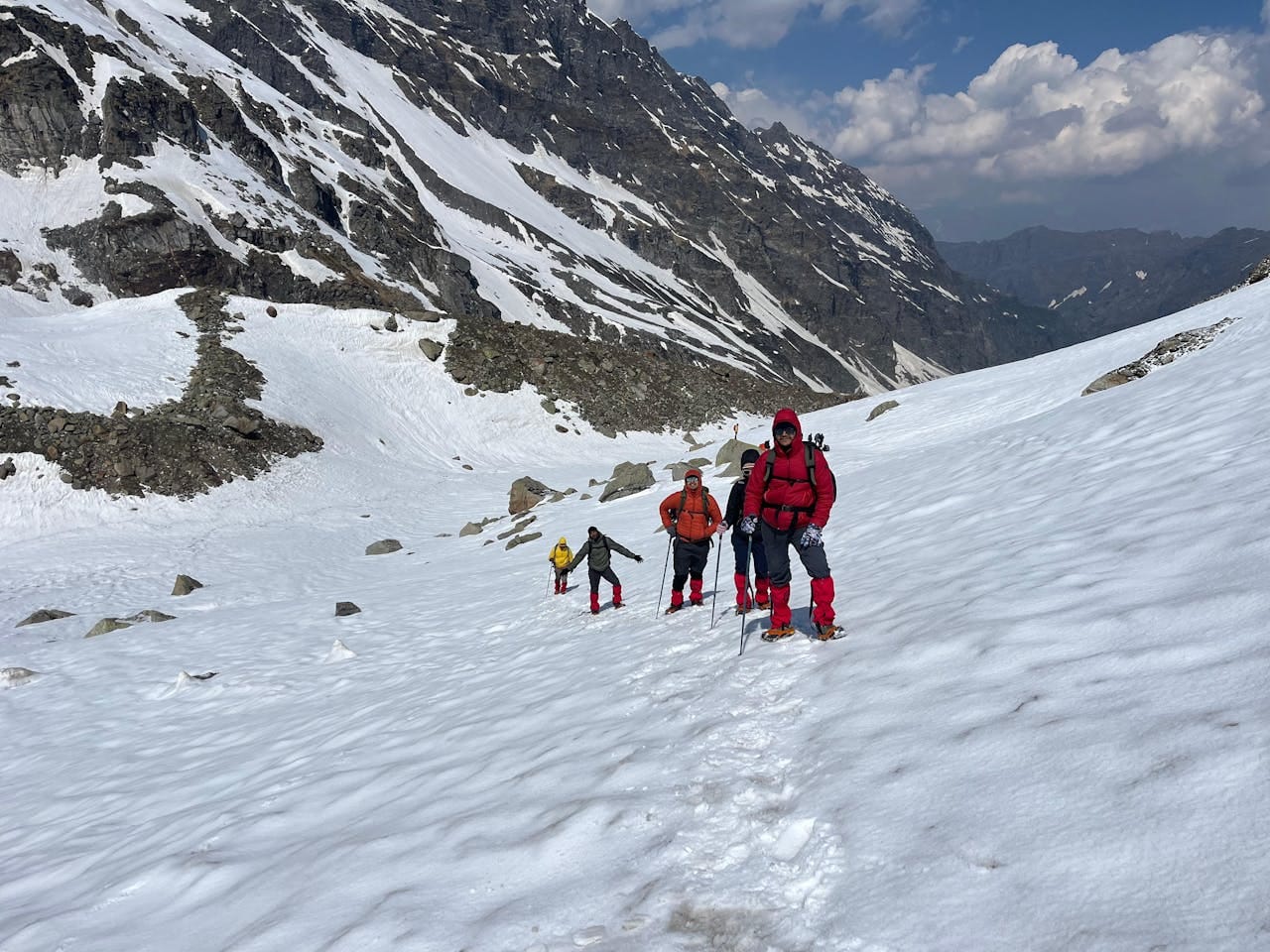
During winter, snow can transform the forest into one of the most beautiful sections of the trek. Walking beneath snow-covered trees feels very different from walking on an ordinary mountain trail. The silence of the forest, broken occasionally by footsteps and conversation within the group, creates a sense of being completely removed from everyday life.
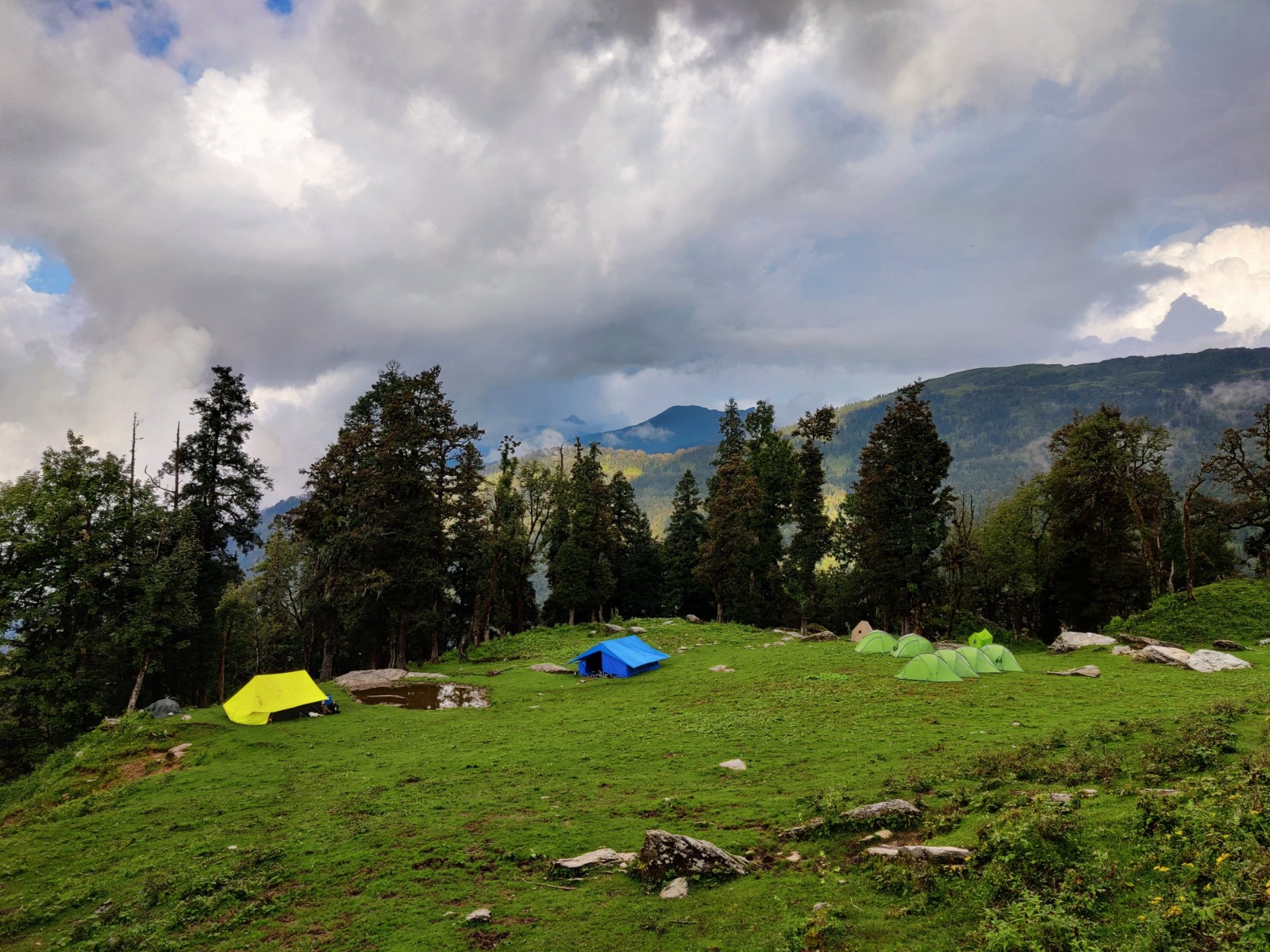
The day's objective is Juda Ka Talab, where the surrounding landscape offers an ideal setting to experience the first proper night of high-altitude winter camping.
Once you reach camp, the priority should be rest, hydration and staying warm. Avoid using all your energy exploring around camp simply because you are excited about the snow. The higher sections are still ahead.
Day 3: Juda Ka Talab to Kedarkantha Base Camp
The next morning, the trek continues towards the higher camping area. The trail becomes increasingly mountainous as you gain elevation.
Snow conditions can influence your walking speed significantly. A trail that looks short on a map may take longer when covered with snow, so maintaining a steady pace is more important than constantly checking how much distance remains.
As you approach the base camp, the landscape begins to open up. The forests become less dominant and the surrounding mountain scenery becomes increasingly visible.
Reaching base camp is an important moment because the next day is summit day. This is when you should prepare your backpack carefully, organise your warm clothing and make sure your essentials are easily accessible.
An early dinner and good rest are important. Summit day demands both physical energy and mental patience.
Day 4: Kedarkantha Summit
Summit day is usually the most anticipated day of the Kedarkantha Winter Trek.
The day begins very early, often while the surrounding mountains are still dark. Walking in the cold before sunrise can be challenging, but it is also what creates one of the most memorable experiences of the trek.
The higher trail requires concentration. Snow, steep sections, altitude and darkness can make progress slower than expected. Instead of trying to keep pace with the fastest person in the group, maintain a rhythm that works for you.
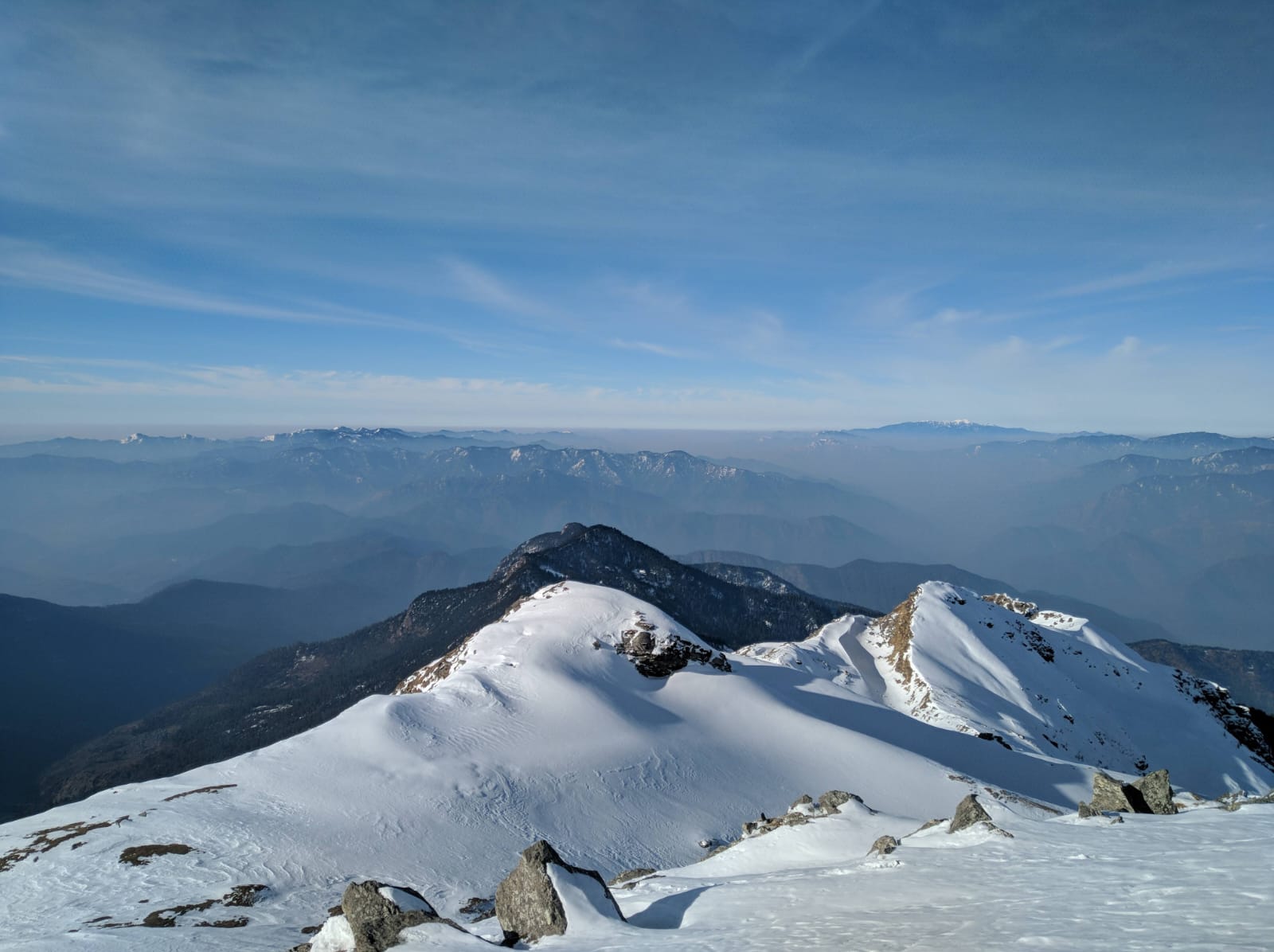
The final climb may feel demanding, but the moment you reach the summit changes the entire perspective of the journey. Looking across the Himalayan landscape after climbing through the early morning creates a feeling that photographs can never fully capture.
Spend your summit time responsibly. Enjoy the views, take photographs and appreciate the achievement, but remember that conditions at altitude can change quickly. The descent is an equally important part of the day.
After leaving the summit, you begin descending towards the designated lower campsite. The return journey may feel easier mentally, but tired legs still require careful movement.
Day 5: Descent to Sankri
The final trekking day brings you back towards Sankri.
By this point, your body may be tired, but the rhythm of trekking has become familiar. The descent gives you an opportunity to look back at the trail from a different perspective and realise how much terrain you covered in just a few days.
Reaching Sankri marks the completion of the trekking section. The simple feeling of arriving back at the village after the summit can be surprisingly satisfying.
Depending on the selected package, the group may stay overnight or continue according to the planned transportation schedule.
Kedarkantha Trek Difficulty: Can Beginners Do It?
The Kedarkantha Trek is often considered suitable for beginners, but that should not be mistaken for an easy holiday. It is still a high-altitude Himalayan trek, and winter conditions can make the trail considerably more demanding.
The difficulty comes from the combination of factors rather than from one particularly technical section. You may encounter snow-covered trails, continuous climbs, cold temperatures, uneven ground and a long summit day. Walking early in the morning adds another challenge because your body is still adjusting to the cold and altitude.
The good news is that you do not need previous mountaineering experience for the standard trekking experience. What you do need is reasonable stamina, preparation and the willingness to walk at a controlled pace.
For beginners, preparation should begin several weeks before the trek. Regular walking, stair climbing, basic strength training and cardiovascular exercise can all help.
The most important lesson is simple: do not underestimate the mountain because you have read that it is beginner-friendly.
Best Time for Kedarkantha Winter Trek
If snow is the main reason you want to experience Kedarkantha, winter is the season to consider.
The Kedarkantha Winter Trek is popular because snowfall can transform the route into a classic Himalayan snow landscape. Forest trails, campsites and open areas can take on an entirely different appearance when covered in snow.
However, snowfall is a natural phenomenon and cannot be controlled by an itinerary. Conditions can differ between seasons and even between individual departures. The amount of snow you encounter will depend on recent weather and conditions on the trail.
Rather than travelling with the expectation of seeing a specific amount of snow, prepare yourself for a genuine winter mountain experience. The cold, changing terrain, early mornings, camps and summit climb are all part of what makes the trek special.
Kedarkantha Trek Cost: What Determines the Price?
There is no single universal Kedarkantha Trek Cost because trekking packages can be designed differently.
Transportation is one of the major factors. A package beginning with transportation from Dehradun will naturally have a different cost structure from a package where trekkers reach Sankri independently.
Accommodation, meals, camping equipment, trek staff, local operational charges and other services also contribute to the overall price.
When comparing the Kedarkantha Trek Price offered by different operators, look at the complete package rather than comparing one number. Ask whether transportation is included, what type of accommodation is provided, whether meals are covered and what equipment you need to arrange yourself.
A transparent package should make these details easy to understand.
The objective should not simply be finding the cheapest Kedarkantha trek package. It should be finding a package where the price, services, support and overall experience make sense together.
Kedarkantha Trek Packing List
Packing for a winter trek requires a balance between warmth and weight. Carrying too little can leave you uncomfortable in cold conditions, while carrying unnecessary items will make every uphill section harder.
Your basic clothing system should include thermal layers, a warm mid-layer, an insulated jacket and a protective outer layer. Warm socks, gloves, a woollen cap and a neck warmer are also important for winter conditions.
Good trekking shoes are among the most important items in your backpack. Your footwear should provide adequate grip and stability for the conditions you are likely to encounter. Depending on the snow conditions, additional traction equipment may also be recommended.
Other essentials include sunglasses, sunscreen, a headlamp, water bottles, personal medicines, toiletries, identity documents, a power bank and waterproof protection for important belongings.
Pack thoughtfully. The mountains teach you very quickly that every unnecessary item has a weight.
Fitness Preparation for Kedarkantha
Your preparation for Kedarkantha does not need to be complicated. Consistency is more important than an extreme workout routine.
Start with regular walking and gradually increase your duration. Stair climbing is particularly useful because it prepares your legs for sustained uphill movement. You can also include squats, lunges and basic core exercises to improve strength and stability.
Cardiovascular activities such as brisk walking, cycling or jogging can help build endurance, depending on your current fitness level.
Try to develop the ability to remain active for several hours rather than focusing only on short bursts of intense exercise.
The objective is to arrive at Sankri feeling prepared—not exhausted from last-minute training.
Important Things to Know Before Your Kedarkantha Snow Trek
A winter trek requires flexibility. Mountain weather can change quickly, and the safest itinerary is sometimes different from the itinerary you originally imagined.
Listen to your trek leader, particularly when weather or trail conditions change. Do not leave the group without informing the team, and do not treat the summit as something that must be reached at any cost.
Cold weather can also make you underestimate dehydration. Continue drinking water even when you do not feel particularly thirsty.
Protect your eyes and skin from strong sunlight. Snow can reflect sunlight, making sunglasses and sunscreen important even when the temperature is low.
Most importantly, remember that trekking is not a race. Your goal is to experience the mountain safely, not to prove how quickly you can reach the top.
Responsible Trekking in the Himalayas
The beauty of Kedarkantha comes with a responsibility to protect the landscape.
A snow-covered mountain may look untouched, but every trekker leaves an impact. Carry your waste back with you, avoid unnecessary plastic and never leave food packaging behind.
Respect local communities, their homes and their traditions. Keep noise levels low and avoid disturbing the natural surroundings simply for photographs.
Do not damage trees or vegetation for firewood, photographs or camping convenience. Follow the trail and the instructions of your trek team.
Responsible trekking is not a separate activity from adventure. It is part of being a good traveller.
The best souvenir you can leave behind is nothing at all.
Why Choose ThinAirExpedition for Your Kedarkantha Trek?
A Himalayan trek should feel adventurous, but the logistics behind it should be dependable.
Thin Air Expedition approaches trekking with the belief that a good mountain experience begins with proper planning. From understanding the itinerary and preparing for the trail to managing the practical details of the journey, every part contributes to the experience.
When choosing our Kedarkantha Trek Packages, trekkers should have clarity about transportation, accommodation, meals, trekking support and equipment requirements before beginning the journey.
But ultimately, Kedarkantha is not about ticking another destination off a list.
It is about stepping away from routine, walking deeper into the mountains and giving yourself the space to experience something completely different.
That is the kind of journey we want to create at Thin Air Expedition.
Frequently Asked Questions About Kedarkantha Trek
Is Kedarkantha a snow trek?
Kedarkantha is widely known as a winter snow trek, and winter departures are particularly popular among travellers looking for snowy Himalayan landscapes. Snow conditions can vary depending on the season and current weather.
Can beginners do the Kedarkantha Trek?
Prepared beginners can take on the trek. Previous Himalayan trekking experience is not essential, but reasonable fitness, appropriate clothing and preparation for cold and altitude are important.
How difficult is the Kedarkantha Trek?
The trek is generally approachable for people with reasonable fitness, but winter conditions and the summit day make it physically demanding. The difficulty should not be underestimated simply because it is often recommended to beginners.
Where does the Kedarkantha Trek start?
The trekking section generally begins around Sankri, while Dehradun is commonly used as the gateway for organised trekking departures.
Can I join the Kedarkantha Trek from Delhi?
Yes. Travellers from Delhi can travel to Dehradun and continue towards Sankri. Depending on the selected package, transportation arrangements may also be available from Delhi.
What should I carry for the Kedarkantha Winter Trek?
Warm layered clothing, proper trekking footwear, gloves, a cap, sunglasses, sunscreen, a headlamp, water bottles, personal medication and other essential winter trekking gear should be part of your preparation.
What is the best time for the Kedarkantha Snow Trek?
Winter is the preferred period for trekkers specifically looking for snow. However, snowfall varies naturally, so exact snow conditions cannot be guaranteed for every departure.
How much does a Kedarkantha Trek Package cost?
The cost depends on factors such as transportation, accommodation, meals, camping, trek support and equipment. Compare complete inclusions rather than looking only at the advertised price.
Your Kedarkantha Journey Starts Before the Trail
Kedarkantha is more than a destination marked on a map.
It begins with the decision to leave the familiar behind.
It begins on the road from Dehradun, continues through the mountain village of Sankri and slowly unfolds with every step into the forest. It is the sound of your boots on snow, the cold morning air, the warmth of camp after a long day and the anticipation of waking up before sunrise for the summit.
And when you finally stand high above the trail, the summit becomes more than a point on a trekking route. It becomes a reminder of the distance you covered—physically and mentally—to reach that moment.
Whether you are searching for Kedarkantha Trek Packages, planning your Kedarkantha Trek from Dehradun, or travelling from Delhi for your first Himalayan snow trek, prepare well, respect the mountains and come ready to experience the journey rather than simply chase the destination.
Thin Air Expedition — Trek Your Way To Freedom.