Kedarkantha Trek The Complete Guide by ThinAirExpedition
Kedarkantha Trek The Complete Guide by ThinAirExpedition
08
Sep

Uttarakhand's most iconic winter summit trek — snow-laden pine forests, frozen lakes, and a 360-degree Himalayan panorama, all in just 5 days.
| Location | Govind Pashu Vihar National Park, Uttarkashi district, Uttarakhand |
| Base Camp | Sankri village (approx. 200 km from Dehradun) |
| Duration | 5 Days / 4 Nights |
| Trek Distance | 20–22 km (round trip) |
| Max Altitude | 12,500 ft (3,810 m) |
| Difficulty | Easy to Moderate — ideal for first-time Himalayan trekkers |
| Best Season | December to April (peak snow: late December–February) |
| Nearest Airport | Jolly Grant Airport, Dehradun (~25 km) |
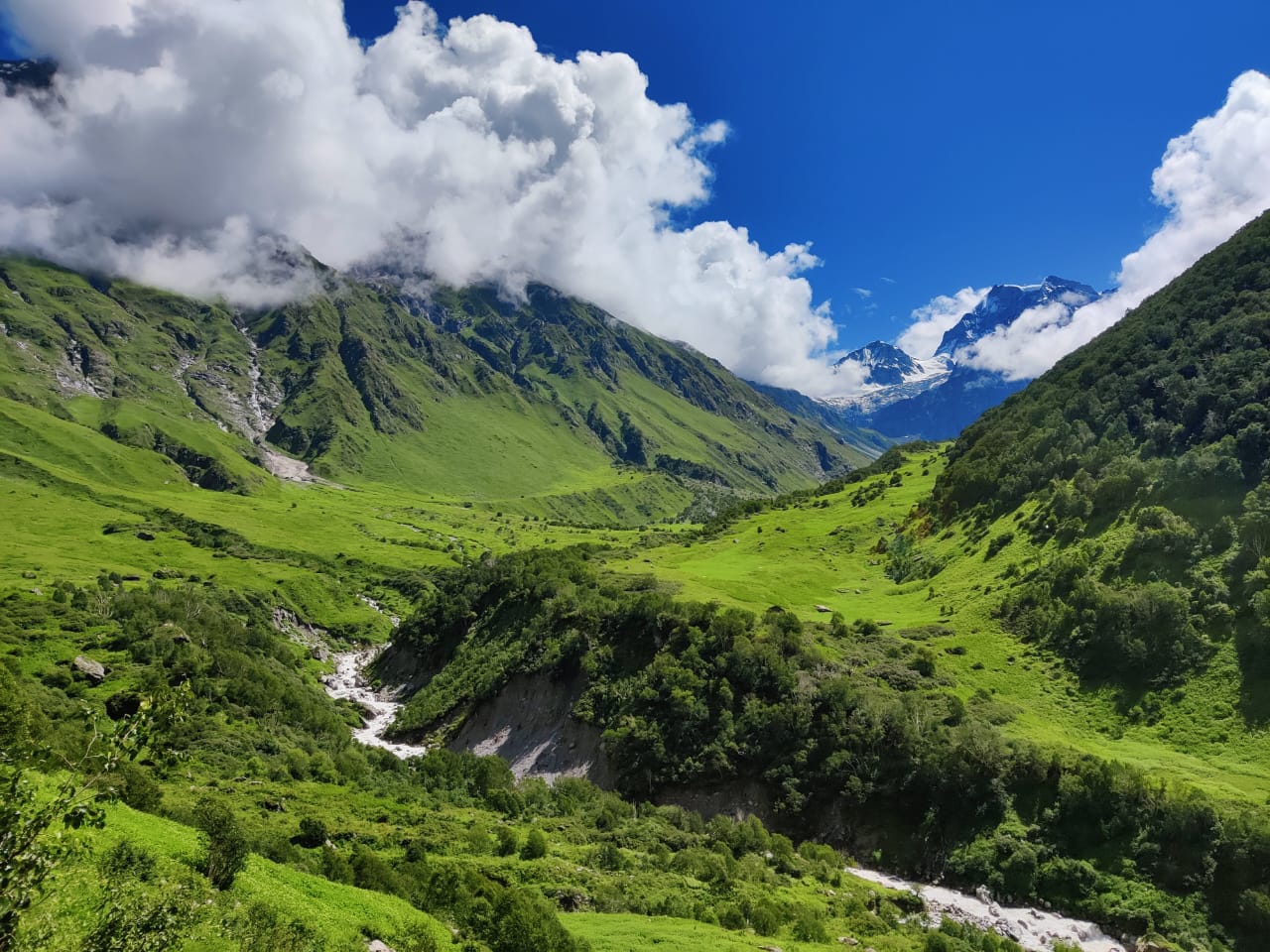
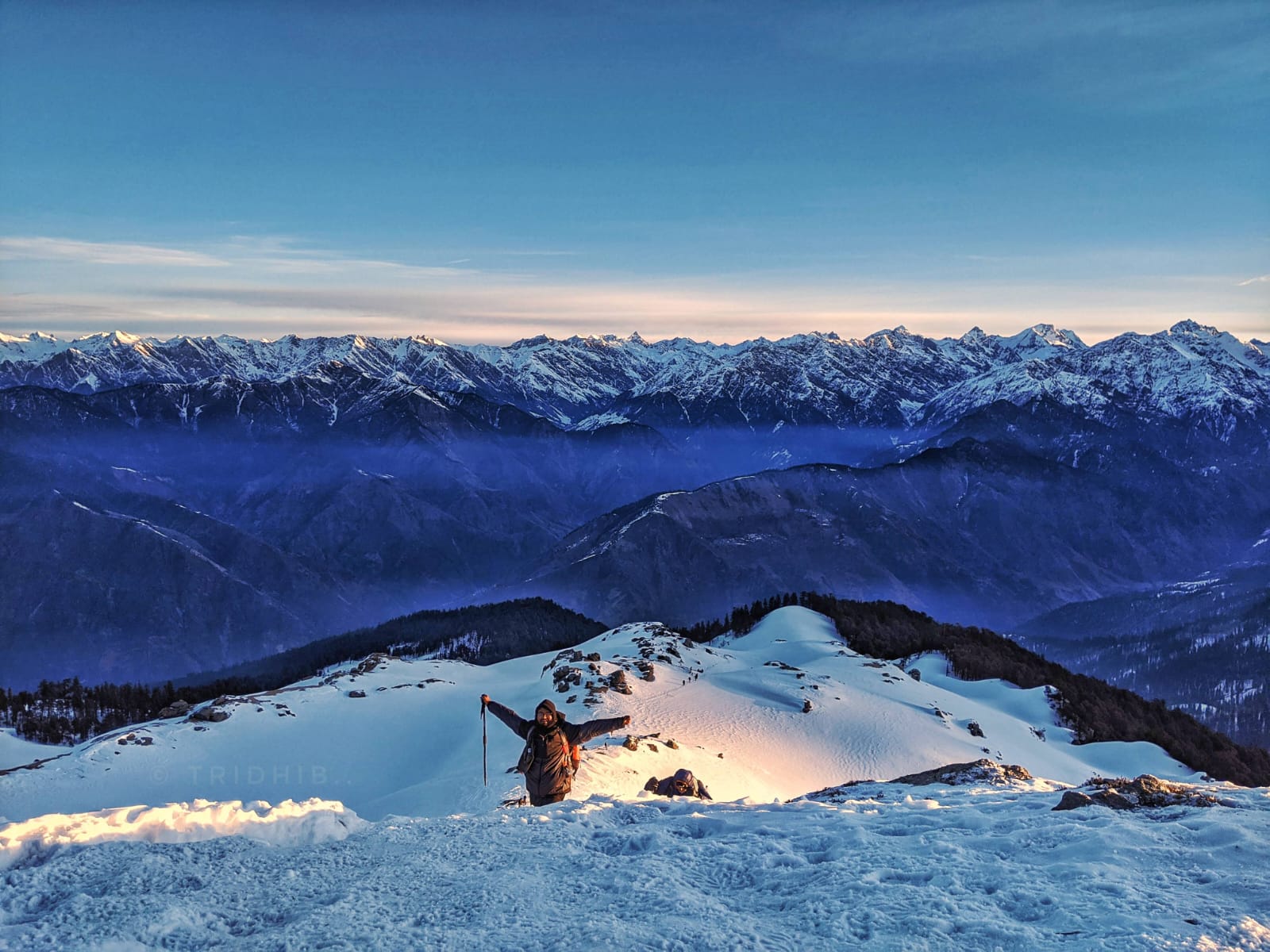
If you're looking for a Himalayan trek that delivers a genuine summit experience without demanding technical climbing skills, Kedarkantha is hard to beat. It's often called India's finest winter trek, and for good reason — you get dense oak, pine, and rhododendron forests, a frozen alpine lake, snow-blanketed meadows, and a 360-degree summit view that takes in giants like Swargarohini, Bandarpoonch, and the Black Peak, along with distant glimpses of the Kinnaur and Kailash ranges.
At ThinAir Expedition, we've designed our Kedarkantha itinerary around proper acclimatization, safety-first trail practices, and small group sizes — so whether you're a complete beginner or a seasoned trekker looking for a quick winter escape, you get a well-paced, well-supported climb to the top.
Daytime temperatures typically range from 8°C to 15°C, while nights can drop to -5°C to -10°C during peak winter, so proper cold-weather gear is essential.
ThinAir Expedition arranges group transport from Dehradun to Sankri on request, so you can simply land in Dehradun and let us handle the rest.
Drive out from Dehradun early morning, winding through Mussoorie, Purola, and Mori. The road hugs the Tons River for long stretches before climbing up to Sankri, a quaint Himalayan village that serves as the gateway to the trek. Overnight stay in a guesthouse or campsite at Sankri, with time to pick up any last-minute gear and get a briefing on the days ahead.
Distance: ~4–5 km | Duration: 4–5 hours | Altitude gain: ~2,700 ft
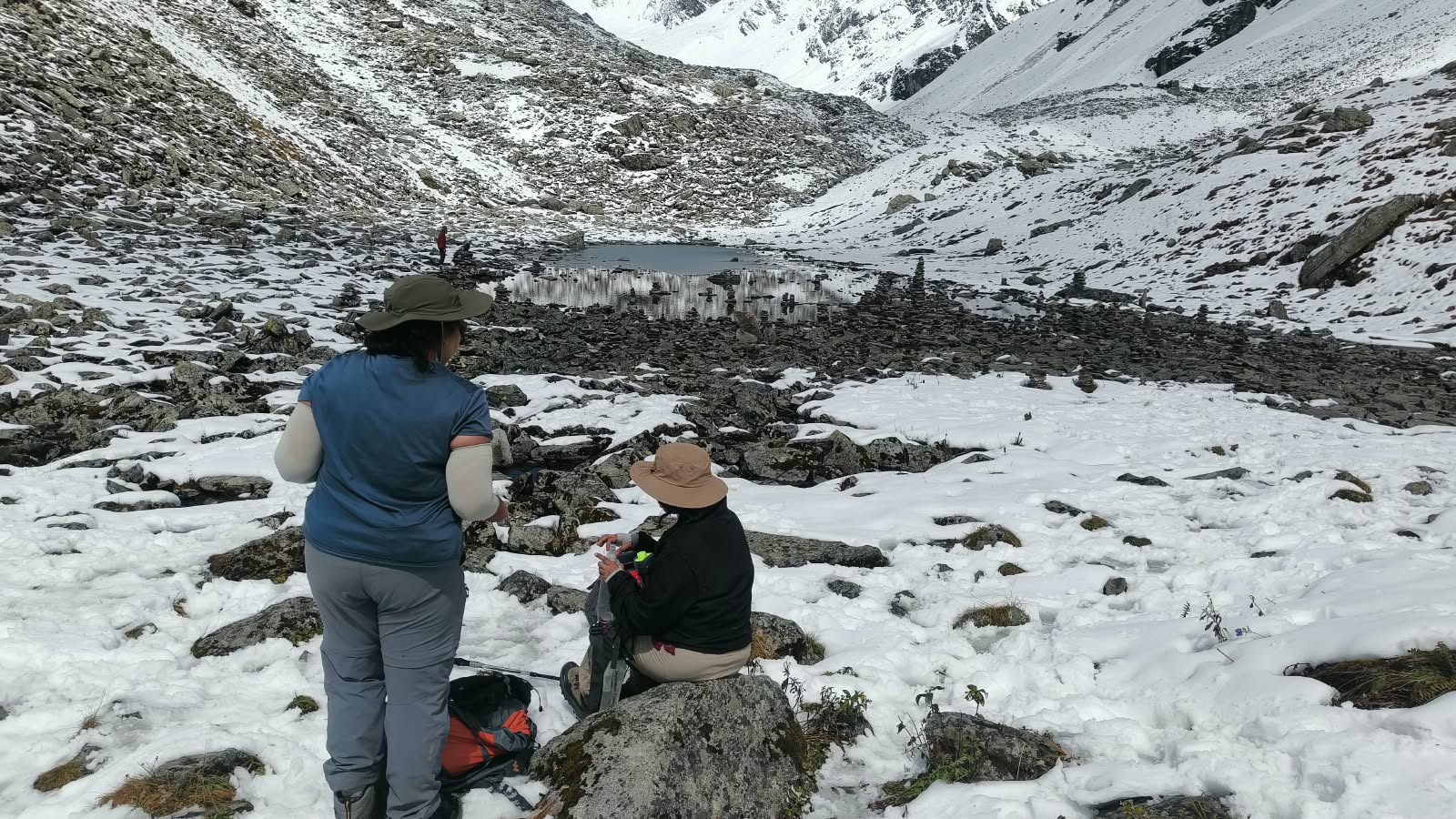
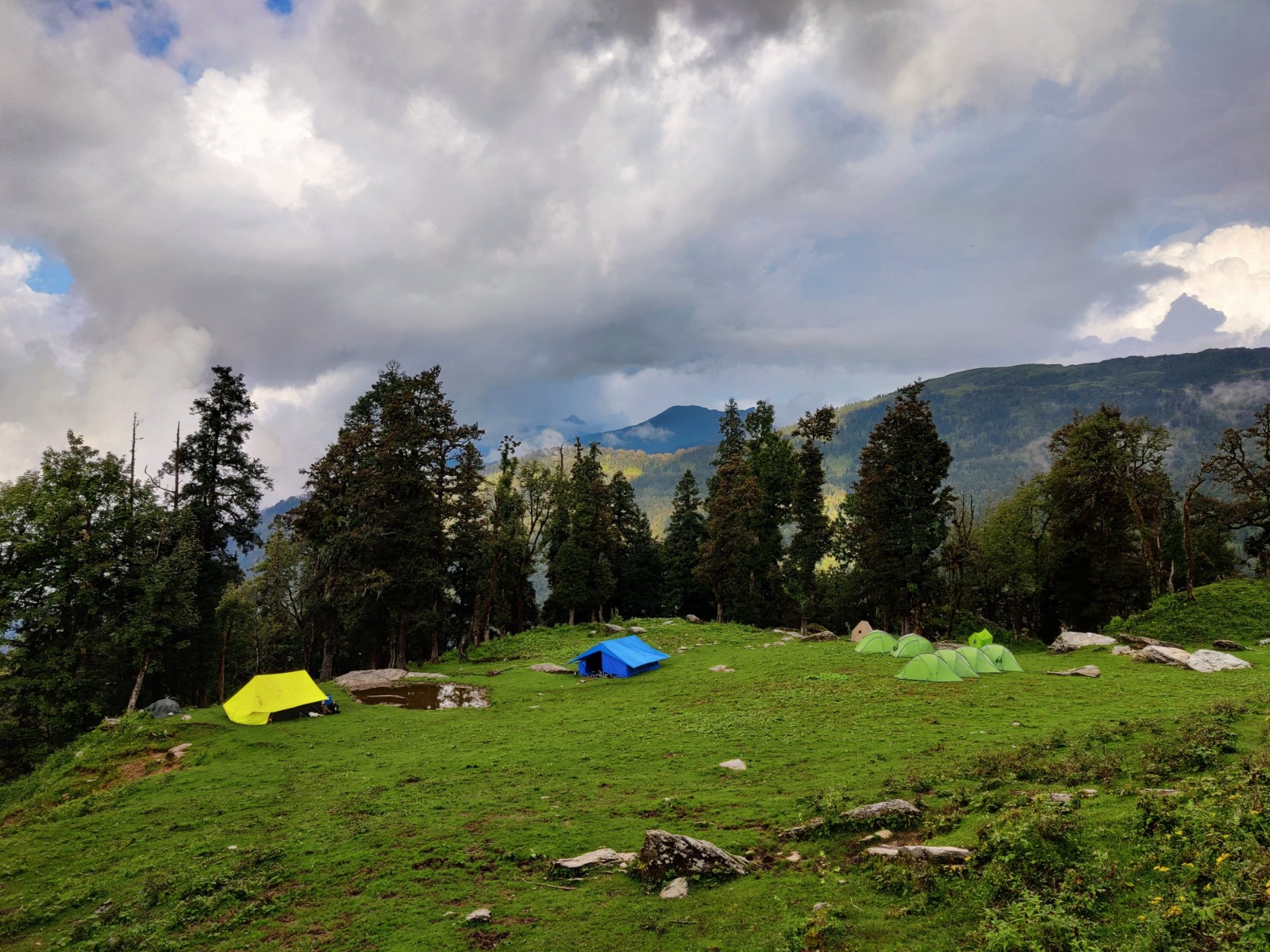
The trek begins in earnest, climbing gradually through dense pine, oak, and deodar forest on a wide, clear trail. By early afternoon, you arrive at Juda Ka Talab — a high-altitude lake wrapped in local legend, which freezes into a sheet of ice during peak winter. Campsites here offer views of the Phulara Ridge and your first proper look at snow-covered slopes.
Distance: ~3–4 km | Duration: 3–4 hours | Altitude gain: ~1,000 ft
A shorter, gentler day that lets your body continue acclimatizing. The trail moves through more oak and rhododendron forest, opening into meadows where you'll often spot shepherd huts. Kedarkantha Base Camp sits at roughly 11,250 ft and offers sweeping views of the surrounding peaks — the perfect spot to rest up before summit day.
Distance: ~8–9 km round trip | Duration: 9–10 hours | Altitude gain to summit: ~1,250 ft
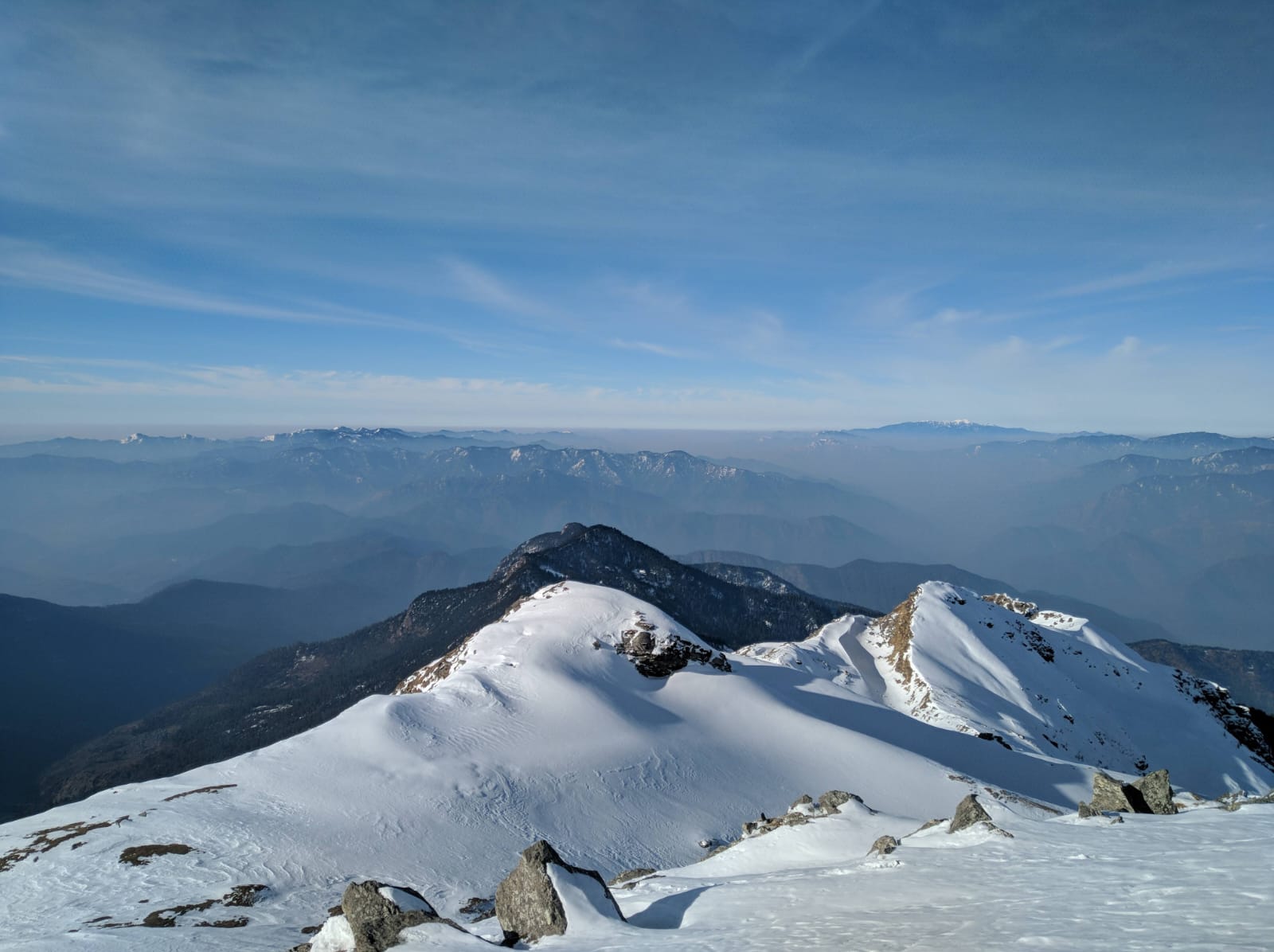
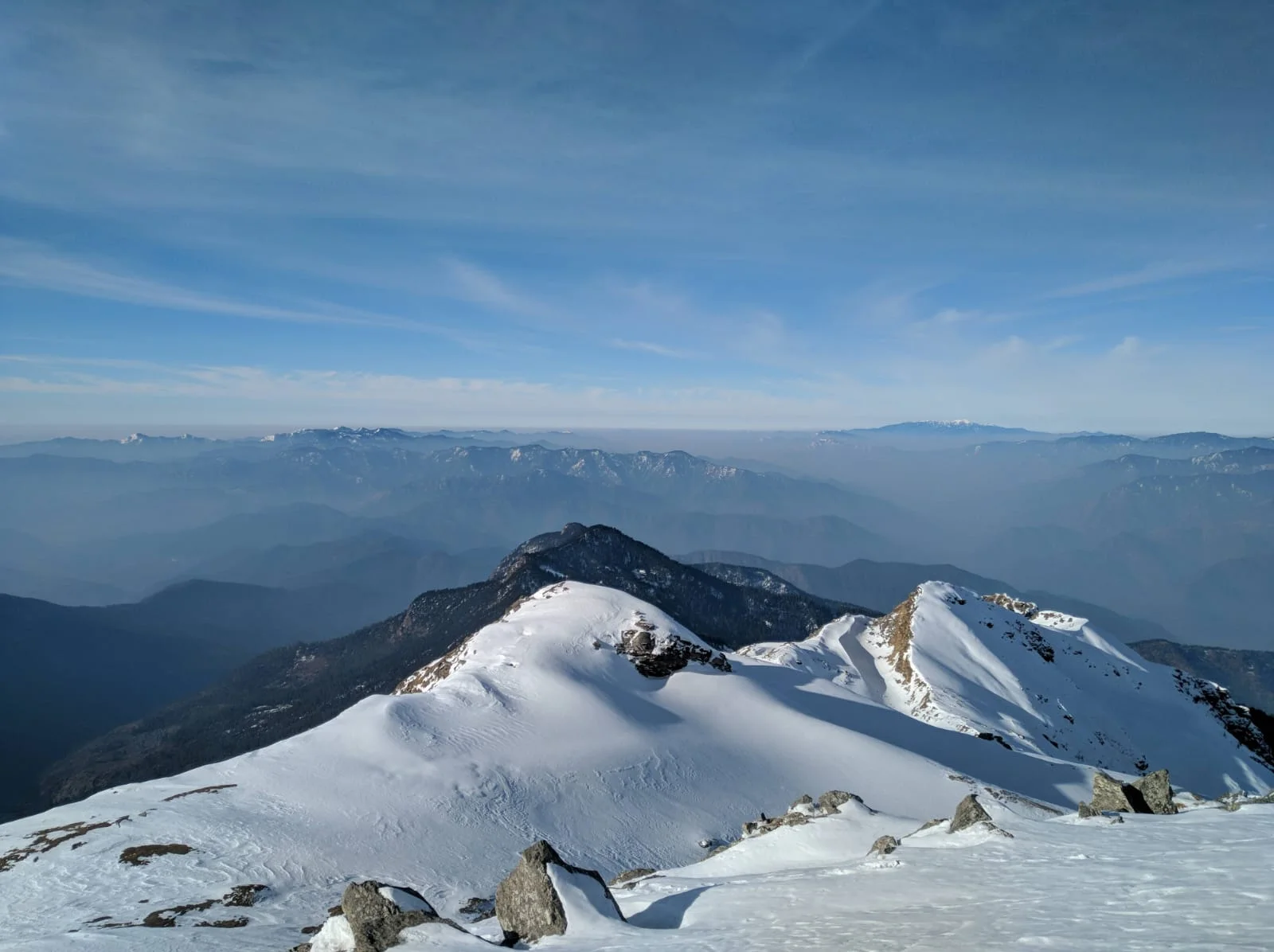
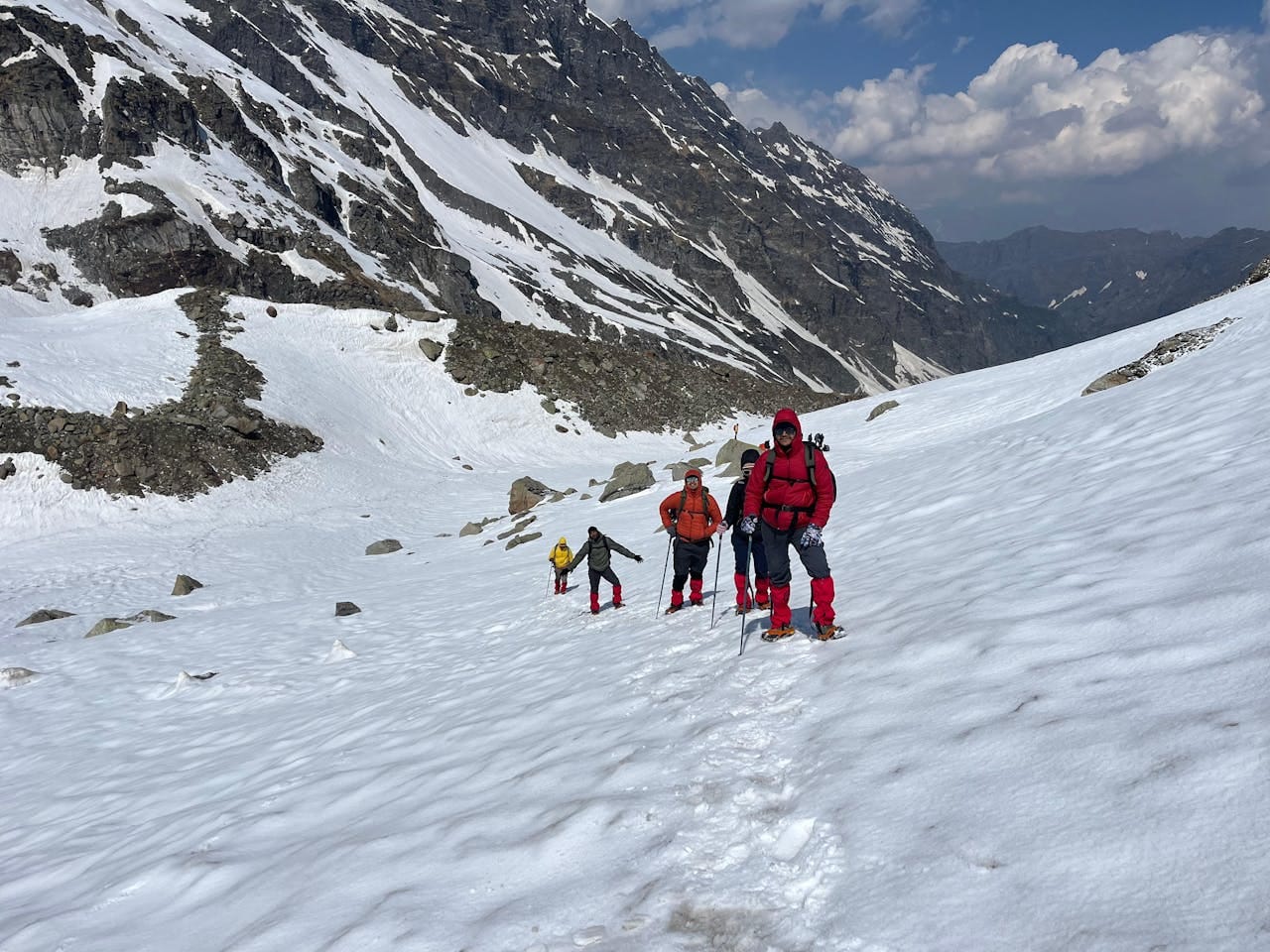
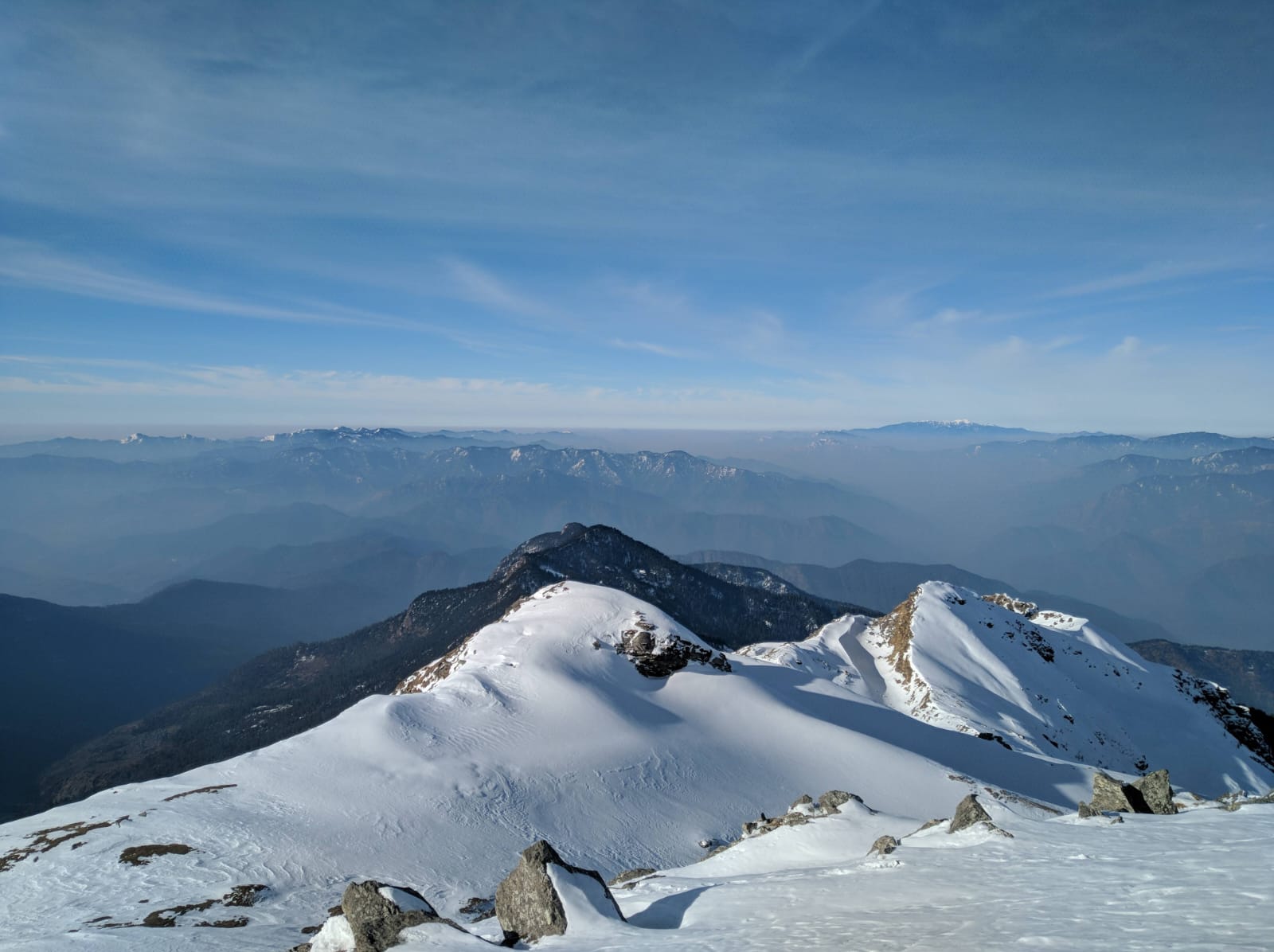
This is the day it's all been building toward. Trekkers set off well before dawn, climbing steadily to the 12,500 ft summit in time to catch sunrise breaking over the Garhwal Himalayas. From the top, the view stretches across Swargarohini, Bandarpoonch, the Har Ki Dun valley, and — on a clear day — as far as ranges in Himachal Pradesh. After soaking in the panorama, the group descends back down to camp, a long but hugely rewarding day.
Distance: ~9–10 km | Duration: 4–5 hours | Difficulty: Easy, gradual descent
The final trekking day is a relaxed downhill walk back through the same beautiful oak and rhododendron forest to Sankri. From here, it's a drive back to Dehradun, arriving by evening — tired, sun-kissed, and already planning your next trek.
Kedarkantha is widely regarded as one of the best beginner-friendly Himalayan treks, but "easy" is relative in the mountains. Here's what to actually expect:
With basic fitness — regular walking, jogging, or stair climbing in the weeks before your trek — most first-timers complete Kedarkantha comfortably.
ThinAir Expedition provides a detailed packing checklist and gear-rental options once you book, so you don't have to buy everything from scratch.
Since the trek passes through Govind Pashu Vihar National Park, a forest permit is mandatory and is arranged by your trekking operator, along with a valid ID proof. ThinAir Expedition handles all permit formalities as part of your booking — one less thing to worry about.
Is Kedarkantha suitable for beginners?
Yes — it's one of the most recommended first Himalayan treks, thanks to its manageable distances, gradual altitude gain, and well-marked trail.
What's the minimum age for the trek?
Most operators, including ThinAir Expedition, accept trekkers aged 10 and above, provided they're in good health and reasonably fit.
Do I need prior trekking experience?
No prior experience is required, though basic fitness preparation in the weeks before the trek is strongly recommended.
Is Kedarkantha the same as Kedarnath?
No — despite the similar name, they're entirely different. Kedarkantha is a trekking summit in the Govind Pashu Vihar National Park, while Kedarnath is a sacred Shiva temple roughly 370 km away by road.
What if it doesn't snow?
Even without fresh snow, the trek offers stunning forest trails, alpine meadows, and one of the best summit views in the Garhwal Himalayas — snow is a bonus, not a guarantee.
Ready to summit Kedarkantha?
Check out ThinAirExpedition's upcoming batch dates and book your spot on India's favorite winter trek.