The Ultimate Expedition Guide Black Peak vs Kang Yatse 2 vs Friendship Peak
04
Feb
By ThinAir
For mountaineers seeking to transition from trekking to technical climbing, these three 6,000-meter peaks offer the perfect stepping stones. Each presents unique challenges, requires different skill sets, and rewards climbers with unforgettable Himalayan experiences. This comprehensive guide will help you choose your first high-altitude expedition.
Quick Comparison Black Peak, Kang Yaste and Friendship Peak Expedition
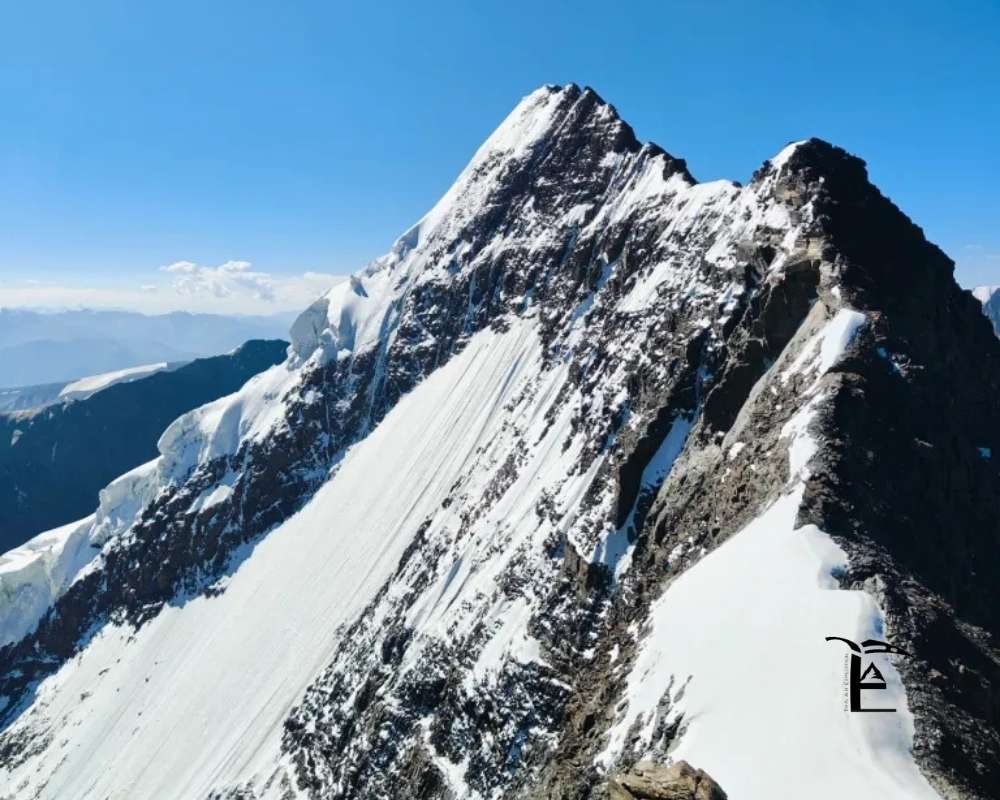
Black Peak expedition, locally known as Kalanag (Black Serpent), is one of the most aesthetic peaks in the Garhwal Himalayas. Standing at 6,387 meters, it’s the highest peak in the Bandarpunch massif and offers a true mountaineering experience that bridges the gap between trekking and serious climbing.
Location & Access
Region: Uttarkashi District, Uttarakhand
Range: Bandarpunch Range, Garhwal Himalayas
Nearest Town: Uttarkashi (3-4 hours drive from Dehradun)
Starting Point: Gangotri (3,048m)
Approach: Drive to Gangotri, then trek through Nala Camp, Rudugaira base camp
Detailed Itinerary
Day 1-2: Arrival in Gangotri (3,048m), acclimatization, preparation Day 3: Trek to Nala Camp (3,600m) – 10 km, 6-7 hours Day 4: Trek to Rudugaira Base Camp (4,300m) – 8 km, 5-6 hours Day 5: Acclimatization day, short hike to higher altitude Day 6: Move to Advanced Base Camp (4,800m) – 4-5 hours Day 7: Acclimatization and technical training Day 8: Summit push to Camp 1 (5,400m) – 4-5 hours Day 9: Summit day – Start 1-2 AM, reach summit by noon, return to ABC – 12-14 hours Day 10: Reserve day for weather/summit attempt Day 11-12: Descent to Gangotri
Technical Requirements
Climbing Grade: Alpine PD+ to AD (Peu Difficile Plus to Assez Difficile)
Technical Skills Needed:
Crampon techniques on 40-45° ice slopes
Ice axe arrest and self-belay
Fixed rope ascending using jumars
Basic crevasse rescue awareness
Rope team movement on glaciers
Navigation in whiteout conditions
Equipment Required:
Full mountaineering boots (B2 or B3 rated)
12-point crampons
Technical ice axe
Climbing harness
Helmet
Prusik loops and carabiners
Avalanche transceiver (recommended)
Personal clothing layers for -25°C
4-season sleeping bag (-20°C rated)
High-altitude tent (expedition grade)
Route Description
The climb begins from Advanced Base Camp with a glacier approach. The initial section involves navigating crevassed terrain requiring rope team techniques. As you gain altitude, the angle steepens to 40-45 degrees with hard ice sections requiring front-pointing crampon technique.
The summit day is long and demanding, typically starting between 1-2 AM. The final 200 meters involve exposed ridgeline climbing with stunning drop-offs on both sides. Fixed ropes are usually established on the steeper sections by expedition teams.
The descent follows the same route and is technically demanding, especially if conditions have deteriorated. Most accidents occur during descent due to fatigue.
Challenges & Risks
Primary Challenges:
Sustained high altitude above 5,500m
Technical ice climbing sections
Early morning summit attempts in freezing temperatures (-20 to -25°C)
Crevasse hazards on glacier approach
Avalanche risk in certain sections
Weather window uncertainty
Risk Factors:
Acute Mountain Sickness (AMS) risk above 5,000m
Frostbite exposure during summit push
Technical fall risk on steep ice sections
Seracs and icefall dangers
Sudden weather deterioration
Physical Preparation
Training Timeline: 3-4 months minimum
Cardio Training:
Running: 5-10 km, 4-5 times per week
Cycling: Long rides of 30-50 km on weekends
Swimming: 30-45 minutes, 2-3 times weekly
Stair climbing with weighted backpack (12-15 kg)
Strength Training:
Core exercises: Planks, leg raises, Russian twists
Leg strength: Squats, lunges, step-ups with weights
Upper body: Pull-ups, push-ups for rope work
Back strength for carrying loads
Altitude Training:
Complete at least 2-3 treks above 4,000m
One trek to 5,000m+ highly recommended
Practice with weighted backpack (10-12 kg)
What Makes Black Peak Special
Black Peak offers the complete mountaineering package. Unlike many beginner peaks that are primarily long walks, Black Peak demands genuine technical skills. The aesthetic beauty of the peak, with its pyramid shape visible from Gangotri, has inspired mountaineers for decades.
The climbing is varied and interesting – glacier travel, steep ice climbing, and exposed ridge walking all feature prominently. Successfully summiting Black Peak means you’ve genuinely earned a mountaineering achievement, not just a high-altitude trek with crampons.
The approach through the Rudugaira valley is spectacular, with views of Jogin peaks, Swargarohini, and the Gangotri group. The region is less crowded than many popular peaks, offering a wilderness experience.
Best For
Fit trekkers with 4,000m+ experience ready for technical climbing
Those who’ve completed basic mountaineering courses
Climbers wanting to learn comprehensive mountain skills
Mountaineers preparing for bigger Himalayan expeditions
Those seeking aesthetic, challenging 6,000m peaks
Success Tips
Arrive in top physical condition – this cannot be overstated
Follow the acclimatization schedule religiously
Practice crampon techniques before the expedition
Invest in quality mountaineering boots and fit them properly
Start summit day well-hydrated and well-fed
Listen to your guide’s weather assessment
Have the wisdom to turn back if conditions deteriorate
Budget for a reserve day – weather windows can be narrow
Kang Yatse 2, at 6,250 meters, is considered one of the best first 6,000m peaks in the Indian Himalayas. Located in the stunning Markha Valley of Ladakh, it combines an excellent trekking approach with a genuine high-altitude summit experience. The peak offers spectacular 360-degree views of the Ladakh and Zanskar ranges.
Location & Access
Region: Ladakh, Union Territory of Ladakh Range: Markha Valley, Ladakh Range Nearest Town: Leh (3,500m) Starting Point: Chilling or Skiu (3,350m) Approach: Trek through the famous Markha Valley, one of Ladakh’s most beautiful valleys
Detailed Itinerary
Day 1-2: Arrive Leh (3,500m), acclimatization walks, preparation Day 3: Drive to Chilling (3,350m), trek to Skiu (3,350m) – 3-4 hours Day 4: Trek to Markha village (3,750m) – 16 km, 6-7 hours Day 5: Trek to Hankar village (4,200m) – 10 km, 5-6 hours Day 6: Trek to Thachungtse (4,300m) – 8 km, 4-5 hours Day 7: Trek to Nimaling (4,800m) – 8 km, 4-5 hours Day 8: Acclimatization day, hike to viewpoint (5,200m) Day 9: Trek to Base Camp (5,150m) – 3-4 hours Day 10: Rest, acclimatization, technical training Day 11: Move to Advanced Base Camp (5,450m) Day 12: Summit push to summit camp (5,800m), early rest Day 13: Summit attempt (start 2-3 AM), return to BC – 10-12 hours Day 14: Reserve day for weather/second attempt Day 15-16: Trek out via Kongmaru La to Hemis/Martselang
The approach through Markha Valley is one of the finest valley walks in the Himalayas. You’ll pass through traditional Ladakhi villages, Buddhist monasteries, and cross numerous streams before reaching the high pastures of Nimaling.
From Base Camp, the route follows a glacier approach with some crevasse zones (usually well-marked or bridged). The climbing angle is moderate, mostly 25-35 degrees with some sections reaching 40 degrees near the summit ridge.
Summit day involves ascending through the night, reaching easier terrain as the sun rises. The final section is a broad snow dome with spectacular views emerging with every step. The summit offers panoramic views including Kang Yatse 1 (6,401m), Stok Kangri, and on clear days, even K2 in the distance.
Challenges & Risks
Primary Challenges:
Extended time above 5,000m
Very cold summit night temperatures (-20 to -25°C)
Long approach trek requires stamina
Thin air of Ladakh’s dry climate
Long summit day (10-12 hours)
Glacier navigation
Risk Factors:
Altitude sickness – significant time above 5,000m
Dehydration in Ladakh’s dry climate
Cold injuries (frostbite, hypothermia)
Crevasse falls (minimal with guide)
Weather changes can be rapid
Solar radiation is intense at altitude in Ladakh
Physical Preparation
Training Timeline: 3-4 months
Endurance Focus:
Long-distance running: Build up to 15-20 km runs
Hiking: 6-8 hour hikes with 10 kg backpack
Cycling: 40-60 km rides for endurance
Back-to-back long days to simulate expedition fatigue
Altitude Preparation:
Multiple treks above 4,000m essential
One trek to 5,000m+ highly recommended
Spend extra days in Leh for acclimatization
Consider altitude pre-acclimatization if possible
Strength Training:
Leg endurance: High-rep squats, lunges, step exercises
Core stability for carrying loads
Upper body: Moderate strength for rope work
What Makes Kang Yatse 2 Special
Kang Yatse 2 is special for several reasons. The approach through Markha Valley is considered one of the most beautiful treks in Ladakh, passing through remote villages where traditional Buddhist culture thrives unchanged. You’ll witness daily life in one of the world’s highest inhabited valleys.
The mountain itself offers a perfect introduction to 6,000m climbing. It’s technically straightforward enough that fit trekkers can summit, yet high enough to provide a genuine high-altitude challenge and mountaineering experience.
The summit views are extraordinary – a 360-degree panorama of the Ladakh, Zanskar, and Karakoram ranges. The success rate is relatively high, making it an achievable yet worthy goal.
Perhaps most importantly, the extended acclimatization schedule with gradual ascent through the Markha Valley makes it safer than many peaks where approach times are compressed.
Best For
Trekkers ready for their first 6,000m peak
Those wanting beautiful trekking combined with summit experience
Climbers interested in Ladakhi culture and villages
Mountaineers seeking high success rate on a worthy objective
Photographers – the Markha Valley and summit views are spectacular
Those preparing for higher Himalayan peaks
Success Tips
Spend minimum 2-3 days in Leh before trek starts
Walk slowly during approach – resist the temptation to rush
Hydrate constantly – Ladakh’s dry air causes rapid water loss
Protect against sun exposure – it’s extreme at this altitude
Acclimatize properly at Nimaling – don’t skip the rest day
Pack warm – summit night is brutally cold
Start summit bid early (2-3 AM) to avoid afternoon weather
Budget for reserve day – Ladakh weather can be unpredictable
Friendship Peak, at 5,289 meters, is the ideal first high-altitude peak for those new to mountaineering. Located near Manali in Himachal Pradesh, it offers an accessible yet rewarding climbing experience with genuine mountaineering challenges compressed into a short, achievable timeframe.
Location & Access
Region: Manali, Himachal Pradesh
Range: Pir Panjal Range
Nearest Town: Manali (2,050m) – easily accessible
Starting Point: Dhundhi (3,150m) or Bakarthach (3,300m)
Approach: Short drive from Manali followed by 1-2 day trek
Detailed Itinerary
Day 1: Arrive Manali (2,050m), preparation and briefing Day 2: Drive to Dhundhi (3,150m), trek to Bakarthach (3,300m) – 2-3 hours Day 3: Trek to Lady Leg Base Camp (3,800m) – 4-5 hours Day 4: Acclimatization, technical training session, practice with equipment Day 5: Trek to Summit Base Camp (4,450m) – 3-4 hours Day 6: Summit attempt – Start 1-2 AM, return to base camp – 10-12 hours Day 7: Reserve day for weather/second attempt Day 8: Descend to Manali
Some operators run 6-day expeditions with compressed schedules, though 7-8 days is safer for proper acclimatization.
Technical Requirements
Climbing Grade: Alpine F+ to PD (Facile Plus to Peu Difficile)
Technical Skills Needed:
Basic crampon walking on moderate slopes (25-35°)
Ice axe for support and balance
Ability to walk in rope team on glaciated terrain
Basic understanding of mountain safety
Endurance for long summit day at altitude
Previous trekking experience above 4,000m helpful
Equipment Required:
High-altitude trekking boots (B1-B2 rated)
10-12 point crampons
Ice axe (60 cm)
Climbing harness (for glacier and safety)
Helmet
Trekking poles (for approach)
Warm layers for -15 to -20°C
Good quality sleeping bag (-10 to -15°C)
Down jacket
Warm gloves and liner gloves
Balaclava or face mask
Quality sunglasses (Category 4)
Headlamp with extra batteries
Route Description
The trek begins from Bakarthach with a scenic walk through alpine meadows and coniferous forests. The landscape opens up as you approach Lady Leg Base Camp, with views of Hanuman Tibba and surrounding peaks becoming prominent.
From Summit Base Camp, the route follows a glacier approach in the early morning darkness. The climbing is straightforward on moderate snow slopes, with the angle gradually increasing as you ascend. The final approach to the summit involves steeper snow (35-40°) but is usually well-tracked.
The summit is a snow dome offering spectacular views of Hanuman Tibba, Shitidhar, Indrasan, and Deo Tibba peaks. On clear days, you can see deep into the Pir Panjal and Dhauladhar ranges.
The descent follows the same route, with the option to glissade down snow slopes under guide supervision (a fun and efficient way to descend).
Challenges & Risks
Primary Challenges:
Quick altitude gain from Manali (2,050m to 5,289m in 5 days)
Cold summit morning temperatures (-15 to -20°C)
Crevassed glacier sections (usually well-marked)
Summit day starts very early (1-2 AM)
Physical endurance for 10-12 hour summit day
Weather can change quickly in shoulder seasons
Risk Factors:
Altitude Acute Mountain Sickness due to rapid ascent
Cold-related injuries on summit day
Glacier hazards (crevasses, ice bridges)
Slips on steep snow sections
Weather deterioration
Exhaustion on long summit day
Physical Preparation
Training Timeline: 2-3 months (minimum 6 weeks)
Cardiovascular Training:
Running: 5-8 km, 4-5 times per week
Build endurance gradually
Include hill running for leg strength
Stair climbing with 8-10 kg backpack
Strength Training:
Leg exercises: Squats, lunges, step-ups
Core strengthening for carrying load
Basic upper body strength
Flexibility and stretching
Pre-Expedition Experience:
At least one trek above 4,000m recommended
Practice with crampons and ice axe if possible
Get comfortable with long hiking days
Test all your gear on prior treks
What Makes Friendship Peak Special
Friendship Peak is special because it democratizes high-altitude mountaineering. Its accessibility from Manali makes it logistically simple, while the climbing is genuine enough to provide a real mountaineering experience and sense of achievement.
The peak is perfect for testing your response to altitude without committing to a long expedition. The relatively short duration means less time away from work or studies, making it accessible to a wider range of people.
The name “Friendship Peak” comes from its popularity with groups of friends attempting their first peak together. The camaraderie of a summit push with friends creates lasting memories and bonds.
The Solang Valley region is beautiful year-round, and the peak offers excellent views despite its modest altitude. The climbing, while not extremely technical, is engaging enough to feel like real mountaineering rather than just high-altitude trekking.
Best For
First-time peak aspirants with good fitness
Trekkers wanting to test high-altitude response
Those with limited time for expedition (1 week possible)
Corporate groups and friend groups seeking adventure
Mountaineering course participants
Those building towards higher peaks
Anyone wanting mountain experience without extreme technical demands
Success Tips
Arrive in Manali 1-2 days early if coming from low altitude
Don’t underestimate the altitude gain – acclimatize properly
Stay well-hydrated throughout – carry 2-3 liters for summit day
Dress in layers – you’ll heat up during climb, freeze during stops
Practice with crampons before summit day during training
Pack light for summit day but don’t skip essentials
Start summit bid on time – guide’s timing is based on experience
Maintain steady pace – slow and steady is key
Turn back if experiencing severe altitude symptoms
Celebrate the journey, not just the summit – every attempt teaches
Direct Comparison Analysis
Altitude & Acclimatization
Black Peak (6,387m):
Highest of the three, requires best acclimatization
2-3 dedicated acclimatization days
Time above 5,000m: 3-4 days
Most susceptible to altitude issues
Kang Yatse 2 (6,250m):
Very high but excellent gradual acclimatization profile
4-5 days for acclimatization built into approach
Time above 5,000m: 4-5 days
Best acclimatization schedule of the three
Friendship Peak (5,289m):
Lowest altitude provides safety margin
Quick ascent means less acclimatization time
Time above 5,000m: 1-2 days
Altitude manageable for most fit individuals
Winner: Kang Yatse 2 for acclimatization profile, Friendship Peak for altitude manageability
Technical Difficulty
Black Peak:
Most technical with sustained 40-45° ice climbing
Requires proficient crampon and ice axe skills
Exposed ridgeline sections
Fixed rope sections on steep terrain
Grade: PD+ to AD
Kang Yatse 2:
Moderate technical demands
Mostly 25-35° with brief 40° sections
Straightforward glacier navigation
Less exposed climbing
Grade: PD
Friendship Peak:
Least technical challenge
Maximum 35-40° on summit approach
Simple glacier sections
Minimal exposure
Grade: F+ to PD
Winner: Friendship Peak for beginners, Black Peak for technical learning
Physical Demands
Black Peak:
Very demanding summit day (12-14 hours)
Sustained high-altitude climbing
Heavy pack weight for ABC setup
Steep ice climbing is exhausting
Kang Yatse 2:
Long approach trek (7-8 days walking)
Summit day 10-12 hours
Less technical but thin air is challenging
Multi-day acclimatization is tiring
Friendship Peak:
Shortest overall duration
Summit day still demanding (10-12 hours)
Less time at altitude means less fatigue
Quick altitude gain can be challenging
Winner: Varies by preference – Friendship for short commitment, Kang Yatse 2 for endurance
Winner: Friendship Peak for budget-conscious climbers
Scenic Beauty & Experience
Black Peak:
Stunning Garhwal Himalayan scenery
Views of Gangotri group, Jogin peaks
Less crowded, wilderness experience
Aesthetic pyramid peak
Kang Yatse 2:
Exceptional Markha Valley trek
Traditional Ladakhi culture and villages
360° summit panorama including Karakoram views
Buddhist monastery visits
Friendship Peak:
Beautiful Pir Panjal landscapes
Views of Manali region peaks
Alpine meadows and forests
More developed region
Winner: Kang Yatse 2 for overall experience, Black Peak for peak aesthetics
Accessibility & Logistics
Black Peak:
10-12 hour drive from Dehradun
Gangotri well-connected
Moderate logistics complexity
Season limited by monsoon and winter
Kang Yatse 2:
Flight to Leh (weather dependent)
Excellent infrastructure in Ladakh
Requires Leh acclimatization
Limited season (July-September)
Friendship Peak:
Easy access to Manali
Well-developed infrastructure
Shortest approach
Longer season (May-June, Sep-Oct)
Winner: Friendship Peak for ease of access
Which Peak Should You Choose?
Choose Black Peak If You:
Have completed multiple 4,000m+ treks
Have basic mountaineering training
Want to learn genuine technical climbing skills
Are preparing for bigger Himalayan expeditions (7,000m+)
Prefer less crowded, wilderness experiences
Have 10-12 days available
Want a challenging, rewarding achievement
Are comfortable with 60-70% success rates
Choose Kang Yatse 2 If You:
Want your first 6,000m peak
Value excellent acclimatization and safety
Are interested in Ladakhi culture and villages
Enjoy combining beautiful trekking with summit experience
Prefer higher success rates (70-80%)
Have 12-14 days available
Want spectacular summit views
Are willing to invest more (budget ₹45,000-65,000)
Enjoy extended time in the mountains
Choose Friendship Peak If You:
Are attempting your first high-altitude peak
Have limited time (6-8 days maximum)
Want to test altitude response before bigger commitments
Are working with a modest budget (₹22,000-35,000)
Prefer easier logistics and access
Want highest success rate (80-90%)
Are new to technical gear (crampons, ice axe)
Value a quick, achievable challenge
Progression Pathway
For most mountaineers, the ideal progression is:
Level 1: Start with Friendship Peak to learn basics and test altitude response Level 2: Progress to Kang Yatse 2 for first 6,000m experience with excellent support Level 3: Attempt Black Peak to develop technical skills for bigger objectives Level 4: Graduate to 7,000m peaks (Trishul, Nun, Stok Kangri)
However, if you’re already an experienced trekker with 5,000m+ experience, you could start with Kang Yatse 2 or even Black Peak with proper preparation.
Essential Preparation Common to All Three
Physical Training (3-4 months minimum)
Cardiovascular Base:
5 days/week cardio: running, cycling, swimming
Gradually increase duration and intensity
Include back-to-back long days to simulate expedition fatigue
Final month: 6-8 hour hikes with loaded pack
Strength & Conditioning:
Leg strength: Squats, lunges, step-ups with weights
Core: Planks, side planks, leg raises, rotational exercises
Upper body: Pull-ups, push-ups for rope work
Flexibility: Yoga or stretching routine
Mental preparation: Visualization and mental endurance training
Prior Experience
Minimum:
At least 2-3 multi-day treks
One trek above 4,000m
Experience with camping and mountain conditions
Basic physical fitness
Recommended:
Multiple treks above 4,000m
One trek to 5,000m+
Basic Mountaineering Course (BMC) for technical peaks
Experience with crampons and ice axe
Medical Clearance
Get medical clearance including:
General health checkup
Cardiovascular fitness test
Lung function test
Any pre-existing conditions evaluated for high altitude
Guide-to-client ratio (1:3 or better for technical peaks)
Quality of equipment provided
Emergency protocols and evacuation plans
Reviews and recommendations
Transparent cost structure
Final Thoughts
Each of these three peaks offers a unique and valuable mountaineering experience. Friendship Peak provides an accessible introduction to high-altitude climbing, Kang Yatse 2 delivers the complete 6,000m experience with excellent safety margins, and Black Peak challenges you with genuine technical climbing in spectacular surroundings.