KASHMIR TREKS 2026 The Ultimate Himalayan Trekking Guide
KASHMIR TREKS 2026 The Ultimate Himalayan Trekking Guide
21
Mar

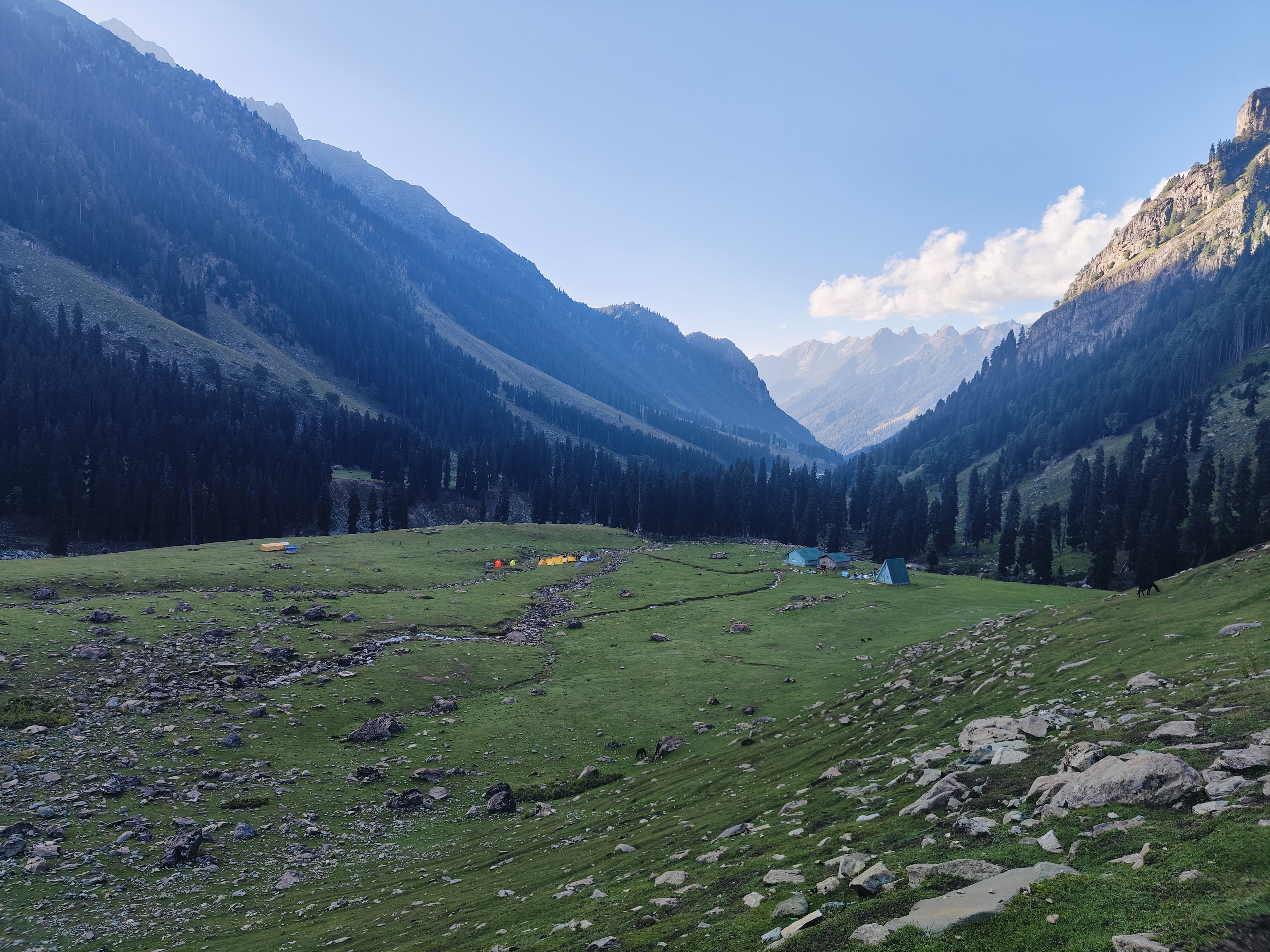
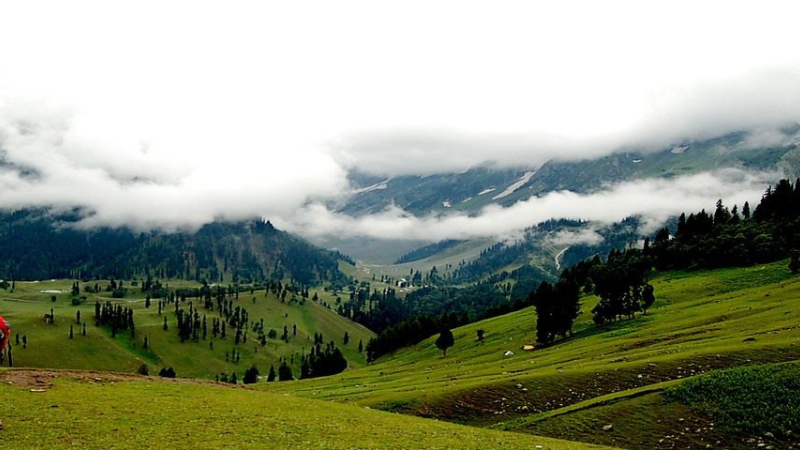
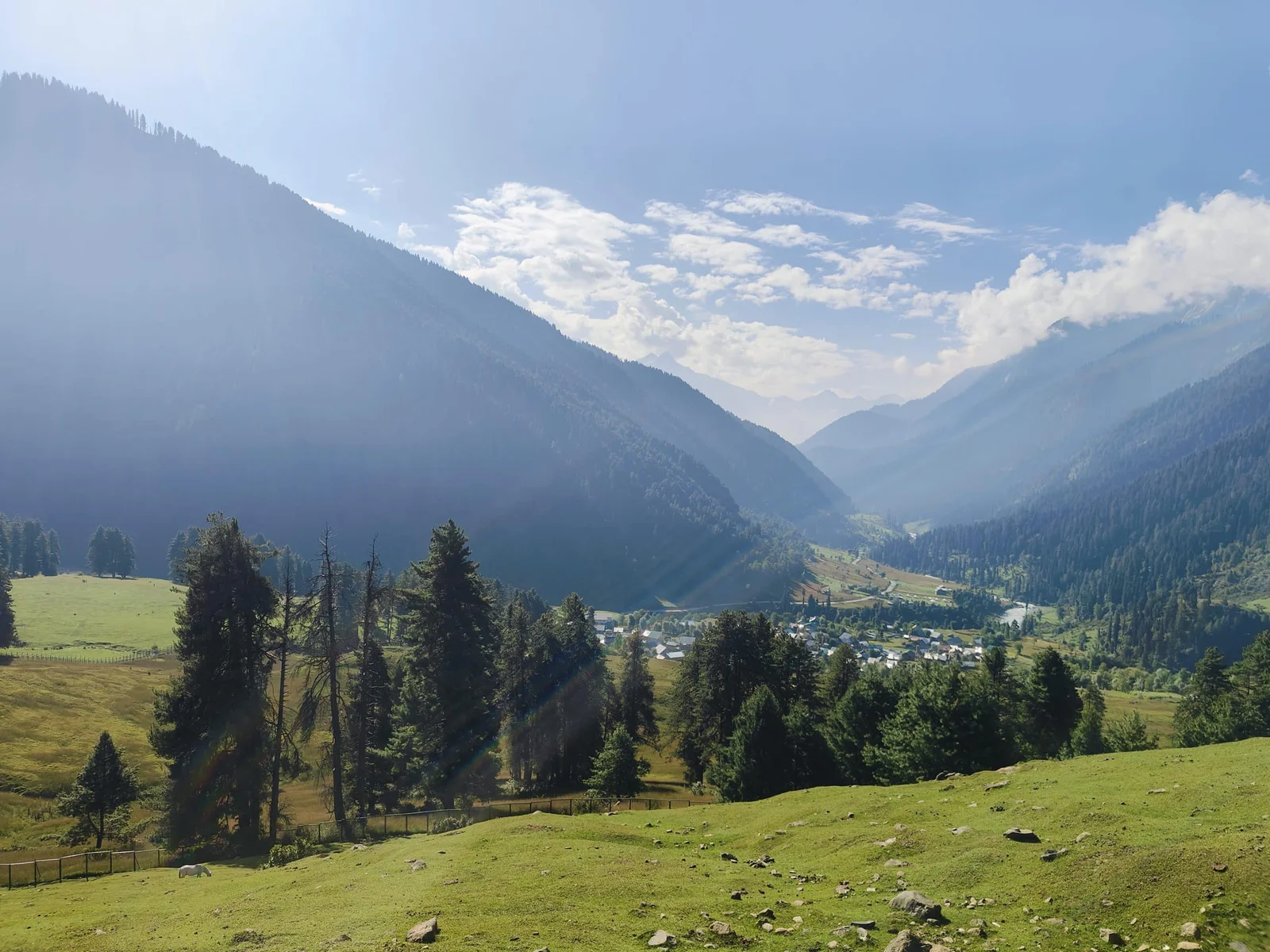
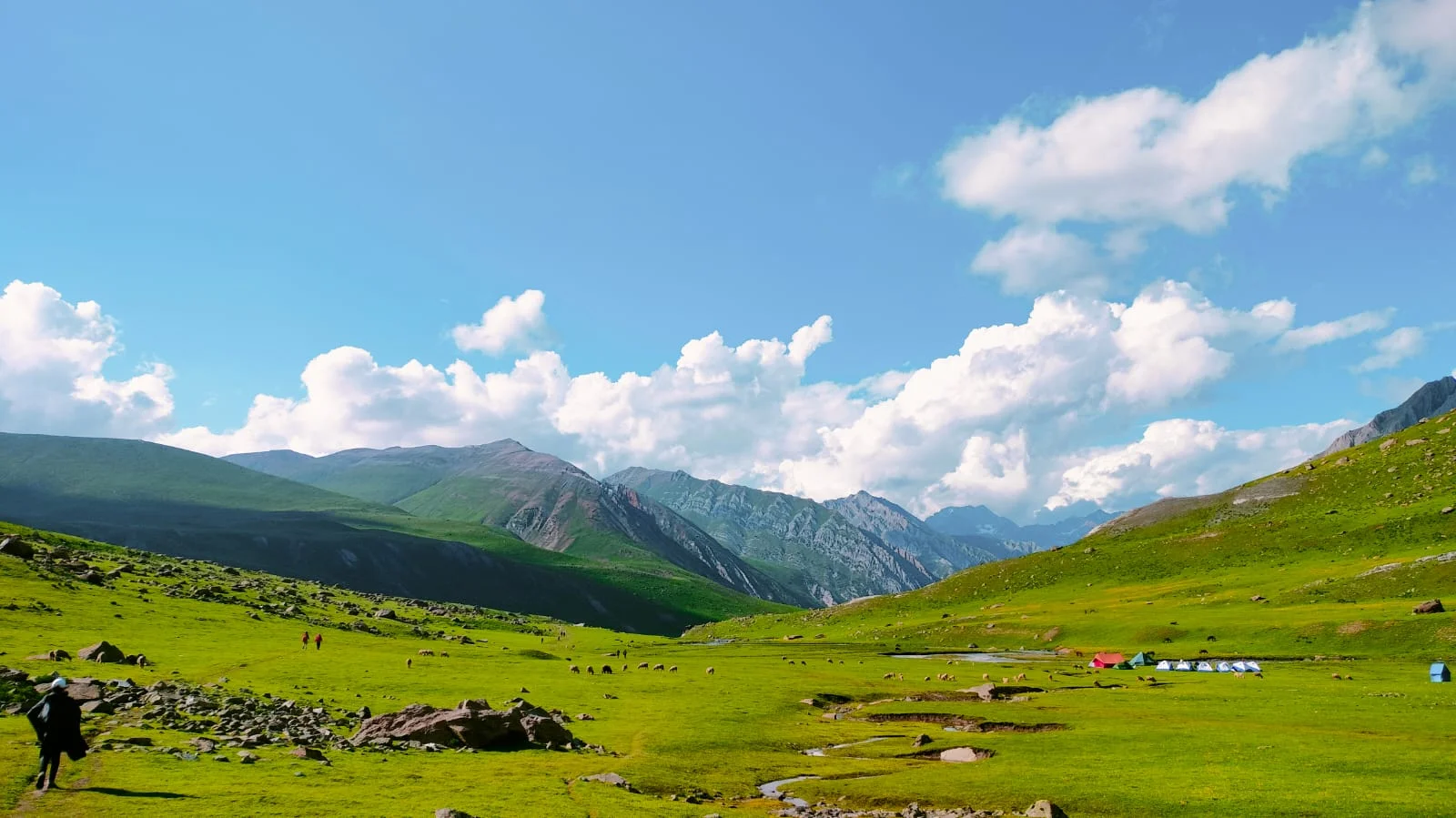
Kashmir — the crown of India — is a land where glaciers meet meadows, where alpine lakes shimmer at impossible altitudes, and where ancient shepherds' routes wind through valleys that seem sculpted by divine hands. In 2026, Kashmir trekking has never been more accessible, safer, or better organized, with world-class packages catering to first-timers and seasoned mountaineers alike.
From the legendary Kashmir Great Lakes circuit to the serene silence of Tosamaidan's meadows, from the warrior valleys of Warwan to the mystical Pir Panjal Lakes — every trail in this region tells a story of breathtaking beauty, raw wilderness, and Himalayan grandeur.
This comprehensive guide covers the 10 best trekking experiences Kashmir has to offer in 2026, complete with route details, difficulty levels, best seasons, package information, and insider tips for every kind of adventurer.
|
Trek Name |
Duration |
Difficulty |
Max Altitude |
Best Season |
Highlight |
|---|---|---|---|---|---|
|
Kashmir Great Lakes |
7-8 Days |
Moderate |
4,350 m |
Jul–Sep |
7 alpine lakes |
|
Tarsar Marsar |
6-7 Days |
Moderate |
4,100 m |
Jul–Sep |
Twin jewel lakes |
|
Tulian Lake |
4-5 Days |
Moderate+ |
3,750 m |
Jun–Sep |
Highest lake in Pahalgam |
|
Marchoi Trek |
4-5 Days |
Easy-Mod |
3,900 m |
Jun–Sep |
Pristine wilderness |
|
Nafran Valley |
3-4 Days |
Easy |
3,400 m |
May–Oct |
Lush green meadows |
|
Warwan Valley |
8-10 Days |
Hard |
4,200 m |
Jul–Sep |
Remote ancient route |
|
Brammah Valley |
7-8 Days |
Hard |
4,500 m |
Jun–Sep |
Brammah Peaks |
|
Silent Meadows |
4-5 Days |
Easy-Mod |
3,600 m |
May–Oct |
Peaceful solitude |
|
Tosamaidan |
3-4 Days |
Easy |
3,200 m |
May–Oct |
Largest meadow in J&K |
|
Pir Panjal Lakes |
6-7 Days |
Moderate+ |
4,600 m |
Jul–Sep |
Hidden plateau lakes |
"The Jewel Circuit of the Himalayas — Seven Lakes, One Unforgettable Journey"
|
📍 Region |
Sonamarg to Naranag (Gangabal Valley), Kashmir |
|
⏱ Duration |
7–8 Days |
|
📊 Difficulty |
Moderate |
|
🏔 Max Altitude |
4,350 m (Gadsar Pass) |
|
📅 Best Season |
July to September |
|
💰 Package Cost |
₹22,000 per person (2026) |
|
👥 Group Size |
8–20 trekkers | Solo packages available |
|
🚀 Start Point |
Sonamarg, Jammu & Kashmir |
The Kashmir Great Lakes Trek is unanimously regarded as one of the finest high-altitude treks in the entire Indian Himalayas — a spectacular circuit that strings together seven stunning alpine lakes in a single continuous journey across the Great Himalayan Range.
Beginning from the glacier-kissed meadows of Sonamarg, the trail crosses multiple high passes, including the iconic Nichnai Pass (4,100 m) and the majestic Gadsar Pass (4,350 m), weaving through landscapes of surreal beauty: rolling meadows carpeted with wildflowers, glacial streams cascading over ancient boulders, and lake basins holding waters so clear they mirror the peaks above.
The seven lakes — Vishansar, Krishansar, Gadsar, Satsar, Gangabal, Nundkol, and the seasonal Yamsar — each have a distinct character. The twin lakes of Vishansar and Krishansar shimmer in shades of turquoise and emerald. Gangabal, the largest and most revered, sits in the shadow of Mount Harmukh (5,142 m), making for one of the most dramatic campsite views in the Indian Himalayas. In 2026, this trek has become the benchmark trail for anyone exploring Kashmir's wilderness, with well-organized packages now offering everything from basic camping to deluxe tent experiences with chef-prepared meals.
Seven alpine lakes in a single trek — each uniquely beautiful
Twin lakes Vishansar & Krishansar visible from a single ridge
Stunning Gadsar Pass (4,350 m) with panoramic Himalayan views
Gangabal Lake camped beneath towering Mount Harmukh (5,142 m)
Rich Himalayan flora and fauna — golden eagles, Himalayan bears, marmots
Culturally rich Naranag ending with ancient temple ruins
Available in group, private, and women-only formats in 2026
"Kashmir's Twin Jewels — A Photographer's Paradise Hidden in the Himalayas"
|
📍 Region |
Aru Valley, Pahalgam, Kashmir |
|
⏱ Duration |
6–7 Days |
|
📊 Difficulty |
Moderate |
|
🏔 Max Altitude |
4,100 m (Marsar Lake) |
|
📅 Best Season |
July to September |
|
💰 Package Cost |
₹20,000 per person (2026) |
|
👥 Group Size |
6–18 trekkers |
|
🚀 Start Point |
Aru Village, Pahalgam |
Hidden in the folds of the Lidder Valley above Pahalgam, the Tarsar Marsar Trek reveals two of the most exquisitely beautiful alpine lakes in all of Kashmir — Tarsar and Marsar — connected by a dramatic ridgeline walk that offers views stretching deep into the Greater Himalayan Range.
The trek begins at the charming village of Aru, ascending through dense pine and birch forests before opening into the wide, flower-strewn meadows of Lidderwat. From here, the trail climbs steadily through boulder fields and ancient moraines to Tarsar Lake (3,900 m), an oval jewel of sapphire water ringed by a natural amphitheater of peaks that includes the distinctive Tarsar Peak.
From Tarsar, a challenging climb over the connecting ridge leads to the equally magnificent Marsar Lake, higher and more remote, often surrounded by lingering snowfields even in August. The return via Shekwas adds yet another dimension, with sweeping valley views and encounters with the Bakarwal nomads who migrate through these highlands each summer. In 2026, the Tarsar Marsar Trek has emerged as one of the most popular moderate-level treks in Kashmir, perfectly suited for those seeking solitude, natural beauty, and manageable challenge.
Twin high-altitude lakes — Tarsar and Marsar — both at over 3,800 m
Flower-filled meadows of Lidderwat — a trekker's paradise
Dramatic ridge crossing between the two lakes with panoramic views
Encounters with Bakarwal nomadic herders and their migrating flocks
Outstanding photography — mirror-still reflections at sunrise
Well-defined trails with excellent campsites throughout
Option for a challenging extension to Sonsar Lake
"The Frozen Giant — Pahalgam's Most Dramatic High-Altitude Lake"
|
📍 Region |
Pahalgam, Anantnag District, Kashmir |
|
⏱ Duration |
4–5 Days |
|
📊 Difficulty |
Moderate to Challenging |
|
🏔 Max Altitude |
3,750 m (Tulian Lake) |
|
📅 Best Season |
June to September |
|
💰 Package Cost |
₹16,000 per person (2026) |
|
👥 Group Size |
6–20 trekkers | Day hike options available |
|
🚀 Start Point |
Pahalgam Town, Kashmir |
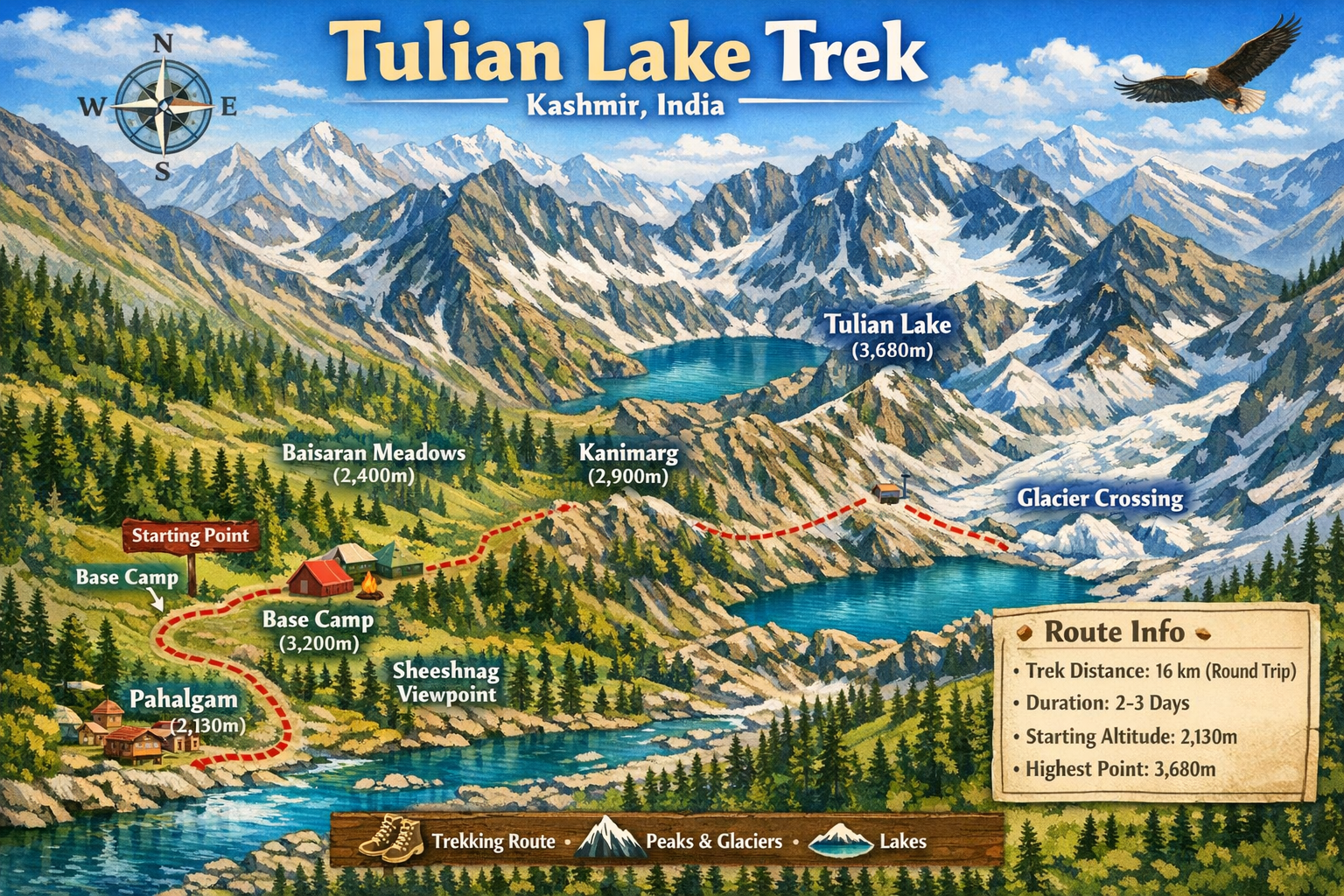
The Tulian Lake Trek is one of Kashmir's most rewarding shorter treks, delivering dramatic alpine scenery in a compact itinerary that makes it ideal for those with limited time but unlimited ambition. Situated at 3,750 m above sea level, Tulian is among the highest lakes in the Pahalgam region — a vast, brooding body of water that remains frozen well into June, surrounded by sheer cliff faces and permanent snowfields.
The trail from Pahalgam climbs steadily through the famous Baisaran meadow (often called Mini Switzerland), passes through shepherd settlements, and ascends through increasingly dramatic terrain before the lake basin suddenly reveals itself — a stunning, cirque-enclosed lake that commands one of the most powerful views in the region. The surrounding peaks — some exceeding 5,000 m — create an extraordinary natural amphitheater.
In 2026, the Tulian Lake Trek is popular as a pre-acclimatization route before longer treks, as well as a standalone adventure for trekkers based in Pahalgam. Day-trip options from Pahalgam are available but the overnight camping experience at the lake is unmissable — watching alpenglow paint the surrounding peaks at dusk is a defining Kashmir memory.
Dramatic 3,750 m lake in a sheer-walled natural cirque
Baisaran Meadow — the famous 'Mini Switzerland of Kashmir'
Lingering snowfields even in summer — surreal summer-snow scenery
360-degree views of Greater Himalayan peaks above 5,000 m
Accessible from Pahalgam — ideal add-on to a larger Kashmir trip
Excellent camping with spectacular sunset and sunrise views
Wildlife: Himalayan griffons, snowcock, red fox commonly spotted
"Kashmir's Best Kept Secret — Wild, Pristine and Utterly Unspoiled"
|
📍 Region |
Sonamarg area, Ganderbal District, Kashmir |
|
⏱ Duration |
4–5 Days |
|
📊 Difficulty |
Easy to Moderate |
|
🏔 Max Altitude |
3,900 m |
|
📅 Best Season |
June to September |
|
💰 Package Cost |
₹15,000 per person (2026) |
|
👥 Group Size |
4–16 trekkers | Excellent for beginners |
|
🚀 Start Point |
Sonamarg, Jammu & Kashmir |
The Marchoi Trek is one of Kashmir's best-kept trekking secrets — a shorter, less-crowded trail that leads into a pristine valley of extraordinary natural beauty, far from the well-trodden paths of more famous routes. Starting from the popular base of Sonamarg, the Marchoi route quickly leaves tourist traffic behind, ascending into a secluded world of alpine meadows, crystal-clear streams, and towering granite walls.
The Marchoi valley itself is a revelation — wide, open, and almost surreally green in the peak summer months, with the stream running through its center sparkling with glacial melt. The upper meadows offer close-up views of surrounding peaks and glaciers, with the high point of the trek at nearly 3,900 m delivering an expansive panorama across the Sindh Valley.
What sets the Marchoi Trek apart in 2026 is its combination of accessibility and wildness. It requires no special permits, is manageable for fit beginners, and yet delivers an authentic Himalayan wilderness experience that feels completely removed from the modern world. For those seeking their first Kashmir trek or a peaceful complement to a longer adventure, Marchoi is a perfect choice.
Unspoiled, crowd-free valley with genuine wilderness atmosphere
Accessible from Sonamarg — perfect for first-time Kashmir trekkers
Spectacular views of Sindh Valley glaciers and high peaks
Lush summer meadows with wildflowers from June onwards
Ideal acclimatization trek before longer, higher routes
Short enough for families and beginners with moderate fitness
Chance to encounter Gujjar and Bakarwal nomadic communities
"Pahalgam's Hidden Garden — Where Streams, Meadows and Silence Converge"
|
📍 Region |
Pahalgam, Anantnag District, Kashmir |
|
⏱ Duration |
3–4 Days |
|
📊 Difficulty |
Easy |
|
🏔 Max Altitude |
3,400 m |
|
📅 Best Season |
May to October |
|
💰 Package Cost |
₹28,000 per person (2026) |
|
👥 Group Size |
4–25 trekkers | Family & senior-friendly |
|
🚀 Start Point |
Pahalgam Town, Kashmir |
Tucked away as a side valley above Pahalgam, the Nafran Valley Trek is one of Kashmir's most accessible and family-friendly trekking experiences — a gentle journey through some of the lushest, most visually striking landscapes in the entire region. The Nafran Valley is a broad, river-carved sanctuary of meadows, streams, and towering deodar forests, rising gradually to alpine pastures that offer expansive views without demanding high-altitude effort.
The route follows the Nafran stream upstream from its confluence near Pahalgam, passing through shepherd settlements and traditional Gujjar summer camps where you can witness an age-old nomadic way of life that has changed little over centuries. The upper valley opens into a wide bowl of rolling meadows — an ideal picnic and camping spot with panoramic views of the surrounding ridgelines.
In 2026, the Nafran Valley Trek has gained recognition as one of Kashmir's finest introductory trekking experiences. With a maximum altitude of just 3,400 m, a gentle gradient, and well-maintained forest trails, it is genuinely suitable for older adults, young children, and anyone seeking the beauty of the Himalayas without technical difficulty. It also serves as an excellent warm-up before longer Pahalgam-based treks like Tarsar Marsar or Tulian Lake.
Gentle gradient — accessible to families, seniors, and beginners
Lush deodar and pine forests with birdsong throughout
Authentic encounters with Gujjar nomadic communities
Beautiful river camping with meadow picnic opportunities
Long season: May to October — widest availability of any Kashmir trek
Excellent birdwatching: kingfishers, Himalayan monals, eagles
Can be extended upward for more experienced trekkers
"The Road Less Traveled — Kashmir's Greatest Wilderness Adventure"
|
📍 Region |
Kishtwar to Pahalgam, crossing the Himalayan divide |
|
⏱ Duration |
8–10 Days |
|
📊 Difficulty |
Hard / Challenging |
|
🏔 Max Altitude |
4,200 m (Margan Top) |
|
📅 Best Season |
July to September |
|
💰 Package Cost |
₹32,000 per person (2026) |
|
👥 Group Size |
6–14 trekkers | Experienced trekkers only |
|
🚀 Start Point |
Inshan, Kishtwar District |
The Warwan Valley Trek is Kashmir's great epic trail — a legendary traverse that crosses from Kishtwar on the southern slopes of the Himalayas into the Kashmir Valley, following a route that has been used by traders, warriors, and shepherds for thousands of years. This is not a trail for beginners; the Warwan Valley demands genuine wilderness experience, solid physical fitness, and a taste for remote adventure.
The Warwan River, one of the most beautiful and least-known Himalayan rivers, carves a dramatic gorge through the mountains, and the trek follows this valley for much of its length before crossing the Himalayan watershed at Margan Top. The villages encountered along the way — Inshan, Hanzal, Sukhnai, Chittichat — are among the most remote permanently inhabited settlements in Jammu & Kashmir, where traditional Kishtwari culture survives intact and hospitality is fierce and genuine.
In 2026, the Warwan Valley Trek is increasingly sought by experienced trekkers looking for an authentic, unvarnished Himalayan adventure far from commercial trek circuits. With limited infrastructure, no mobile connectivity, and days of trail where human habitation is absent, this trek delivers something increasingly rare: true wilderness immersion. Package providers now offer satellite communication devices, trained medical staff, and experienced local guides to ensure safety without compromising the wild character of the route.
One of India's greatest trans-Himalayan wilderness traverses
Remote Kishtwari villages with living traditional culture
Warwan River gorge — dramatic and spectacularly beautiful
Margan Top (4,200 m) — panoramic views of both mountain ranges
No mobile network — genuine digital detox in the Himalayas
Encounters with traditional Gujjar and Kashimiri shepherds
Snow leopard habitat — rare wildlife in pristine environment
Crossover to Pahalgam provides natural trekking finale
"The Kishtwar Jewel — Where Granite Peaks Pierce the Sky"
|
📍 Region |
Kishtwar District, Jammu & Kashmir |
|
⏱ Duration |
7–8 Days |
|
📊 Difficulty |
Hard / Challenging |
|
🏔 Max Altitude |
4,500 m (Brammah Base Camp) |
|
📅 Best Season |
June to September |
|
💰 Package Cost |
₹18,000 per person (2026) |
|
👥 Group Size |
4–12 trekkers | Mountaineers & experienced trekkers |
|
🚀 Start Point |
Kishtwar Town, J&K |
The Brammah Valley Trek is one of the most spectacular high-altitude trekking experiences in the Jammu & Kashmir region — a journey into the Kishtwar Himalaya, a range of extraordinary technical peaks and dramatic glaciated valleys that remains far less visited than the Kashmir Valley trails despite offering equal — or arguably greater — natural grandeur.
The twin Brammah Peaks (Brammah I: 6,416 m, Brammah II: 6,425 m) are among the most striking unclimbed summits in the Indian Himalayas, and trekking to their base camp delivers views of these granite and ice giants at close range. The valley approach follows the Chenab River tributaries through spectacular gorge terrain before ascending into high alpine environments of moraines, glaciers, and ice-blue meltwater pools.
In 2026, the Brammah Valley Trek is increasingly popular with trekkers who have completed standard Kashmir trails and are seeking something more remote and more challenging. The route requires genuine high-altitude experience, competent navigation skills, and respect for rapidly changing mountain weather. Packages include certified guides, technical equipment, and emergency evacuation protocols — essential in this remote terrain.
Base camp views of the spectacular Brammah twin peaks (6,416–6,425 m)
Kishtwar Himalaya — one of India's least-visited mountain ranges
Dramatic Chenab tributary gorge approach terrain
High-altitude glaciers and meltwater pools at 4,000+ m
True expedition atmosphere — minimal tourist infrastructure
Excellent for trekkers aspiring to move into mountaineering
Rich alpine biodiversity in one of J&K's protected zones
"The Antidote to Modern Life — Kashmir's Most Peaceful Trekking Experience"
|
📍 Region |
Yusmarg area, Budgam District, Kashmir |
|
⏱ Duration |
4–5 Days |
|
📊 Difficulty |
Easy to Moderate |
|
🏔 Max Altitude |
3,600 m |
|
📅 Best Season |
May to October |
|
💰 Package Cost |
₹23,000 per person (2026) |
|
👥 Group Size |
4–20 trekkers | Ideal for couples and groups |
|
🚀 Start Point |
Yusmarg, Budgam District |
The Silent Meadows Trek lives up to its evocative name in every sense — a journey through rolling Himalayan grasslands, whispering forests, and high mountain clearings so peaceful that the loudest sound you'll hear is the wind across the grass and the occasional call of a monal pheasant. Located in the less-traveled Yusmarg region, this trek offers a profound contrast to the busier trails of Pahalgam and Sonamarg.
The trail climbs gently from Yusmarg — itself a beautiful meadow destination — through mixed forests of pine, maple, and walnut, past seasonal shepherd camps and small streams, into a sequence of open meadows that step upward through the landscape. Each meadow clearing offers increasingly expansive views, and the highest point at 3,600 m opens a panorama of the Kashmir Valley spread below, framed by the Greater Himalayan peaks.
In 2026, the Silent Meadows Trek is a rising star on Kashmir's trekking calendar, increasingly chosen by couples on honeymoon treks, solo travelers, writers, artists, and anyone seeking restoration in nature's company. Night skies here are extraordinary — far from light pollution, the Milky Way blazes overhead, and guided stargazing is a popular add-on offered by several package operators.
Profound peace and solitude — among Kashmir's least-crowded routes
Extraordinary night skies — stargazing packages available
Gentle gradient ideal for a restorative trekking experience
Yusmarg starting point — beautiful meadow with pony rides and picnics
Rich birdlife — Himalayan monal, snowcock, vultures
Kashmir Valley panorama from the high meadow viewpoint
Perfect for couples, solo travelers, and wellness-focused trekkers
"The Great Green Carpet — J&K's Largest and Most Beautiful Alpine Meadow"
|
📍 Region |
Budgam District, Kashmir Valley |
|
⏱ Duration |
3–4 Days |
|
📊 Difficulty |
Easy |
|
🏔 Max Altitude |
3,200 m |
|
📅 Best Season |
May to October |
|
💰 Package Cost |
₹15,000 per person (2026) |
|
👥 Group Size |
4–30 trekkers | Families, beginners, school groups |
|
🚀 Start Point |
Beerwah, Budgam District |
Tosamaidan is one of Kashmir's most magnificent natural treasures — an enormous alpine meadow stretching across 10,000 hectares in the Budgam district, earning the title of the largest alpine meadow in Jammu & Kashmir. The name itself translates beautifully from Kashmiri: 'Tosa' meaning cool and 'Maidan' meaning ground — and the meadow fully justifies this description, a vast, cool, emerald expanse that unfolds beneath the summer sky like nature's grandest carpet.
The trekking route to Tosamaidan passes through dense deodar and fir forests, following traditional paths used by Gujjar and Bakarwal herders who bring their flocks here every summer. As the forest opens into the meadow, the scale of the landscape is genuinely breathtaking — a rolling grassland dotted with wildflowers, divided by sparkling streams, and bounded on all sides by forested ridgelines that rise toward distant snow-capped summits.
In 2026, Tosamaidan has been designated a conservation area, with strict limits on camping footprint and waste management requirements for all licensed operators. The trek is one of Kashmir's most accessible, making it ideal for school groups, senior citizens, families with children, and anyone experiencing Himalayan trekking for the first time. Pony trekking options are also available for those who prefer a gentler pace.
Largest alpine meadow in Jammu & Kashmir — 10,000 hectares of grassland
Blanket of Himalayan wildflowers from May to August
Authentic Gujjar and Bakarwal nomadic culture encounters
Easy gradient — genuinely suitable for families and senior trekkers
Pony trekking options available throughout the route
Designated conservation area — pristine and protected ecosystem
Excellent birdwatching in surrounding deodar and fir forests
"The Hidden Plateau — Kashmir's Most Secret Collection of Alpine Lakes"
|
📍 Region |
Pir Panjal Range, Shopian / Budgam Districts, Kashmir |
|
⏱ Duration |
6–7 Days |
|
📊 Difficulty |
Moderate to Challenging |
|
🏔 Max Altitude |
4,600 m (Pir Panjal Plateau) |
|
📅 Best Season |
July to September |
|
💰 Package Cost |
₹22,000 per person (2026) |
|
👥 Group Size |
6–16 trekkers | Intermediate trekkers |
|
🚀 Start Point |
Shopian or Aharbal, Kashmir |
The Pir Panjal Lakes Trek is perhaps the most underrated trekking experience in all of Kashmir — a challenging traverse of the Pir Panjal Range that discovers a remarkable collection of hidden alpine lakes scattered across a high plateau that sees far fewer trekkers than the more famous Great Himalayan trails to the north.
The Pir Panjal Range forms the southern boundary of the Kashmir Valley, and its northern slopes rise in dramatic, forested steps before breaking into the high-altitude plateau country above 4,000 m. This plateau is scattered with glacial lakes — some unnamed, some frequented only by the most intrepid trekkers — each set in a different style of mountain landscape, from bare rock basins to grassy hollows and snowfield-rimmed bowls.
The highest point of the trek, at approximately 4,600 m on the main Pir Panjal ridge, offers one of the most extraordinary views available on any Kashmir trek — on one side, the entire Kashmir Valley spread in a tapestry of green and gold far below; on the other, the greater ranges of the Himalayas stretching toward the horizon in wave after wave of ice and rock. In 2026, specialist operators are offering guided Pir Panjal Lakes Treks with detailed lake-hopping itineraries and expert naturalist guides.
Hidden plateau lakes — among the least-visited in Kashmir
Pir Panjal ridge viewpoint (4,600 m) — dual-aspect Kashmir Valley vista
Rich, less-disturbed alpine ecosystems — excellent wildlife observation
Dramatic transition from forested slopes to open plateau terrain
Spectacular Aharbal Waterfall at the trek starting region
Off-the-beaten-path — very low crowd density even in peak season
Combines beautifully with a Mughal Road road trip itinerary
Kashmir's trekking season is concentrated between late May and early October, with each window offering a different experience. Late May to June is ideal for lower-altitude treks like Nafran Valley and Tosamaidan — fresh snow on the peaks, meadows just turning green, and very few fellow trekkers. July and August are peak season for high-altitude routes like Kashmir Great Lakes, Tarsar Marsar, and Pir Panjal Lakes, with passes fully open, wildflowers at their peak, and long daylight hours. September brings golden autumn colors and crystal-clear skies — arguably the most beautiful time for photography — with diminishing crowds after August. October sees early snow at high altitudes and a magical autumnal palette, but window of opportunity narrows significantly as the month progresses.
For easy-rated treks (Tosamaidan, Nafran Valley, Silent Meadows): Basic fitness and a regular walking habit are sufficient. No special preparation needed, though cardiovascular training over 4–6 weeks before the trek is beneficial.
For moderate treks (Kashmir Great Lakes, Tarsar Marsar, Tulian Lake): A solid base of cardiovascular fitness is essential. Begin training 8–12 weeks before your trek date with regular hiking, stair climbing, cycling, and running. Practice carrying a day pack of 8–10 kg.
For hard treks (Warwan Valley, Brammah Valley): These demand real physical conditioning. Begin training 4–6 months before, including regular long-distance hiking, altitude camping experience, and ideally completion of at least one moderate Himalayan trek.
Layering system: moisture-wicking base layer, insulating mid-layer, waterproof outer shell
Sturdy trekking boots (waterproof, ankle-support) — broken in before the trek
Trekking poles — invaluable on high-pass crossings and descent terrain
Sleeping bag rated to -5°C minimum (high-altitude treks: -10°C recommended)
Headlamp with spare batteries, sunscreen SPF 50+, UV-protection sunglasses
Water purification: iodine tablets or UV purifier (quality filter recommended)
Personal first aid kit including altitude sickness medication (consult doctor)
Packable rain cover for both backpack and body
Power bank — no charging available on trail
High-calorie snacks: nuts, chocolate, energy gels, dry fruits
As of 2026, foreign nationals require a Protected Area Permit (PAP) for certain trekking zones in Jammu & Kashmir. Indian nationals do not require special permits for most Kashmir treks, but should carry valid government ID throughout. The Brammah Valley Trek in Kishtwar District requires prior permission from the District Magistrate's office for all trekkers. Your package operator will handle all necessary permits as part of the package service — always confirm this when booking.
Acute Mountain Sickness (AMS) can affect any trekker regardless of fitness level. Key symptoms include headache, nausea, dizziness, fatigue, and loss of appetite. The golden rules: ascend slowly (never more than 300–400 m of altitude gain per day above 3,000 m), stay hydrated, avoid alcohol in the first 48 hours at altitude, and descend immediately if symptoms worsen. All 2026 packages include guides trained in altitude sickness recognition and management. Always consult a doctor before departure if you have any concerns.
Kashmir's mountain ecosystems are among the most fragile and beautiful on Earth. As trekking grows in popularity, responsible practice is essential to preserve these landscapes for future generations. Follow the Leave No Trace principles: carry out all waste, use designated toilet areas, avoid picking wildflowers, and respect wildlife by maintaining distance. Support the local economy by choosing locally-operated packages, purchasing food and supplies from village communities, and respecting cultural norms in traditional settlements. Many 2026 packages now include environmental education components and contribute to local conservation funds.